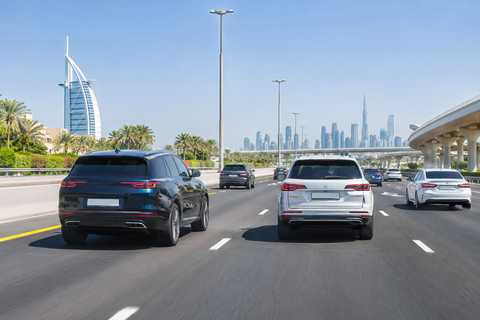

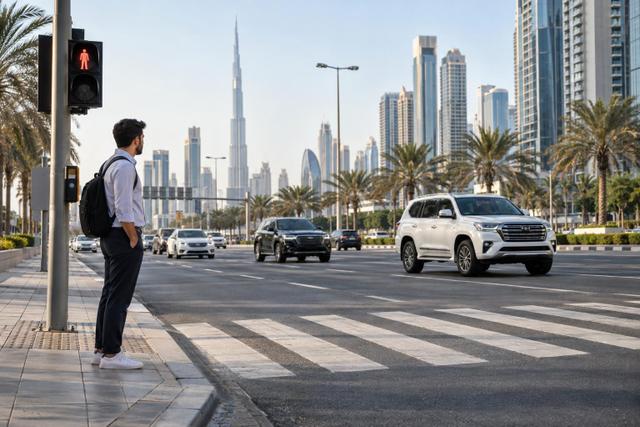
Dubai Police have launched a pedestrian safety campaign reminding residents and visitors that crossing roads unsafely can result in a Dh400 fine. The message is straightforward: use marked crossings, pedestrian bridges, underpasses and traffic signals rather than taking risks through moving traffic.
The campaign focuses on reducing preventable crashes by encouraging pedestrians and drivers to treat crossings as shared safety zones. It also reinforces that road safety rules apply to everyone using Dubai’s streets, not only motorists.
Dubai Police launch a new pedestrian safety awareness campaign
Dubai Police are using the campaign to highlight the dangers of jaywalking, crossing from unapproved locations and ignoring pedestrian signals. According to Gulf News, pedestrians who cross from undesignated areas or fail to follow signals may face an AED 400 penalty.
Also read: Dubai's RTA Will Raise Speed Limits on Three Roads and Lower Them on Two From November 1
The initiative combines enforcement with public awareness. Police messaging is aimed at busy roads, residential districts, commercial areas and locations where people may be tempted to cross directly instead of walking to the nearest safe crossing point.
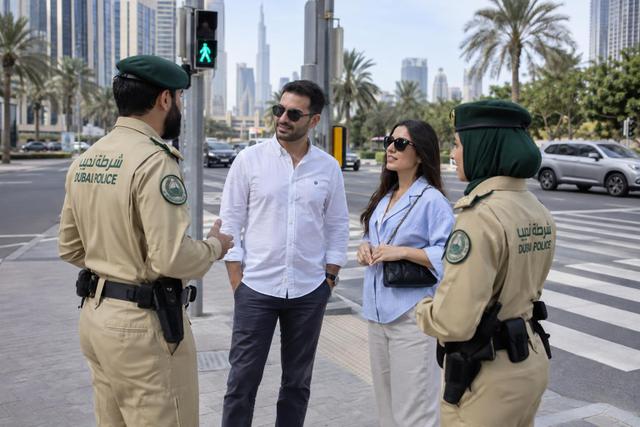
What triggers the Dh400 fine for unsafe crossing?
The fine is generally linked to crossing a road in a way that creates unnecessary danger or disregards designated pedestrian facilities. A short walk to a crossing is always safer than crossing multiple lanes of traffic from an uncontrolled point.
- Crossing from a location that is not a designated pedestrian crossing.
- Ignoring a red pedestrian signal at a controlled crossing.
- Crossing a road where a pedestrian bridge, underpass or marked crossing is available nearby.
- Walking into traffic without checking that vehicles have stopped or can stop safely.
- Crossing high-speed or multi-lane roads outside approved crossing areas.
Khaleej Times reported that the awareness drive specifically warns against jaywalking and unsafe road crossings. The Dh400 penalty is intended to discourage behaviour that can put pedestrians, passengers and drivers at risk.
Understanding Article 89 of the Federal Traffic Law
The campaign refers to Article 89 of the UAE Federal Traffic Law, which covers pedestrian responsibilities when using public roads. In practical terms, pedestrians are expected to use places intended for crossing and comply with traffic controls.
Article 89 is important because it makes clear that pedestrians also have duties in the road environment. Drivers must remain alert and yield where required, but pedestrians should not assume that an approaching vehicle can always stop immediately.
Visibility, vehicle speed, road width and weather can all affect stopping distance. On wide Dubai roads, a driver may have only seconds to react if someone steps out between vehicles or crosses away from a signal.
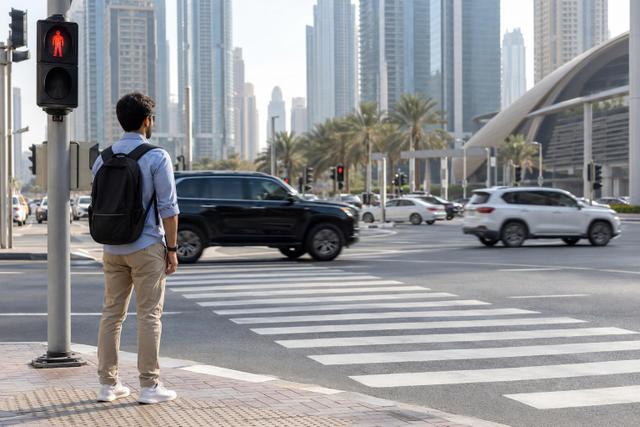
How the campaign is being rolled out across Dubai
Dubai Police are communicating the safety message through awareness activity and reminders directed at road users across the emirate. The focus is on making pedestrians aware of both the legal consequence and the potentially serious safety consequence of unsafe crossings.
Emirates 247 said the campaign warns pedestrians about the AED 400 fine while encouraging the use of safe crossing points. This approach supports broader efforts to improve compliance at traffic lights and pedestrian facilities.
For drivers, local rule changes and awareness campaigns are a useful reminder to keep up with road signs and instructions. Our guide to UAE traffic signs for new drivers explains the regulatory and warning signs motorists are likely to encounter near crossings, schools and junctions.
Why pedestrian safety is a growing priority for authorities
Pedestrians are among the most exposed road users because they have no seatbelts, airbags or protective vehicle structure. A collision that may cause minor vehicle damage can result in severe injury for someone on foot.
Dubai’s roads carry fast-moving traffic, particularly on arterial routes and roads with several lanes. Unplanned crossings can force drivers to brake sharply, swerve or make sudden lane changes, creating a risk for surrounding traffic as well.
The campaign also reflects the need for predictable behaviour. When pedestrians cross only at expected locations, drivers can identify hazards earlier and approach crossings at an appropriate speed.
Also read: Dubai's RTA and Police Confirm New Truck Movement Restrictions From October 1, 2026
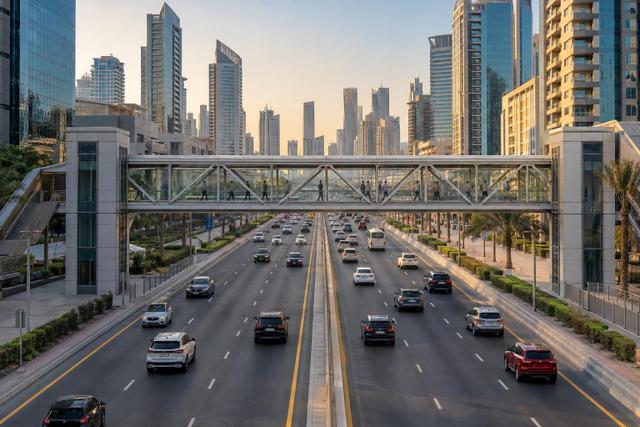
Safe crossing practices pedestrians should follow
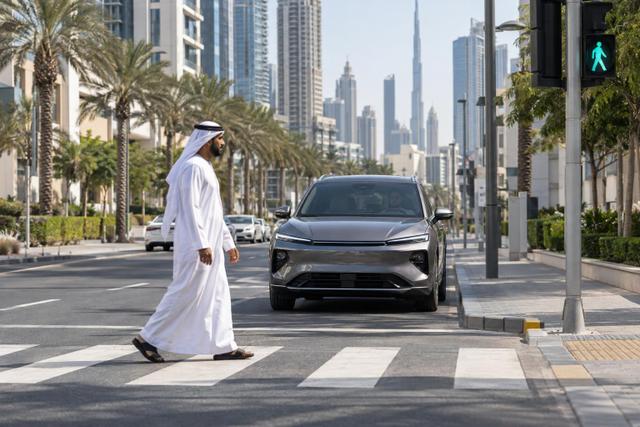
Using a legal crossing point is the starting point, but pedestrians should still assess the situation before stepping onto the road. A green pedestrian signal gives priority to cross, yet it does not remove the need to watch for turning vehicles, cyclists or drivers who may have failed to stop.
- Use the nearest marked crossing, pedestrian bridge or underpass.
- Wait for the green pedestrian signal where lights are installed.
- Look both ways and make sure approaching vehicles have stopped before entering the road.
- Avoid distractions such as phones, headphones or looking down while crossing.
- Do not cross from between parked cars, buses or other objects that block a driver’s view.
- Wear visible clothing when walking near roads at night or in low-light conditions.
Parents and guardians should take extra care with children near roads. Holding a child’s hand and using formal crossings helps establish safer habits early, especially around schools, shopping areas and public transport stops.
What drivers should also keep in mind near crossings
Pedestrian safety is not solely a pedestrian issue. Drivers should reduce speed when approaching marked crossings, scan pavements for people waiting to cross and be particularly cautious near schools, bus stops, mosques and busy retail areas.
Motorists should never overtake a vehicle that has stopped at a crossing, as it may be giving way to someone who is not visible from the adjacent lane. They should also check carefully for pedestrians when turning at junctions, including when the vehicle has a green signal.
Changes to road rules can affect how motorists plan journeys and respond to conditions. Drivers travelling beyond Dubai may also want to note the reduced speed limit on the Fujairah-Khorfakkan Road, where a lower limit gives motorists more time to identify hazards.

Key takeaways for residents and visitors
The central point of the Dubai Police campaign is simple: do not cross roads wherever it seems convenient. Use the designated facility, obey pedestrian signals and allow enough time to cross safely.
- Unsafe road crossing can lead to a Dh400 fine.
- Pedestrian bridges, underpasses and marked crossings are the correct places to cross.
- A green signal is not a substitute for checking traffic before crossing.
- Drivers should expect pedestrians near crossings and approach with caution.
- Visitors unfamiliar with Dubai’s road network should plan walking routes around official crossings rather than attempting to cross wide roads directly.
Safe road use depends on predictable decisions by everyone. Whether walking, driving or using public transport, choosing the proper crossing point helps avoid penalties and, more importantly, reduces the chance of a serious collision.
People Also Ask
What is the fine for jaywalking in Dubai?
Pedestrians can face a Dh400 fine for crossing roads unsafely, including crossing away from designated locations or ignoring pedestrian traffic signals.
Can pedestrians cross anywhere in Dubai?
No. Pedestrians should use marked crossings, pedestrian bridges, underpasses and signal-controlled crossing points. Crossing from undesignated areas can be dangerous and may result in a fine.
Do drivers have to stop at pedestrian crossings in Dubai?
Drivers should approach pedestrian crossings carefully and give way where required. They should reduce speed, watch for people entering the crossing and avoid overtaking vehicles that have stopped near one.
Is it safe to cross Dubai roads when the pedestrian light is green?
A green pedestrian signal indicates that it is time to cross, but pedestrians should still check that traffic has stopped. Turning vehicles, cyclists and drivers who fail to comply with signals can still create a hazard.
What should visitors do if there is no crossing nearby?
Visitors should walk to the nearest official crossing facility rather than crossing a wide or busy road directly. Dubai’s major roads can have fast traffic and multiple lanes, making informal crossings particularly unsafe.