Mileage
Lower kilometres usually mean a higher value. Cars covering far more than the typical 20,000–25,000 km a year are priced lower.

Friday, October 16, 2026
Whether you're planning to sell, trade in, refinance or simply curious, knowing what your car is worth puts you in a stronger position. Our car value calculator estimates the current market value of your used car in Dubai, Abu Dhabi, Sharjah and the rest of the UAE, using comparable vehicles listed for sale in the UAE right now.
Most online valuation tools in the UAE are run by car-buying companies, and the estimate is the first step of a sales pitch. Khaleej Cars is an independent automotive publication. There is no sign-up, no phone number and no follow-up call – just an estimated AED range you can use to benchmark offers.
No registration, email or phone number needed.
Estimates based on comparable listings across the Emirates.
Accounts for GCC and imported specifications, mileage in km and condition.
Step 1
Select the brand, model, year, trim, regional specification and current mileage.
Step 2
Choose the condition that most closely reflects the car's wear, maintenance and mechanical state.
Step 3
See an estimated AED market range based on comparable vehicle listings in the UAE.
Two cars of the same make, model and year can be thousands of dirhams apart. These are the factors that move the number most.
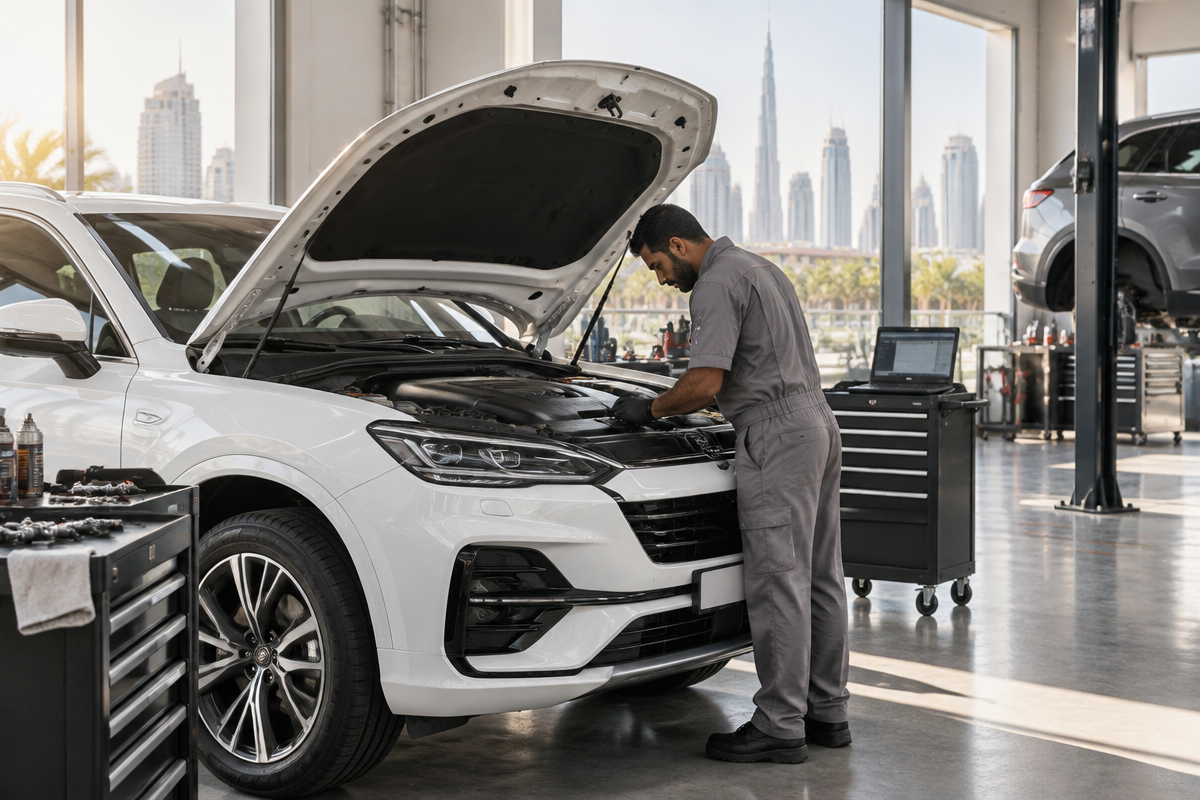
Lower kilometres usually mean a higher value. Cars covering far more than the typical 20,000–25,000 km a year are priced lower.
GCC-spec cars are built for Gulf heat and are generally easier to resell than American, Japanese or other imported specs.
A full, documented service record – ideally with the dealer or a reputable workshop – reassures buyers and supports a higher price.
Previous accidents, repaints or a salvage history can lower value noticeably, even after a quality repair.
Paintwork, interior wear, tyres and mechanical health all feed into the final figure. Be honest when choosing a condition.
Higher trims and factory options such as sunroofs, premium audio and driver-assistance features add value over base versions.
Remaining manufacturer warranty or an active service contract is a genuine selling point in the UAE market.
Popular, reliable models in demand across the Gulf sell faster and hold their value better than niche or discontinued ones.
Yes – and more in the UAE than almost anywhere else. GCC-spec vehicles are built for the region, typically with upgraded radiators, stronger air-conditioning and filters suited to heat and dust. Buyers, banks and insurers are familiar with them, so they tend to sell faster and at better prices. Imported cars (American, Japanese, Canadian or European spec) can be excellent buys, but many buyers price in the risk of cooling issues, parts availability or an unknown history. If your car is an import, select the correct specification in the calculator for a realistic estimate.
Resale value
Depreciation is the biggest cost of owning most cars. As a general rule, a new car loses the most value in its first one to three years, and many mainstream models are worth roughly half their original price after around five years. The exact rate depends on the brand, the model's reputation for reliability and how strong demand is in the used market.
Across the Gulf, rugged and dependable models tend to have the strongest resale values. Toyota Land Cruiser, Toyota Prado, Nissan Patrol and Lexus SUVs are consistently in demand, pickups such as the Toyota Hilux keep their value well, and certain performance models like the Porsche 911 are known for holding their value. Luxury saloons and cars with high running costs typically depreciate faster.
Planning your next purchase? Checking resale value before you buy can save you thousands when it's time to sell.
Selling options
The calculator shows an estimated market value based on comparable listings. What you're actually offered depends on how you sell.
Usually the highest price, because you're selling directly to the next owner. It takes more time: listing, calls, viewings and handling the transfer yourself.
Convenient if you're buying another car from the same dealer. Expect a lower figure, as the dealer needs margin to recondition and resell.
The fastest option, often paid the same day. Offers are typically below market value to cover inspection, reconditioning and resale risk.
Use your estimate as a benchmark – if an offer is far below the range, ask why.
Gather your paperwork – registration card (Mulkiya), service records, warranty documents and spare keys.
Get it professionally cleaned or detailed – first impressions make a real difference to buyers.
Fix small, inexpensive issues such as warning lights, worn wiper blades or minor scratches.
Book a pre-sale inspection at an independent workshop so there are no surprises during negotiation.
Check tyre condition and date codes – worn or old tyres give buyers an easy reason to negotiate down.
Clear any outstanding fines and settle or obtain a clearance letter for any car loan before the transfer.
Time your sale – demand for used cars can dip in the peak summer months and pick up again before the cooler season.
Price realistically using your valuation range, leaving a little room to negotiate.
Common questions
Valuations are estimates based on current UAE market listings and are provided for information only. They are not a purchase offer. Last reviewed: September 2026.
Value my car