

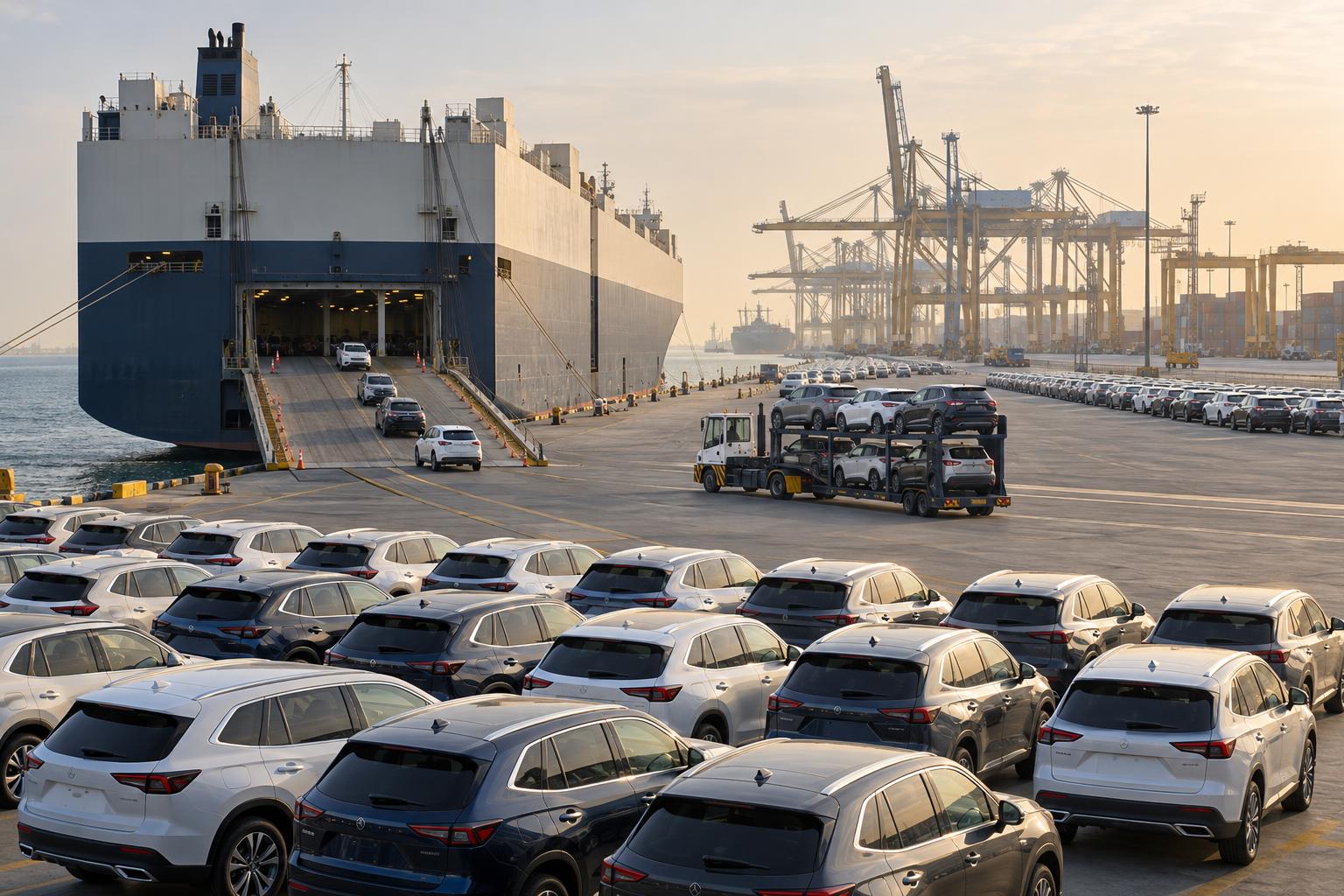
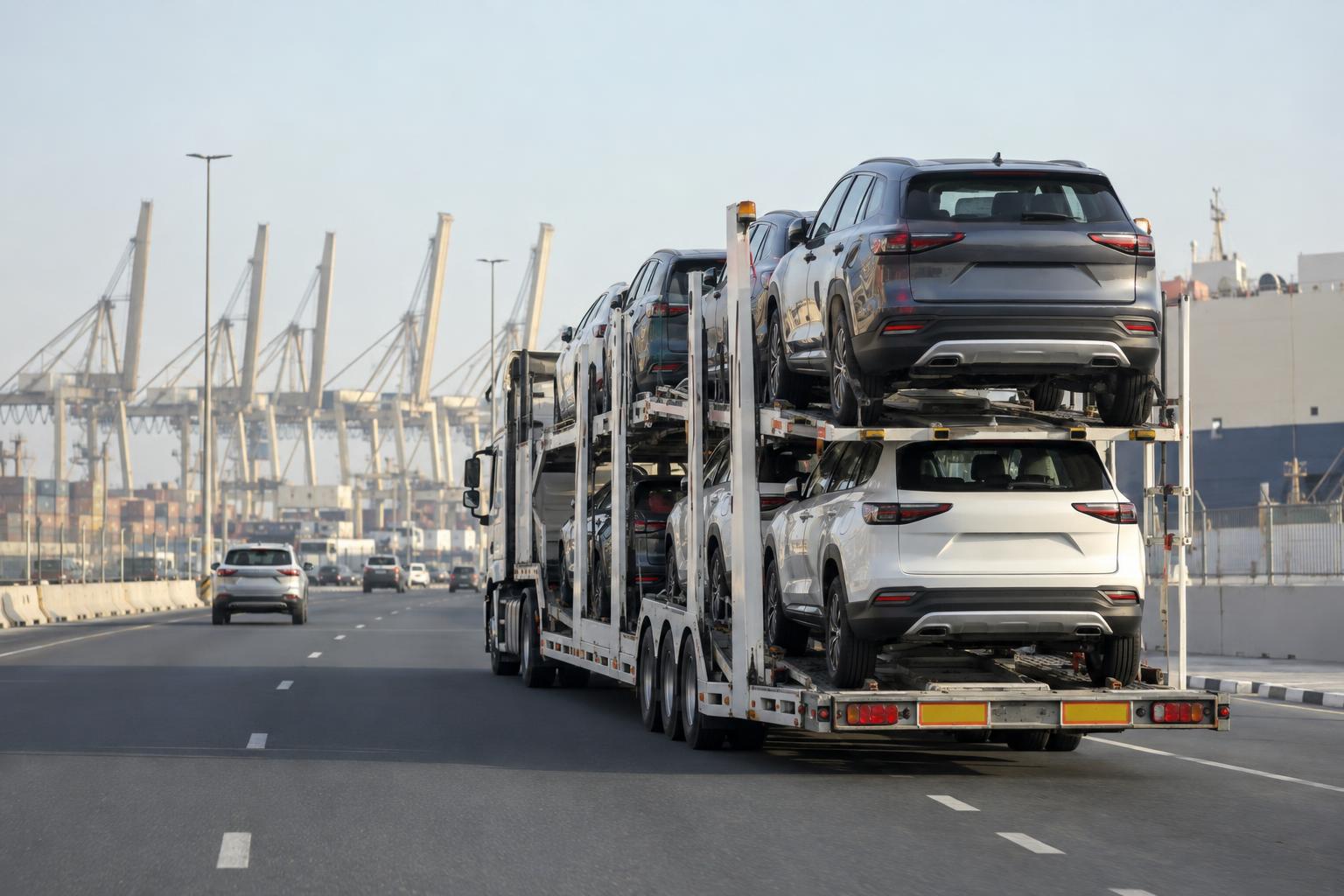
DP World and Japan's Mitsui O.S.K. Lines (MOL) have signed a term sheet to explore a new automotive logistics facility at Jebel Ali Port. The proposed project would expand the port's ability to receive, store, inspect and prepare vehicles before they are distributed across the UAE and wider GCC, supporting a trade route that is increasingly important for new-car imports and re-exports.
For buyers, the announcement is not about a new car model or factory. It is about the infrastructure behind the cars arriving at dealerships. If developed, the facility could help importers and distributors move vehicles through one of the region's main automotive gateways more efficiently, while adding more services close to the port.
DP World and MOL sign term sheet for Jebel Ali automotive facility
The term sheet marks the latest step in the relationship between DP World and MOL, a major Japanese shipping and logistics group. The companies are considering a dedicated facility at Jebel Ali Port focused on finished vehicles, meaning completed cars, SUVs, pickups and other road vehicles being imported, exported or re-exported.
DP World operates Jebel Ali Port and its surrounding logistics ecosystem, while MOL brings experience in vehicle shipping and automotive supply chains. Together, the companies are looking at how port-based services can make the movement of vehicles more streamlined from vessel discharge through to regional delivery.
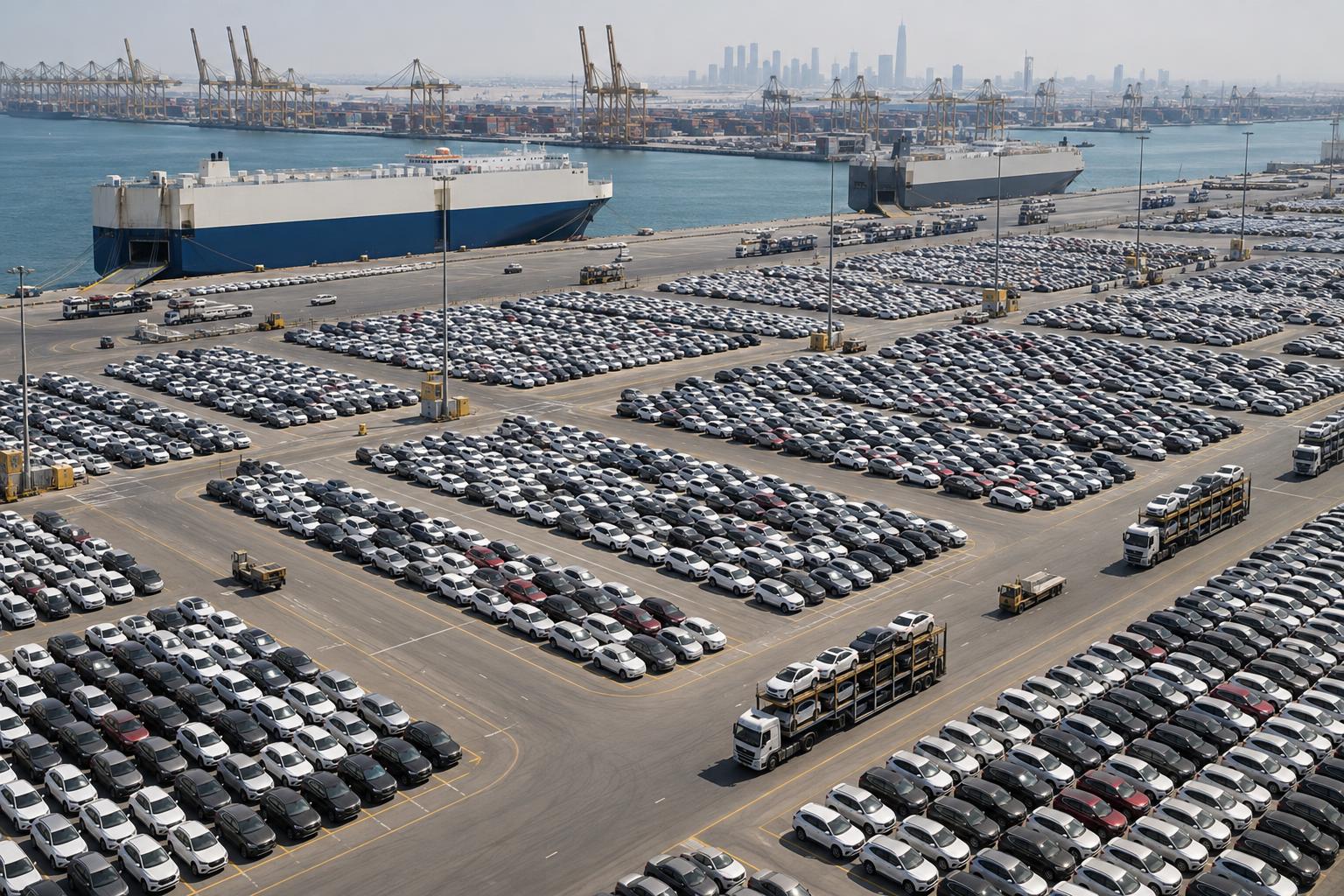
What is Jebel Ali Port's current role in GCC vehicle trade?
Jebel Ali Port is already one of the GCC's most important gateways for automotive cargo. Vehicles arriving from manufacturing hubs in Japan, South Korea, China, Europe and other markets can be unloaded in Dubai, processed through local logistics facilities, then delivered to UAE dealers or shipped onward to customers in the Gulf, Africa and other nearby markets.
Its value is not limited to domestic vehicle sales. Dubai has long been a major re-export centre, with traders using Jebel Ali's shipping links, free-zone operations and road connections to serve markets beyond the UAE.
- Imports: new vehicles destined for UAE dealerships and fleet operators.
- Re-exports: vehicles moved through Dubai to other regional and international markets.
- Transhipment: vehicles transferred between ships without entering the local retail market.
- Logistics processing: storage, accessory work, inspections and release preparation before distribution.
This role matters because vehicle logistics are more specialised than container handling. Finished cars need secure parking areas, careful loading and unloading procedures, condition checks and controlled handover processes to avoid damage or delays.
Jebel Ali Port handled nearly 1.1 million vehicles in 2025
DP World says Jebel Ali Port handled nearly 1.1 million vehicles in 2025. That scale underlines how central Dubai has become to the automotive trade, particularly as GCC demand continues to include a broad mix of mainstream passenger cars, premium vehicles, commercial fleets and Chinese brands expanding their regional presence.
High volumes also create pressure for efficient vehicle yards and processing capacity. A vehicle may arrive at port in large batches, but it often leaves in smaller allocations for individual dealers, fleet customers or export destinations. Dedicated automotive infrastructure can help manage those different flows more effectively.
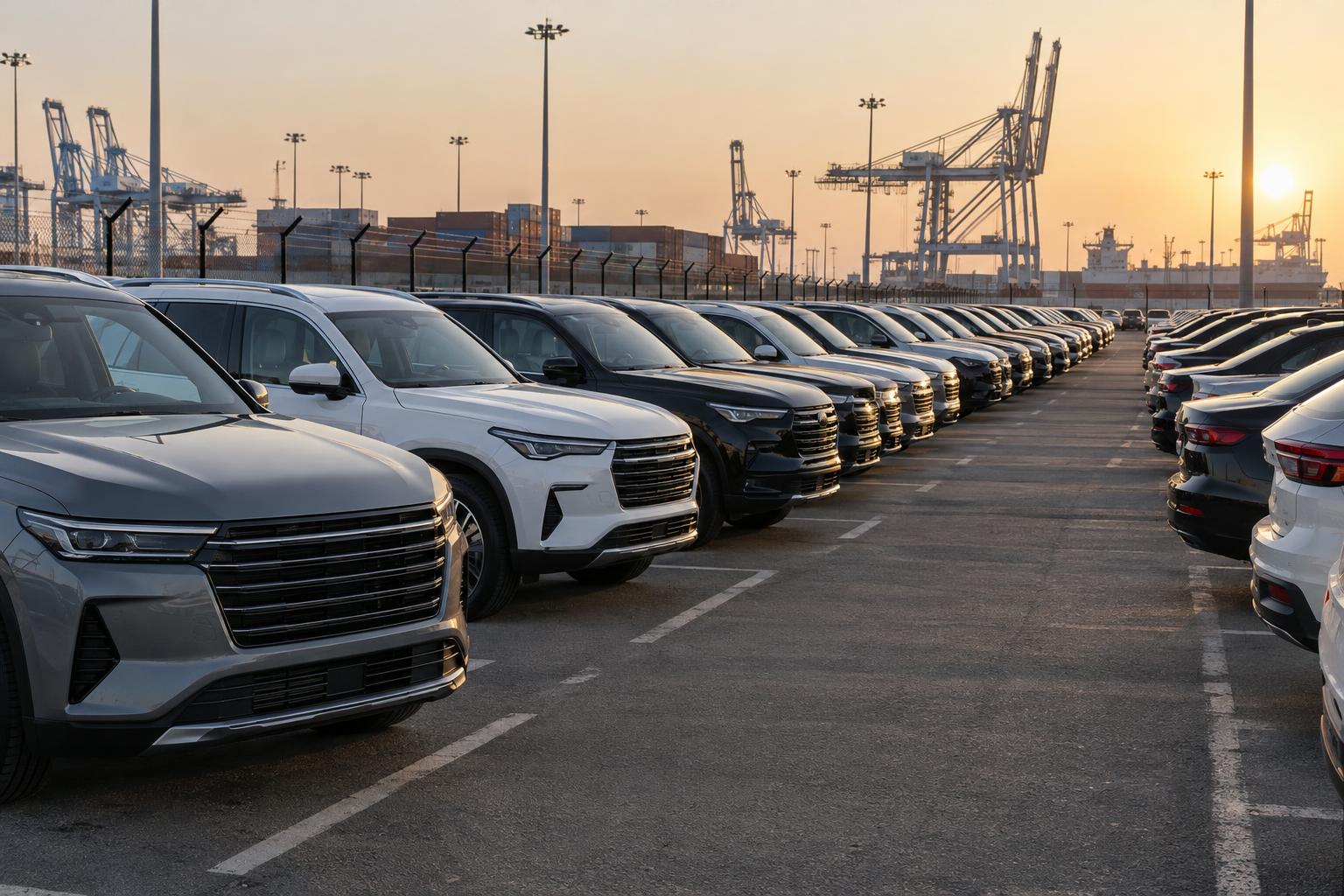
What the proposed facility would include
The proposed facility is expected to provide a range of automotive logistics functions rather than simply additional parking space. Its purpose would be to support vehicle handling from arrival through to distribution, with services designed around the needs of manufacturers, distributors, dealers and shipping customers.
Vehicle storage
Secure vehicle storage is a core requirement for any large automotive logistics hub. Cars may need to be held temporarily after unloading, while waiting for customs processing, dealer allocation, transport booking, accessory installation or onward shipping.
A purpose-built area can give importers better visibility of stock and reduce the need to move vehicles repeatedly between separate locations. This is particularly useful when distributors receive several variants, colours and model years in one shipment and need to allocate them across multiple showrooms or markets.
Pre-delivery inspection (PDI)
Pre-delivery inspection, usually shortened to PDI, is the process of checking a new vehicle before it is handed to a dealer or customer. It can include verifying the vehicle's exterior condition, fluid levels, tyre pressures, battery status, warning lights and basic operation of key equipment.
For a vehicle arriving by sea, PDI also helps identify any issues that may have occurred before or during transport. Carrying out this work close to the port can help distributors prepare cars before they move to dealer compounds, which may shorten the time between arrival and retail delivery.
Other value-added logistics services
Although final details of the facility have not been announced, automotive logistics sites commonly offer services beyond storage and basic inspection. These can reduce the number of handling stages required before a vehicle reaches a showroom or fleet customer.
- Vehicle condition reporting and damage assessment.
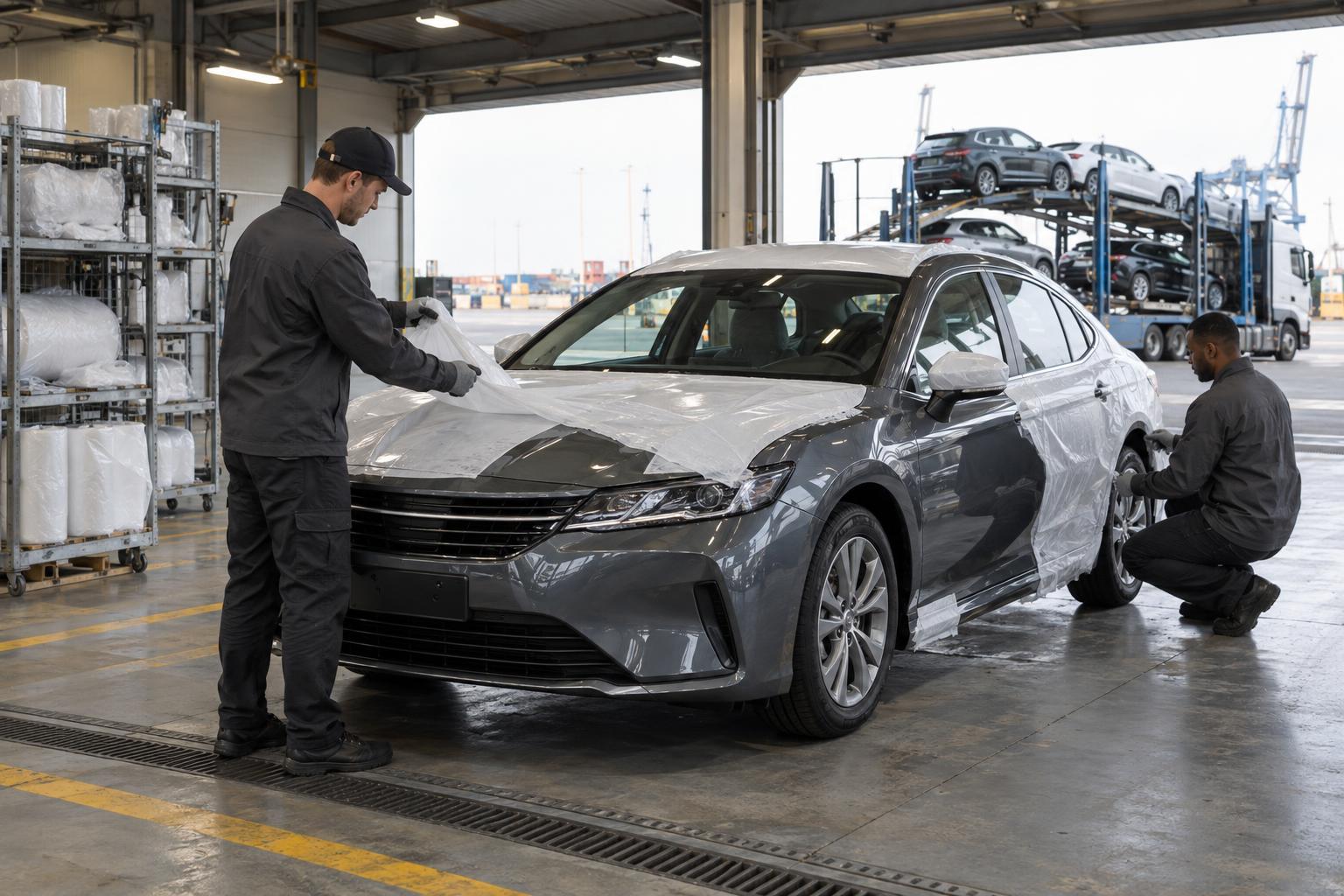
- Washing, cleaning and protective-film removal.
- Accessory fitting, where approved by the distributor or manufacturer.
- Labelling, documentation and inventory management.
- Preparation for road transport or onward sea shipment.
- Support for regional re-export and transhipment movements.

Background on the DP World and MOL partnership
DP World and MOL are building on an existing relationship in logistics and maritime transport. Their cooperation reflects a wider industry trend, where port operators, shipping lines and vehicle logistics specialists work more closely to improve cargo flow rather than treating each stage as a separate operation.
The companies' prior 2023 MoU
The two companies previously signed a memorandum of understanding, or MoU, in 2023. An MoU generally records an intention to cooperate and examine opportunities, but it does not necessarily commit either party to build a specific project.
That earlier agreement created a framework for discussions around logistics cooperation. The new term sheet is more directly connected to a potential automotive facility at Jebel Ali Port.
How the new term sheet builds on that relationship
A term sheet usually takes discussions further by setting out the main commercial principles that the parties intend to negotiate. It can cover the proposed scope of a project, responsibilities, investment considerations, operating arrangements and next steps, although the exact legal effect depends on the document and its individual clauses.
In practical terms, the agreement signals that DP World and MOL have moved beyond a broad statement of cooperation and are assessing a specific automotive logistics opportunity. It does not by itself mean that construction has begun or that the final facility design, capacity and opening date have been confirmed.
What a term sheet means at this stage
For readers following the announcement, the key point is that a term sheet is an important milestone but not a completed project. The parties would still need to progress through detailed planning, commercial agreements, approvals and implementation work before the facility can enter service.
- It indicates serious intent: the companies have identified a project worth advancing.
- It is not a launch announcement: final specifications and operational timing may still change.
- It may lead to further agreements: detailed contracts typically follow if the project proceeds.
- It does not change current customer arrangements immediately: dealers and importers should rely on their existing logistics contacts for operational information.
Why this matters for the UAE and GCC automotive supply chain
The GCC remains heavily dependent on imported finished vehicles, even as local manufacturing and assembly initiatives grow. Faster, more integrated vehicle handling can help distributors manage supply more predictably, especially when demand changes quickly between brands, body styles and export destinations.
For the UAE, additional automotive logistics capability strengthens Dubai's position as a regional distribution hub. For neighbouring markets, it can offer another route through a well-connected port and logistics network, provided the final service offering, pricing and shipping schedules are competitive.
The potential benefits are mainly operational rather than immediately visible to private buyers. Better stock management, fewer unnecessary movements and quicker processing can help dealers plan deliveries more accurately, though they do not guarantee lower retail prices or eliminate delays caused by production, shipping or regulatory factors.
How it differs from recent single-brand manufacturing projects in the region
This proposed development is a logistics project, not a vehicle manufacturing plant. It is designed to handle finished vehicles arriving from factories elsewhere, whereas recent regional manufacturing announcements have often focused on producing or assembling vehicles for a particular brand.
A single-brand factory is tied to its own production line, supplier network and model programme. An automotive logistics facility can potentially serve multiple manufacturers, importers and destination markets, making it a broader piece of trade infrastructure.
- Manufacturing projects create or assemble vehicles locally.
- Automotive logistics facilities receive, store, inspect, prepare and distribute completed vehicles.
- Brand-specific projects are built around one manufacturer's requirements.
- Port logistics projects can support a wider mix of brands and vehicle types.
Key takeaways for dealers, importers and car buyers
Dealers and importers should view the DP World and MOL term sheet as a potential expansion of the region's finished-vehicle logistics capacity. The project could create more integrated handling options at Jebel Ali, particularly for businesses moving volume across the UAE and surrounding markets.
For buyers, the immediate effect is likely to be limited because the facility remains at the term-sheet stage. Over time, better logistics infrastructure may support more reliable dealer supply and delivery planning, but availability and pricing will still depend on manufacturing output, shipping capacity, demand, taxes, specifications and each distributor's own strategy.
- The proposed facility would focus on finished-vehicle logistics at Jebel Ali Port.
- Planned functions include storage, pre-delivery inspection and related value-added services.
- Jebel Ali handled nearly 1.1 million vehicles in 2025, highlighting its existing role in the trade.
- The agreement builds on a 2023 MoU between DP World and MOL.
- A term sheet is a step towards a possible project, not confirmation that a completed facility is already operating.
People Also Ask
What is pre-delivery inspection for a new car?
Pre-delivery inspection is a final check performed before a new vehicle is supplied to a dealer or customer. It typically covers the car's condition, essential fluid levels, tyres, battery, warning lights and operation of key features.
Why is Jebel Ali important for vehicle imports?
Jebel Ali is a major regional port with extensive shipping connections, road access and logistics facilities. It serves both UAE vehicle demand and re-export flows to other GCC, African and international markets.
Does a term sheet mean the new Jebel Ali facility is confirmed?
Not necessarily. A term sheet sets out key proposed terms and indicates that parties are progressing discussions, but final agreements, approvals and implementation work may still be required.
Will the proposed facility make new cars cheaper in the UAE?
There is no direct guarantee that it will reduce retail prices. Improved logistics can help distributors operate more efficiently, but vehicle prices are also affected by factory costs, shipping, exchange rates, taxes, demand and dealer pricing decisions.
Is the DP World and MOL project a car manufacturing plant?
No. The proposed project is an automotive logistics facility for handling completed vehicles. It would support activities such as storage, inspection and distribution rather than manufacturing or assembling cars.


