Stellantis Middle East has unveiled the redesigned Peugeot 408 for the GCC, giving the fastback a sharper visual identity while retaining the practical, elevated driving position that sets it apart from conventional sedans. The update is aimed at buyers who want a distinctive European alternative to compact SUVs and traditional saloons, with Saudi Arabia expected to be among the key regional markets.
The refreshed 408 focuses on styling, equipment and brand identity rather than changing the model’s basic formula. It remains a five-door fastback with coupe-inspired proportions, a spacious cabin and a turbocharged petrol powertrain suited to daily GCC driving.
Stellantis Middle East unveils the redesigned Peugeot 408 for the GCC
The Peugeot 408 occupies an unusual space in the market. It is lower and more car-like than an SUV, but its raised ride height and crossover-inspired stance give it a more commanding feel than a regular sedan. That combination could appeal to GCC buyers looking for something less familiar than the usual compact premium crossover.
For the region, the redesigned 408 is positioned as a style-led model that also needs to work in real-world conditions, including long motorway journeys, high ambient temperatures and urban commuting. Peugeot’s local rollout will depend on each market’s distributor plans, but the GCC launch signals the brand’s intention to strengthen its presence in the fastback and crossover segments.
What is new in the design of the Peugeot 408?
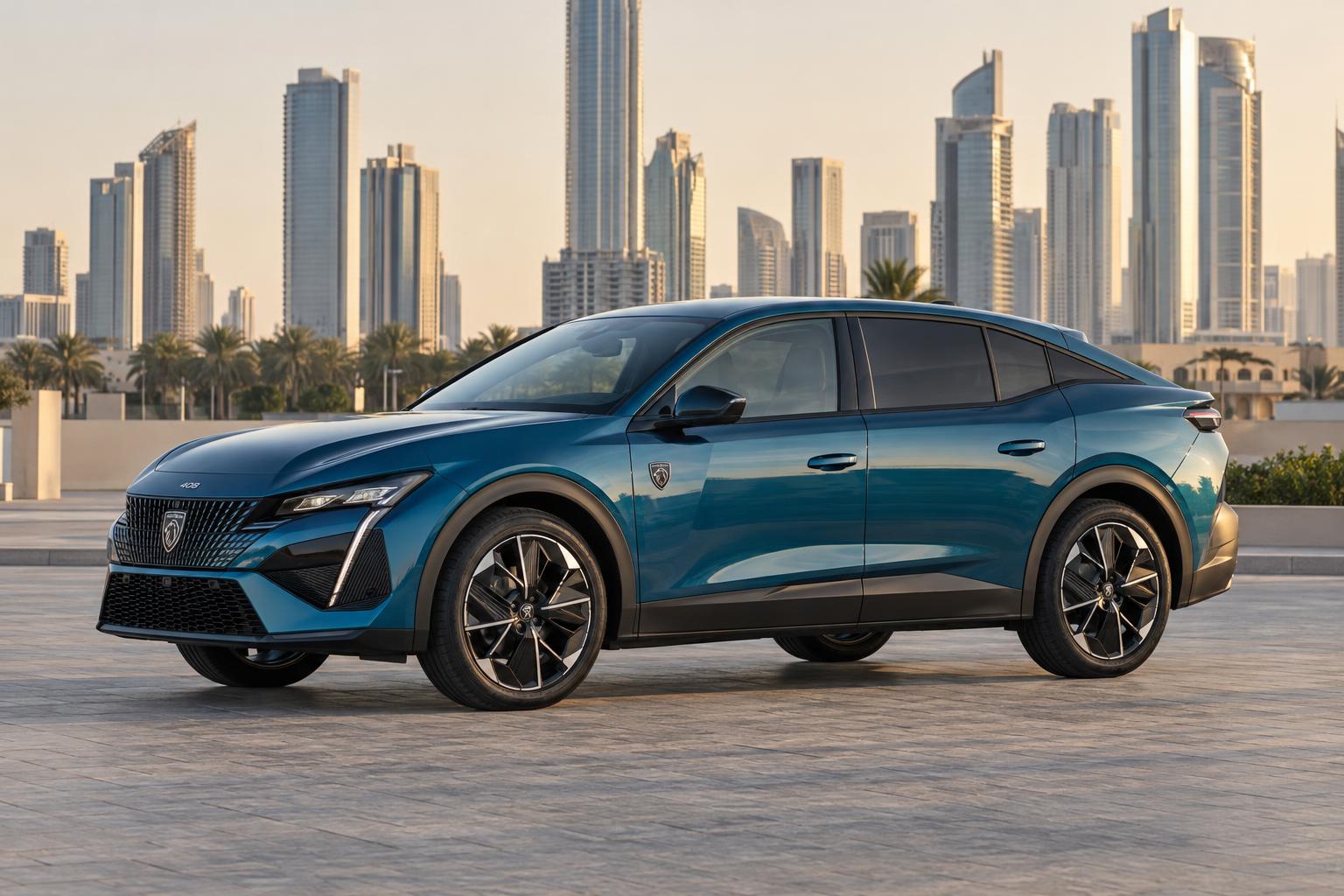
The updated 408 builds on the dramatic shape of the existing car, with a long bonnet, sweeping roofline and wide rear haunches. Its design is intended to look more assertive from the front and more recognisable at night, without turning the car into a full SUV.
Key visual elements include the latest Peugeot front-end treatment, prominent grille detailing, slim lighting signatures and a more sculpted rear profile. The car’s fastback silhouette remains central to its character, balancing a sporty appearance with the usefulness of a rear hatch.
- A low, coupe-like roofline with five-door practicality
- Raised body proportions compared with a conventional saloon
- Peugeot’s distinctive three-claw lighting signature
- Sharper front and rear styling details
- Large alloy wheel designs, depending on trim level
This is not a redesign that makes the 408 look conservative. Its appeal will remain strongest among buyers who value standout design and do not want their next vehicle to look like every other crossover in a parking area.
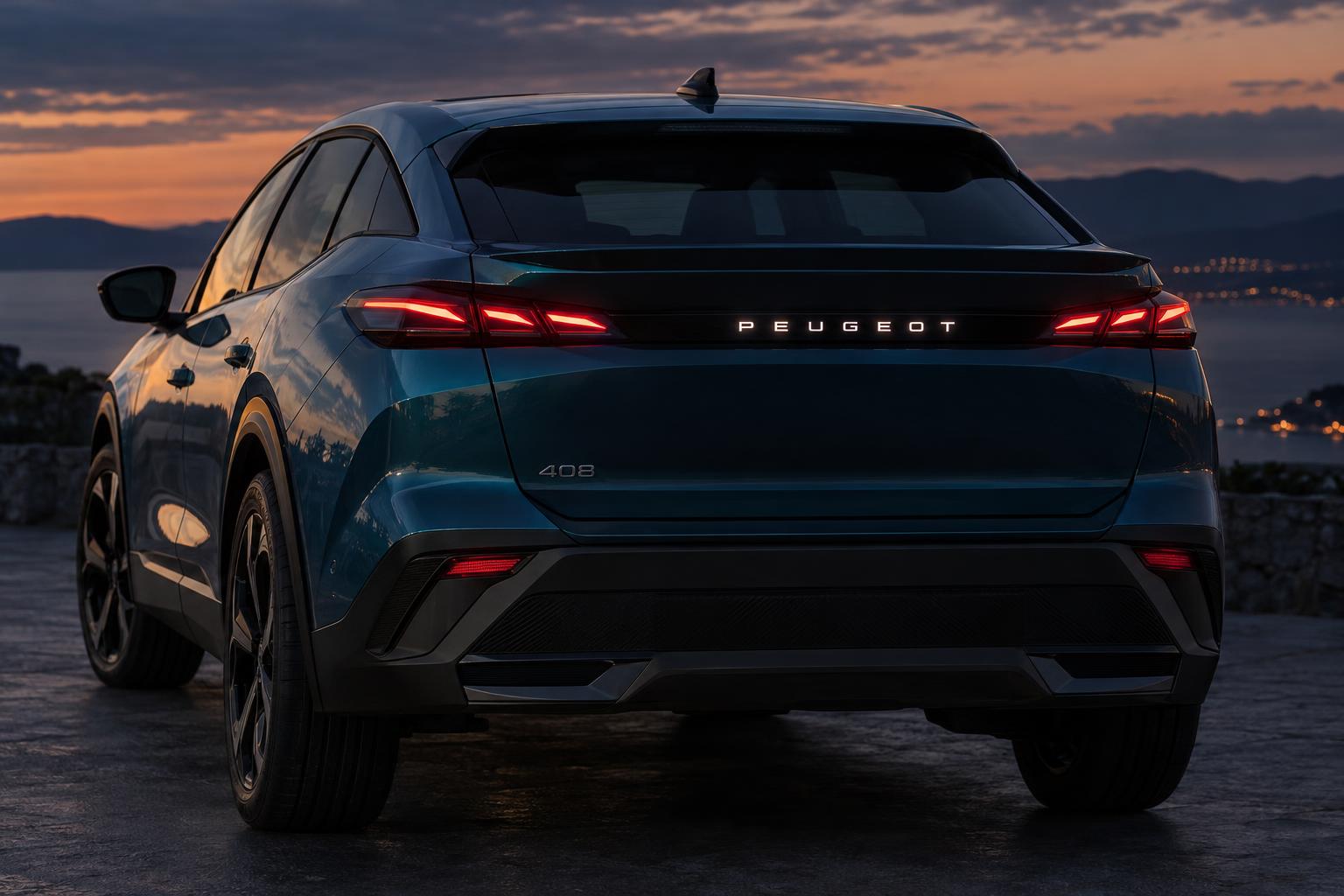
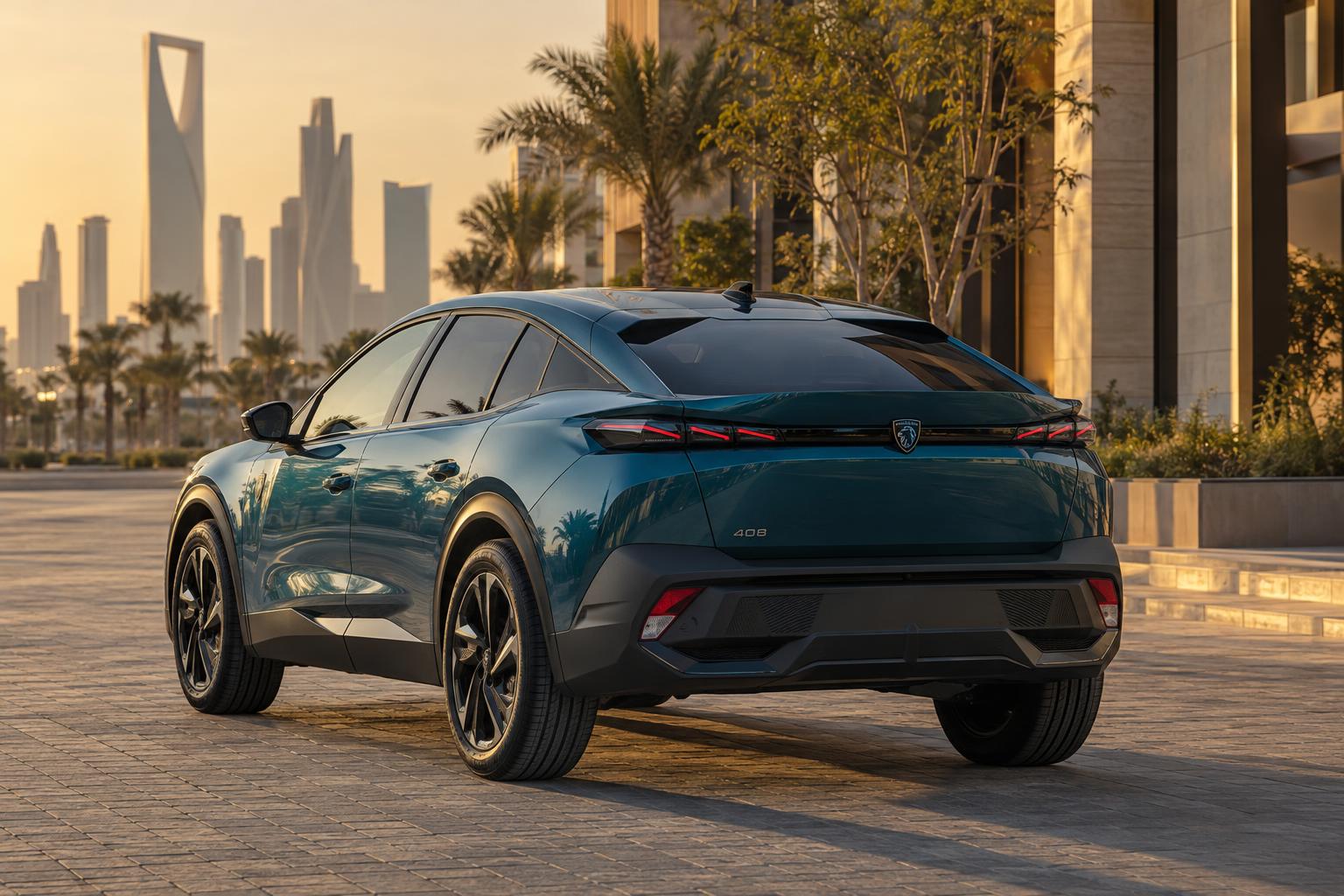
Illuminated rear Peugeot lettering and the exclusive Flare Green colour
One of the most noticeable details of the redesigned model is the illuminated Peugeot lettering across the rear. Rather than relying only on a conventional badge, the feature gives the 408 a more modern night-time signature and helps emphasise the width of the tailgate.
The updated range also introduces an exclusive Flare Green exterior colour. This is a bold choice compared with the white, grey, black and silver finishes that dominate GCC new-car sales, and it suits the 408’s expressive styling particularly well.
Buyers should still check local specification sheets before ordering. Exterior colours, wheel designs and illuminated details can vary between markets and trim levels, especially when cars are introduced at different times across the GCC.
What does Peugeot's ‘Serious and Wow’ positioning mean?
Peugeot describes its direction as “Serious and Wow”, combining practical ownership qualities with more emotional design. In simple terms, the brand wants its cars to be credible daily transport while also feeling distinctive enough to create a strong first impression.
For the 408, the “serious” element relates to usability, technology, efficiency and the backing of the Stellantis regional network. The “wow” element comes from the fastback shape, detailed lighting, bold colours and an interior designed to feel different from more conventional rivals.
This positioning matters because the 408 is not aimed purely at buyers comparing boot capacity or horsepower figures. Its value proposition depends on the entire experience, from its styling on the road to the layout of Peugeot’s i-Cockpit cabin.
Engine and performance details of the updated 408
GCC-market engine availability should be confirmed with the local Peugeot distributor, but the 408 is expected to continue with a turbocharged petrol engine paired with an automatic transmission. In many regional specifications, the model has used a 1.6-litre turbocharged four-cylinder petrol engine with an eight-speed automatic gearbox.
| Specification | Peugeot 408 GCC specification |
|---|---|
| Engine | 1.6-litre turbocharged petrol four-cylinder |
| Transmission | Eight-speed automatic |
| Driven wheels | Front-wheel drive |
| Power output | Up to approximately 215 hp, subject to market specification |
| Torque | Up to approximately 300 Nm, subject to market specification |
| Body style | Five-door fastback |
With this type of powertrain, the 408 should offer confident overtaking performance and relaxed highway cruising rather than being positioned as a dedicated performance car. Front-wheel drive also helps keep the mechanical package straightforward, although drivers who regularly travel on loose desert tracks should remember that this is a road-focused fastback, not an off-road SUV.
Official fuel-consumption figures, acceleration times and emissions ratings can differ by country and homologation. Buyers should ask for the final Saudi or GCC specification before making comparisons with rivals.
Allure and GT trim lines explained
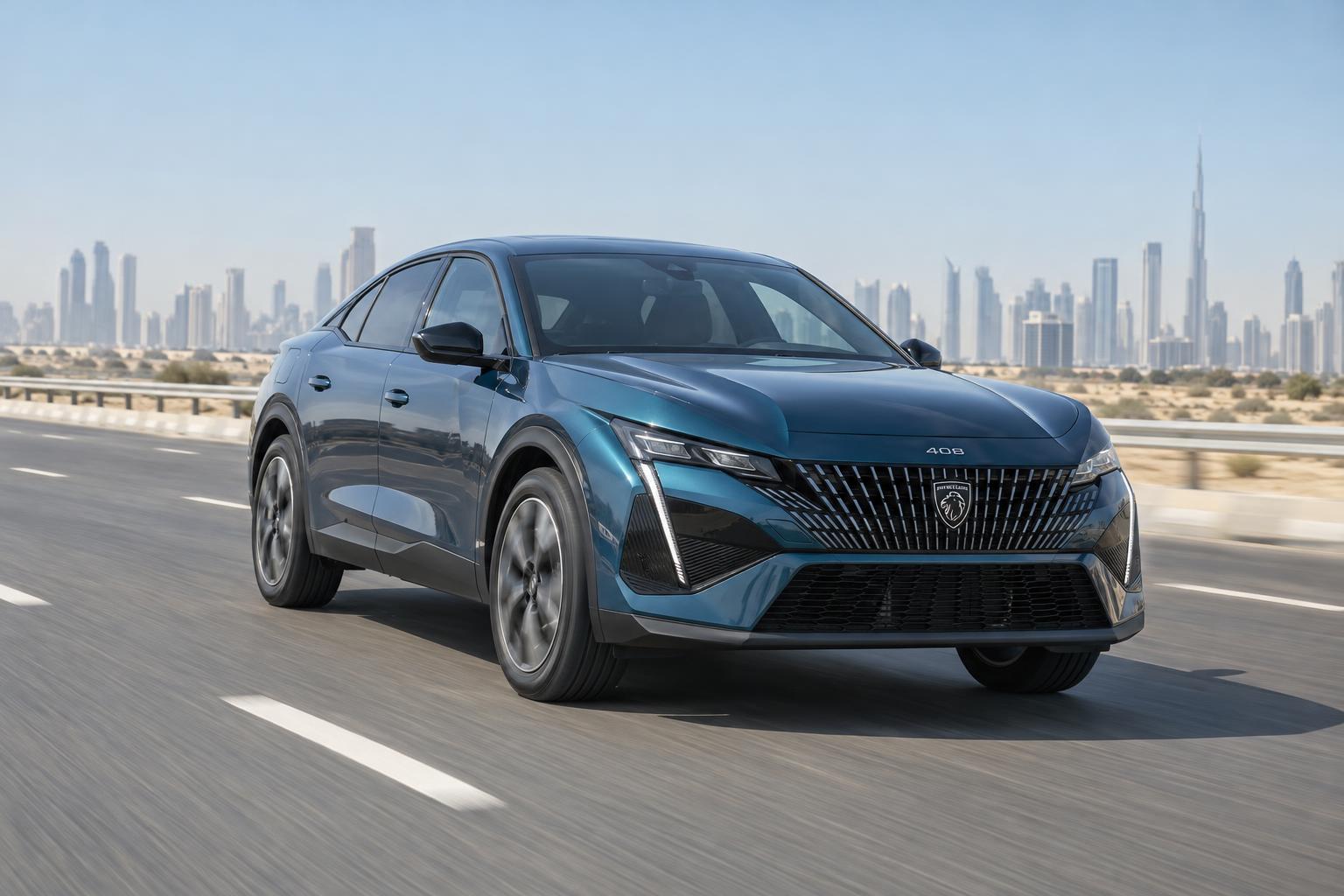
The redesigned 408 is expected to be offered in familiar Peugeot trim grades, including Allure and GT. The exact equipment list can differ across GCC markets, but the two grades generally provide a clear choice between a well-equipped entry point and a more appearance-focused, feature-rich version.
Peugeot 408 Allure
Allure is likely to suit buyers who want the 408’s core design and technology without prioritising every available cosmetic upgrade. It typically combines key comfort and connectivity equipment with a restrained exterior appearance.
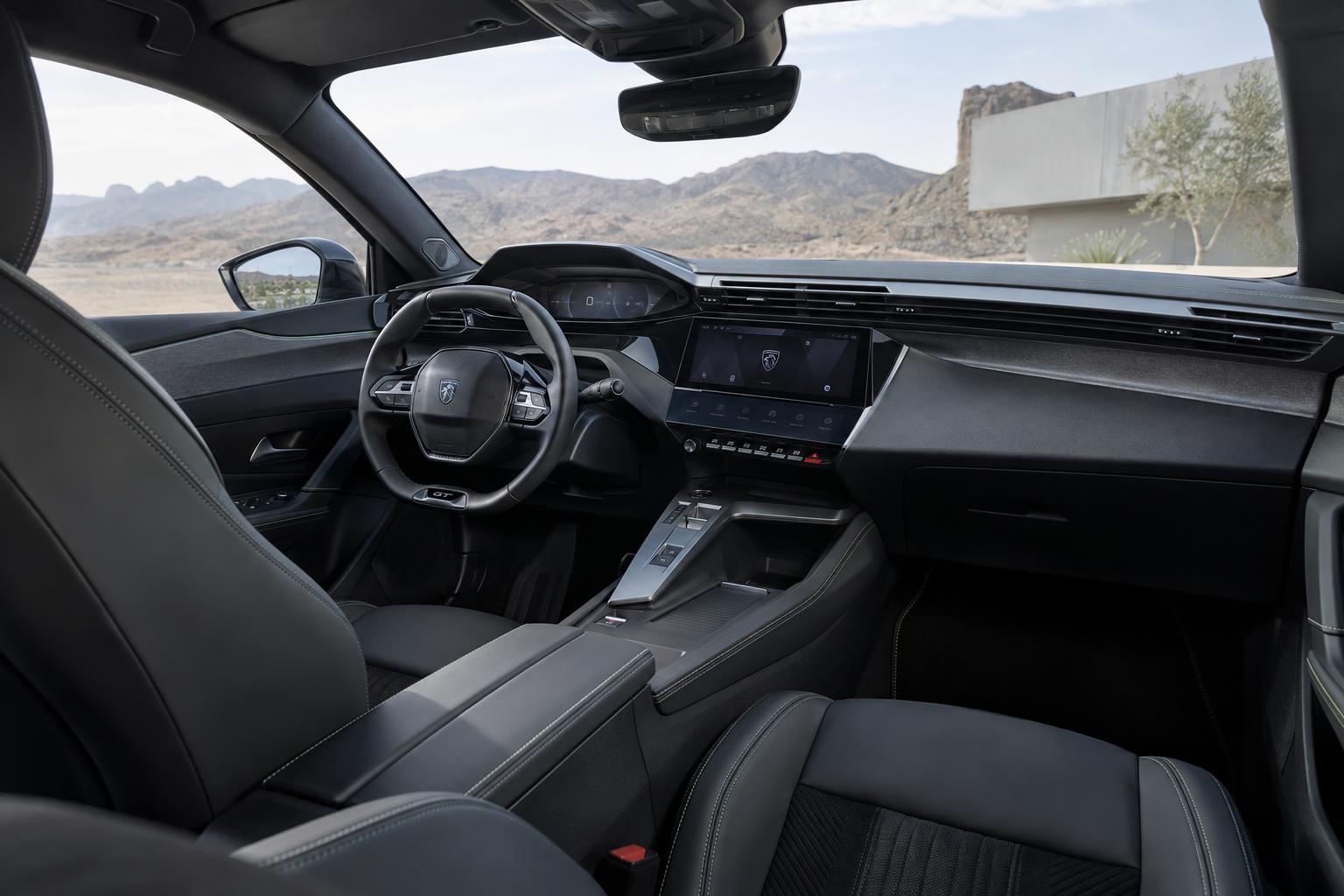
- Peugeot i-Cockpit digital driver display
- Central infotainment touchscreen
- Driver-assistance and safety systems, subject to local specification
- Alloy wheels and LED lighting
- Practical comfort features for everyday driving
Peugeot 408 GT
The GT grade is generally the version for buyers who want the most visually assertive 408. It often adds sportier exterior detailing, upgraded wheel designs, more premium cabin trim and additional convenience or driver-assistance features.
GT does not necessarily mean a separate high-performance engine in every market. It is primarily an equipment and styling grade, so it is worth comparing the confirmed local specification rather than assuming it will have more power than Allure.
When will the Peugeot 408 launch in Saudi Arabia?
Stellantis Middle East has confirmed the redesigned Peugeot 408 for the GCC, with Saudi Arabia expected to be an important market in the regional rollout. However, buyers should wait for the official announcement from Peugeot Saudi Arabia for the confirmed showroom arrival date, available trims and local pricing.
Launch timing can vary between GCC countries because vehicles need to be allocated, certified and specified for each market. Interested buyers should register their interest with an authorised Peugeot dealer, particularly if they want a specific trim, colour or early delivery allocation.
It is also sensible to ask about warranty coverage, service intervals, roadside assistance and the availability of replacement parts. These ownership details can be just as important as the headline specification when choosing a newer or less common body style.
What this update means for GCC buyers considering the 408
The redesigned 408 gives GCC buyers another option between a sedan and a compact SUV. Its key attraction is not maximum off-road capability or seven-seat practicality. Instead, it offers an elevated, stylish fastback format with a more distinctive identity than many mainstream crossovers.
It could make sense for drivers who spend most of their time on tarmac, value motorway comfort and want a useful hatchback opening for luggage. The rear opening should be more convenient than a conventional saloon boot for larger shopping bags, suitcases and everyday family items.
- Consider the 408 if: you want an expressive European design, a practical five-door layout and a car-like driving position.
- Compare carefully if: you need genuine off-road ability, a third row of seats or the highest possible ground clearance.
- Before buying: confirm Saudi pricing, warranty terms, fuel requirements, standard safety equipment and aftersales support.
For many buyers, the final decision will come down to whether the 408’s design-led approach is worth choosing over an established compact SUV. The updated model strengthens that argument by adding a more distinctive rear signature, fresh colour choices and clearer separation between its Allure and GT grades.
People Also Ask
Is the Peugeot 408 an SUV or a sedan?
The Peugeot 408 is best described as a five-door fastback with crossover-inspired proportions. It is not a conventional SUV, but it sits higher than a typical sedan and has a practical rear hatch.
What engine does the Peugeot 408 use in the GCC?
GCC availability should be confirmed locally, but the 408 has commonly been offered with a 1.6-litre turbocharged petrol engine and an eight-speed automatic transmission. Final power figures can vary by market specification.
Will the redesigned Peugeot 408 be sold in Saudi Arabia?
Saudi Arabia is expected to be part of the GCC rollout. Peugeot Saudi Arabia will confirm the final launch date, trim levels, prices and stock availability.
What is the difference between Peugeot 408 Allure and GT?
Allure is generally the well-equipped mainstream grade, while GT adds sportier styling and typically more premium equipment. The exact differences depend on the local vehicle specification.
Is the Peugeot 408 suitable for desert driving?
The 408 is designed mainly for paved roads, city use and highway travel. It can handle normal uneven surfaces with care, but it is not intended for serious dune driving or demanding off-road use.