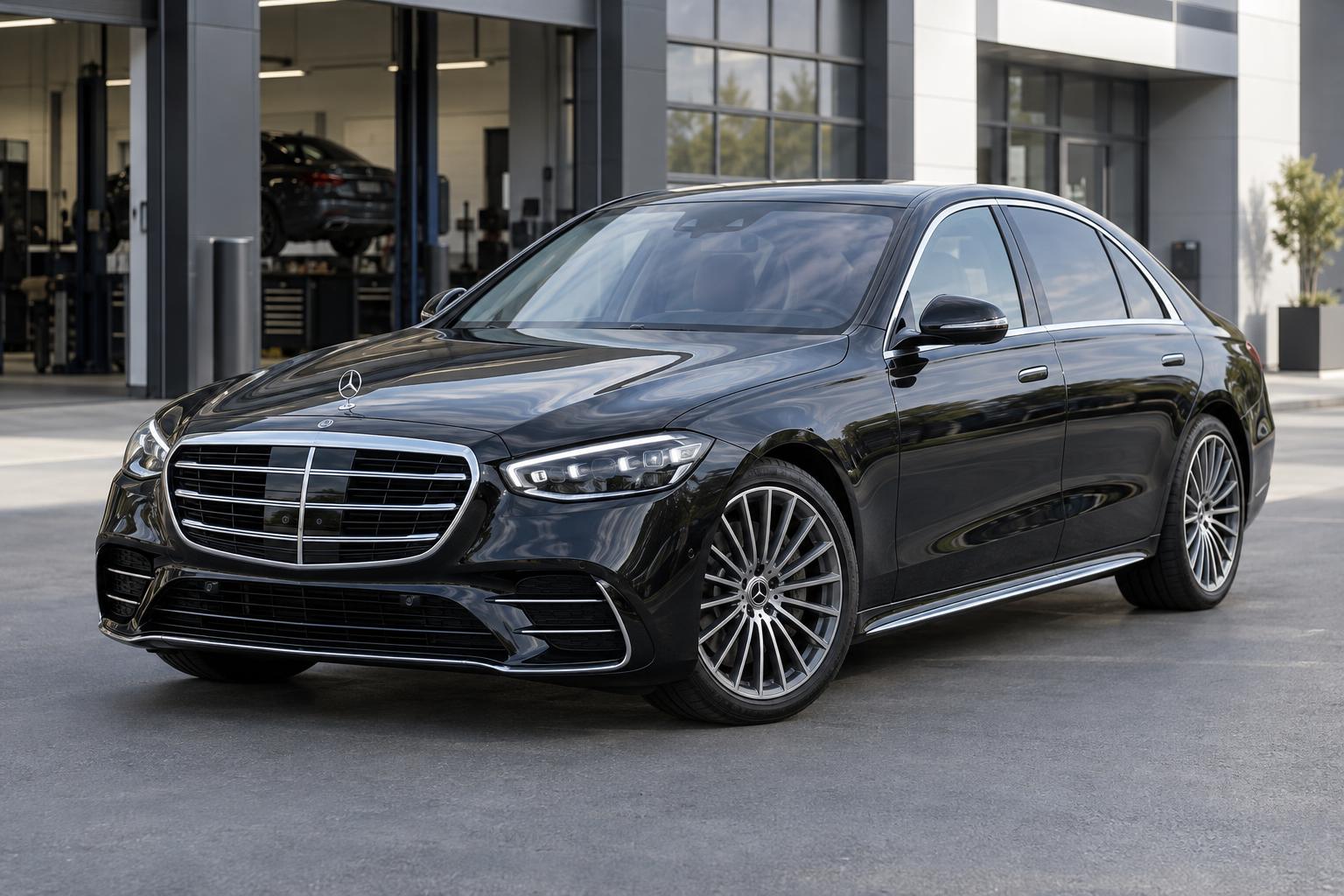
Mercedes-Benz has announced a new safety recall affecting more than 30,000 luxury sedans and performance models in the United States after identifying a potential brake hose problem. The issue could allow brake fluid to leak, which may reduce braking performance and increase the risk of a crash if it is not repaired.
The recall concerns certain S-Class, Mercedes-Maybach S-Class and Mercedes-AMG models. While the campaign is being handled through the US National Highway Traffic Safety Administration, owners in the GCC should still be aware of the defect, particularly if their vehicle was imported from North America or has a US-market vehicle identification number (VIN).
Mercedes-Benz files new recall for over 30,000 vehicles
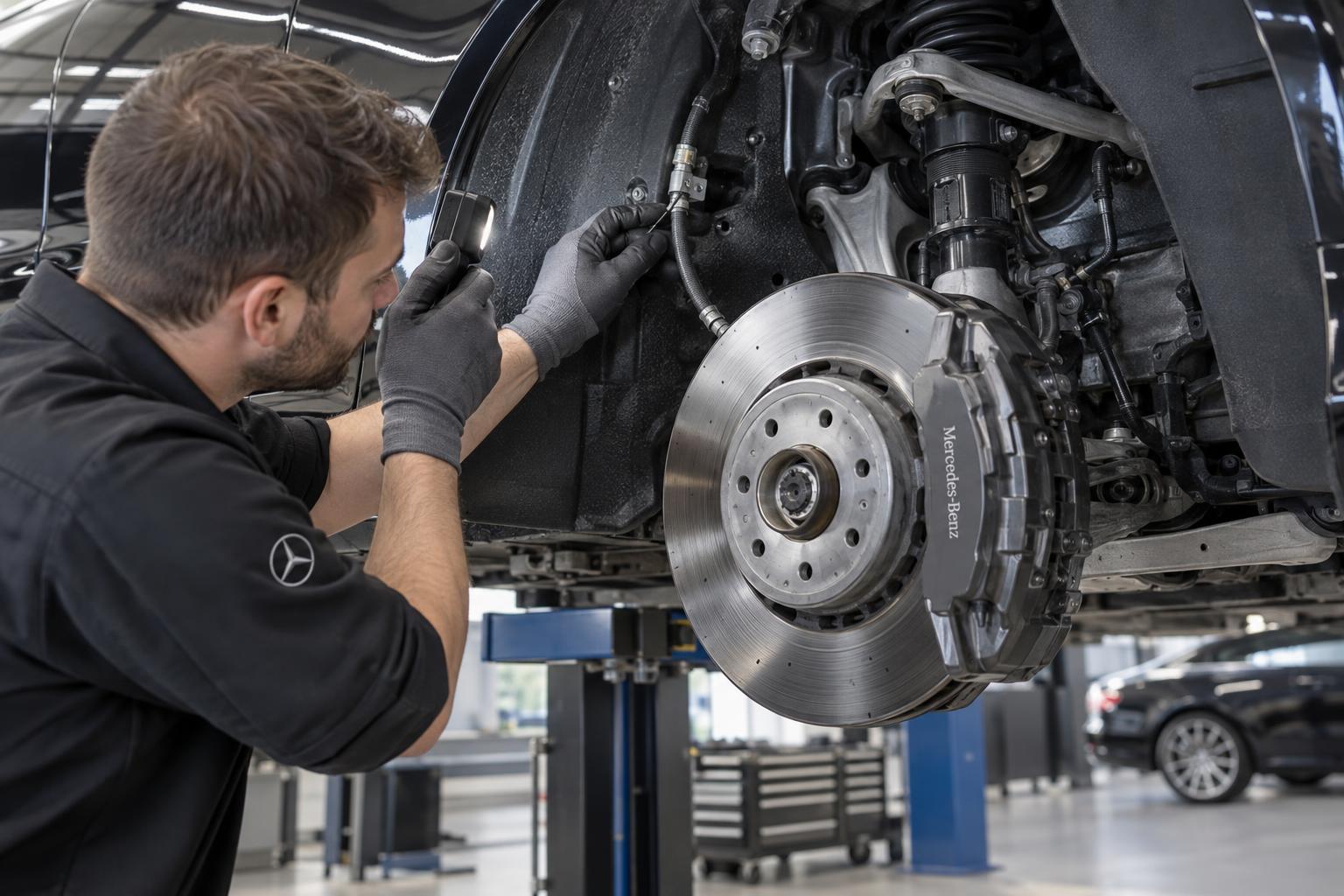
Mercedes-Benz USA is recalling more than 30,000 vehicles because a brake hose may not meet the manufacturer’s required durability standards. Over time, the affected hose could develop a leak, allowing brake fluid to escape from the hydraulic braking system.
Modern cars have warning systems designed to alert drivers to a loss of brake fluid or reduced braking performance. However, a dashboard warning should not be treated as a reason to continue driving normally. A brake-related warning requires immediate attention, especially in GCC driving conditions where high speeds, heavy traffic and high ambient temperatures can place extra demands on braking systems.
Which models are covered by the recall?
The recall covers selected Mercedes-Benz S-Class, Mercedes-Maybach S-Class and Mercedes-AMG variants. The exact affected production range depends on the individual vehicle, which is why checking the VIN is more reliable than relying only on the model year or badge.
| Model family | Potentially affected versions | Issue covered by the recall |
|---|---|---|
| Mercedes-Benz S-Class | Selected S-Class sedans | Possible brake hose leak |
| Mercedes-Maybach S-Class | Selected Maybach S-Class sedans | Possible brake hose leak |
| Mercedes-AMG S-Class models | Selected AMG performance variants | Possible brake hose leak |
Owners should not assume that every S-Class or Maybach is included. Recall campaigns are usually limited to vehicles built during specific production periods, often using component supplier records and factory build data to identify the affected VINs.

What is the brake hose defect and why does it matter?
Brake hoses carry pressurised brake fluid between fixed brake lines and moving suspension or brake components. They are designed to withstand heat, vibration, steering movement and repeated pressure changes throughout the life of the car.
If a hose leaks, the brake system can lose hydraulic pressure. Depending on the severity of the leak, a driver may notice a low brake-fluid warning, a softer or longer brake-pedal travel, reduced braking response, or fluid underneath the vehicle.
- Brake fluid level may fall, potentially triggering a warning message or warning light.
- Pedal feel may change, with the pedal travelling further before the brakes respond.
- Stopping distances may increase if braking performance is reduced.
- A leak can worsen over time, particularly if the vehicle continues to be driven without inspection.
A brake-fluid leak is a safety issue because the braking system relies on hydraulic pressure. Although many modern vehicles have split-circuit braking systems that may retain some braking ability after a fault, drivers should never depend on this as a safe way to continue using the car.
How Mercedes-Benz and NHTSA are handling the recall
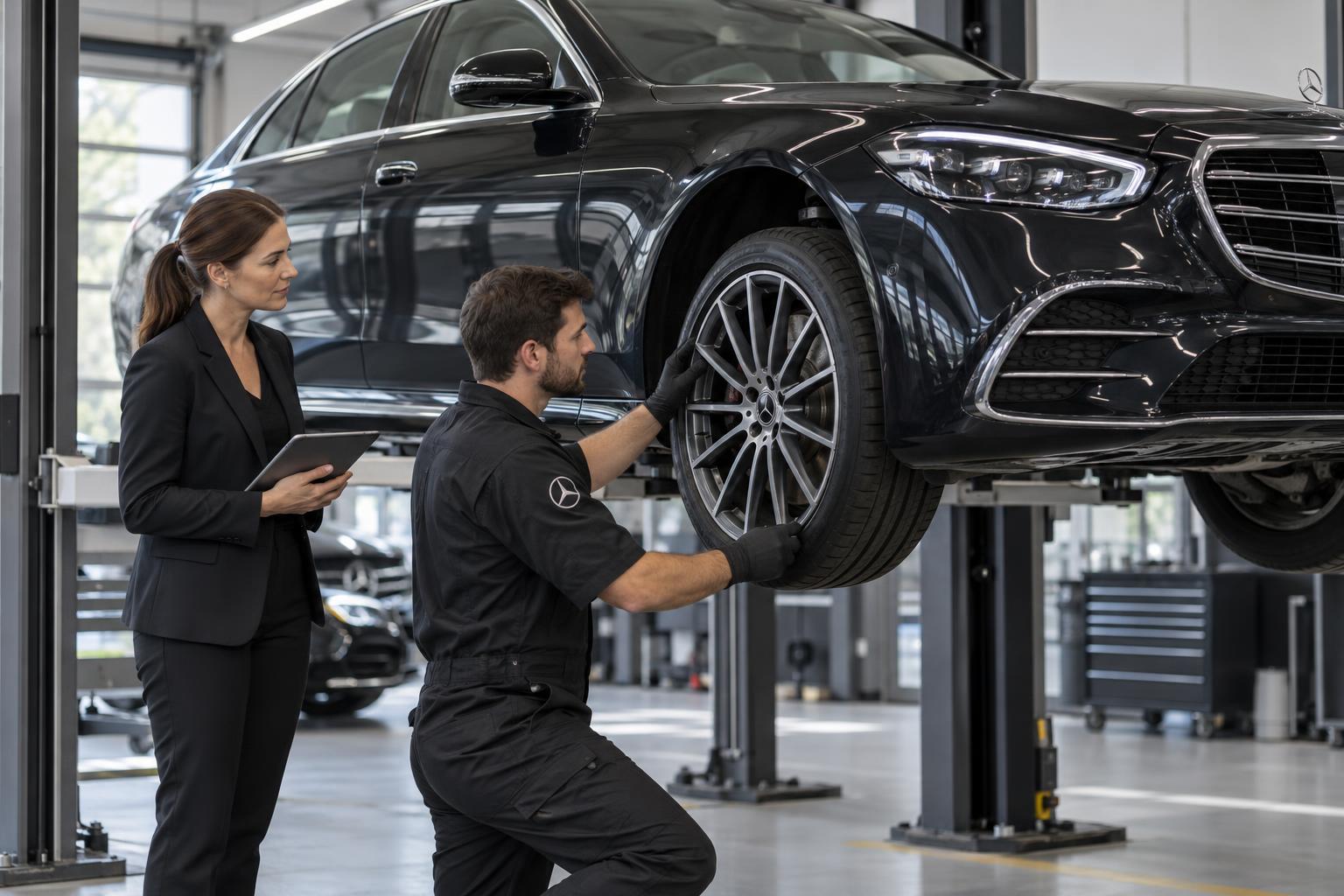
Mercedes-Benz will notify affected US owners and instruct them to take their vehicle to an authorised dealer. Technicians will inspect the relevant brake hose and replace it where necessary, with recall work generally completed at no charge to the owner.
NHTSA publishes recall information for vehicles sold in the United States and allows owners to search by VIN. This is useful for buyers considering a US-specification import, including cars that have entered the UAE, Saudi Arabia, Kuwait, Bahrain, Qatar or Oman through independent import channels.
Recall completion is normally recorded against the vehicle’s VIN. Before buying a used imported Mercedes-Benz, ask the seller for evidence that all outstanding safety campaigns have been completed, rather than accepting a verbal assurance.
Is this the same issue as the September GLE recall?
No. This campaign should be treated separately from the brake-related recall involving certain Mercedes-Benz GLE models reported in September. Even when two recalls involve braking components, the affected vehicle population, supplier parts, manufacturing period and repair procedure can be different.
Owners of a GLE should not assume their vehicle is covered by this newer campaign, and S-Class owners should not assume a previous GLE recall notice applies to them. The VIN remains the correct way to confirm recall status.
What should GCC owners of these models do?
GCC-specification cars are not automatically included in a US NHTSA campaign. Mercedes-Benz regional distributors may issue a separate service campaign or recall if locally supplied vehicles use the same affected parts. The safest approach is to contact an authorised Mercedes-Benz dealer in the country where the car is registered and provide the full VIN.
This is particularly important for vehicles imported from the US. A car may be physically located in Dubai, Abu Dhabi, Riyadh or Doha while still carrying an open US recall that has not yet been completed.
- Check the vehicle’s VIN through an authorised Mercedes-Benz dealer.
- For US imports, check the NHTSA recall database using the 17-character VIN.
- Arrange the repair promptly if an open brake-related recall is confirmed.
- Do not ignore a brake warning light, low brake-fluid message or unusual pedal feel.
- Ask a workshop to inspect the vehicle before long-distance travel if you suspect a fluid leak.
If a brake warning appears while driving, reduce speed carefully, leave extra space to traffic ahead and stop in a safe location as soon as possible. Avoid driving the vehicle further until it has been inspected, especially if the brake pedal feels unusually soft or braking force has changed.
Key takeaways for owners and buyers
The recall is a reminder that even high-end luxury cars can require safety-related repairs after they leave the factory. A recall does not necessarily mean a vehicle will develop the fault, but it means the manufacturer has identified a risk serious enough to warrant inspection or replacement.
- More than 30,000 vehicles are involved in the US campaign.
- The affected range includes selected S-Class, Maybach S-Class and AMG models.
- The concern is a potential brake hose leak that could reduce braking performance.
- GCC-market eligibility must be confirmed by VIN through a local Mercedes-Benz dealer.
- US-import vehicles should be checked for open NHTSA recalls before purchase or registration.
For used-car buyers, an open recall should not automatically rule out a purchase, provided the repair can be completed properly. It should, however, be treated as a negotiation point and resolved before the car is relied upon for daily driving.

People Also Ask
How do I check whether my Mercedes-Benz has an open recall?
Contact an authorised Mercedes-Benz dealer with the vehicle’s 17-character VIN. Owners of US-specification vehicles can also check the NHTSA recall database for open safety campaigns.
Can I drive a car with an open brake hose recall?
If there are no warning lights or braking symptoms, the vehicle may still be operational, but the recall should be completed as soon as possible. Do not drive the car if the brake pedal feels abnormal, brake fluid is leaking, or a brake warning appears.
Will Mercedes-Benz repair a recall free of charge?
Safety recall repairs are normally carried out free of charge by the manufacturer or its authorised dealer network. Coverage for imported vehicles can vary by market, so GCC owners should confirm the process with their local dealer.
Does a US Mercedes-Benz recall apply to GCC-spec cars?
Not always. A US recall may involve vehicles built for North America, while GCC-specification cars may be covered by a separate regional campaign, or may not use the same component. A VIN check is the most reliable answer.
What are the signs of a brake fluid leak?
Possible signs include a low brake-fluid warning, a soft or sinking brake pedal, reduced braking response, visible fluid near a wheel or under the car, and a brake warning light. Any of these symptoms should be inspected without delay.