
Oman’s Royal Oman Police has formed a committee to review driving licence conditions and heavy vehicle safety requirements under Decision No. 137/2026. The review could affect how driving licences are issued across all categories, with particular attention expected on the standards applied to truck and bus drivers, vehicle safety, and commercial transport operations.
For motorists and businesses, this is a policy review rather than an immediate announcement of new licence rules. However, transport operators, fleet owners and professional drivers should follow its progress closely because the eventual recommendations may lead to updated training, testing, medical, safety or compliance requirements.
ROP issues Decision No. 137/2026 to form a review committee
The Royal Oman Police decision establishes a formal committee to study current driving licence requirements and related road-safety rules. Its role is to assess whether existing conditions remain appropriate for Oman’s road network, vehicle fleet and transport sector.
The committee’s work is expected to cover the full licensing framework rather than being limited to one type of driver. Still, heavy vehicles are an important area because a truck or bus incident can have more serious consequences than a typical passenger-car collision.
- Conditions for issuing different categories of driving licences
- Requirements relevant to truck and bus drivers
- Heavy vehicle roadworthiness and operating safety considerations
- Alignment with recognised international safety practices
- Potential measures to improve compliance and reduce risk on the road
Who leads the committee?
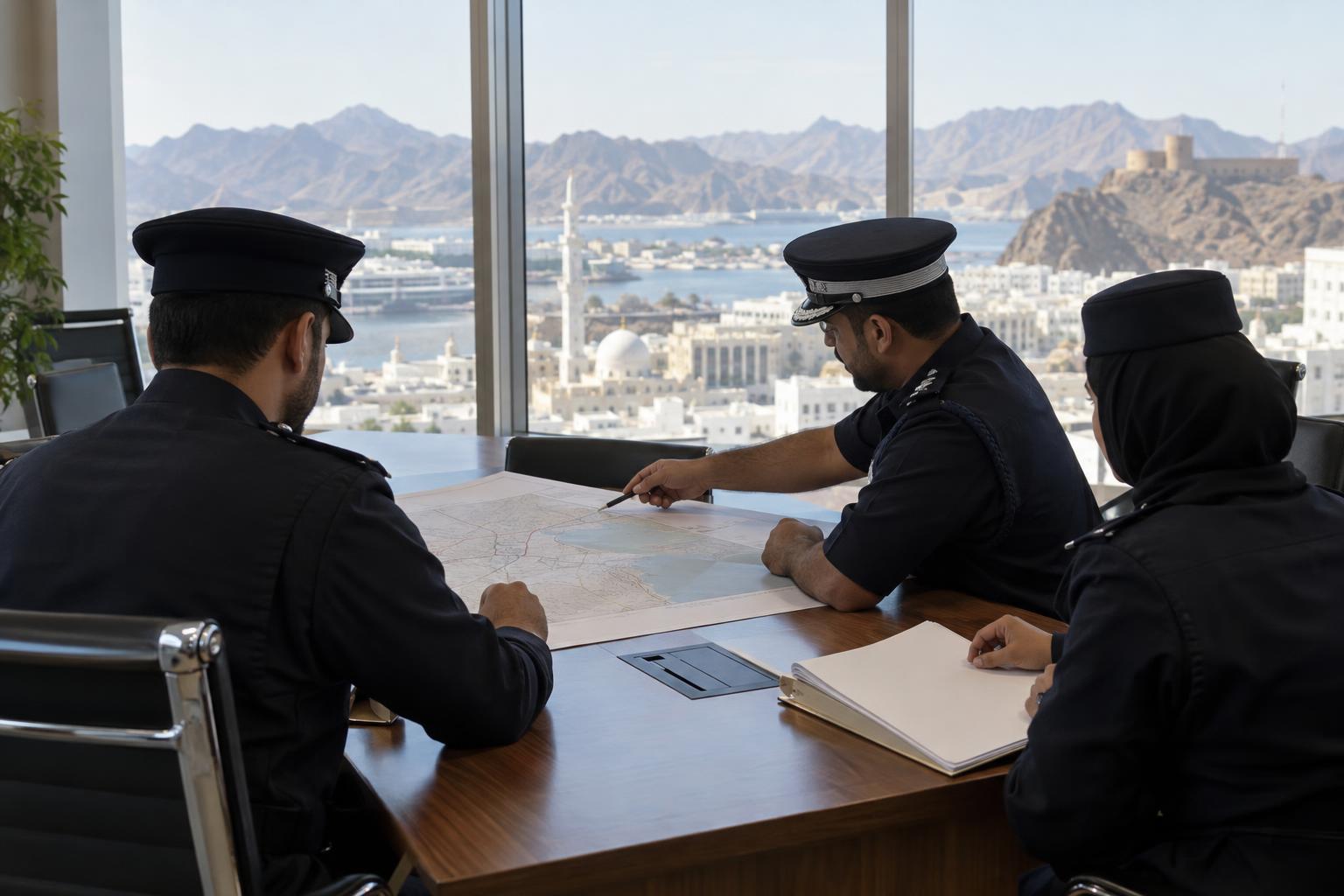
The committee was formed by order of the Inspector General of Police and Customs. It is led by the Director General of Traffic, placing the review under the authority responsible for traffic regulation, road safety and driver licensing matters in Oman.
This structure is significant because licence policy is closely connected to enforcement, vehicle registration, traffic investigations and driver behaviour. A review led through the traffic directorate can consider how any revised rules would work in practice, not only how they would appear on paper.
What the committee will examine
A central part of the committee’s mandate is reviewing the conditions for issuing all categories of driving licences. In practical terms, that may involve examining the eligibility standards, tests and supporting requirements used before a driver is authorised to operate a particular class of vehicle.
Driving licence categories exist because the skills required to drive a light car are not the same as those needed to operate a loaded truck, coach or other commercial vehicle. A review can assess whether each category properly reflects the vehicle’s size, weight, passenger capacity and operational risk.
Licence issue conditions may be reassessed
The decision does not itself set out a new list of rules. The committee will first study the existing system and may then make recommendations. Any resulting changes would need to be announced through the relevant official channels before they could take effect.
Areas commonly considered in licence reviews may include:
- Minimum eligibility requirements for each licence class
- The format and scope of theory and practical tests
- Driver experience requirements before upgrading to heavier categories
- Medical fitness and vision standards where applicable
- Training quality and assessment of defensive-driving skills
- Rules for licence renewal, suspension or requalification
Why heavy vehicle licences are a key focus area
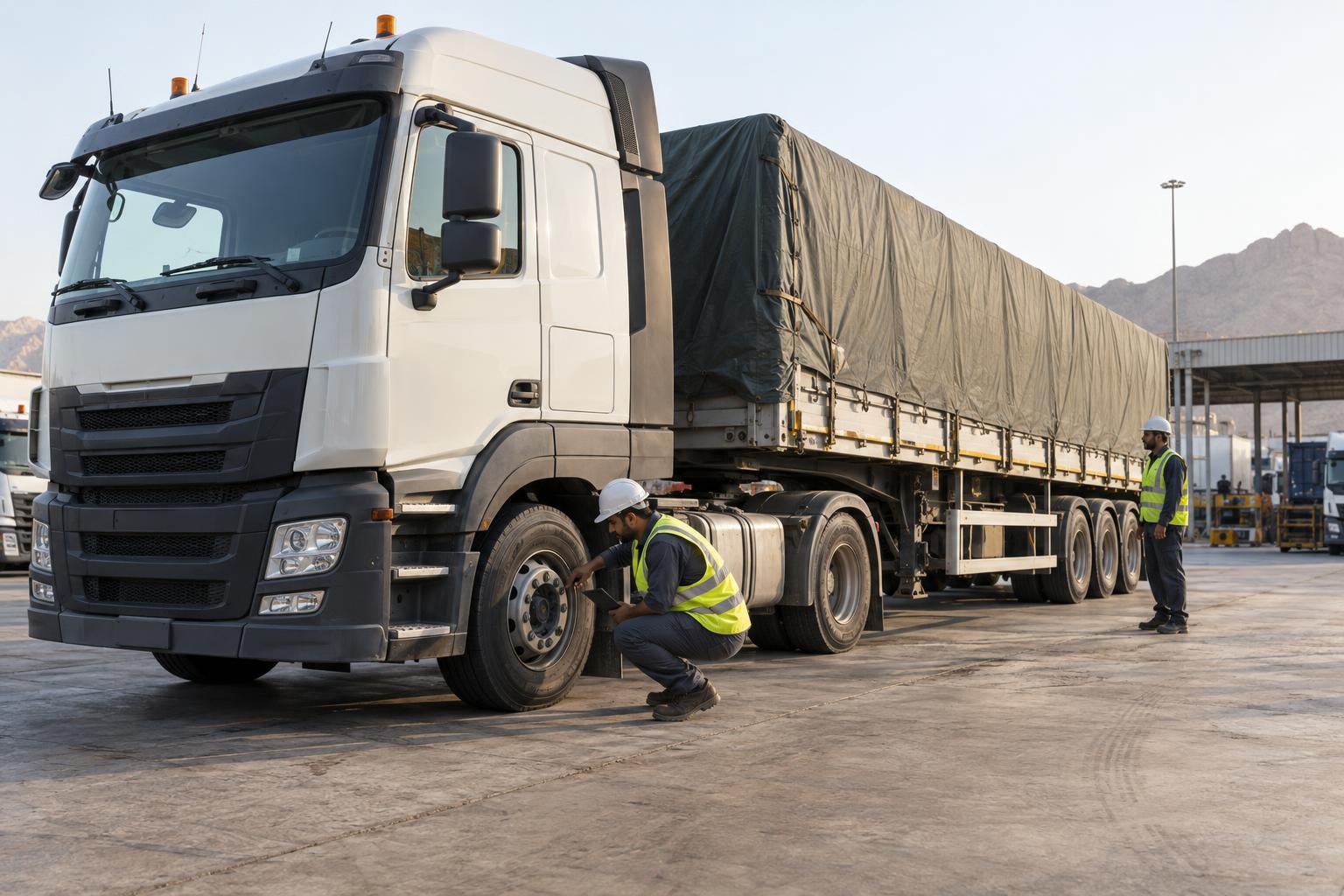
Heavy vehicles require more space, more stopping distance and more careful planning than passenger cars. Their size also creates larger blind spots, while their weight can make sudden braking, lane changes and downhill driving more difficult, especially when carrying cargo or passengers.
A commercial driver must manage more than basic vehicle control. They may need to account for loading limits, cargo security, route restrictions, fatigue, vehicle inspections and the behaviour of smaller vehicles around them. These factors make specialist licensing standards particularly important.
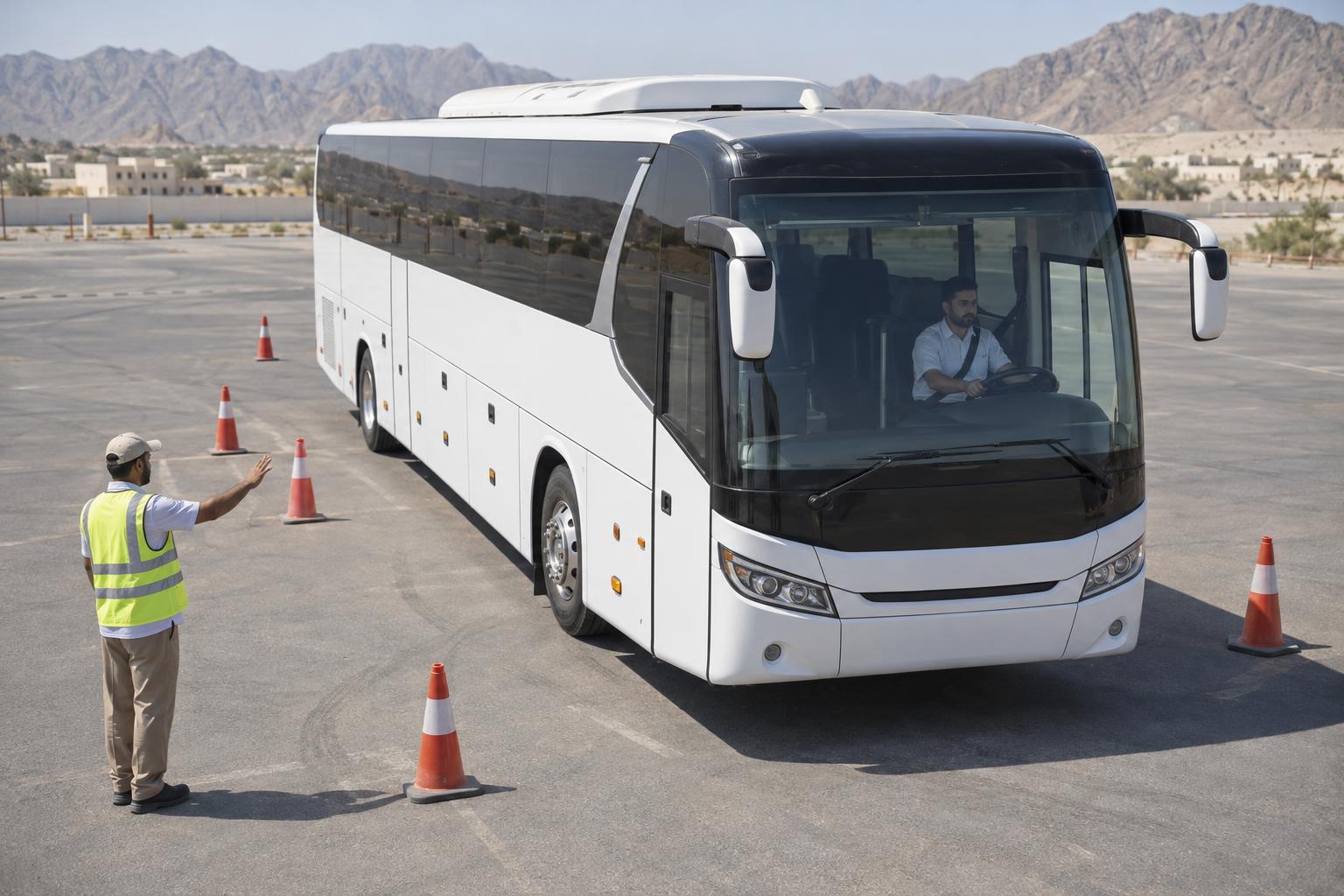
Truck and bus risks are different from light-vehicle risks
A heavily loaded truck can take substantially longer to stop than a car, and an incorrectly secured load can shift during a turn or emergency manoeuvre. Buses also carry responsibility for passengers, requiring careful operation around stops, pedestrians, school areas and congested roads.
Oman’s roads include urban routes, busy freight corridors, mountain sections and long-distance highways where heat, distance and driver fatigue can all influence safety. A licensing review can examine whether professional drivers are adequately prepared for these real-world conditions.
Assessing truck and bus safety requirements against international best practice
The committee is expected to assess heavy vehicle safety requirements with reference to international best practice. This does not necessarily mean Oman will copy another country’s rules exactly. International approaches can instead provide a benchmark for identifying gaps, improving training and setting proportionate standards for local conditions.
Well-established heavy vehicle safety systems often focus on the driver, the vehicle and the operator. Safer outcomes usually depend on all three working together: a properly qualified driver, a roadworthy vehicle and a company that manages its fleet responsibly.
What international best practice can include
- More specialised testing for commercial vehicle licence categories
- Training on braking distance, blind spots and safe overtaking
- Pre-trip vehicle inspection procedures
- Clearer requirements for cargo loading and securing
- Fatigue-management measures for long-distance driving
- Stronger attention to tyres, brakes, lights and safety equipment
- Operator responsibilities for maintenance and driver supervision
These measures are not confirmed outcomes of the Oman review. They are examples of areas that safety-focused licensing and commercial transport frameworks often consider when addressing the risks associated with large vehicles.
Why is Oman reviewing heavy vehicle safety rules now?
Road-safety rules need periodic review because transport patterns, vehicle technology and commercial operations change over time. Growth in logistics, construction, passenger transport and cross-border freight can increase the number of heavy vehicles using major roads, making a current assessment of standards sensible.
Heavy vehicle incidents can also have a disproportionate impact because of vehicle mass, cargo, passenger numbers and the potential to block important routes. Reviewing the rules before problems become widespread is a practical way to support safer roads for professional drivers and other road users.
The decision also reflects the importance of keeping licence requirements relevant to modern driving conditions. Advanced driver-assistance systems, improved braking technology and fleet-monitoring tools may help safety, but they do not remove the need for capable, properly trained drivers.
What this could mean for licence holders and transport operators
Current licence holders should not assume that their licence status has changed. The committee has been formed to conduct a review, and no new requirements should be treated as final unless they are officially issued by the relevant Omani authorities.
That said, professional drivers and businesses can use this period to make sure their records, training and vehicles are in good order. Operators that already follow strong safety routines will be better prepared if future requirements place greater emphasis on documented training, inspections or operational controls.
Practical steps for commercial drivers
- Check that your driving licence category matches the vehicle you operate.
- Keep licence, residency and employment documents valid and available.
- Follow pre-trip checks for tyres, brakes, lights, mirrors and warning equipment.
- Do not exceed vehicle, axle or cargo limits.
- Secure loads correctly before starting a journey.
- Allow for longer braking distances and wider turning space.
- Report mechanical faults promptly rather than continuing to operate an unsafe vehicle.
What fleet operators should review
Transport companies may wish to assess whether their internal procedures are consistent, recorded and easy for drivers to follow. This includes maintenance schedules, vehicle inspection forms, driver induction, accident reporting and fatigue-management practices.
Businesses should also avoid relying solely on a driver’s licence as evidence of competence for every task. A valid licence is essential, but operators may need further familiarisation for specialised equipment, unusual loads, passenger routes or particular vehicle types.
What happens next in the committee review process?
The committee will review the relevant licensing and heavy vehicle safety conditions, compare them with suitable safety practices and develop recommendations. The exact timetable, membership details, consultation process and implementation dates will depend on official decisions that follow the committee’s work.
Possible outcomes could range from minor administrative updates to more substantial changes in licensing, testing or commercial vehicle oversight. It is also possible that the review identifies areas where existing rules are adequate but enforcement, awareness or operator compliance needs stronger attention.
Possible outcomes of the review
- Updated conditions for issuing or renewing certain licence categories
- Revised practical or theory test requirements
- Additional training expectations for heavy vehicle drivers
- More detailed safety requirements for trucks and buses
- New guidance for fleet operators and commercial transport companies
- Improved alignment between licensing, vehicle inspections and enforcement
Until formal rules are published, drivers should rely on announcements from the Royal Oman Police and other competent Omani authorities. Businesses should be cautious about treating unofficial claims on social media or messaging groups as confirmed regulatory changes.
Key takeaways for Oman motorists and commercial drivers
- Decision No. 137/2026 forms a committee to review driving licence conditions and heavy vehicle safety requirements.
- The committee is led by the Director General of Traffic under the order of the Inspector General of Police and Customs.
- The review covers all driving licence categories, with trucks and buses a major area of focus.
- Heavy vehicle rules may be assessed against international safety practices.
- No specific new licence requirement should be assumed until it is officially announced.
- Professional drivers and fleet operators should use the review period to strengthen training, inspections and safety procedures.
People Also Ask
What is Royal Oman Police Decision No. 137/2026?
Decision No. 137/2026 forms a committee to review conditions for issuing driving licences and to examine heavy vehicle safety requirements in Oman.
Who heads the driving licence review committee in Oman?
The committee is headed by the Director General of Traffic, following an order issued by the Inspector General of Police and Customs.
Will Oman introduce new heavy vehicle licence rules immediately?
No immediate new rules are confirmed by the committee’s formation. The committee will review the current framework and may submit recommendations for later official approval and announcement.
Why are truck and bus drivers subject to different licence requirements?
Trucks and buses are larger, heavier and more difficult to manoeuvre than passenger cars. Their drivers need skills related to braking distance, blind spots, load or passenger safety and commercial operating conditions.
What should transport companies in Oman do now?
Transport companies should ensure that drivers hold the correct licence categories, vehicles are properly maintained, loads are secured and safety procedures are documented. They should also monitor official Royal Oman Police announcements for any future regulatory changes.