

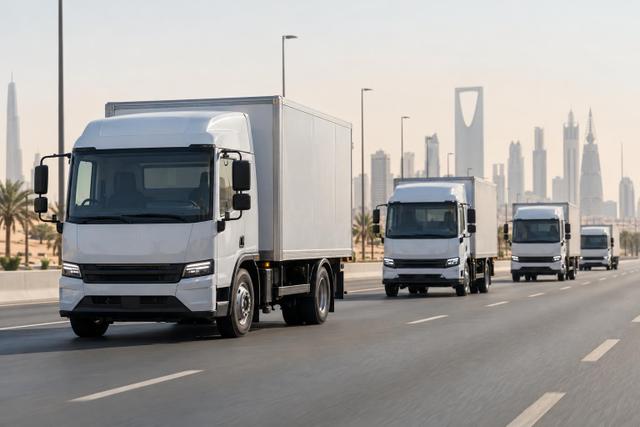
DSV will begin electrifying part of its Riyadh logistics operation by adding 10 electric trucks through a new agreement with EVIQ and Hala Auto. The project combines vehicle deployment with dedicated charging at DSV facilities, giving the fleet a practical operating base rather than relying solely on public chargers.
The move is significant because commercial EV adoption in Saudi Arabia depends on more than buying electric vehicles. Fleet operators need suitable routes, reliable charging, vehicle support and enough operational data to understand how electric trucks perform in Riyadh's climate and delivery cycles.
DSV to Begin Electrifying Its Riyadh Fleet With 10 Electric Trucks
DSV has confirmed that it will introduce 10 electric trucks into its Riyadh fleet under the partnership. The trucks are intended for logistics operations in and around the Saudi capital.
Also read: Saudi Arabia's EV Auto Show Returns to Riyadh for a Fourth Edition in November
The initial deployment is relatively modest compared with a large diesel fleet, but it gives DSV an opportunity to test electric commercial vehicles in real working conditions. This includes daily mileage, payload requirements, charging time, driver feedback and the effect of high ambient temperatures on energy use.
- Fleet size: 10 electric trucks.
- Primary market: Riyadh, Saudi Arabia.
- Vehicle purpose: Commercial logistics and cargo operations.
- Charging approach: Dedicated depot charging supported by EVIQ's wider network.
- Partners: DSV, EVIQ and Hala Auto.
What Role Do EVIQ and Hala Auto Play in the Partnership?
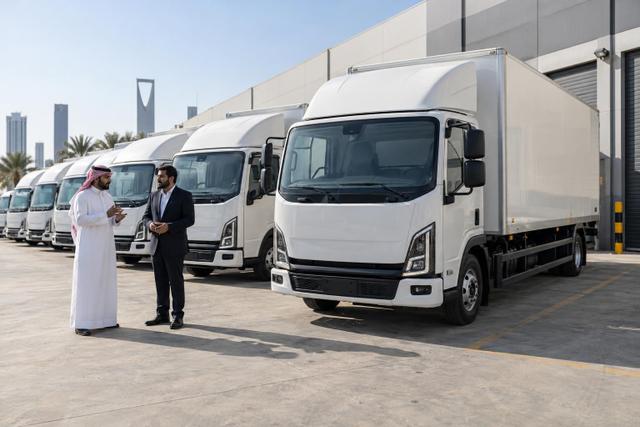
The arrangement brings together three different parts of the commercial EV ecosystem. DSV operates the logistics fleet, EVIQ provides charging infrastructure, and Hala Auto supports the vehicle side of the deployment.
EVIQ, Hala Auto and DSV announced that their agreement is designed to accelerate the electrification of Saudi Arabia's logistics sector. It is therefore an operational partnership, not simply a truck purchase.
For fleet managers, this structure matters. A truck may be technically capable of completing a route, but it is only commercially useful when charging can be scheduled around loading, dispatching, driver shifts and return-to-depot timing.
How Will the Electric Trucks Operate in DSV's Riyadh Logistics Network?
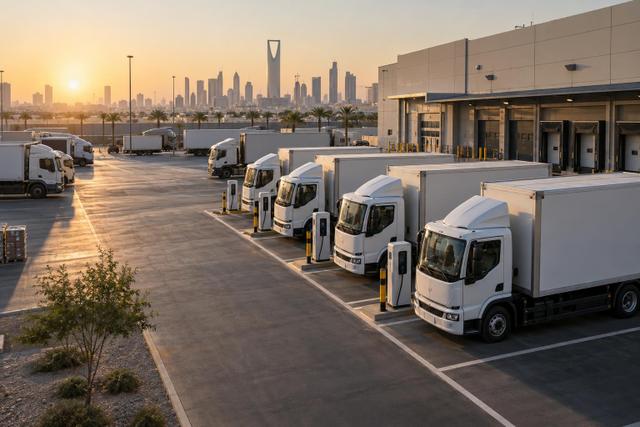
The electric trucks will be used in DSV's Riyadh logistics network, where predictable urban and regional routes can be better suited to early commercial EV deployment. Return-to-base operations are particularly useful because vehicles can charge when they are parked at the end of a shift.
Electric trucks are generally easiest to introduce on routes with known distances, planned stops and sufficient time at the depot. Operators can monitor real-world consumption and gradually decide which duties are suitable for more electric vehicles.
CargoTalk GCC reported that the initiative focuses on electric cargo vehicles in Riyadh. The project should provide a local example of how zero-tailpipe-emission vehicles can fit into commercial distribution work rather than only passenger transport.
Dedicated Depot Charging and Network Access From EVIQ
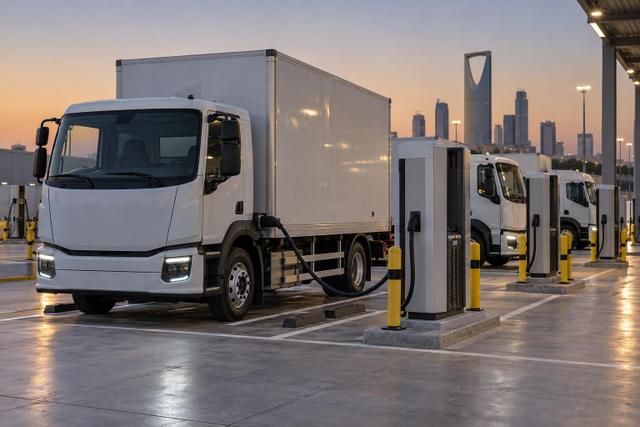
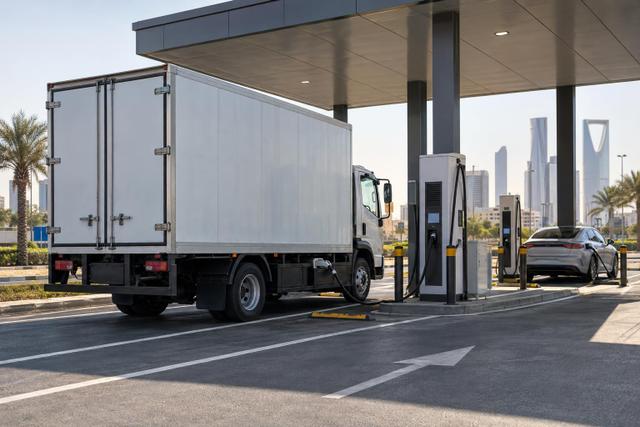
Charging at a dedicated depot is central to the project. Rather than asking drivers to find an available public charger during a working day, DSV can charge trucks where they are parked, loaded and prepared for their next assignments.
A depot-based setup can help an operator plan electricity use around fleet schedules. It also reduces uncertainty around charger availability, although charging capacity must still be sized correctly for the number of vehicles, their batteries and the time available overnight.
- Trucks can be charged during scheduled downtime.
- Dispatch teams can match vehicle range to planned routes.
- Drivers do not need to make unplanned charging stops as often.
- Fleet operators can collect consistent data on energy consumption.
- Access to EVIQ's network offers additional charging flexibility away from the depot.
Network access is still useful when routes change, vehicles are reassigned or a truck needs charging outside its usual operating base. For a commercial fleet, this combination of private charging and public-network access is generally more resilient than either option alone.
Why Logistics Companies Are Starting to Electrify Commercial Fleets
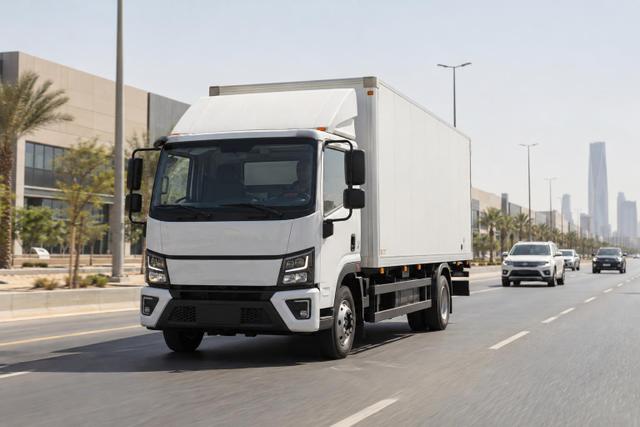
Logistics operators are beginning with electric vans and trucks because many delivery routes are repetitive and centrally managed. That makes it easier to calculate daily energy demand and decide whether a vehicle can complete its work without disrupting operations.
Electric trucks also offer the potential to reduce tailpipe emissions in populated areas. Their suitability varies by duty cycle, however, because factors such as payload, air-conditioning demand, driving speed, terrain and the number of stops can affect usable range.
For Saudi operators, heat management and charging reliability are especially important considerations. A pilot fleet allows a company to test those conditions before making a larger commitment.
The development also sits alongside wider regional interest in electric commercial vehicles, including plans for an electric truck manufacturing facility in Abu Dhabi. Local fleet trials can help establish what types of vehicles and infrastructure are needed across the GCC.
What This Means for Saudi Arabia's Growing EV Charging Infrastructure
The DSV project shows why charging infrastructure needs to support business users as well as private-car owners. Commercial vehicles often require higher-energy charging, predictable access and locations designed around working fleets.
Okaz has reported on the expansion of Saudi Arabia's EV charging sector, reflecting the broader push to build infrastructure for electric mobility. Partnerships that include depot installations can help bring charging capacity to places where it is immediately useful.
For the wider market, fleet depots may become an important part of charging growth. They can serve a defined group of vehicles with predictable usage patterns, while public chargers remain important for longer or less predictable journeys.
Businesses and buyers following the market can also watch developments such as the EV Auto Show Riyadh 2026, which is expected to focus on electric vehicles, batteries and charging solutions relevant to Saudi Arabia's developing EV ecosystem.
Key Takeaways
- DSV will add 10 electric trucks to its Riyadh logistics fleet.
- EVIQ will support the project with dedicated charging infrastructure and access to its charging network.
- Hala Auto is involved in supporting the vehicle deployment.
- The project will test electric cargo operations in real Riyadh logistics conditions.
- Depot charging is likely to be critical because it lets trucks recharge around planned shifts and delivery schedules.
- The agreement highlights the growing role of commercial fleets in Saudi Arabia's EV and charging transition.
People Also Ask
How many electric trucks is DSV adding to its Riyadh fleet?
DSV plans to introduce 10 electric trucks into its Riyadh logistics fleet. The rollout is part of its agreement with EVIQ and Hala Auto.
Where will DSV charge its electric trucks in Riyadh?
The trucks will have access to dedicated charging at DSV facilities, supported by EVIQ. They will also be able to use EVIQ's wider charging network when required.
Why is depot charging important for electric truck fleets?
Depot charging lets a fleet recharge vehicles while they are parked between shifts. It helps operators schedule charging around delivery work and reduces dependence on finding public chargers during the day.
Are electric trucks suitable for logistics work in Saudi Arabia?
They can be suitable for predictable routes with manageable daily distances and planned charging. Operators still need to assess payload, route length, driving conditions, heat and charging availability before deploying them widely.
What does the DSV agreement mean for Saudi EV infrastructure?
The project adds commercial fleet demand to Saudi Arabia's expanding charging market. It also demonstrates the importance of dedicated charging hubs for businesses that operate vehicles on fixed schedules.