
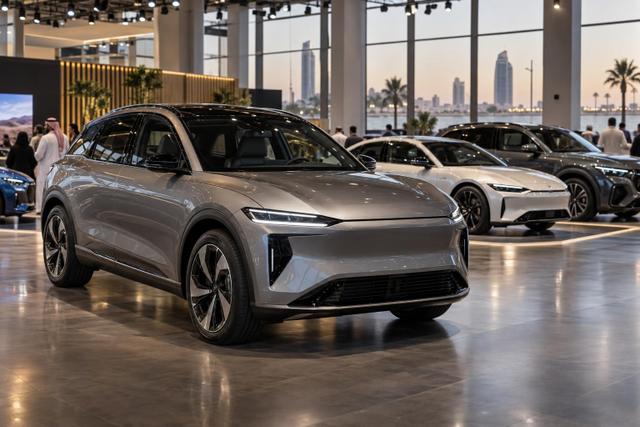
Jeddah International Motor Show is set to return for its 20th edition in late November 2025, bringing major car brands, new powertrain technologies and industry discussions back to the city. The event matters because it gives Saudi buyers a chance to compare conventional, hybrid and electric vehicles in one place, while also highlighting the Kingdom’s fast-growing role in automotive retail, manufacturing and mobility investment.
The show is expected to combine public vehicle displays with business-focused sessions, making it relevant to families shopping for a new SUV, enthusiasts following new launches and investors watching Saudi Arabia’s automotive sector.
Dates, venue and what makes this year significant
The 20th Jeddah International Motor Show is scheduled to run from 29 November to 3 December 2025 at the Jeddah Superdome. Saudi coverage from Makkah Newspaper describes the event as a major platform for automotive brands, technology companies and sector stakeholders.
Also read: Saudi Arabia's EV Auto Show Returns to Riyadh for a Fourth Edition in November
This edition is notable not only for its anniversary, but also for the wider range of propulsion systems expected on the show floor. Saudi consumers now have more choices than before, from petrol SUVs and pickups to hybrids, plug-in hybrids and fully electric cars.
- Dates: 29 November to 3 December 2025
- Venue: Jeddah Superdome, Jeddah
- Edition: 20th Jeddah International Motor Show
- Focus: New vehicles, smart mobility, electrification and automotive investment

What is new at the 2025 show?
The 2025 event is expected to put greater emphasis on the fact that Saudi buyers are no longer choosing only between engine sizes and trim levels. They are increasingly comparing different powertrain types based on fuel cost, charging access, driving range and long-term ownership needs.
Petrol and diesel vehicles remain important
Internal-combustion vehicles will still have a major presence, particularly large SUVs, luxury sedans, performance cars, pickups and commercial vehicles. These categories remain popular in Saudi Arabia because they suit long motorway journeys, family use, towing and hot-weather driving.
For many shoppers, a conventional petrol vehicle will continue to be the simplest option where they want familiar servicing, quick refuelling and a broad choice of used-car buyers later on.
Hybrid, plug-in hybrid and REEV models are expanding
Hybrid and plug-in hybrid vehicles are likely to receive more attention as brands look to offer better fuel economy without requiring every owner to rely on public charging. A hybrid uses an engine and electric motor, while a plug-in hybrid can generally cover shorter trips using battery power if it is charged regularly.
Range-extended electric vehicles, often called REEVs, are also becoming part of the conversation. In a REEV, the wheels are primarily driven by electric motors, while a small engine works as a generator to recharge the battery when needed.
- Hybrid: engine and electric motor work together, with no external charging required.
- Plug-in hybrid: can be charged externally and may complete short daily journeys on electricity.
- REEV: electric drive with an onboard engine used mainly to extend range.
- Full EV: battery-electric vehicle with no petrol or diesel engine.
Full-electric models will be a central draw
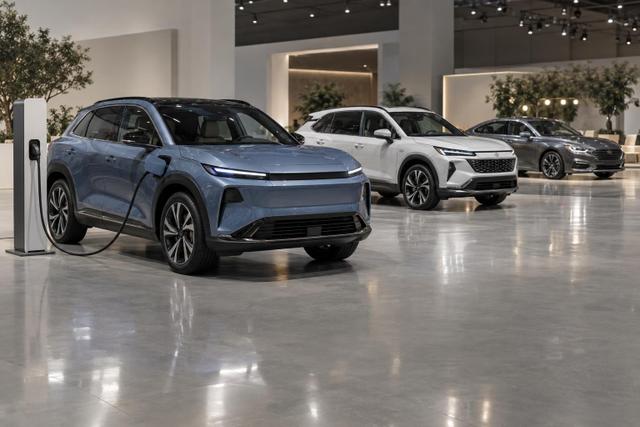
Battery-electric vehicles are expected to be among the main attractions, especially as more global and Chinese manufacturers enter the Saudi market. Buyers will be looking beyond headline range figures and asking practical questions about charging, warranty coverage, cabin cooling and service support.
Tesla has confirmed its participation in the Jeddah event, underlining the importance of the Saudi market for established EV brands. Anyone comparing electric models may also find useful context in this guide to the EV Auto Show Riyadh 2026, which focuses on charging, batteries and fleet electrification.
Innovation hackathon and automotive investment sessions
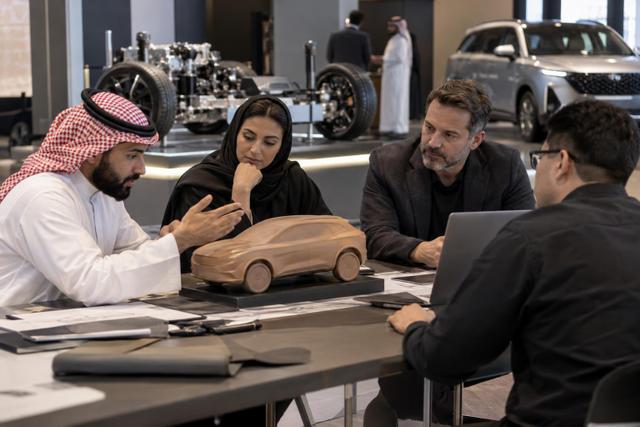
The show is planned as more than a consumer exhibition. Its programme includes an innovation hackathon and sessions examining investment opportunities in Saudi Arabia’s automotive industry, according to Sabq.
A hackathon typically brings together students, developers, entrepreneurs and industry specialists to develop ideas or prototypes within a limited period. In an automotive setting, that can include digital retail tools, vehicle data, charging solutions, connected-car services or mobility platforms.
The investment sessions are especially relevant as Saudi Arabia works to develop local capability across assembly, components, logistics, software and aftersales. The country’s automotive ambition is broader than importing finished cars, even though retail sales remain a crucial part of the market.
How big is Saudi Arabia's automotive market in 2025?
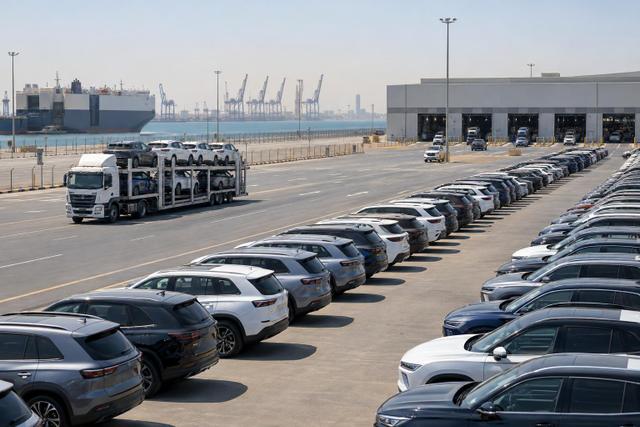
Saudi Arabia is the Gulf’s largest vehicle market by population and one of the region’s most important destinations for carmakers. Demand is supported by a young population, high rates of private vehicle use, long travel distances and continued development in cities and transport infrastructure.
New-car demand remains particularly strong in SUVs, crossovers and pickups, while premium brands have an established customer base in Jeddah, Riyadh and the Eastern Province. At the same time, value-focused Chinese brands are broadening buyer choice in compact cars and family SUVs.
The transition to lower-emission transport is still at an earlier stage than in some European or Chinese markets, but interest is increasing. Coverage by Al Riyadh points to the show’s role in presenting newer mobility technologies alongside conventional vehicles.
For buyers, the key point is that the market is becoming more diverse rather than moving from petrol cars to EVs overnight. A buyer can now consider an efficient hybrid, an affordable petrol crossover, a luxury EV or a high-performance SUV, often within the same showroom network.
Which brands and vehicles will be on display?
Visitors should expect a mixture of established Japanese, Korean, American and European manufacturers, alongside Chinese brands that have rapidly expanded their Saudi retail presence. The final exhibitor list and individual vehicle launches can change before opening day, so it is sensible to check the official event channels before travelling.
Tesla is one confirmed participant, while the broader event is expected to feature passenger cars, SUVs, luxury models, performance vehicles and new-energy vehicles. Visitors may also see models aimed at commercial operators, including pickups, vans and fleet-friendly SUVs.
Also read: Lexus Unveils the New ES in Saudi Arabia as Jeddah Lexus Center Reopens
The most useful approach is to compare vehicles by how they will actually be used. For example, a buyer considering a large family SUV should inspect third-row space, air-conditioning performance, boot capacity and warranty terms, rather than relying only on exterior design or screen size.
- Check whether the displayed vehicle is a local-specification model.
- Ask for the expected Saudi delivery date, not only the global launch date.
- Confirm warranty length, servicing intervals and roadside-assistance terms.
- For EVs and plug-in hybrids, ask about home charging equipment and public-charging compatibility.
- Compare finance, insurance and trade-in offers separately from the vehicle’s advertised price.
Traditional workhorse models should also remain relevant to visitors. Buyers following the segment can compare what is changing in the market through the new ninth-generation Toyota Hilux in the Middle East, including the growing importance of updated safety and connectivity equipment.
Why the show matters for Saudi Arabia's growing auto industry
Large motor shows help manufacturers gauge local demand, introduce products to the public and build confidence among dealers, suppliers and service providers. They also give shoppers an opportunity to inspect several competing vehicles without booking separate showroom appointments.
For Saudi Arabia, the significance goes further. The country is pursuing an automotive ecosystem that includes vehicle production, components, technology, logistics and intelligent transport solutions, while the retail market continues to bring in a wide range of global brands.
New mobility technology is likely to be part of that story. Developments such as the planned autonomous bus trials in Saudi Arabia show that the market conversation is extending beyond private-car ownership to connected and automated transport.
The Jeddah show also provides a useful reality check for buyers. A concept car or global announcement can generate attention, but visitors can ask directly whether a model has local type approval, dealer support, available spare parts and a confirmed delivery timeline.
Visitor information: how to attend
Visitors should check the event organiser’s official announcements for ticketing, opening hours, parking arrangements and any registration requirements. Weekend and evening periods are likely to be the busiest, particularly for popular vehicle reveals and family visitors.
If you are attending to choose a car rather than simply browse, prepare a shortlist before arriving. Bring notes on your budget, expected annual mileage, parking situation and whether you can charge at home or work.
How to make the most of a visit
- Start with the vehicles that are already on your shortlist.
- Take photos of specification sheets and ask whether prices include VAT, registration and delivery.
- Sit in both front and rear seats, especially if the vehicle is for family use.
- Ask whether a test drive can be booked at a local dealer after the show.
- Do not assume a display car is immediately available for purchase in Saudi Arabia.
Visitors interested in newer EV technology should ask exhibitors about battery warranty, charging speed and local support. Those details will often matter more in day-to-day ownership than the maximum range figure quoted in marketing material.
As the 20th edition approaches, Jeddah International Motor Show looks set to offer a broad snapshot of where the Saudi car market is now: conventional vehicles still dominate, but electrified powertrains, digital technology and industrial investment are becoming a much bigger part of the picture.
People Also Ask
When is Jeddah International Motor Show 2025?
Jeddah International Motor Show 2025 is scheduled from 29 November to 3 December 2025. Visitors should confirm final opening times and ticket information through official event announcements before attending.
Where will Jeddah International Motor Show take place?
The event is scheduled to take place at the Jeddah Superdome in Jeddah. The venue hosts major exhibitions and is designed to accommodate large public events.
Will electric cars be displayed at Jeddah International Motor Show?
Yes, electric vehicles are expected to be a key part of the show, alongside petrol, hybrid, plug-in hybrid and range-extended electric models. Tesla has confirmed participation, and other brands are expected to present new-energy vehicles.
Can visitors buy cars at Jeddah International Motor Show?
Motor shows are primarily for viewing vehicles and speaking with brands, but exhibitors may collect enquiries, announce offers or arrange dealer follow-up. Confirm the final on-road price, delivery date and specification with the authorised dealer before placing an order.
Why is the Jeddah motor show important for Saudi Arabia?
The show brings together consumers, manufacturers, dealers, technology companies and investors. It reflects Saudi Arabia’s growing importance as a vehicle market and its wider plans to develop automotive manufacturing and mobility-related industries.