

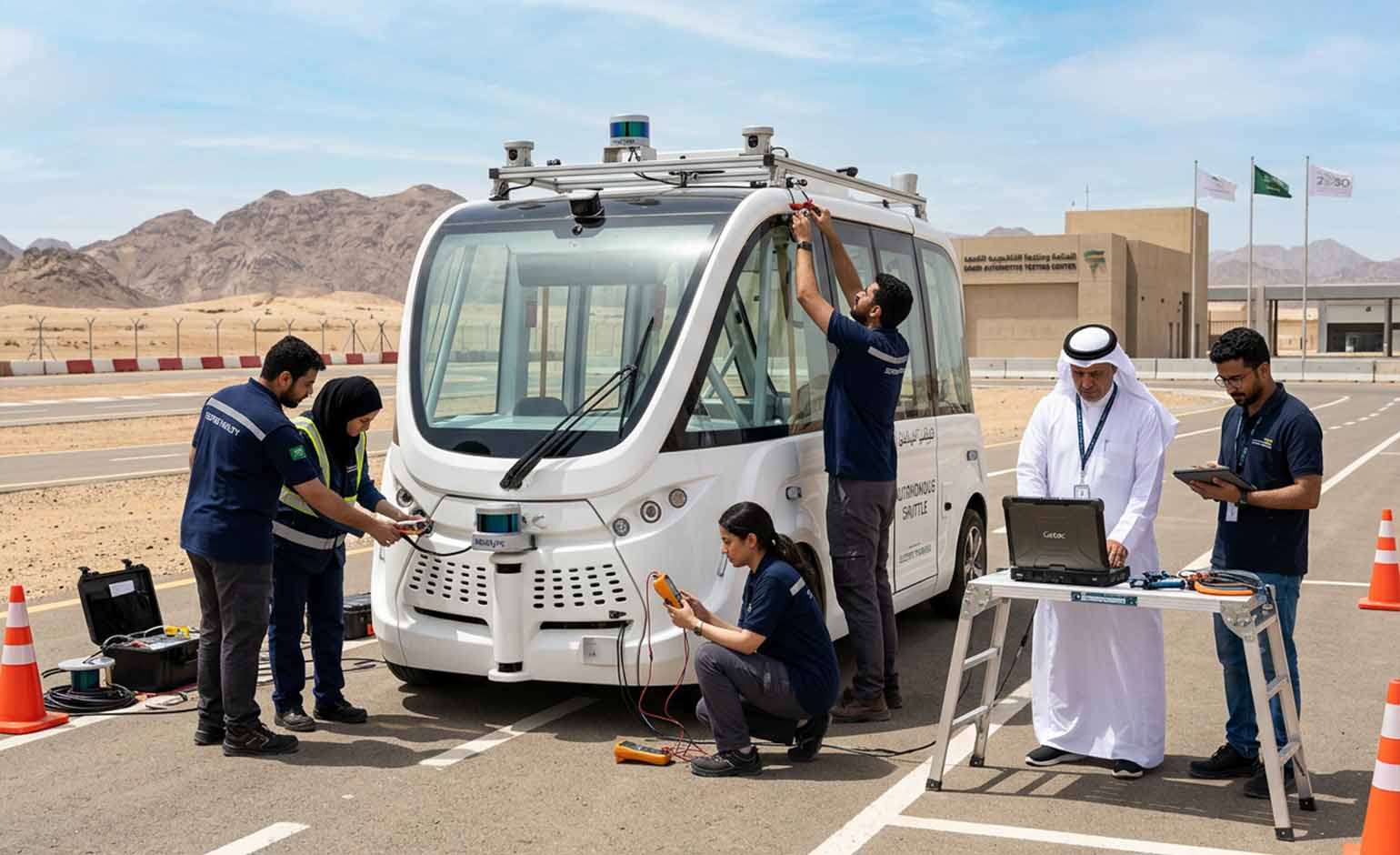
Japan’s Tier IV has received backing from the Ministry of Economy, Trade and Industry, known as METI, to prepare and test autonomous bus technology in Saudi Arabia. The project is aimed at adapting Tier IV’s open-source autonomous driving system to local conditions, integrating it into suitable vehicles and conducting field trials with Saudi technology partner Elm.
For Saudi Arabia, the work is relevant to wider plans for smarter transport, safer mobility and automated public services by 2030. For drivers and transport users in the GCC, it is also a reminder that autonomous mobility is moving beyond small demonstrations and into projects designed around real roads, climate conditions and operating requirements.
What Tier IV Received Funding For
The funding supports the development and validation of an autonomous bus system for Saudi Arabia. Rather than simply sending an existing Japanese vehicle overseas, Tier IV is expected to adapt its autonomous driving software, sensors and vehicle-control integration for use in the Saudi market.
The project focuses on the practical steps needed before public deployment can be considered, including:
Localising autonomous driving software for Saudi road and traffic conditions.
Integrating the system with a bus platform supplied through a European automaker.
Testing sensors and automated driving functions in local heat, light and dust conditions.
Building operational knowledge with Saudi partner Elm.
Gathering data that can support future commercial autonomous transport services.
This is a development and validation programme, not an immediate nationwide rollout of driverless buses. The field-test phase is important because autonomous driving systems must be proven in the environment where they are intended to operate.
Why Is Japan's METI Backing This Project?
METI supports projects that can help Japanese technology companies develop overseas markets and build international partnerships. Autonomous driving is an area where software, sensors, mapping, vehicle engineering and transport operations need to work together, so overseas testing can be as valuable as development work conducted in Japan.
Saudi Arabia offers a large and ambitious mobility market, along with a national strategy that includes smart-city infrastructure and advanced transport. Supporting Tier IV’s work there gives Japan an opportunity to demonstrate autonomous driving technology in a demanding environment while strengthening industrial links with the Kingdom.
For Tier IV, the project can provide data and experience that may also be useful in other hot-climate markets. Many autonomous vehicles are developed primarily in Japan, Europe, China or North America, where weather, road layouts and driving patterns can differ considerably from those in the Gulf.
How Tier IV Plans to Adapt Its System for Saudi Arabia
Tier IV is known for developing autonomous driving software based around Autoware, an open-source platform used by researchers, vehicle manufacturers and mobility companies. In Saudi Arabia, the challenge will be less about creating an autonomous bus from zero and more about making the entire system dependable under local operating conditions.
Heat, glare and dust are important engineering challenges
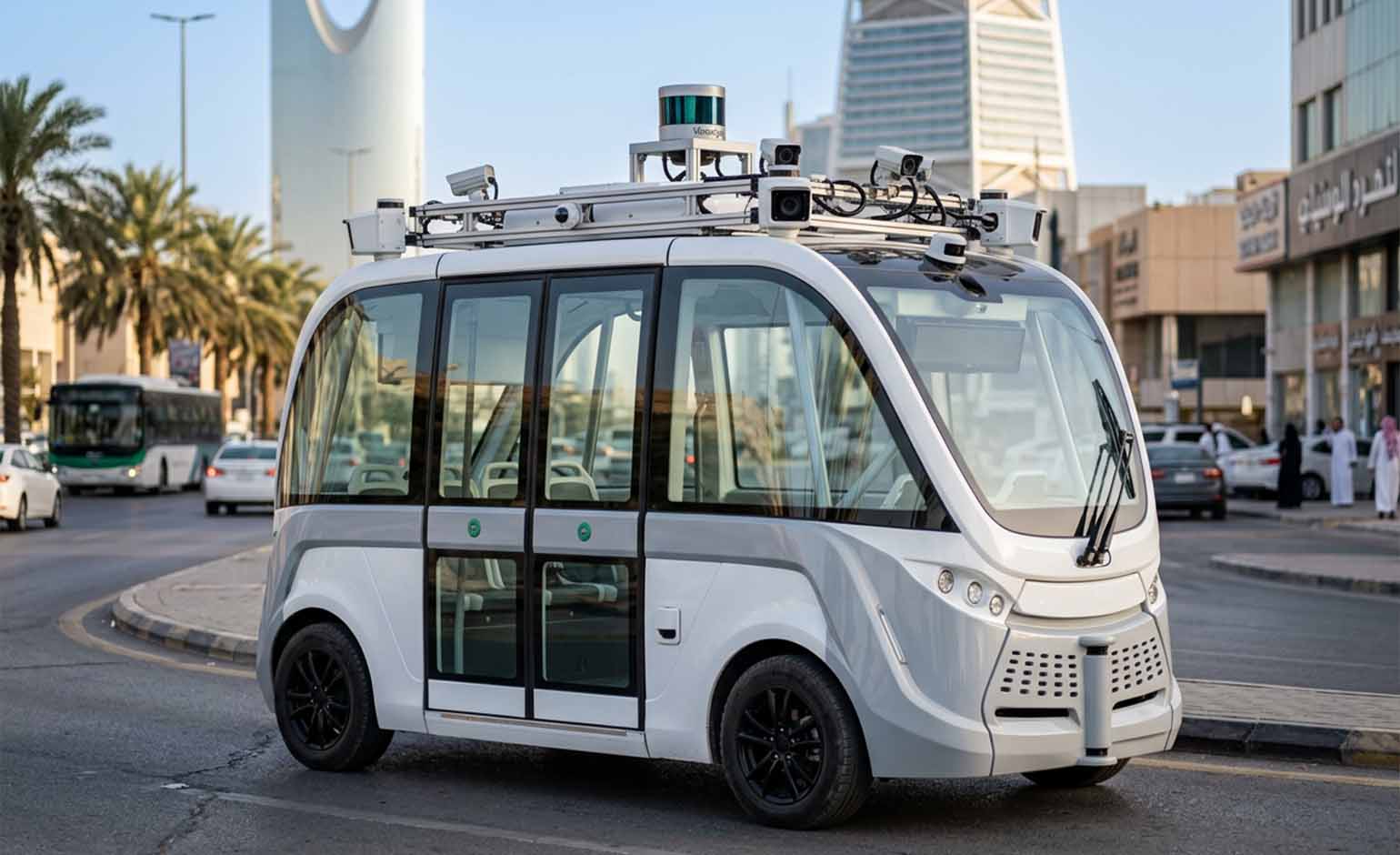
High temperatures can affect electronics, battery systems, sensor performance and vehicle cooling requirements. Strong sunlight can also create glare for cameras, while airborne sand and dust can obstruct camera lenses and reduce the clarity of lidar and radar sensors.
Autonomous vehicles use several sensor types because each has strengths and limits. Cameras can interpret lane markings, traffic lights and signs, while lidar uses laser pulses to build a detailed view of nearby objects. Radar can remain useful in conditions where visibility is reduced, but the system needs to combine all of this information accurately.
Sensor placement: Sensors need protection without losing a clear view of the road.
Thermal management: Computing hardware and sensors must operate reliably in extreme heat.
Road interpretation: The software must recognise local signs, lane layouts, kerbs and traffic behaviour.
Mapping and positioning: The vehicle needs precise location data even where satellite signals or road markings are imperfect.
Maintenance routines: Operators need practical cleaning, inspection and calibration procedures.
These are not unique to Saudi Arabia, but they are particularly relevant in Gulf markets. A bus that performs well on a controlled route in mild weather still needs extensive validation before it can be trusted on a busy route in Riyadh, Jeddah or another Saudi city.
Working With a European Automaker on Vehicle Integration
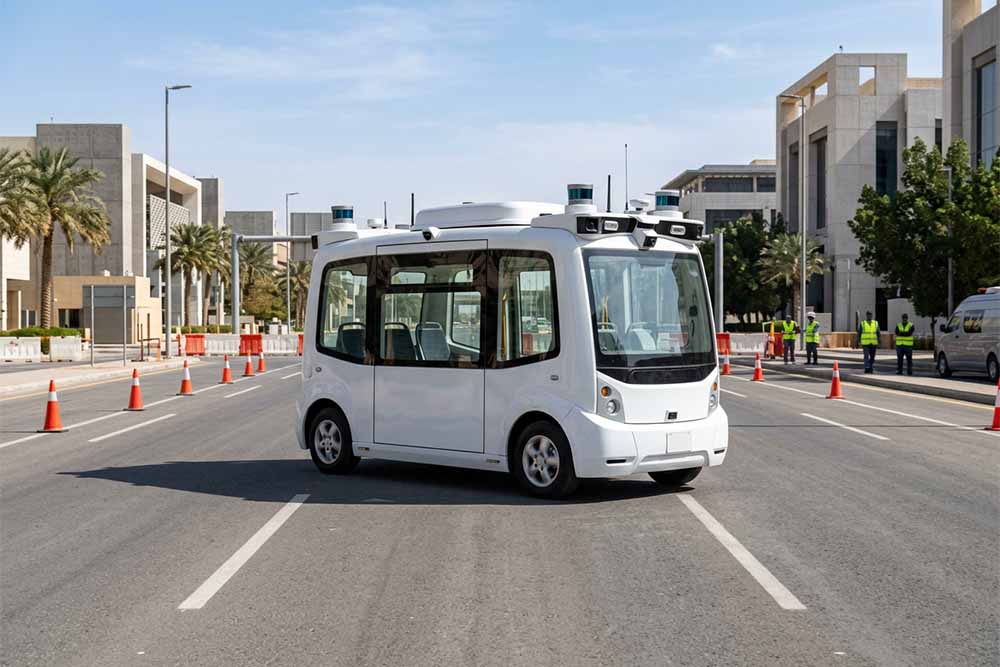
Autonomous driving software cannot operate independently of the vehicle underneath it. The system must be connected safely to steering, braking, acceleration, doors, warning systems and other vehicle functions. This work is usually called vehicle integration.
Tier IV’s project includes cooperation with a European automaker on the vehicle side of the programme. The automaker’s role is expected to involve providing a suitable bus platform and helping ensure that the autonomous driving system can communicate correctly with the vehicle’s electronic controls.
Why vehicle integration matters
For an autonomous bus, the software must be able to request a precise braking force, keep the vehicle centred in its lane, pull away smoothly and stop accurately at a designated point. The bus also needs fallback behaviour if a sensor fails, a fault is detected or the system reaches a situation it cannot safely manage.
This is why an autonomous mobility project involves more than fitting sensors to a conventional bus. Safe operation depends on the interaction between the vehicle manufacturer, automation developer, fleet operator, regulator and local infrastructure provider.
How Will the Field Tests Be Structured?
Specific routes, dates and operating conditions will depend on approvals and the project’s detailed planning. In most autonomous bus programmes, testing begins in controlled or carefully selected areas before expanding to more complex conditions.
The work is likely to include repeated driving on defined routes, monitoring of vehicle behaviour and close analysis of situations that require human intervention. Early stages may use a trained safety operator on board, even if the vehicle is capable of carrying out some driving functions autonomously.
Typical stages of autonomous bus validation
Simulation and software validation before driving on public roads.
Closed-area testing to verify steering, braking, stopping and emergency responses.
Low-speed operation on predetermined routes.
Testing in varied traffic, lighting and weather conditions.
Assessment of passenger operations, remote support and maintenance procedures.
Review by the relevant authorities before any wider deployment.
A successful trial is not measured only by whether the bus completes a route. Engineers will examine how often the system needs assistance, whether it identifies road users correctly, how accurately it stops, how it responds to unexpected obstacles and how easily the fleet can be maintained.
How Does This Support Saudi Arabia's 2030 Autonomous Transport Target?
Saudi Arabia has identified autonomous mobility as part of its broader Vision 2030 agenda. The country has already pursued smart-city projects, connected infrastructure, electric mobility initiatives and technology partnerships intended to modernise transport and create new economic sectors.
Autonomous buses could eventually be useful for fixed and predictable routes, such as airport links, business districts, large developments, university campuses, industrial sites and entertainment destinations. These routes can be easier to manage than unrestricted city-wide driving because stops, operating hours and road conditions can be more tightly controlled.
The immediate value of the Tier IV programme is local capability building. It can help Saudi organisations understand what is needed to operate autonomous fleets safely, from mapping and communications to vehicle servicing, regulations and passenger support.
It also gives local stakeholders an opportunity to assess whether an autonomous system can cope with Saudi conditions before committing to larger deployments. That evidence-led approach is more useful than treating autonomous transport as a technology showcase.
The 2025 MOU With Elm and What It Means for the Project
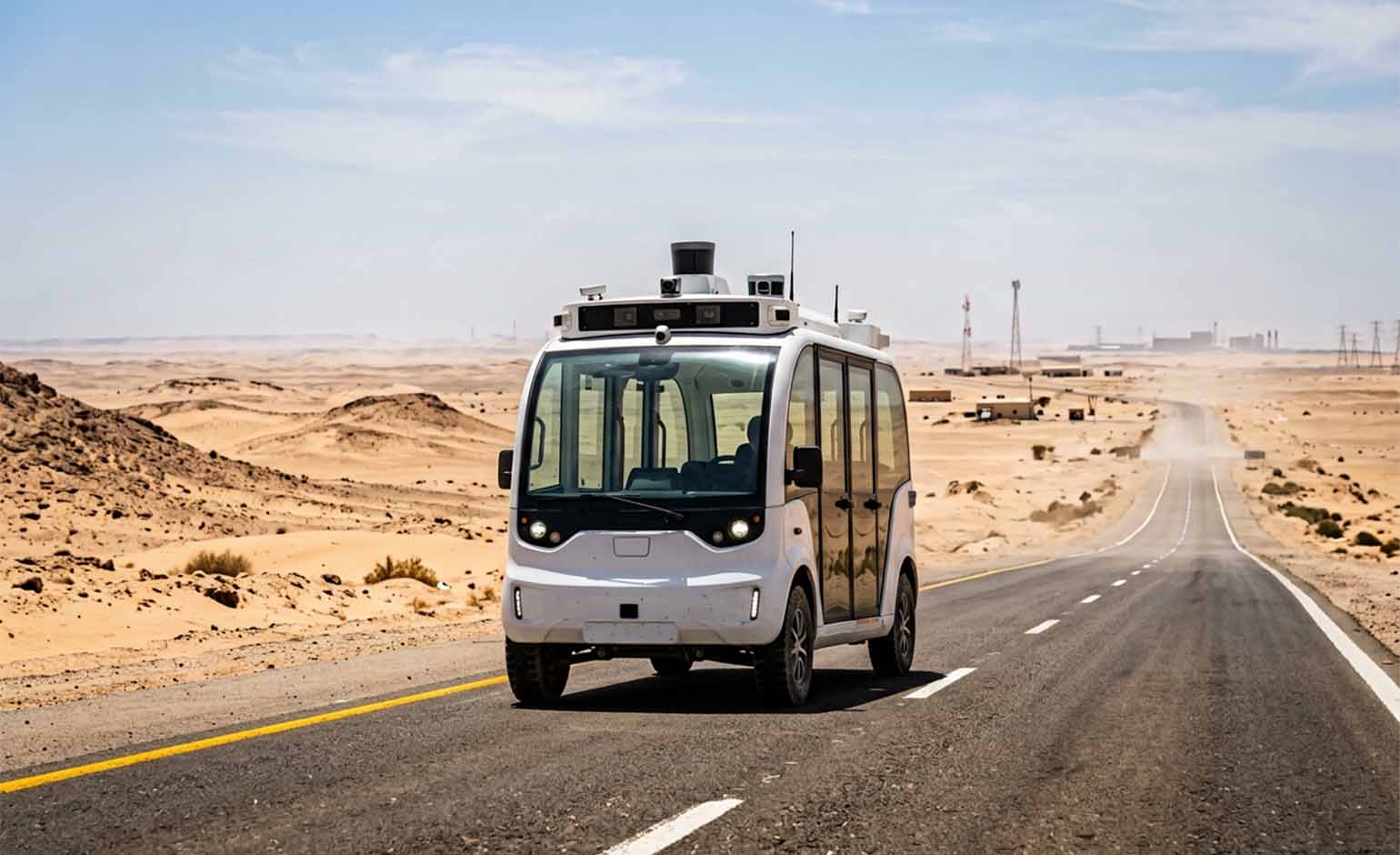
Tier IV and Elm signed a memorandum of understanding in 2025 to explore autonomous driving and mobility opportunities in Saudi Arabia. Elm is a Saudi digital solutions company with experience delivering technology services and platforms for government and business customers.
The MOU established a framework for cooperation, while the METI-backed programme gives the relationship a more practical focus around autonomous bus testing and localisation. In other words, the agreement set out the intention to work together, and the funded project helps move that intention toward technical development and real-world validation.
Elm's likely role in the Saudi mobility ecosystem
Autonomous vehicles need more than a driving system. They may require digital fleet management, route planning, passenger information, remote monitoring, cybersecurity measures and links to public-sector systems. A local technology partner can help address these operational and regulatory needs.
Elm’s involvement may also help connect the project with local stakeholders and identify viable use cases. This matters because the best early applications for autonomous buses are likely to be routes where there is a clear transport need and a manageable operating environment.
How This Project Differs From Other GCC Autonomous Mobility Efforts
Autonomous transport activity is growing across the GCC, particularly in the UAE and Saudi Arabia. Dubai has conducted autonomous mobility trials and set long-term goals for automated transport, while Abu Dhabi has hosted autonomous vehicle testing and deployment programmes. Saudi Arabia is also developing new urban areas and destinations where advanced transport can be included from the planning stage.
What makes the Tier IV initiative notable is its combination of Japanese autonomous driving software, a European vehicle partner and a Saudi technology partner. It is designed around local adaptation rather than assuming that a system developed for another country can be deployed unchanged.
The project also centres on buses rather than robotaxis. Robotaxis often attract more attention, but autonomous buses can be a practical first step because they can operate on planned routes, serve groups of passengers and support public or private shuttle services.
Not every autonomous vehicle programme has the same goal
Some GCC projects focus on passenger robotaxis, some on airport shuttles, some on delivery vehicles and others on logistics or port operations. The operating environment is critical. A low-speed shuttle within a controlled district has a different safety and technical challenge from a full-size bus running in mixed traffic.
For buyers and enthusiasts watching the sector, the key point is that autonomous driving does not arrive as one feature or one date. It develops route by route, vehicle type by vehicle type and city by city, with testing, regulation and operations all progressing together.
Key Takeaways
Tier IV has received Japanese METI support for an autonomous bus development and field-test project in Saudi Arabia.
The programme is intended to adapt autonomous driving technology to Saudi road, climate and operational conditions.
Heat, sun glare, dust, sensor reliability and vehicle cooling will be important factors in local validation.
A European automaker will support vehicle integration, which is essential for safe control of braking, steering and other bus functions.
Saudi technology company Elm is a key local partner following a memorandum of understanding signed with Tier IV in 2025.
The project supports Saudi Arabia’s wider Vision 2030 transport ambitions, but it should be viewed as a testing and capability-building stage rather than an immediate public rollout.
People Also Ask
What is Tier IV?
Tier IV is a Japanese autonomous driving technology company. It develops software, hardware and vehicle integration systems, including work based on the open-source Autoware autonomous driving platform.
Will autonomous buses operate without a driver in Saudi Arabia?
Not immediately on all public roads. Autonomous bus projects usually begin with controlled testing and may use trained safety operators while the technology, routes and operating procedures are validated.
Why is Saudi Arabia testing autonomous transport?
Autonomous transport can support smart-city planning, public mobility, logistics and technology-sector development. Testing also helps authorities and operators understand the safety, infrastructure and regulatory requirements before wider deployment.
What problems can dust and heat cause for autonomous vehicles?
Dust can block cameras and lidar sensors, while extreme heat can affect computers, batteries, cooling systems and sensor reliability. Vehicles intended for Gulf operation need equipment protection, thermal management and regular maintenance plans.
What is the difference between an autonomous bus and a robotaxi?
An autonomous bus normally follows a planned route and carries multiple passengers, while a robotaxi is designed for on-demand individual trips. Fixed bus routes can make early autonomous operation easier to manage and assess.


