
Saudi Arabia’s King Salman Automotive Cluster is a manufacturing hub planned for King Abdullah Economic City that brings vehicle makers, component suppliers and training facilities into one industrial ecosystem. Its purpose is to increase local vehicle production, build supply-chain capability and support the Kingdom’s wider push to become a regional automotive and mobility centre.
What is the King Salman Automotive Cluster?
The cluster is a dedicated automotive manufacturing zone announced by Saudi Arabia’s Public Investment Fund. It is intended to support the production of passenger vehicles, electric vehicles, engines, components and related services within the Kingdom.
According to the Public Investment Fund announcement, the project brings together major manufacturers and suppliers in one location, rather than treating each factory as a separate investment.
- Vehicle assembly and eventual full manufacturing operations
- Electric-vehicle production and battery-related activity
- Engine and component manufacturing
- Supplier facilities and logistics infrastructure
- Technical training and workforce development
For buyers, the cluster does not mean locally made cars will immediately become cheaper. Its longer-term value is likely to be greater regional supply, more skilled technical jobs and a stronger base for parts, servicing and manufacturing support.

Where is the cluster located and why KAEC?
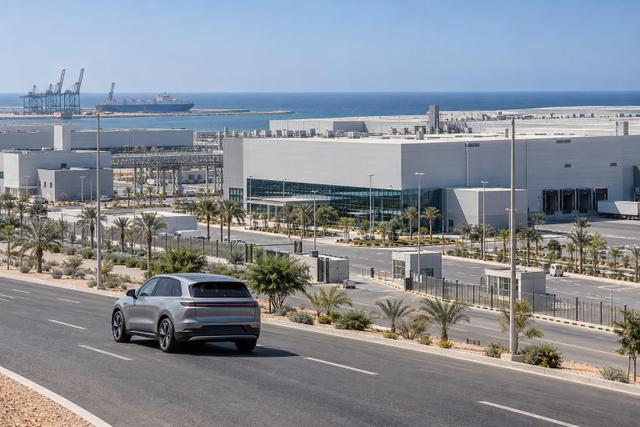
The King Salman Automotive Cluster is located in King Abdullah Economic City, on Saudi Arabia’s Red Sea coast. KAEC offers access to King Abdullah Port, major transport routes and industrial land designed for large-scale manufacturing operations.
The location is also within the King Abdullah Economic City Special Economic Zone, which is designed to attract export-oriented industrial businesses through logistics access and a dedicated regulatory framework.
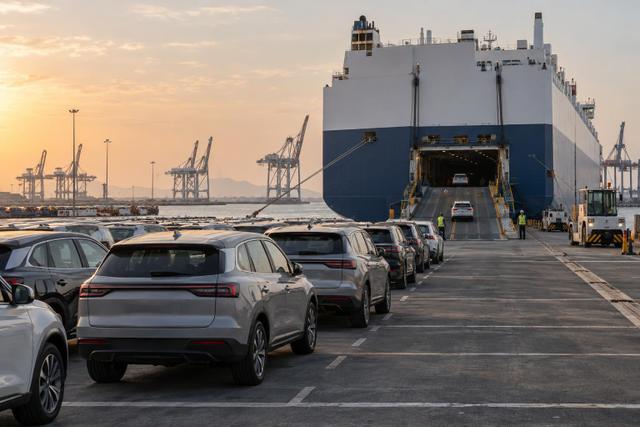
For automotive companies, a port-connected factory location can reduce the complexity of importing components during the early production phase. It can also make it easier to export finished vehicles and parts to markets across the GCC, Africa and other regions.
Why does port access matter for car production?
Vehicle manufacturing relies on a large and predictable flow of parts, from steel stampings and electronics to tyres, glass and battery cells. A factory can begin with imported kits or components, then progressively increase local content as suppliers establish nearby facilities.
KAEC’s coastal position gives manufacturers a practical route for this transition. It also supports Saudi Arabia’s ambition to use domestic production for both local demand and exports.
Which companies are part of the cluster?
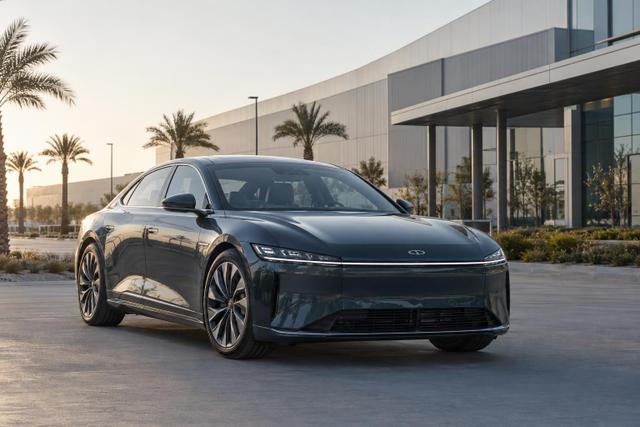
The cluster includes Saudi and international automotive businesses at different stages of development. The announced ecosystem features CEER, Lucid, Hyundai Motor Manufacturing Middle East and a network of suppliers, service providers and training institutions.
The Saudi Press Agency said the initiative is intended to integrate production, supply chains and workforce development in one location. That matters because an automotive sector needs more than an assembly line to operate at scale.
- CEER, Saudi Arabia’s domestic electric-vehicle brand
- Lucid, which already operates a Saudi production facility
- Hyundai Motor Manufacturing Middle East, focused on vehicle and engine-related manufacturing capability
- Automotive parts makers and logistics providers
- Training, research and skills-development facilities
CEER, Saudi Arabia's homegrown EV brand
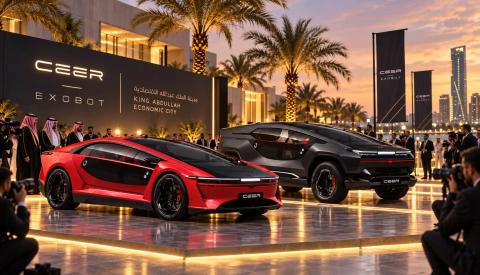
CEER is Saudi Arabia’s first homegrown electric-vehicle brand and is central to the Kingdom’s localisation strategy. It is expected to produce EVs tailored to regional customers, with an emphasis on modern technology, connectivity and local manufacturing capability.
The brand is more than a sales project. Its factory and supplier network are intended to create engineering, production, quality-control and after-sales skills that can support the wider automotive sector.
CEER has already revealed its first EXOBOT sedan and SUV models in KAEC. Readers can find more detail on the launch of CEER’s EXOBOT sedan and SUV and the company’s stated model plans.
For GCC buyers, CEER’s eventual importance will depend on production quality, charging support, price positioning and the availability of parts. Local assembly alone will not guarantee success, but it could give the brand a closer understanding of regional climate, road and ownership requirements.
Lucid's manufacturing presence in the Kingdom
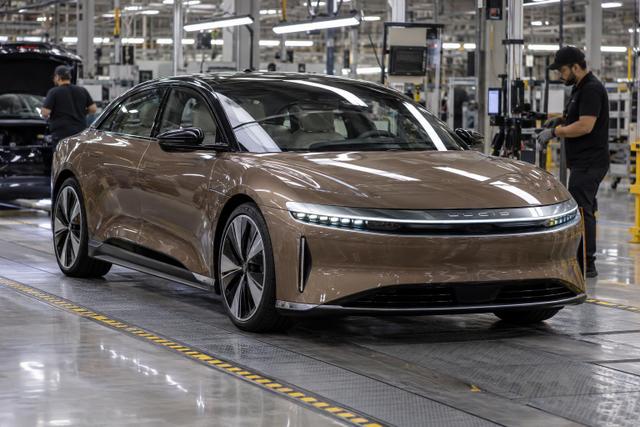
Lucid is among the most visible international EV manufacturers involved in Saudi Arabia’s automotive plans. Its AMP-2 facility in KAEC began with the assembly of vehicle kits and is intended to progress towards more comprehensive manufacturing operations.
This staged approach is common in new automotive markets. It allows a manufacturer to establish production processes and workforce capability before adding operations such as body stamping, paint, battery-pack assembly and deeper local sourcing.
Lucid’s Saudi facility remains an important test of how quickly the country can move from assembly to full vehicle production. Our coverage explains how Lucid plans to expand its Saudi plant as it works towards greater manufacturing depth.
For customers, locally assembled or manufactured Lucid vehicles should still be supported through the brand’s authorised network. Production location does not change the need for proper servicing, software support, diagnostics and recall work.
Hyundai Middle East Engine Manufacturing
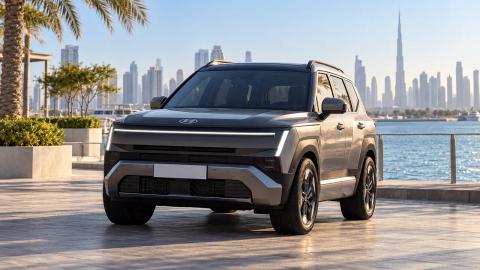
Hyundai’s role adds a conventional manufacturing dimension alongside the cluster’s EV focus. The company has outlined plans for a Saudi manufacturing operation developed with the Public Investment Fund, covering both internal-combustion and electric vehicles.
Hyundai Motor Group confirmed that the planned joint venture is designed to establish a highly automated vehicle manufacturing plant in Saudi Arabia. The project reflects the reality that petrol, hybrid and electric vehicles are likely to coexist in the GCC for many years.
Engine-related manufacturing is significant because it can develop capabilities beyond final assembly. It creates demand for precision machining, testing, quality assurance, logistics and skilled technical labour.

Component suppliers and workforce training facilities
A vehicle factory depends on hundreds of suppliers, which is why the cluster’s component and skills focus is as important as its headline car brands. Local suppliers may eventually produce items such as seats, wiring, plastic trim, glass, wheels, electronics and battery-related components.
Not every part will be made in Saudi Arabia from day one. Automotive localisation usually develops in stages, beginning with final assembly and selected components before moving into more specialised, higher-value production.
The Economic Cities and Special Zones Authority identifies automotive as a sector cluster with potential across vehicle assembly, parts manufacturing and supporting services. Training centres can help ensure that employers have technicians, production engineers and quality specialists available locally.
What skills will the automotive cluster need?
- Vehicle assembly and production-line operations
- Electrical, software and battery-system diagnostics
- Robotics, automation and industrial maintenance
- Quality control, safety and supply-chain management
- Body repair, paint and after-sales technical support
These skills can also strengthen the region’s broader service sector. As more advanced vehicles enter the market, workshops and dealerships will need technicians who understand high-voltage systems, driver-assistance equipment and increasingly software-led diagnostics.
Also read: MG Deploys 570 MG8 Plug-in Hybrid Taxis Across the UAE and Saudi Arabia

Why is Saudi Arabia pushing for localized manufacturing?
Saudi Arabia imports most of the vehicles sold in its market, despite being one of the region’s largest automotive markets. Local manufacturing can retain more economic activity inside the country while creating jobs and reducing dependence on finished-vehicle imports.
The policy is also about industrial resilience. A domestic supplier base can help manufacturers respond more effectively to shipping disruption, parts shortages and changing demand, although it will take time before the local ecosystem reaches meaningful scale.
- Creating skilled industrial and technical jobs
- Increasing local content in vehicles sold domestically
- Supporting export opportunities beyond Saudi Arabia
- Building EV and advanced-manufacturing expertise
- Diversifying the economy beyond oil revenues
There is also a competitive argument. As global manufacturers choose where to locate future EV, battery and software-related investment, Saudi Arabia wants to offer industrial space, capital, logistics links and a large domestic customer base.
How does this fit into Saudi Arabia's broader industrial strategy?
The automotive cluster fits into Vision 2030’s broader goal of developing non-oil industries, attracting international investment and increasing domestic manufacturing. Cars are particularly useful for this objective because they combine engineering, logistics, software, energy, retail and after-sales services.
The model is not limited to building finished cars. It aims to develop a connected industrial base, where suppliers, ports, training providers and manufacturers operate close together and can scale over time.
Saudi Arabia is also using special economic zones to support this approach. The KAEC zone is positioned to serve manufacturers that need efficient import and export channels, while the automotive cluster concentrates sector-specific investment in the same area.
Success will depend on execution rather than announcements alone. The key measures will be production volumes, local-content levels, workforce development, supplier investment and whether locally produced vehicles can compete on quality and cost.
What this means for the wider GCC automotive market
The cluster could gradually change how cars and parts move around the GCC. Saudi Arabia has the region’s largest population and a substantial vehicle market, so local production may influence future supply arrangements for neighbouring countries.
In the near term, buyers in the UAE, Bahrain, Kuwait, Oman and Qatar should not expect an immediate overhaul of showroom choice or vehicle pricing. Most vehicles sold in the GCC will continue to be imported while factories, suppliers and distribution networks develop.
Over the longer term, Saudi-made vehicles and components could provide another supply source for GCC distributors. This may be especially relevant for EVs, fleet vehicles and models designed around hot-weather durability, long-distance travel and regional ownership patterns.
The development may also encourage other GCC markets to compete for component plants, charging infrastructure, battery services and automotive technology investment. Regional manufacturing does not have to mean every country builds complete cars, as specialised supply chains can cross borders.
Key takeaways
- The King Salman Automotive Cluster is based in KAEC and is intended to build an integrated automotive manufacturing ecosystem.
- CEER, Lucid and Hyundai are among the most important named manufacturers linked to the project.
- The initiative covers more than vehicle assembly, including suppliers, logistics and workforce training.
- EV manufacturing is a major part of the plan, but petrol, hybrid and engine-related production also remain relevant.
- The biggest impact on GCC buyers is likely to emerge gradually as production capacity and local parts content increase.
People Also Ask
What is the King Salman Automotive Cluster?
It is a Saudi automotive manufacturing hub in King Abdullah Economic City. The project is designed to bring car makers, component suppliers, logistics businesses and training facilities together in one industrial location.
Where is the King Salman Automotive Cluster located?
The cluster is located in King Abdullah Economic City on Saudi Arabia’s Red Sea coast. Its proximity to King Abdullah Port is intended to support the import of components and export of finished vehicles.
Which car brands are involved in the Saudi automotive cluster?
Named participants include CEER, Lucid and Hyundai Motor Manufacturing Middle East. The cluster is also expected to include automotive parts suppliers and supporting industrial businesses.
Will CEER cars be made in Saudi Arabia?
Yes, CEER is being developed as Saudi Arabia’s domestic EV brand, with production planned in King Abdullah Economic City. Its wider success will depend on manufacturing ramp-up, quality, pricing and after-sales support.
Will Saudi-made cars be sold across the GCC?
Saudi manufacturers could eventually supply other GCC markets, particularly as production volumes and export arrangements develop. However, the timing and model availability will depend on each manufacturer’s production plans and regional distributor networks.
Sources
- Public Investment Fund: Crown Prince announces King Salman Automotive Cluster in KAEC
- Saudi Press Agency: King Salman Automotive Cluster announcement
- Hyundai Motor Group: Saudi vehicle manufacturing joint venture announcement
- Economic Cities and Special Zones Authority: KAEC Special Economic Zone
- Economic Cities and Special Zones Authority: Automotive sector cluster