

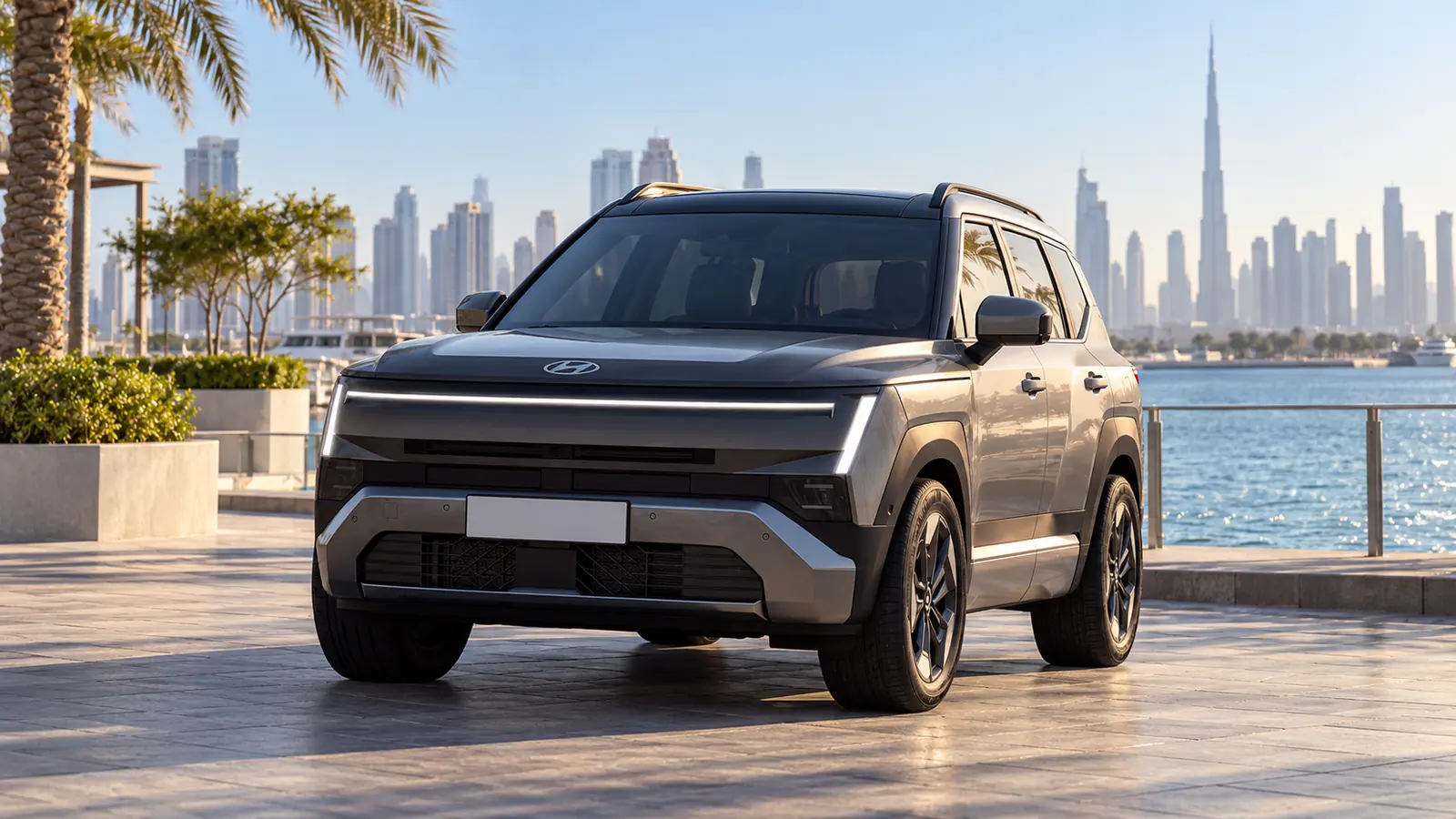
Hyundai has used the New York reveal of the fifth-generation Tucson to signal a more dramatic direction for one of its most important global SUVs. The new model combines sharper styling, electrified powertrains, a redesigned digital cabin and a more capable XRT PRO variant, while keeping the practical family-SUV role that has made the Tucson popular in markets including the UAE and wider GCC.
For buyers in the region, the biggest points to watch are the availability of hybrid and plug-in hybrid versions, cooling and specification packages for hot climates, and the timing of the model’s local launch. Hyundai has shown the new Tucson in North American specification first, so final GCC equipment and engines may differ when regional details are announced.
Hyundai Unveils the Fifth-Generation Tucson in New York
The fifth-generation Tucson moves the SUV into a new chapter rather than simply updating the existing model. Hyundai has focused on a bolder exterior, a more software-led interior and greater powertrain flexibility, reflecting the growing demand for electrified family SUVs.
The Tucson sits in one of the most competitive parts of the market. It must appeal to buyers who may also be considering vehicles such as the Toyota RAV4, Honda CR-V, Nissan X-Trail, Kia Sportage, Mazda CX-5 and various Chinese-brand SUVs with high equipment levels.
A new exterior design language called Art of Steel
Updated hybrid and plug-in hybrid powertrain choices
Hyundai’s Pleos Connect software platform
The Gleo AI in-car assistant
An XRT PRO version aimed at drivers wanting more off-road ability
A larger focus on connected services and over-the-air updates
A closer exterior view supports Hyundai's new Art of Steel design theme.
What Does the New 'Art of Steel' Design Look Like?
Hyundai describes the new Tucson’s styling theme as Art of Steel. In practical terms, it gives the SUV a more angular, technical and muscular appearance, with cleaner body surfaces and stronger geometric details than the outgoing Tucson.
The front end is expected to be the most recognisable change. Hyundai has continued to use distinctive lighting signatures across its SUV range, but the new Tucson appears designed to look more upright and robust, rather than simply more aggressive.
A more substantial road presence
The new shape is intended to make the Tucson look larger and more planted without turning it into a full-size SUV. This matters in the GCC, where buyers often value a confident road presence but still need an SUV that is easy to park at malls, apartment buildings and office car parks.
Depending on market and trim, exterior details may include different wheel designs, protective cladding, roof rails and more rugged bumper treatments. The XRT PRO version takes this approach further with equipment aimed at unpaved roads and light off-road use.
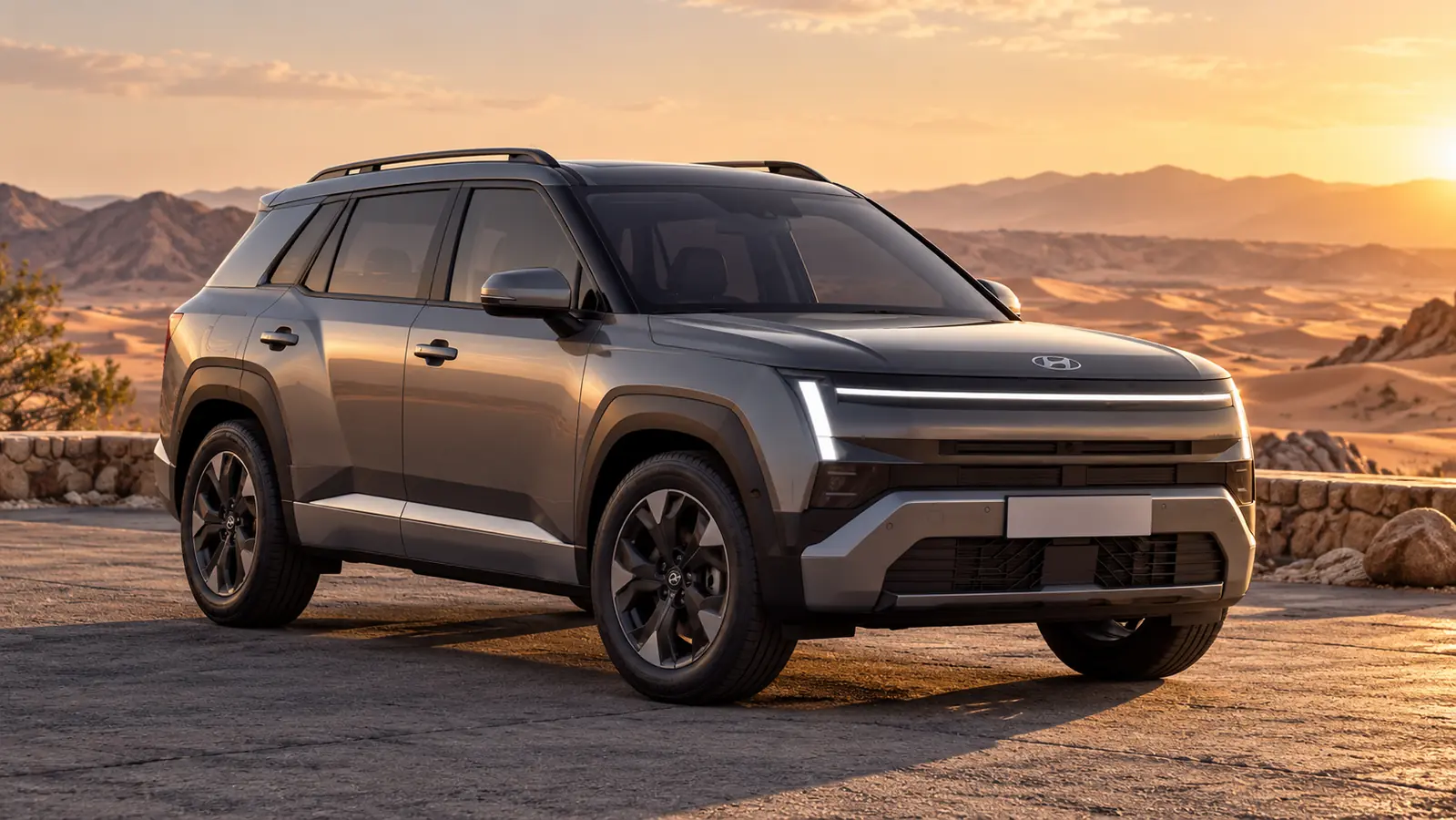
The plug-in hybrid is intended to add meaningful electric-only driving capability.
Next-Generation Hybrid and Plug-in Hybrid Powertrains
Electrification is central to the new Tucson range. Hyundai has confirmed that hybrid and plug-in hybrid powertrains will remain part of the line-up, giving buyers alternatives to a conventional petrol-only compact SUV.
A standard hybrid uses a petrol engine and electric motor working together. It charges its battery through braking and the engine, so it does not need to be plugged in. A plug-in hybrid has a larger battery that can be charged externally and can cover shorter journeys using electric power alone when its battery is charged.
Powertrain type | How it works | Best suited to |
|---|---|---|
Hybrid | Petrol engine supported by an electric motor and self-charging battery | Drivers who want better urban efficiency without changing their refuelling routine |
Plug-in hybrid | Petrol-electric system with a larger battery that can be externally charged | Owners with reliable home or workplace charging and regular short journeys |
For UAE drivers, a conventional hybrid is likely to be the easier transition. It can improve fuel use in city traffic while retaining the long-distance convenience of petrol. A plug-in hybrid can make sense for commuters who can charge regularly, but its advantage is reduced when it is driven mainly with an empty battery.
Hyundai has not yet confirmed the full engine range, output figures, battery capacities or GCC-market fuel economy. Those details will be important because local specifications can differ from US, European and Korean versions.
New Technology Inside: Pleos Connect and the Gleo AI Assistant
The new Tucson introduces Hyundai’s Pleos Connect platform, which is designed to make the infotainment system more connected, adaptable and updateable over time. Instead of treating the screen as a fixed feature at the point of sale, this approach allows selected functions and software to be improved through over-the-air updates.
The cabin also gains Gleo, Hyundai’s AI assistant. The aim is to let occupants use more natural voice commands for selected vehicle, navigation, communication and infotainment functions.
What will this mean in daily use?
Useful in-car technology should reduce distraction rather than add more menus to navigate. Voice assistance can be particularly helpful when setting a destination, adjusting cabin functions or finding information while keeping attention on the road.
However, buyers should check exactly which connected features will work in the UAE and other GCC countries. Features such as live services, voice languages, connected apps and remote functions can vary by country, mobile network support and subscription package.
Pleos Connect: Hyundai’s connected infotainment and software platform.
Over-the-air updates: selected system updates delivered without visiting a workshop.
Gleo AI assistant: a voice-led assistant intended to understand more natural requests.
Connected services: features that may depend on local market availability and a data connection.
The redesigned cabin is the setting for Pleos Connect and Hyundai's Gleo AI assistant.
XRT PRO Brings a Rugged Off-Road Option
The XRT PRO version gives the Tucson a more adventurous identity. It is not intended to replace a serious body-on-frame 4x4, but it should offer a more suitable package for gravel tracks, campsite access roads, wadis and mild desert routes than a typical front-wheel-drive crossover.
Rugged trims are increasingly popular because they combine everyday comfort with a tougher appearance and, in some cases, useful mechanical upgrades. Buyers should look beyond the styling details and check the actual hardware fitted to the version sold locally.
What should GCC buyers check on an XRT PRO?
Whether all-wheel drive is standard or optional
Ground clearance and approach, departure and breakover angles
Tyre type and wheel size, especially for rough-road use
Whether it has drive modes designed for sand, mud or loose surfaces
Availability of a full-size spare wheel and underbody protection
Local warranty terms for off-road-related damage
Even with an off-road-focused trim, drivers should match the vehicle to the terrain. Soft sand, steep dunes and remote desert travel require appropriate tyres, recovery equipment, experience and ideally another vehicle. A compact crossover is best treated as a light-adventure SUV, not a substitute for a dedicated off-roader.
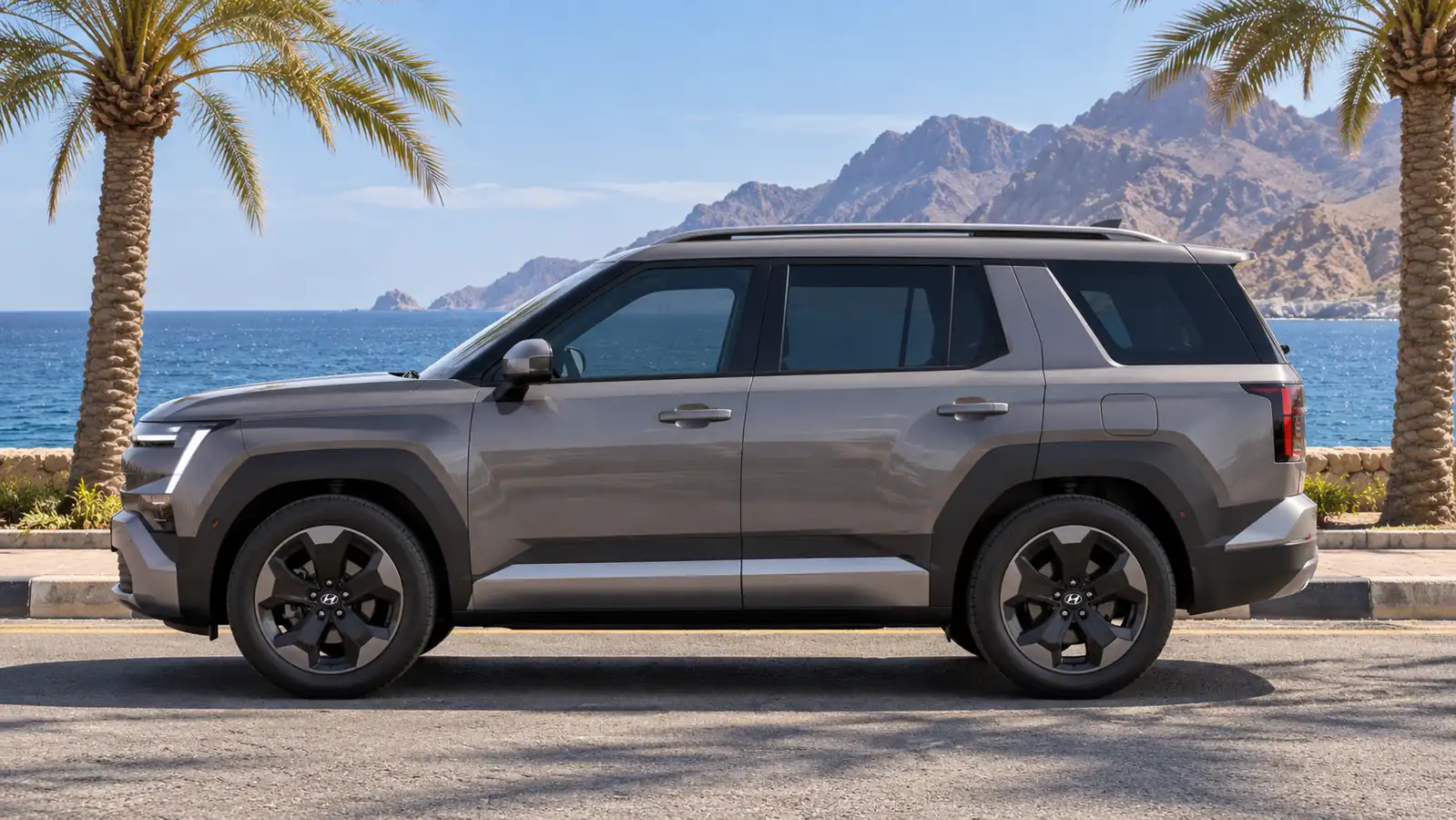
The XRT PRO introduces a more rugged Tucson option for buyers who want light off-road ability.
When Will the New Tucson Arrive in Each Market?
Hyundai has revealed the vehicle in New York, but launch timing will not be identical in every region. North American production, European specifications, Korean-market versions and GCC allocations are typically announced in stages.
At the time of the reveal, Hyundai had not confirmed a full UAE or GCC launch timetable. Buyers interested in the new Tucson should expect local distributors to announce final specifications, pricing and order availability closer to the regional introduction.
It is also worth remembering that the first vehicles shown at an international launch may not be identical to those delivered in the Gulf. Air-conditioning performance, upholstery, safety systems, wheel sizes, engine choices and connected services can all be market-specific.
Why This Reveal Matters for GCC and UAE Buyers
The Tucson has become an important option for buyers who want a practical SUV without moving into a large and expensive three-row model. The fifth-generation vehicle matters because it brings newer hybrid technology, a more distinctive design and a stronger technology story to a segment where equipment levels now heavily influence buying decisions.
For UAE shoppers, the key question is not simply whether the new Tucson looks better. It is whether Hyundai can combine its new technology with competitive local pricing, proven cooling performance, useful warranty coverage and a powertrain that suits long highway drives as well as city traffic.
The most sensible approach is to wait for UAE specifications before comparing trims. Check whether the preferred hybrid or all-wheel-drive version will be sold locally, ask about service intervals and battery warranty, and test the infotainment system with the functions you will use every day.
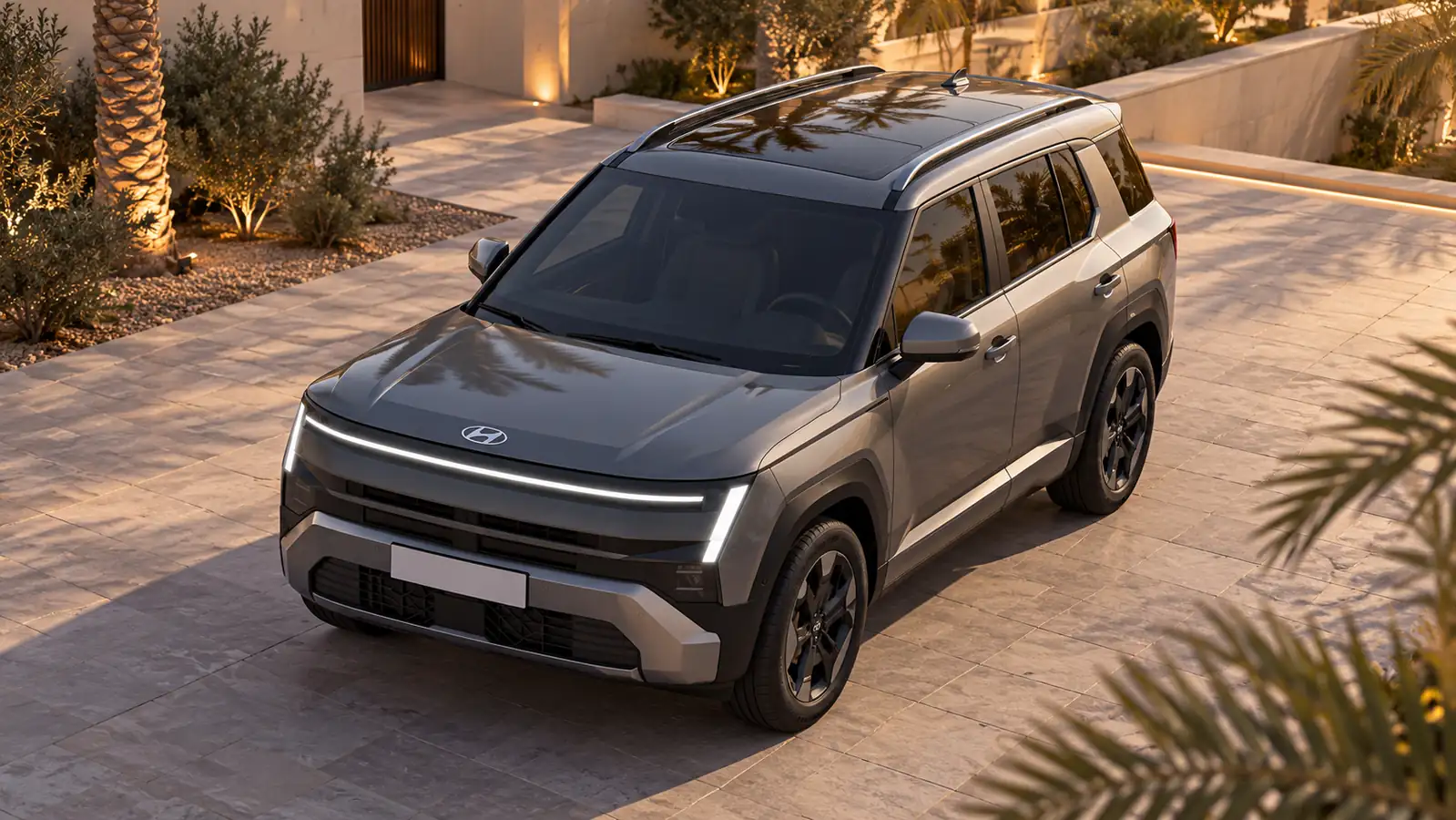
The global launch timeline is especially relevant to prospective UAE and GCC buyers.
People Also Ask
Is the fifth-generation Hyundai Tucson available in the UAE yet?
Hyundai has revealed the new Tucson internationally, but UAE availability, specifications and pricing will be confirmed separately by the local distributor. Buyers should check with Hyundai dealers in the UAE for the latest order and delivery information.
Will the new Hyundai Tucson be available as a hybrid?
Yes. Hyundai has confirmed hybrid power will be part of the new Tucson range. Exact engine specifications and hybrid trim availability for the GCC have not yet been confirmed.
What is the difference between the Tucson hybrid and plug-in hybrid?
The hybrid recharges its battery while driving and does not need external charging. The plug-in hybrid has a larger battery that can be charged from an external power source, allowing more electric-only driving when charged.
Is the Hyundai Tucson XRT PRO a proper off-road SUV?
The XRT PRO is designed to be more capable on rough roads and light trails than a standard Tucson. It is still a compact crossover, so it is better suited to light off-road use than deep-sand dune driving or demanding rock trails.
What is Hyundai Pleos Connect?
Pleos Connect is Hyundai’s connected vehicle software and infotainment platform. It is intended to support digital services, software updates and a more integrated in-car user experience, subject to feature availability in each market.


