
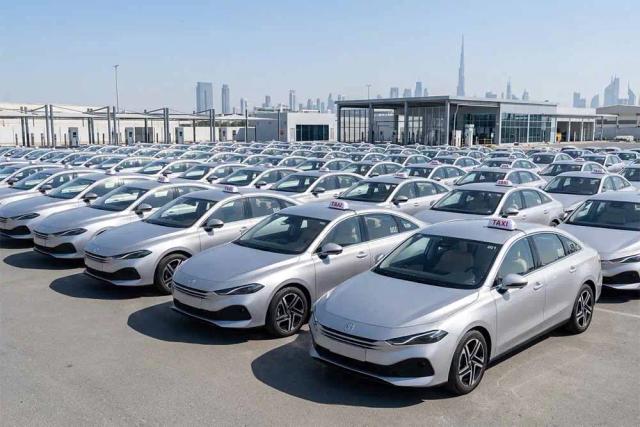
MG Motor Middle East has put 570 MG8 plug-in hybrid electric vehicle (PHEV) taxis into service across the UAE and Saudi Arabia. The rollout is split between a 400-car Metro Taxi LLC fleet in the UAE and a 170-car deployment in Saudi Arabia, making it a significant regional test of plug-in hybrid technology in high-mileage commercial use.
The deployment matters because taxis cover far more kilometres than private cars, often operating for long shifts in city traffic. That makes fleet use a practical way to assess whether a plug-in hybrid can reduce fuel use and emissions while maintaining the range and refuelling flexibility operators need.
MG Motor Middle East's major fleet deployment explained
The programme brings together MG Motor Middle East, local distributors and taxi operators in two of the region's largest mobility markets. According to MG Motor Middle East's announcement reported by Zawya, the fleet consists of 570 MG8 PHEV sedans.
Also read: BMW Launches the Redesigned 7 Series in Saudi Arabia Starting From SAR 600,645
Rather than being a small pilot, the combined order places hundreds of electrified vehicles into daily service. It gives MG and its distributor partners operating data on charging habits, fuel consumption, maintenance needs and driver experience in GCC conditions.
How many MG8 plug-in hybrid taxis are now on the road?
A total of 570 MG8 PHEV taxis are being deployed across the UAE and Saudi Arabia. The UAE receives the larger portion, while the Saudi network accounts for the remaining vehicles.
UAE: 400 MG8 PHEV taxis operated through Metro Taxi LLC.
Saudi Arabia: 170 MG8 PHEV taxis entering taxi network service.
Total: 570 plug-in hybrid MG8 sedans across the two markets.
OTO Drive also reported that the rollout covers both countries, underlining that MG is using the MG8 beyond private-buyer sales. Fleet adoption can be particularly influential because passengers experience the cars directly during ordinary journeys.
Metro Taxi LLC and the 400-unit UAE rollout
Metro Taxi LLC is receiving 400 MG8 PHEVs for service in the UAE. The scale means the cars should become a visible part of the local taxi fleet rather than being limited to a demonstration programme.
For a taxi company, the appeal of a PHEV is not simply its ability to drive on battery power. It is the ability to combine electric running where charging and trip patterns allow with petrol power for longer shifts, airport runs or periods when charging is unavailable.
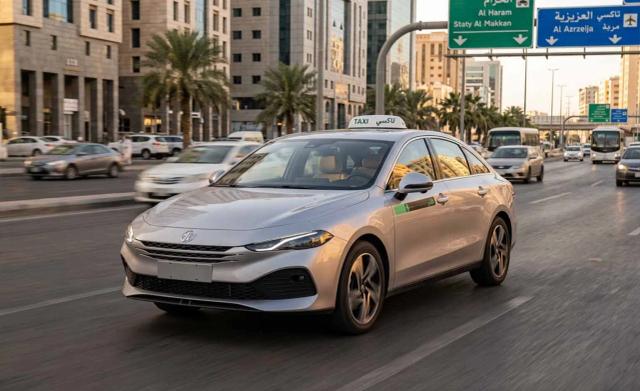
MG8 PHEV taxi on Saudi road.
The UAE already has a growing market for electrified vehicles, but fleet operators have different priorities from private buyers. Vehicle uptime, driver handovers, repair support, energy costs and practical range matter as much as showroom specifications.
For buyers considering a plug-in hybrid for personal use, the arrival of the Toyota RAV4 Plug-in Hybrid in the Middle East is another sign that PHEVs are becoming a more established option in the region.
The 170-unit Saudi Arabia taxi network deployment
Saudi Arabia's share of the programme is 170 MG8 PHEV taxis. These cars are intended for taxi network operation, extending MG's electrified fleet presence into a market where urban mobility demand is expanding rapidly.
The Saudi deployment is relevant because the country combines long intercity distances with dense city driving. A PHEV can use its battery for portions of urban work while retaining an internal-combustion engine for longer duties, although the real benefit will depend on how reliably the vehicles are charged.
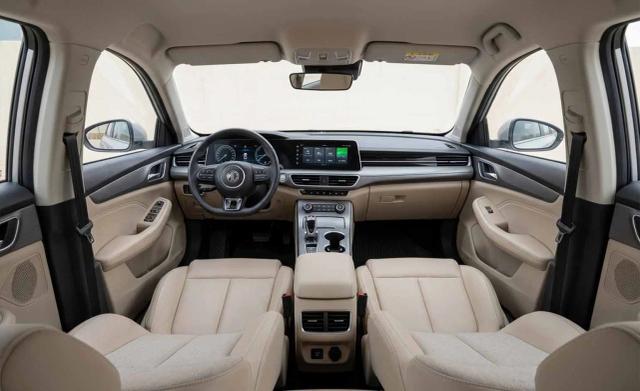
MG8 PHEV taxi interior.
Taxi drivers and fleet managers will also need to work within the local licensing rules that apply to commercial operation. Private visitors should separately note that Saudi Arabia limits most foreign drivers to one year on an international licence, a rule that is distinct from the requirements faced by professional taxi drivers.
Why MG chose the MG8 plug-in hybrid for taxi service
The MG8 is a sedan, a body style that remains well suited to taxi work because it offers rear-seat accommodation, a separate luggage area and a relatively low profile for frequent urban journeys. For fleets, the PHEV version adds an electrified powertrain without requiring the operator to depend exclusively on public charging infrastructure.
A plug-in hybrid uses both a rechargeable battery and a petrol engine. It can travel using electricity for some journeys or sections of journeys, then use the engine when the battery is depleted or when extra range is needed.
It can reduce petrol use when vehicles are charged consistently.
It avoids the range limits of a battery-electric vehicle during long shifts.
It gives fleets time to build charging routines without changing every operating route at once.
It allows operators to compare real-world costs against conventional petrol taxis.
The potential savings are not automatic. If a PHEV is rarely plugged in, it carries the added weight and complexity of a battery system while operating much like a conventional hybrid or petrol car. Charging access at depots, shift planning and driver training will therefore influence the result.
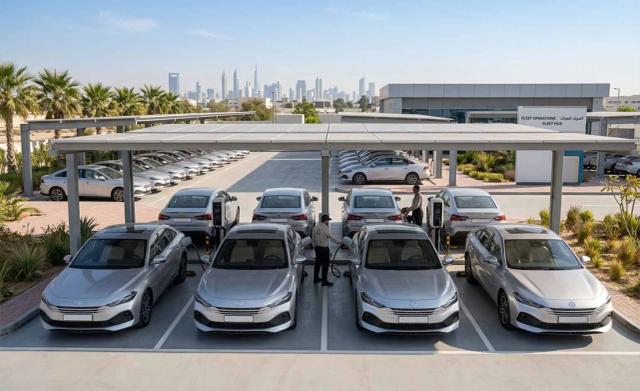
MG8 PHEV taxis charging at depot.
Also read: Zeekr Unveils Its 1,380 Horsepower 9X Hybrid SUV at a Revamped Dubai Showroom Ahead of UAE Launch
MG had previously introduced the model to the local market, describing the MG8 PHEV's UAE debut as part of its electrified model expansion. Taxi service now puts that proposition into a more demanding real-world environment.
The role of distributors IEM and Jiad Modern Motors
MG's distributor network is central to the rollout. IEM supports the UAE programme, while Jiad Modern Motors is involved in the Saudi Arabian deployment.
In a fleet programme of this size, distributors do more than deliver vehicles. They coordinate with the manufacturer and operator on vehicle supply, after-sales planning, parts availability and the servicing arrangements needed to keep cars working through long daily shifts.
This support is especially important for a new-energy vehicle fleet because workshop teams and drivers may need additional familiarity with high-voltage components, charging equipment and PHEV-specific maintenance procedures. Scheduled servicing still follows the manufacturer's requirements, particularly for warranty-covered vehicles.
What this deployment means for MG's regional NEV strategy
The taxi rollout gives MG a high-visibility route into the GCC's new-energy vehicle market. In this context, NEV generally refers to electrified vehicles, including battery-electric, hybrid and plug-in hybrid models.
Private-car sales remain important, but fleet orders can introduce electrified vehicles to thousands of passengers and generate substantial operating data quickly. A successful taxi programme can also help establish confidence among other commercial buyers, including corporate transport, delivery and rental fleets.
The move fits a wider regional shift toward electrified models, particularly in the UAE, where the UAE's leading position in Middle East EV sales reflects growing consumer and infrastructure interest. PHEVs may appeal to operators that want lower fuel consumption but are not ready to rely solely on charging.
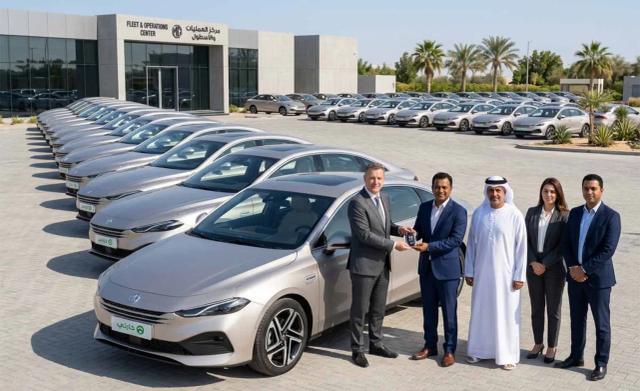
MG8 PHEV taxi fleet handover.
It is too early to judge the programme by headline numbers alone. The most useful measures will be fuel savings, charging frequency, maintenance downtime, battery performance in heat and whether the cars remain economical after sustained commercial mileage.
Key takeaways
570 MG8 PHEV taxis are entering service across the UAE and Saudi Arabia.
Metro Taxi LLC is taking 400 vehicles for UAE operations.
The Saudi taxi network deployment covers 170 vehicles.
The project tests plug-in hybrid technology in demanding, high-mileage fleet conditions.
IEM and Jiad Modern Motors are the distributor partners supporting the UAE and Saudi programmes respectively.
The rollout strengthens MG's regional NEV strategy, but its long-term value will depend on charging discipline, uptime and operating costs.
People Also Ask
How many MG8 PHEV taxis are being deployed in the UAE and Saudi Arabia?
MG is deploying 570 MG8 plug-in hybrid taxis in total. Of these, 400 are allocated to Metro Taxi LLC in the UAE and 170 are assigned to taxi network operations in Saudi Arabia.
What is a plug-in hybrid taxi?
A plug-in hybrid taxi has a rechargeable battery, electric motor and petrol engine. It can run on electric power for part of its operation, while the petrol engine provides additional range when needed.
Why are taxi companies using plug-in hybrids instead of fully electric cars?
Plug-in hybrids can lower fuel use while retaining the flexibility to refuel quickly for long shifts. This can suit fleets that do not yet have enough depot charging capacity or cannot easily schedule charging breaks.
Will the MG8 PHEV taxis need to be charged?
Yes. A PHEV can still operate when its battery charge is low, but regular charging is needed to gain the greatest electric-driving and fuel-saving benefit.
Are plug-in hybrids suitable for GCC weather and taxi use?
They can be suitable, but commercial operation is a demanding test. Battery cooling, air-conditioning use, charging routines, maintenance support and long daily mileage all affect real-world performance and running costs.