
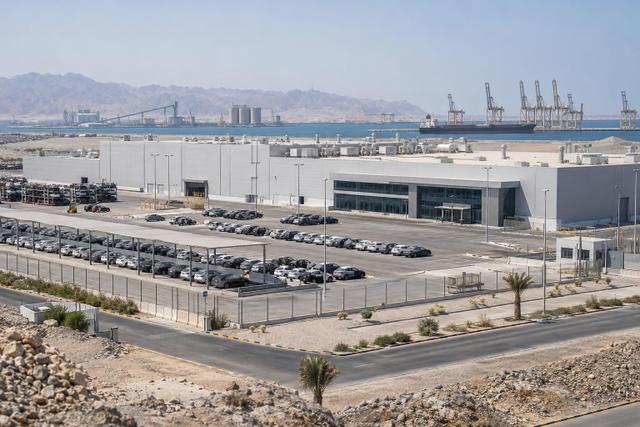
Oman has signed 28 investment agreements worth more than $790 million, with one of the most notable projects being a planned automotive assembly complex in Sohar. The package is intended to expand industrial capacity across economic zones, free zones and industrial cities while supporting Oman’s longer-term move toward manufacturing, logistics and export-led growth.
The agreements were announced by the Public Authority for Special Economic Zones and Free Zones, known as OPAZ. Asharq Al-Awsat reported that the projects span several sectors, including automotive activity, metals, food processing, logistics and renewable-energy-related industries.
Oman signs 28 investment agreements worth over $790 million
The agreements have a combined value of more than OMR304 million, or about $790 million. They are spread across Omani economic zones and industrial locations rather than being concentrated in a single development.
Also read: Sohar Islamic and Sooq Cars Partner to Boost Digital Car Financing in Oman
According to Economy Middle East, the investment programme is designed to add industrial projects, increase private-sector participation and make better use of the country’s ports and dedicated economic zones.
- 28 new investment agreements were signed.
- The announced value exceeds $790 million.
- Sohar is set to receive an automotive assembly complex.
- Projects also cover manufacturing, logistics and supporting industrial activity.
- The investments are located in economic zones, free zones and industrial cities.
For car buyers, the announcement does not mean locally assembled vehicles will appear in showrooms immediately. Assembly projects take time to build, equip, approve and connect to supplier and distribution networks.
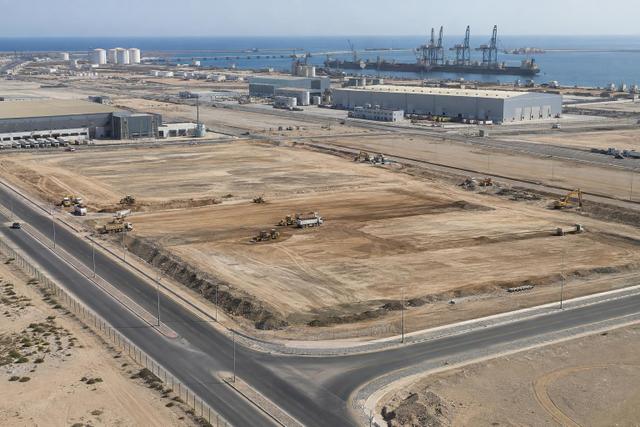
What is included in the new Sohar automotive assembly complex?
The Sohar project is planned as an automotive assembly complex, adding a new industrial use to an area already known for port-linked trade, metals, petrochemicals and logistics. The published announcements identify the complex as part of the wider package but do not yet set out a confirmed vehicle brand, production capacity, model range or launch timetable.
That distinction matters. An assembly complex can range from a relatively small operation that completes imported vehicle kits to a more integrated factory that uses locally supplied parts, testing facilities, storage yards and export logistics.
More technical details will be needed before the market can judge the project’s likely scale. The most useful announcements to watch for are:
- The investor or automotive brand involved.
- Whether the site will assemble passenger cars, commercial vehicles, EVs or multiple vehicle types.
- Annual production capacity and expected start date.
- The extent of local parts sourcing and workforce training.
- Whether production will serve Oman only or GCC and export markets.
Gulf Daily News reported that the agreements are intended to expand industrial and manufacturing capacity, placing the Sohar vehicle project within a broader industrial rather than purely retail automotive strategy.
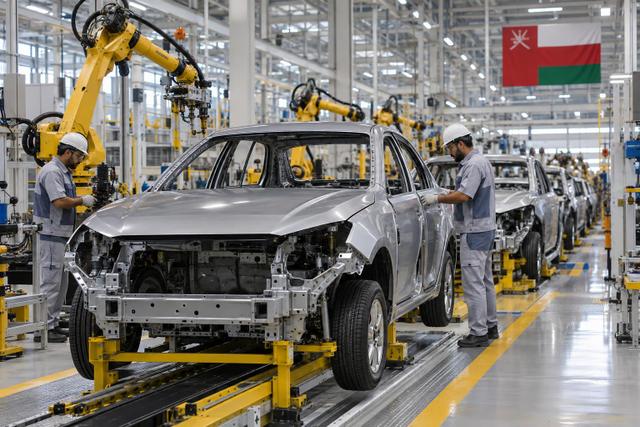
Why is Oman investing in automotive manufacturing?
Vehicle assembly can support more than the final production line. It can create demand for warehousing, shipping, vehicle inspection, parts distribution, packaging, fleet supply and technical training.
For Oman, Sohar offers a practical location because of its industrial base and access to port infrastructure. A factory that imports components and ships finished vehicles through the same logistics network can reduce handling steps compared with an inland location.
The project also aligns with a broader regional push to localise more automotive activity. Saudi Arabia is developing its own manufacturing base through the King Salman Automotive Cluster, while Abu Dhabi has announced plans for a ROX automotive manufacturing centre in KEZAD.
Oman already has a growing interest in electric mobility and local automotive enterprise. The expansion of the Omani Mays EV brand into Bahrain shows how locally developed automotive businesses may look beyond their home market as GCC distribution links develop.
Other projects covered by the agreements
The Sohar automotive complex is only one part of the investment package. The agreements cover multiple industrial activities intended to deepen production capacity and encourage higher-value activity in Oman’s designated economic areas.
Arab News said the investments cover projects across industrial zones, free zones and special economic zones, with manufacturing and logistics among the areas receiving attention.
While individual projects will have different commercial timelines, the combined programme can help create clusters where businesses share infrastructure and suppliers. This can be particularly useful for automotive production, which relies on dependable transport, storage, component supply and inspection services.
- Industrial manufacturing projects.
- Logistics and port-linked activity.
- Metal and materials processing.
- Food and consumer-goods production.
- Clean-energy and sustainability-related investment.
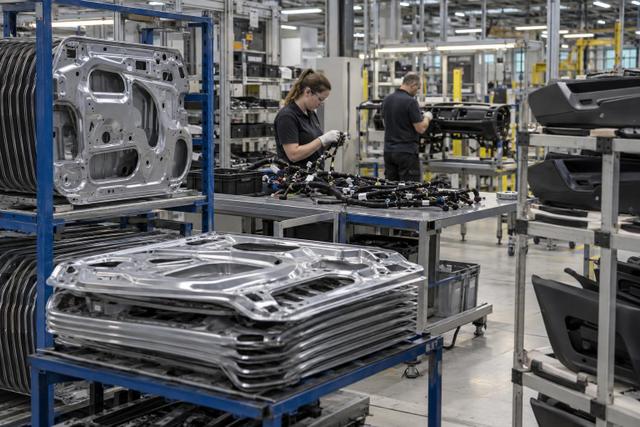
What this means for Oman’s industrial and economic diversification
Oman’s economy has long relied heavily on hydrocarbons, so new industrial investments are important for broadening the country’s economic base. Manufacturing projects can create jobs in operations, engineering, maintenance, procurement, transport and administration, not only on factory floors.
Also read: XPENG Signs New Dealer Agreements to Enter Kuwait and Expand in Oman
The value of the agreements will ultimately depend on execution. Signed deals are an early stage, and the economic benefit rises when projects are built on schedule, employ and train local workers, purchase regional inputs and generate sustainable export activity.
Automotive assembly could be particularly useful if it leads to follow-on businesses. These may include parts suppliers, tyre and battery handling, body repair support, fleet conversion, vehicle pre-delivery inspection and specialist transport services.
For consumers, local manufacturing does not automatically mean lower car prices. Retail prices are still shaped by brand positioning, import duties, specification, exchange rates, dealer costs, finance and the volume a factory can produce.
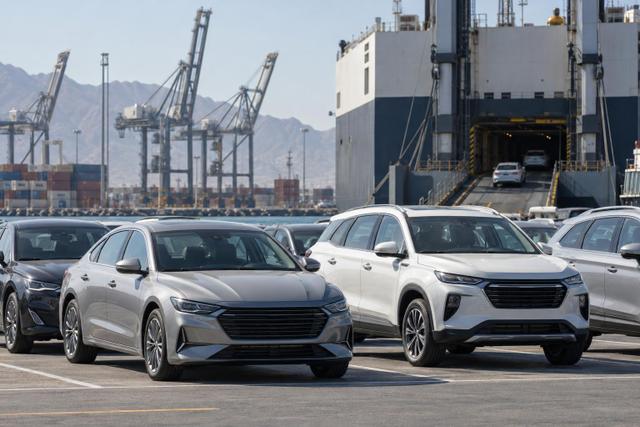
How the Sohar project could affect the wider GCC automotive supply chain
A functioning assembly complex in Sohar could give vehicle companies another possible GCC location for regional production or final assembly. Its usefulness will depend on port connectivity, customs processes, operating costs, availability of skilled labour and the ability to move vehicles competitively to nearby markets.
In the early stages, the site may rely heavily on imported components or semi-assembled kits. Over time, a successful plant could attract suppliers of simpler, bulky or frequently replaced items such as seats, glass, wiring components, plastics, batteries and packaging materials.
The project could also strengthen Oman’s role in regional vehicle logistics. Sohar’s location may suit import, storage and onward distribution for dealers, fleet operators and commercial-vehicle businesses serving Oman and selected export markets.
However, GCC automotive manufacturing is becoming more competitive. Saudi Arabia, the UAE and other markets are also seeking investment in EVs, components, battery technology and vehicle assembly, so Sohar will need a clear commercial advantage rather than simply a new factory site.
For now, the most realistic takeaway is that Oman is building the conditions for a larger automotive industrial presence. The eventual impact on buyers, jobs and vehicle availability will depend on the brands, production plans and supply-chain commitments that follow this initial agreement.
People Also Ask
How much are Oman’s new investment agreements worth?
Oman signed 28 agreements worth more than $790 million, or approximately OMR304 million. The investments cover projects in economic zones, free zones and industrial cities.
Where will the new automotive assembly complex be located?
The planned automotive assembly complex will be located in Sohar, an industrial and port city in northern Oman. Sohar’s logistics infrastructure is one reason it is suitable for manufacturing and vehicle distribution activity.
Which car brand will build vehicles at the Sohar complex?
No vehicle brand has been publicly confirmed in the reported announcement. Details such as the investor, models, capacity and production start date will need to be announced separately.
Will cars assembled in Oman be cheaper for buyers?
Local assembly could eventually reduce some logistics costs, but it does not guarantee lower showroom prices. Prices will still depend on production scale, vehicle specification, taxes, distribution costs, exchange rates and the manufacturer’s pricing strategy.
Could Sohar export vehicles to other GCC countries?
It could, particularly if the plant is designed for regional distribution and has competitive shipping and customs arrangements. Whether exports become viable will depend on the vehicles produced, demand in other markets and the availability of regional dealer networks.
Sources
- Asharq Al-Awsat: Oman signs 28 investment agreements worth $790 million
- Economy Middle East: Oman signs investment deals for projects in economic zones, free zones and industrial cities
- Gulf Daily News: Oman signs $790m deals to expand industrial and manufacturing capacity
- Arab News: Oman signs $790m in investment deals across industrial zones