
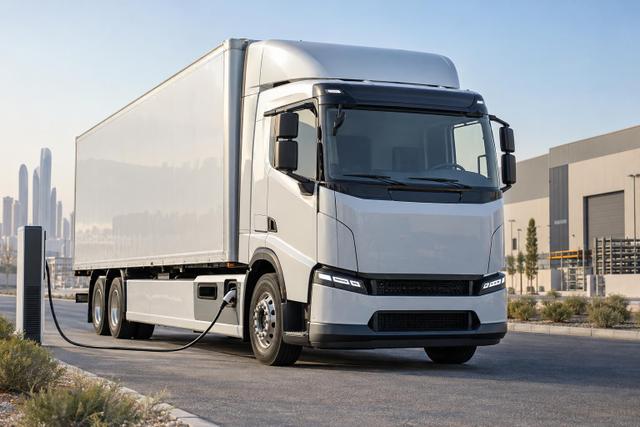
Al Sayegh Group and Triton EV have announced plans to work towards an electric truck manufacturing facility in Abu Dhabi. The proposal matters because it could move part of the UAE’s commercial-vehicle supply chain from importing finished trucks towards local assembly, manufacturing and support for fleet operators.
The project is still at the agreement stage, so buyers and logistics companies should treat production timing, model availability and local pricing as unconfirmed until the partners publish further details. Triton EV’s press-release page is the company’s main channel for updates on its partnerships and vehicle programmes.
Al Sayegh Group and Triton EV sign strategic agreement for Abu Dhabi facility
The strategic agreement brings together Abu Dhabi-based Al Sayegh Group and electric-vehicle company Triton EV around a proposed local truck facility. The stated direction is to establish a manufacturing base capable of supporting electric commercial vehicles in the emirate.
Also read: Al-Futtaim Brings the Polestar 5 Electric Grand Tourer to the UAE
For the UAE, the significance is not simply another EV announcement. Commercial trucks operate intensively, cover predictable routes and are bought in fleets, which can make them a practical early use case for electrification when charging, payload and operating costs are properly managed.
- Local production could shorten delivery lead times for fleet customers.
- Regional assembly may make specifications better suited to Gulf operating conditions.
- A factory could create opportunities for component supply, servicing and technician training.
- Fleet operators may eventually gain access to locally supported electric truck options.

Who are Al Sayegh Group and Triton EV?
Al Sayegh Group is the UAE partner named in the planned Abu Dhabi project. Its role is expected to be important in developing the local industrial, commercial and operational side of the facility.
Triton EV is an electric-vehicle business that has presented electric commercial vehicles as part of its product direction. Its public communications refer to EV programmes and partnerships, although the final models, specifications and manufacturing scope for Abu Dhabi have not yet been fully detailed.
That distinction is important for prospective fleet customers. A strategic agreement signals intent, but it does not by itself confirm a finished factory, production-ready trucks, certified range figures or delivery dates.
What will the new electric truck manufacturing facility produce?
The proposed site is expected to focus on electric trucks, but the partners have not yet publicly confirmed a complete model line-up. There is no confirmed information on vehicle classes, battery capacities, payload ratings, driving range, charging speed or annual production volume.
Those details will determine which logistics tasks the trucks can realistically handle. A light urban delivery truck has very different needs from a refrigerated distribution vehicle, a refuse truck or a long-haul tractor unit.
Key details fleet operators will need before ordering
- Payload and body options: the vehicle must carry a useful load after the battery pack and cargo body are fitted.
- Real-world range: published range needs to account for heat, air conditioning, traffic, payload and route gradients.
- Charging compatibility: fleets need clarity on depot chargers, public charging access and charging time.
- Warranty and parts support: battery coverage, repair procedures and spare-parts availability are crucial for uptime.
- Homologation: trucks must meet UAE registration, safety and commercial-operating requirements.
Until those figures are published, it is too early to compare the planned trucks directly with established diesel, hybrid or electric commercial vehicles already available in the GCC.
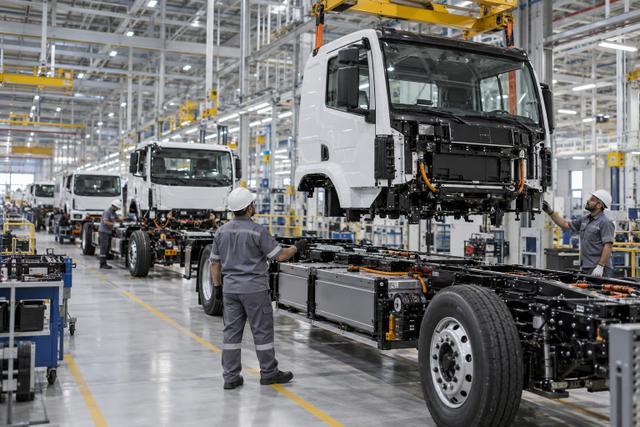
Why is Abu Dhabi building a domestic EV manufacturing base?
Local vehicle production can support wider industrial goals, particularly where a country wants to develop engineering capability, supply chains and skilled employment alongside vehicle sales. For commercial fleets, a nearby production and support base could also make parts planning and technical support more straightforward.
Abu Dhabi is pursuing investment in advanced manufacturing and lower-carbon industries as part of its broader economic diversification. The Abu Dhabi Chamber has also highlighted international investment and cooperation around Abu Dhabi’s business and industrial environment.
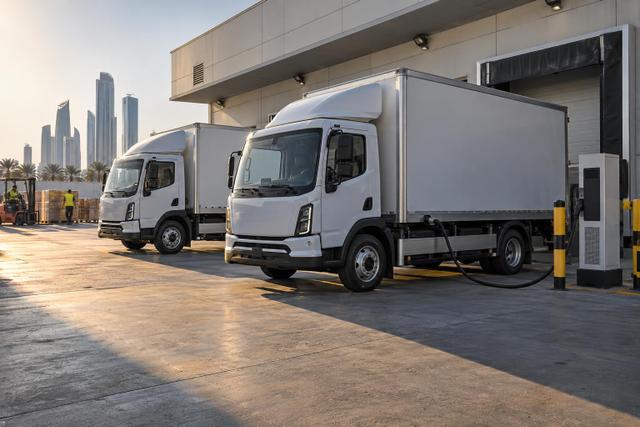
Electric trucks are particularly relevant because the transport sector depends heavily on vehicles that return to the same depot. This allows a fleet to plan charging around overnight parking, shift changes and known daily mileage rather than relying entirely on public chargers.
Local manufacturing does not remove every challenge
Making trucks locally is only one part of the transition. Operators will still need suitable depot electricity capacity, charging equipment, trained technicians, reliable parts supply and routes that fit the vehicles’ real operating range.
Heat is another major consideration in the GCC. Battery cooling, cabin air conditioning, tyre wear and energy consumption under heavy payloads all need to be validated in local conditions rather than assumed from overseas testing.
How this fits into the UAE's broader electric and hydrogen vehicle ambitions
The proposed truck facility fits a broader shift towards electric mobility in the UAE, where passenger cars, commercial fleets and charging infrastructure are all developing at different speeds. The UAE has also been identified as the GCC’s leading electric-mobility market in a recent electric mobility market assessment.
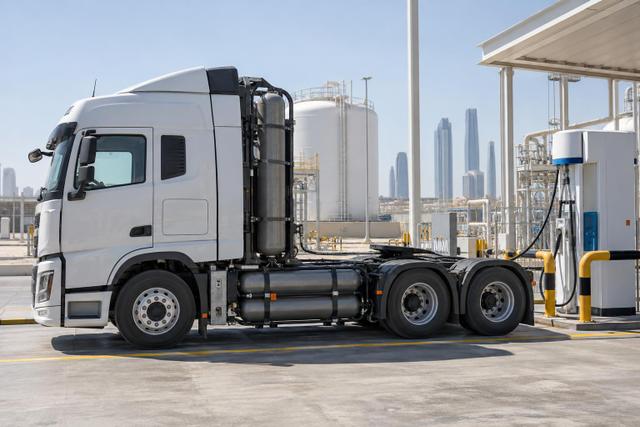
Battery-electric vehicles are likely to suit many urban and regional delivery applications first, especially where trucks return to a depot. Hydrogen could potentially have a role in heavier or longer-distance operations, but it requires a far more extensive refuelling, storage and distribution network.
Also read: WeRide and Uber Launch Robotaxi Rides for Dubai Passengers With RTA Partnership
For now, fleet managers should assess each technology against the work it must do. The best option depends on daily kilometres, payload, dwell time, operating territory, electricity access and total cost of ownership.
- Battery-electric trucks are often best suited to predictable routes and depot charging.
- Hydrogen fuel-cell trucks may eventually suit demanding duty cycles, but infrastructure remains the central challenge.
- Diesel trucks will remain important for many operations while charging and refuelling networks expand.
What this means for the UAE's logistics and trucking industry
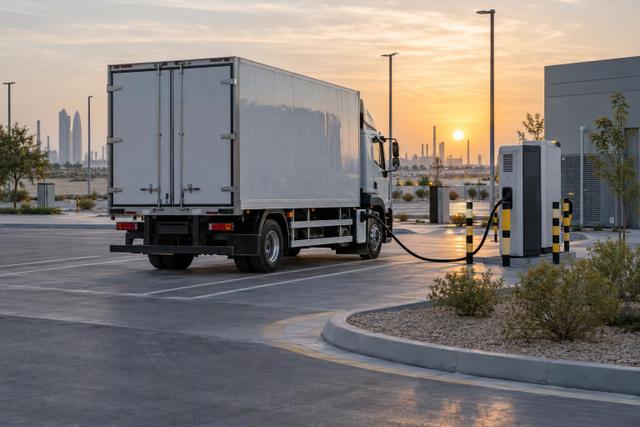
For logistics companies, the announcement creates a potential new future source of electric commercial vehicles, not an immediate replacement for existing fleet plans. Businesses should continue to choose vehicles based on route data, loading patterns, cooling requirements and service support.
Early users are most likely to be fleets with controlled routes and central depots. Last-mile delivery, municipal work, airport operations and distribution between fixed locations can be easier to electrify than irregular long-distance transport.
Local production could eventually help operators request configurations that suit regional work, such as stronger cooling systems, durable air-conditioning performance and bodies designed for local logistics tasks. However, those benefits will depend on the final manufacturing and engineering arrangements.
Electric-truck plans also reinforce the need for businesses to measure their existing operations accurately. Before replacing diesel vehicles, fleet managers should record daily distance, idle time, payload variation, fuel use, parking locations and available electrical capacity.
What comes next for the project?
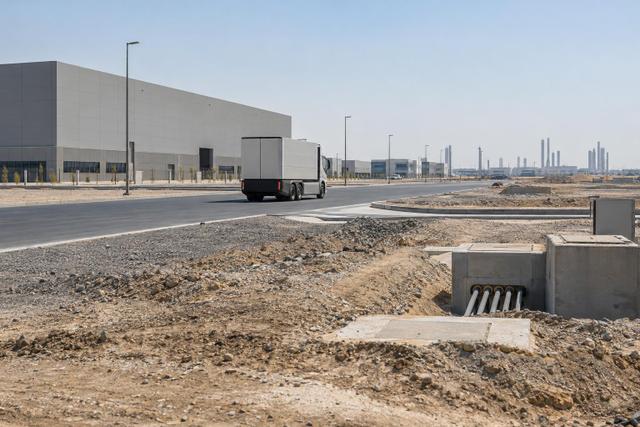
The next meaningful milestones will be confirmation of the facility location, investment scale, construction timetable and the first vehicles intended for production. Fleet buyers will also be looking for technical specifications, road-testing results, warranty terms and an after-sales support plan.
Government approvals, vehicle certification and charging arrangements will be equally important. A truck cannot enter normal fleet service until it can be registered, insured, maintained and charged reliably for the work expected of it.
Readers interested in how locally focused EV activity is developing can also follow the planned ROX ADAMAS Abu Dhabi Edition project, another example of manufacturers looking at Abu Dhabi as a base for vehicle-related activity.
People Also Ask
When will the Triton EV truck factory in Abu Dhabi open?
No confirmed opening date has been publicly announced in the available project information. The agreement outlines a planned facility, while construction, production and delivery timing still need to be confirmed by the partners.
What electric trucks will be built in Abu Dhabi?
A full list of models has not yet been published. Truck class, battery size, payload, range and charging specifications should be treated as unconfirmed until official production details are released.
Will locally made electric trucks be cheaper in the UAE?
Local manufacturing could reduce some shipping and supply-chain costs, but it does not guarantee lower purchase prices. Battery costs, production scale, specifications, taxes, financing and after-sales support will all affect the final price.
Are electric trucks practical in the UAE climate?
They can be practical for suitable routes, particularly depot-based operations with predictable daily distances. Operators must account for high temperatures, air-conditioning demand, heavy loads and charging availability when estimating real-world range.
Can electric trucks replace diesel trucks for long-distance GCC transport?
Not in every case at present. Electric trucks are generally easier to deploy on fixed urban and regional routes, while long-distance operations may need larger batteries, more charging stops or future hydrogen infrastructure.