
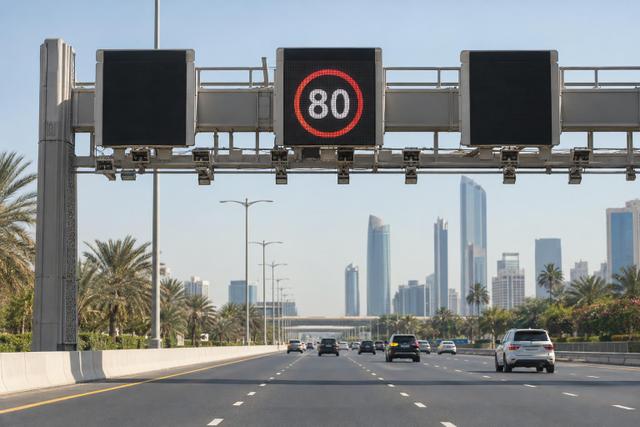
Abu Dhabi’s new variable speed limit system changes the displayed limit on Sheikh Zayed bin Sultan Road when road conditions require it. For drivers, the key rule is simple: follow the speed shown on the electronic signs at that moment, rather than assuming the usual limit applies throughout the journey.
The system is designed to manage traffic flow and improve safety during busy, disrupted or hazardous conditions. It is not a recommendation, and motorists should treat every revised limit displayed on the road as the applicable legal speed limit.
What is Abu Dhabi's new variable speed limit system?
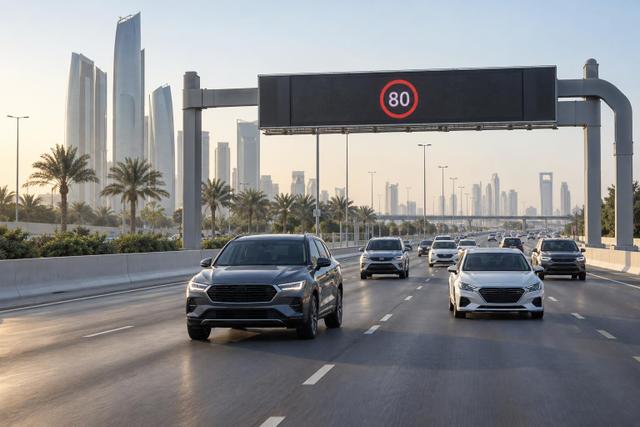
The system uses electronic variable-message signs to alter the maximum permitted speed according to real-time conditions. Instead of one fixed limit being used all day, the limit can be reduced when traffic or safety risks increase.
Also read: Abu Dhabi Mobility Bans Car Washing in Public Parking and Villa Areas
According to Khaleej Times, the initiative was introduced on Sheikh Zayed bin Sultan Road as part of Abu Dhabi’s wider use of smart traffic-management technology.
The signs are intended to give drivers an earlier warning of changing conditions ahead, helping them slow down gradually rather than reacting suddenly near congestion, an incident or roadworks.
When did the system start operating on Sheikh Zayed bin Sultan Road?
The variable speed limit system began operating on Monday, October 27, 2025. It applies on Sheikh Zayed bin Sultan Road, an important route used by commuters and longer-distance traffic travelling between Abu Dhabi and Dubai.
Al Ittihad reported that the system was introduced to adapt speed limits to road and traffic conditions, rather than relying solely on a permanently fixed number.
Drivers should pay particular attention when joining the road, changing lanes or approaching overhead gantries. A lower figure shown on an electronic sign may apply even if the road was flowing freely a few kilometres earlier.
How do the electronic speed signs work in real time?
Traffic-management systems use data from road-monitoring equipment, cameras and incident reports to identify conditions that may require a lower speed. The electronic signs can then display an updated limit for drivers approaching the affected section.
The exact limit may vary by location and by conditions. Motorists should look for the most recent sign on their direction of travel and adjust speed smoothly, while maintaining a safe gap from the vehicle ahead.
- Check overhead electronic signs regularly, especially in busy periods.
- Reduce speed progressively when a lower limit appears.
- Avoid abrupt braking unless necessary for safety.
- Leave extra following distance in rain, dust or dense traffic.
- Do not rely on an older speed sign after passing a newer electronic display.
Understanding the difference between regulatory, warning and guide signs is useful for all motorists. This guide to UAE traffic signs explains how speed-related signs fit into the wider road-sign system.
What conditions can trigger a change in the speed limit?
The purpose of a variable limit is to match driving speeds to the actual risk on the road. A reduction is most likely where visibility, traffic flow or the available stopping distance has worsened.
Traffic congestion
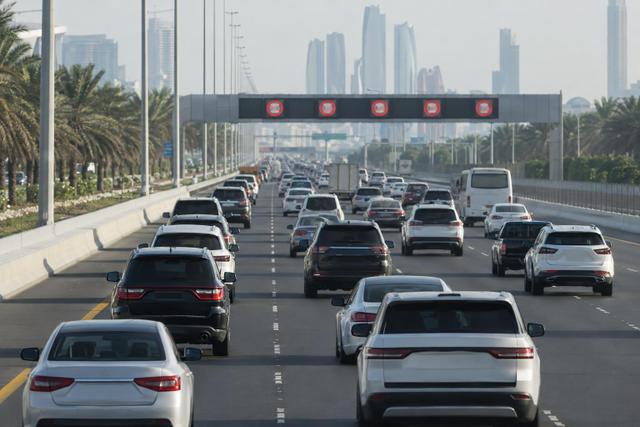
When traffic becomes dense, vehicles have less space to react to sudden braking or lane changes. A lower displayed speed can reduce the speed difference between freely moving traffic and slower queues ahead.
This can be particularly useful where congestion develops beyond a crest, curve, merge point or exit, where drivers may not immediately see the tailback.
Accidents or incidents
An accident, stopped vehicle, debris or emergency response can create an unexpected hazard. Reducing speeds before motorists reach the scene gives drivers more time to see lane closures and follow directions from authorities.
Drivers should not slow down merely to look at an incident. Keep attention on the road, obey lane instructions and move away from emergency vehicles where it is safe and permitted.
Roadworks
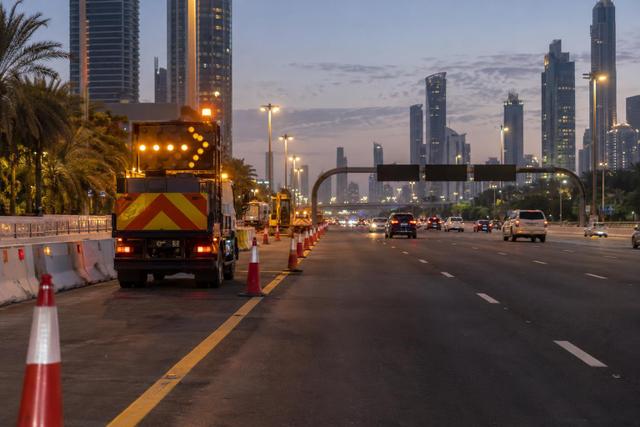
Roadworks may narrow lanes, alter road markings or place workers and equipment close to moving traffic. A temporary lower limit helps account for these changes, even when construction activity is not immediately visible.
Roadwork-related limits can be especially important at night, when lane diversions and temporary barriers may be harder to judge from a distance.
Poor weather conditions
Rain, fog, dust and reduced visibility can all increase braking distances and make lane markings harder to see. A lower variable limit is intended to encourage speeds that are more appropriate for the conditions.
Also read: Fujairah Police Lowers the Khorfakkan Road Speed Limit to 100km/h
Gulf News explained that the system can respond to weather, congestion, incidents and maintenance work, making the road’s displayed speed responsive to the situation rather than fixed.
How does this differ from Dubai's recent speed limit revisions?
Abu Dhabi’s variable system is different from a conventional speed-limit revision. A conventional revision changes the posted limit for a road or section of road on an ongoing basis, while a dynamic system can change the displayed limit as conditions change.
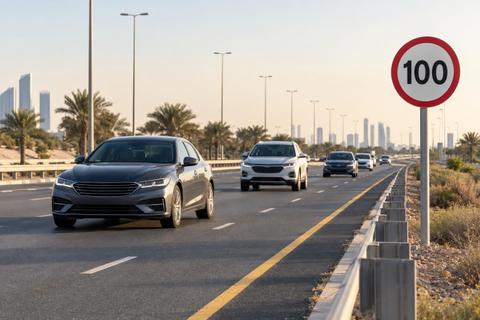
Dubai has also adjusted limits on selected roads through announced changes to permanent signage. For example, Dubai’s planned revisions on five roads include both increases and reductions, as covered in this report on Dubai speed limit changes.
Abu Dhabi has separately made permanent changes too, including the reduction on part of E311. Drivers using both routes should note the distinction between a fixed revised limit and an electronic limit that may change during the day.
For background on that E311 update, see the report on Abu Dhabi’s 100km/h E311 speed limit.
What does the new system mean for drivers on this road?
Motorists should expect the speed limit to be capable of changing on different sections of Sheikh Zayed bin Sultan Road. The displayed sign is the information that matters for the stretch ahead.
It also means cruise control should be used carefully. If the electronic sign changes, drivers need to disengage or adjust their set speed promptly and safely.
- Do not assume the normal limit remains in force during bad weather or heavy traffic.
- Watch for signs well before junctions, lane merges and congested sections.
- Increase following distance when the road is wet, dusty or visibility is poor.
- Plan extra time for journeys during peak periods or weather disruptions.
- Follow any lane-control symbols or incident instructions displayed alongside the speed limit.
The system should be viewed as an additional driving cue, not a substitute for judgement. A driver may need to travel below the posted maximum if traffic, visibility or surface conditions make that necessary.

Key takeaways for motorists
Abu Dhabi’s variable speed limit system is intended to make a major road safer and more predictable when conditions change. It gives authorities a way to reduce speeds before drivers reach a developing hazard.
- The system has operated on Sheikh Zayed bin Sultan Road since October 27, 2025.
- Electronic signs can show different limits depending on real-time conditions.
- Congestion, collisions, roadworks and poor weather can trigger a change.
- Drivers should obey the latest displayed limit and adapt their driving to conditions.
- A variable limit differs from a permanently revised speed limit on a road.
For regular users of the route, the safest habit is to scan overhead signs early and often. Doing so provides time to reduce speed smoothly and avoid sharp braking around slower traffic.
People Also Ask
Do variable speed limits apply legally in Abu Dhabi?
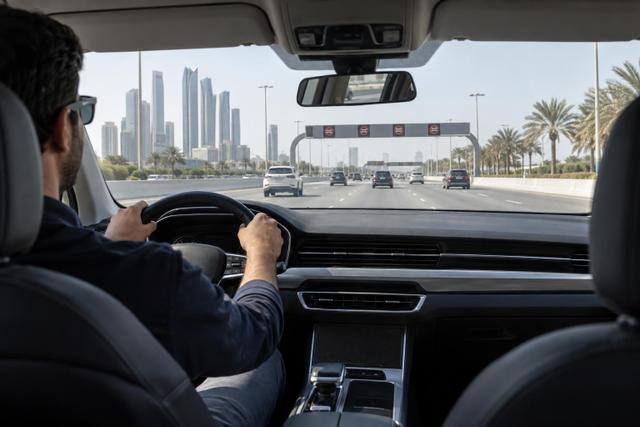
Yes. Drivers should treat the speed shown on an active electronic sign as the applicable limit for that road section and obey it in the same way as a conventional posted speed limit.
Where is Abu Dhabi's variable speed limit system operating?
The system was launched on Sheikh Zayed bin Sultan Road. Motorists should watch electronic signs whenever travelling on the route, as the displayed limit may change according to conditions.
Can the speed limit change because of rain or fog?
Yes. Poor visibility and wet or dusty road conditions are among the situations in which a lower speed may be displayed to improve safety and allow more braking distance.
What should drivers do when an electronic sign shows a lower limit?
Reduce speed gradually when safe, maintain a larger gap to traffic ahead and continue to watch for further signs, lane instructions or emergency activity.
Is a variable speed limit the same as a permanent speed-limit reduction?
No. A permanent revision changes the normal posted limit for a road, while a variable system can raise or lower the displayed limit in response to current traffic, weather or road conditions.