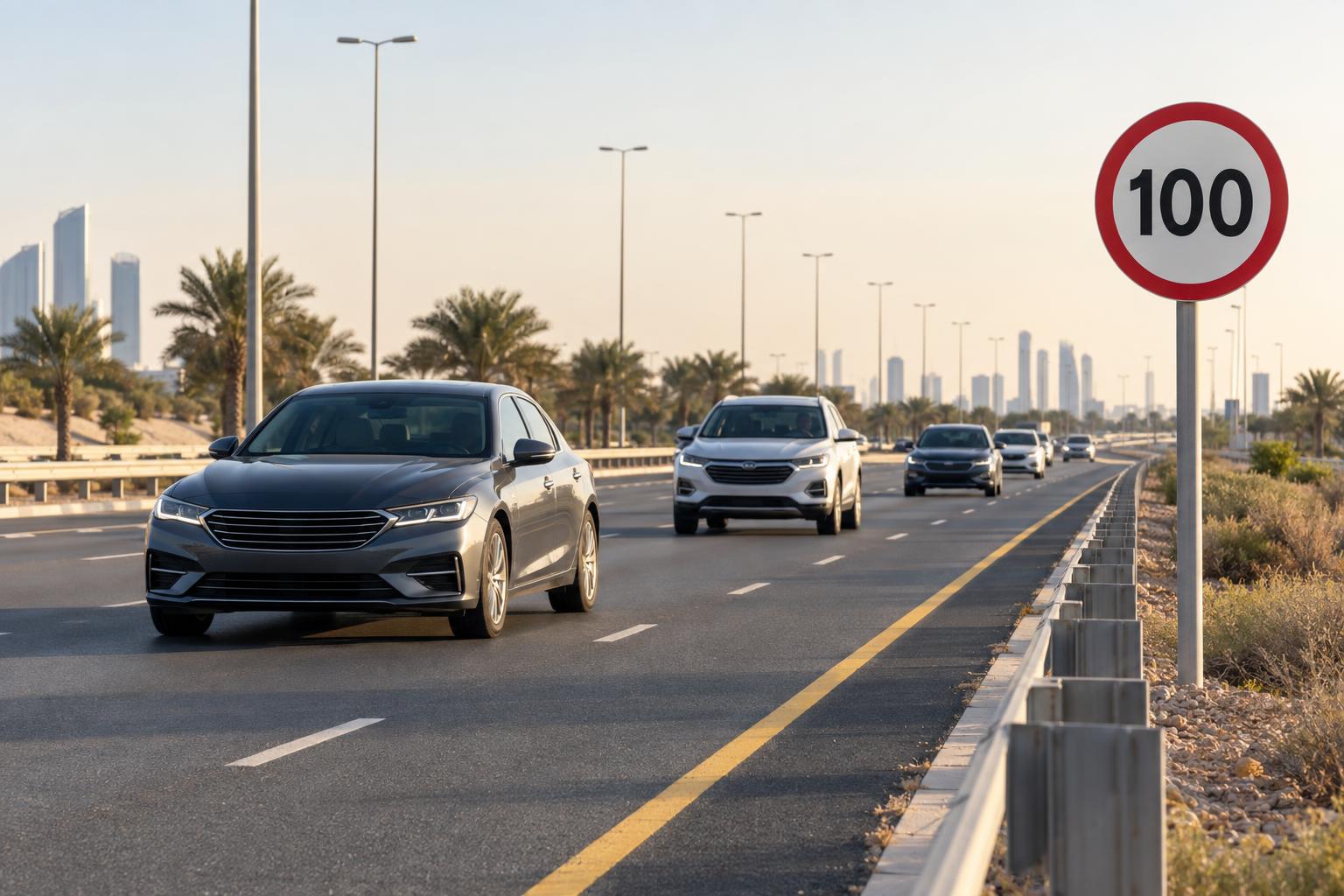
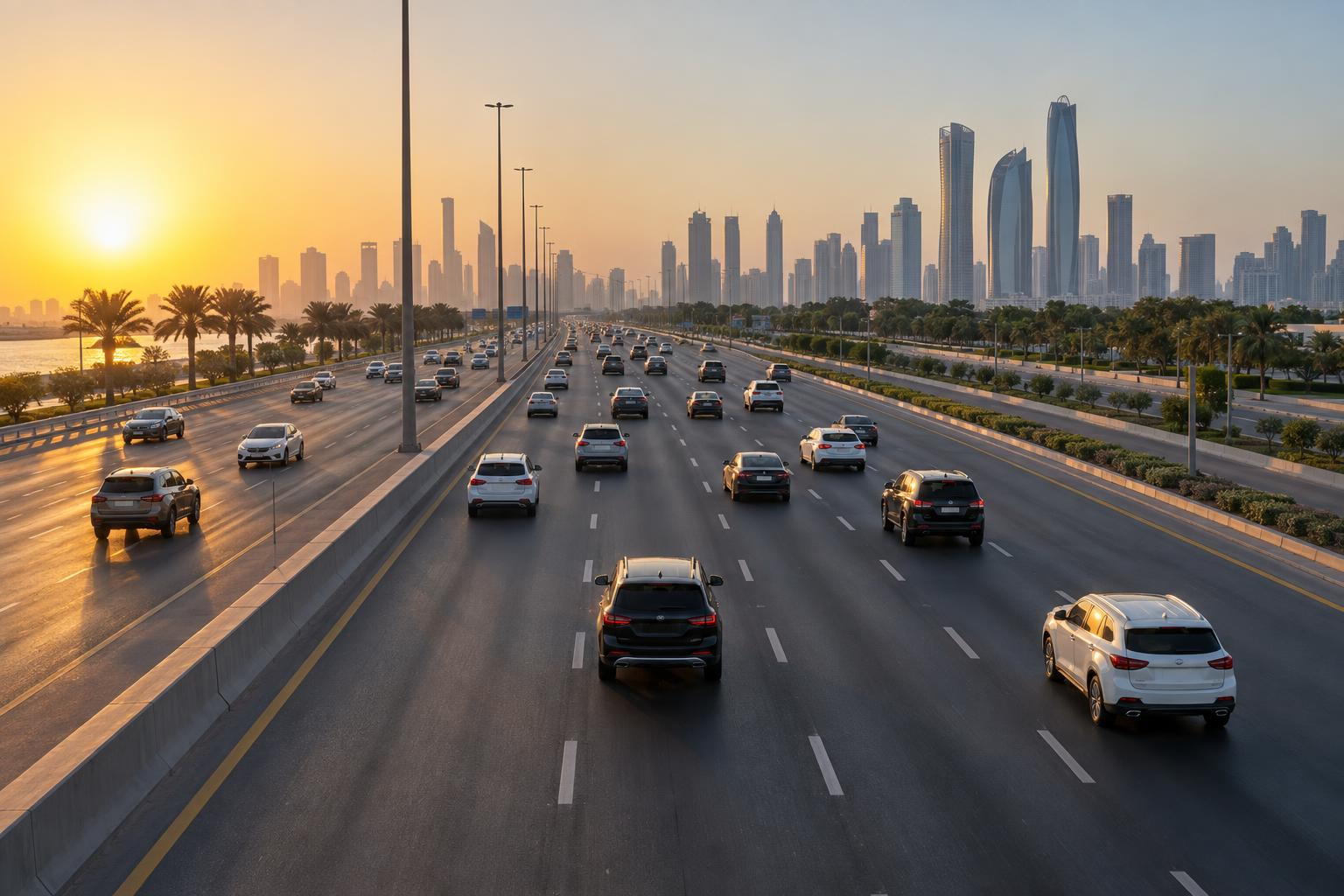
Drivers using Sheikh Mohammed bin Rashid Road (E311) in Abu Dhabi now need to allow more time for their journey. Abu Dhabi Mobility has reduced the posted maximum speed from 120km/h to 100km/h on a specified section of the route, and the emirate's zero-tolerance enforcement approach means even a small amount over the displayed limit can result in a fine.
The change applies within Abu Dhabi, not necessarily to every E311 segment across the UAE. Motorists travelling between Abu Dhabi and Dubai should watch roadside signs carefully, as limits and camera enforcement rules can change when crossing into another emirate.
What changed on the E311 in Abu Dhabi?
The maximum speed limit on the affected Abu Dhabi section of E311, also known as Sheikh Mohammed bin Rashid Road, has been reduced by 20km/h. Where drivers were previously permitted to travel at 120km/h, the new posted limit is 100km/h.
This is a speed-limit change rather than a new road closure or diversion. The route remains open, but drivers should adjust cruise-control settings, following distances and expected travel times before entering the affected area.
| Item | Previous arrangement | Current arrangement |
|---|---|---|
| Road | Sheikh Mohammed bin Rashid Road (E311) | Sheikh Mohammed bin Rashid Road (E311) |
| Maximum posted speed | 120km/h | 100km/h |
| Enforcement approach in Abu Dhabi | Speed must remain within the displayed limit | Speed must remain within the displayed limit |
Which exact stretch of the road is affected?
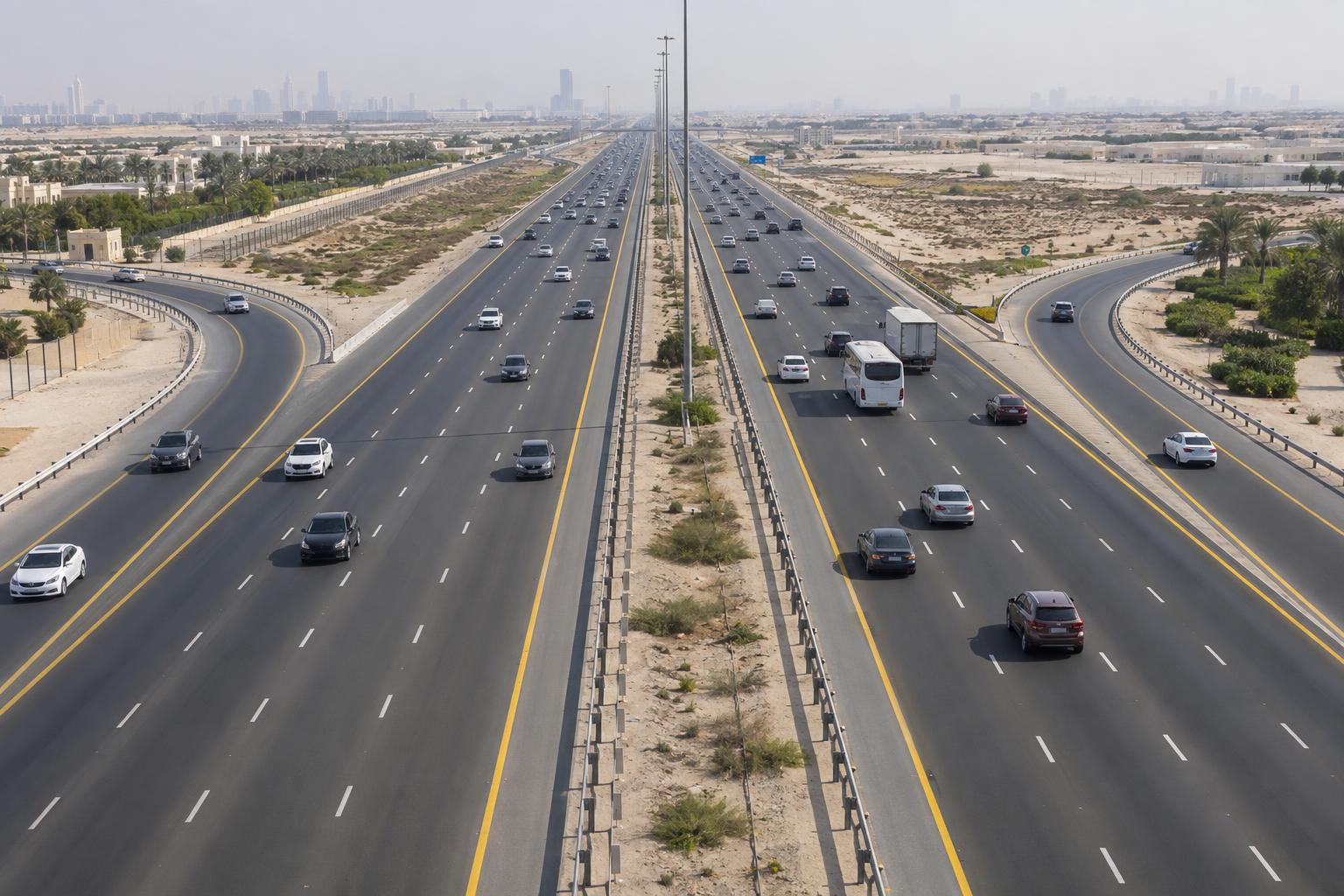
The revised 100km/h limit applies on the E311 section running from Sheikh Zayed bin Sultan Street to the Abu Dhabi-Dubai border, in both directions. This is an important route for commuters, airport travellers, logistics vehicles and motorists moving between Abu Dhabi and Dubai.
Drivers should not assume that the same limit continues for the entire journey after leaving Abu Dhabi. The E311 passes through different jurisdictions, and limits may vary according to the emirate, road design, traffic conditions and posted signs.
When does the new 100km/h limit take effect?
Abu Dhabi Mobility announced that the revised limit took effect on Monday, 14 April 2025. Since the change is already in force, drivers should treat the 100km/h signs and speed cameras on this stretch as the current rule.
Road users should always rely on live roadside signage rather than an old navigation-app setting or past experience. Temporary limits can also be introduced for maintenance, incidents, weather conditions or roadworks.
Why has Abu Dhabi Mobility reduced the speed limit?
Abu Dhabi Mobility has presented the reduction as a road-safety measure. Lowering the maximum speed reduces the distance a vehicle travels before the driver can react, and it can reduce the severity of a collision if one occurs.
This matters particularly on busy inter-emirate corridors where traffic can include private cars, heavy vehicles, merging traffic and drivers changing lanes for exits. A 20km/h reduction may appear modest, but at motorway speeds it makes a meaningful difference to stopping distance and crash forces.
- It gives drivers more time to identify congestion, lane changes and hazards ahead.
- It can reduce the severity of crashes involving high-speed impacts.
- It encourages more consistent traffic flow when volumes are high.
- It supports safer merging and lane discipline near junctions and access roads.
How Abu Dhabi's zero tolerance policy differs from Dubai and Sharjah
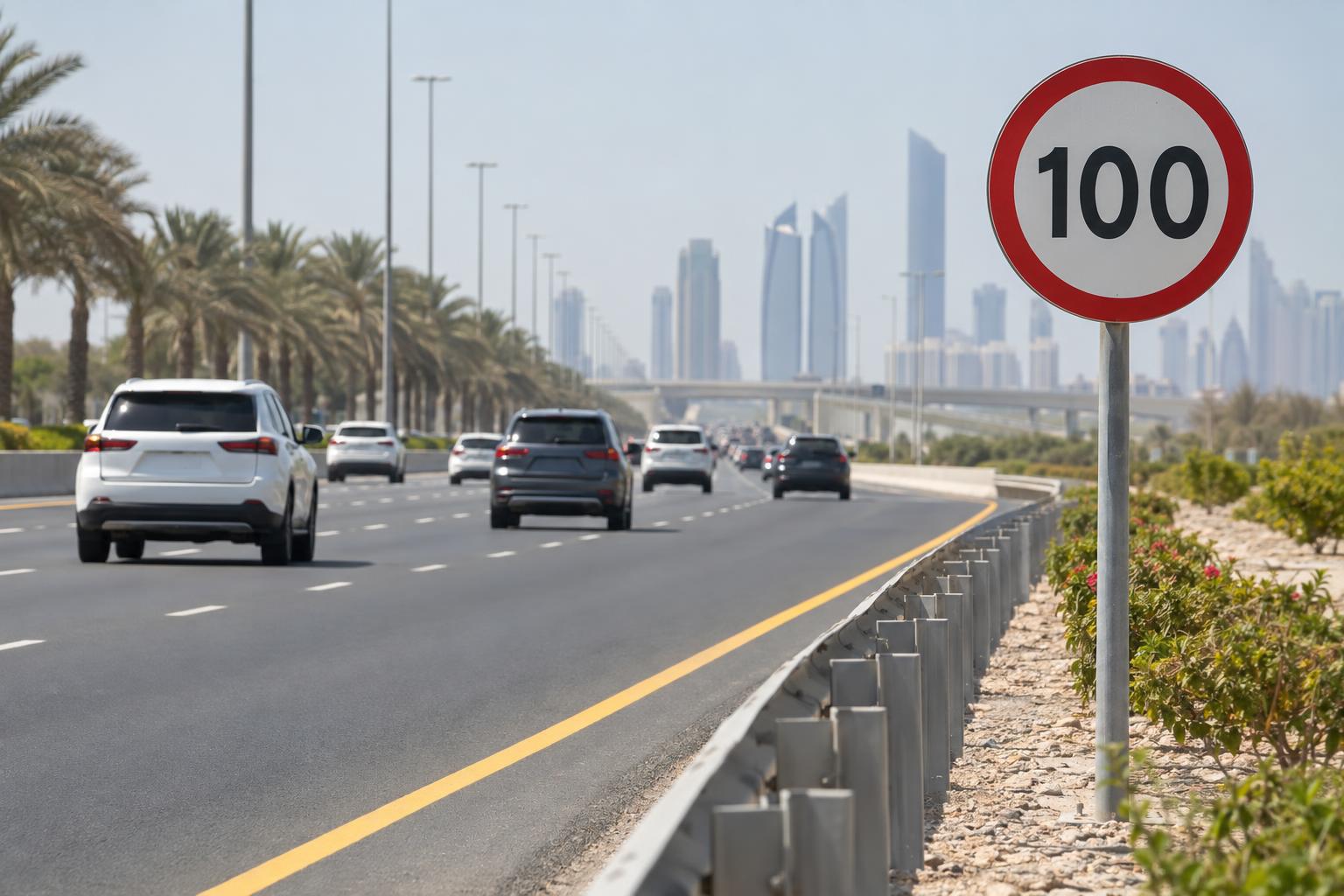
The most important practical point is that Abu Dhabi generally applies a zero-tolerance policy to the displayed speed limit. On a road signed at 100km/h, motorists should aim to stay at or below 100km/h, not treat 100km/h as a starting point for a higher camera threshold.
Dubai and Sharjah have traditionally applied a speed buffer on many roads, often allowing enforcement at a speed above the posted limit. However, drivers should not rely blindly on a presumed buffer. Limits, enforcement thresholds and road-specific arrangements can change, and the posted sign remains the legal reference point.
For a journey that begins in Dubai or Sharjah and enters Abu Dhabi, it is sensible to reduce speed before crossing the border. Cruise control that may have seemed acceptable elsewhere could trigger a fine once the vehicle enters Abu Dhabi.
Why the difference catches commuters out
A driver accustomed to setting cruise control at 118km/h on a 100km/h road in another emirate may assume they have a margin. On the affected Abu Dhabi E311 section, that approach is risky. Allow for speedometer variation, downhill gradients and brief acceleration when overtaking.
Fines, black points and impound risk for speeding on E311
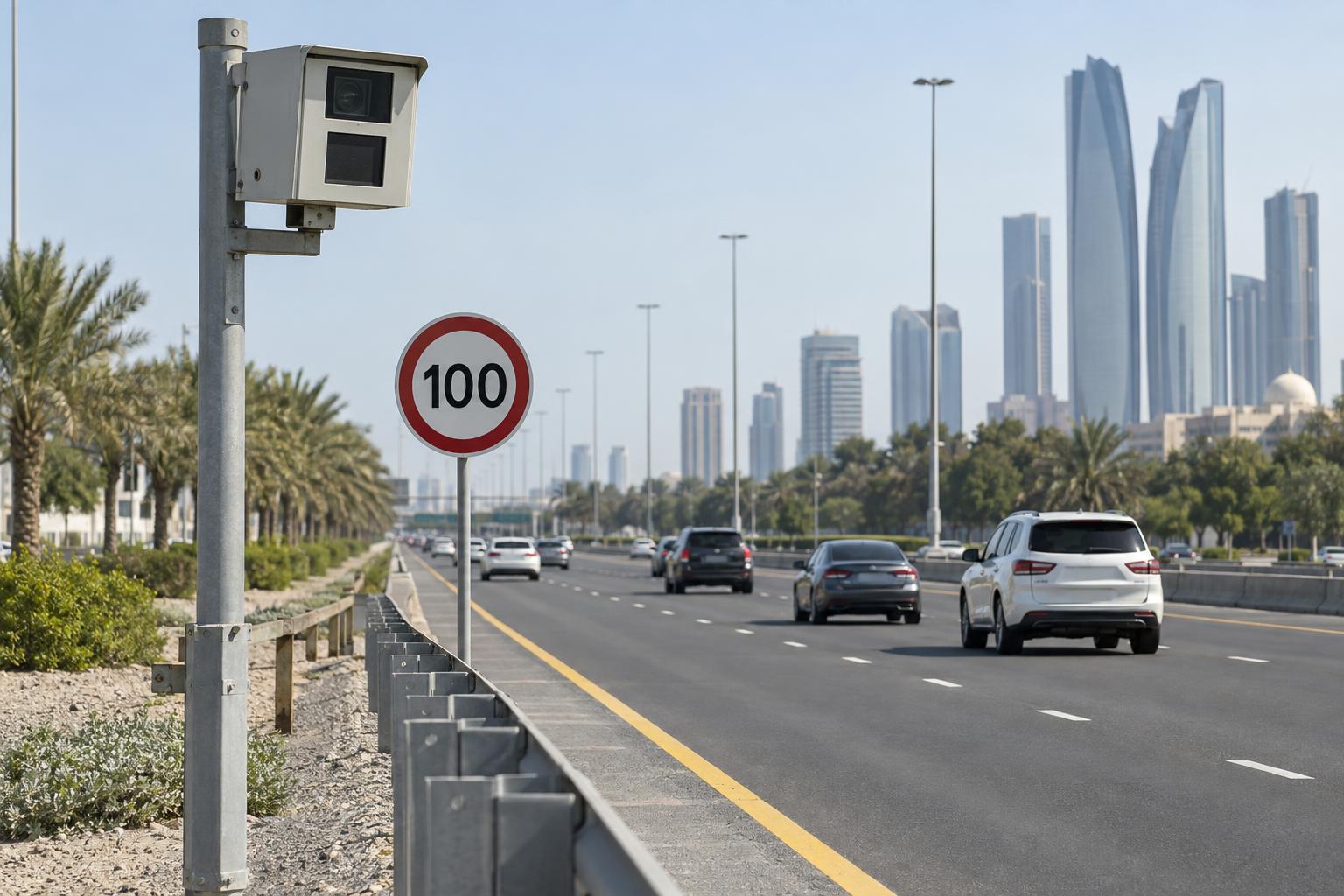
Speeding fines in Abu Dhabi are based on how far above the limit a vehicle is recorded travelling. On a 100km/h road, even a recorded speed of 101km/h can expose the driver to the lowest speeding category because there is no general grace margin to depend on.
More serious speeding offences can add black points to the driving licence and may lead to vehicle impoundment. The exact outcome depends on the recorded excess speed and the applicable traffic rules at the time of the offence.
| Speed above the limit | Fine | Black points | Vehicle impoundment |
|---|---|---|---|
| Up to 20km/h | AED 300 | None | None |
| More than 20km/h up to 30km/h | AED 600 | None | None |
| More than 30km/h up to 40km/h | AED 700 | None | None |
| More than 40km/h up to 50km/h | AED 1,000 | None | None |
| More than 50km/h up to 60km/h | AED 1,500 | 6 points | None |
| More than 60km/h up to 80km/h | AED 2,000 | 12 points | 30 days |
| More than 80km/h | AED 3,000 | 23 points | 60 days |
These penalties are substantial, especially for drivers who use the route daily. Keep in mind that a speeding violation can also affect fleet operations, company policies and a driver's insurance record.
What this means for daily commuters
The lower limit will add some time to journeys, particularly for drivers covering the full affected section. In practice, the difference may be less dramatic than expected once traffic, lane changes, entry ramps and normal congestion are considered.
The best adjustment is to leave a little earlier and drive consistently. Constantly accelerating, braking and changing lanes to recover a few minutes usually increases stress and can increase both fuel consumption and risk.
- Set cruise control to 100km/h or slightly below when conditions allow.
- Check the speedometer after entering Abu Dhabi from another emirate.
- Maintain a safe gap, especially behind heavy vehicles and in poor visibility.
- Use navigation apps for traffic awareness, but follow official roadside signs first.
- Factor extra journey time into airport trips, work commutes and deliveries.
Key takeaways for drivers using the E311
The E311 change is straightforward, but it has real consequences for anyone who regularly drives between Abu Dhabi and Dubai. The affected Abu Dhabi stretch is now signed at 100km/h, and motorists should drive to that displayed limit rather than expect a speed buffer.
- New limit: 100km/h, reduced from 120km/h.
- Affected area: E311 between Sheikh Zayed bin Sultan Street and the Abu Dhabi-Dubai border.
- Effective date: 14 April 2025.
- Enforcement: Abu Dhabi's zero-tolerance approach means drivers should not exceed the posted limit.
- Potential penalties: AED 300 for lower-level speeding, escalating to fines, black points and impoundment for major excess speeds.
For the safest and least stressful trip, treat the new limit as a firm ceiling, not a target to exceed. Watch the signs, use steady inputs and leave enough time for the journey.
People Also Ask
What is the new speed limit on E311 in Abu Dhabi?
The maximum speed on the affected Abu Dhabi section of E311 is now 100km/h, reduced from 120km/h.
Which part of E311 has the 100km/h limit?
The revised limit applies between Sheikh Zayed bin Sultan Street and the Abu Dhabi-Dubai border, in both directions.
When did the E311 speed limit change in Abu Dhabi?
The revised 100km/h limit took effect on 14 April 2025.
Is there a speed buffer in Abu Dhabi?
Abu Dhabi generally follows a zero-tolerance approach. Drivers should stay at or below the posted speed limit because exceeding it, even slightly, can result in enforcement.
What is the fine for driving above 100km/h on the affected E311 section?
A driver recorded up to 20km/h over the limit can face an AED 300 fine. Higher excess speeds bring larger fines, and serious offences can include black points and vehicle impoundment.