
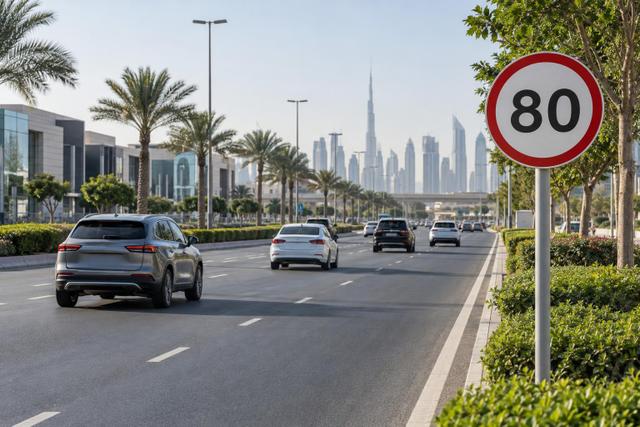
Dubai will change posted speed limits on five major roads from 1 November 2026. Three routes will receive higher limits and two will be reduced, so drivers should check roadside signs rather than rely on the limits they are used to seeing on their daily commute.
The changes follow a review by Dubai’s Roads and Transport Authority (RTA) and Dubai Police of traffic movement, road design and safety conditions. RTA says the revised limits are intended to better match each road’s operating environment.
What is changing on Dubai's roads from November 1, 2026?
The revised limits affect Sheikh Mohammed bin Zayed Road, Al Khail Road, Dubai-Al Ain Road, Sheikh Zayed bin Hamdan Al Nahyan Street and Al Yalayis Street. The new limits apply from the start of Sunday, 1 November.
Also read: Dubai Police Warn Pedestrians of a Dh400 Fine for Unsafe Road Crossings
Drivers should treat the signs at the relevant stretch as the final instruction. A road can have different limits along its length, especially near interchanges, built-up areas and merging traffic.
- Three roads: posted limits will increase.
- Two roads: posted limits will decrease.
- Radar systems: will be updated to reflect the new signed limits.
- Effective date: 1 November 2026.
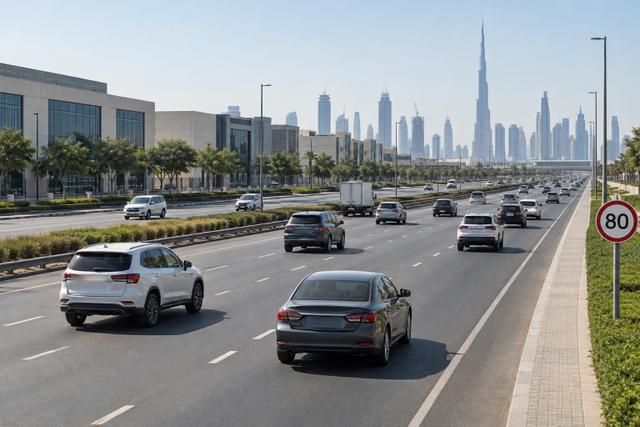
Which roads will have higher speed limits?
According to Gulf News, the following three roads will receive higher posted limits:
- Dubai-Al Ain Road: from 100km/h to 120km/h.
- Sheikh Zayed bin Hamdan Al Nahyan Street: from 100km/h to 110km/h.
- Al Yalayis Street: from 80km/h to 100km/h.
These increases do not mean every section of each route will necessarily carry the same limit. Drivers entering from a service road, approaching a junction or passing roadworks must follow the nearest displayed sign.
Dubai-Al Ain Road is a key link for commuters travelling between Dubai and inland communities. Motorists using this route should still allow for changing traffic conditions around exits, lane drops and heavy peak-hour flows.
Those travelling through wider Dubai should also be aware of the new truck movement restrictions on key Dubai corridors, which took effect earlier in October and can influence traffic patterns at certain times.
Which roads will have lower speed limits?
Two busy high-speed corridors will have lower posted limits from 1 November. The reductions are designed to bring vehicle speeds closer to the road environment and the traffic volumes using these stretches.
- Sheikh Mohammed bin Zayed Road: from 120km/h to 110km/h.
- Al Khail Road: from 100km/h to 90km/h.
Both changes matter because regular users may have driven these roads at the old limit for years. The difference may appear small, but it changes the point at which a radar can record a speeding offence.
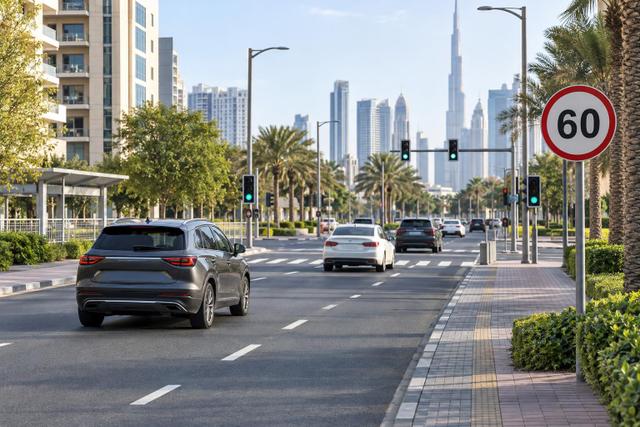
Why has RTA adjusted these specific stretches?
Speed limits are not set only by how quickly a road appears to flow. Authorities consider factors such as lane layouts, merging activity, traffic density, roadside development, collision data and the number of entry and exit points.
On roads where design and traffic conditions support a higher operating speed, an increase can improve consistency between the signed limit and the way traffic moves. On busier corridors with frequent weaving or heavier merging, a lower limit can help reduce speed differences between vehicles.
The National reported that the revisions followed technical traffic and safety studies. The practical aim is to improve road safety without unnecessarily slowing suitable high-capacity sections.
For newer drivers, it is worth remembering that a speed-limit sign is a legal maximum, not a target. Rain, dust, congestion, poor visibility and close traffic can all require a lower speed than the number on the sign.
A refresher on UAE traffic signs and their meanings can also help drivers identify temporary restrictions, lane-control signs and speed changes before reaching a camera.
How radar cameras are being reprogrammed
Dubai’s radar enforcement systems will be reconfigured alongside the new posted limits. This means motorists should not assume that a camera will continue to use the old trigger point after the changes begin.
Also read: Dubai Shuts Emirates Road Lanes Near Al Maktoum Airport for Self-Driving Taxi Trials
Dubai generally applies a radar enforcement margin above the displayed limit, but the posted limit remains the number drivers should use when judging a safe and legal speed. Gulf News explained that the radar threshold changes when the underlying road limit changes.
- At a signed limit of 120km/h, enforcement can begin above 140km/h.
- At a signed limit of 110km/h, enforcement can begin above 130km/h.
- At a signed limit of 100km/h, enforcement can begin above 120km/h.
- At a signed limit of 90km/h, enforcement can begin above 110km/h.
The margin is not an extra permitted speed and should not be treated as one. It exists for enforcement purposes, while the number on the sign remains the legal speed limit drivers are expected to observe.

What drivers need to know before the new limits take effect
Check your usual route before Monday commuting begins. This is especially important for drivers who regularly use Sheikh Mohammed bin Zayed Road or Al Khail Road, where familiar cruising speeds may become too high under the revised rules.
- Look for new or amended speed-limit signs from 1 November.
- Reduce speed early when approaching a lower-limit section.
- Do not rely on an old navigation-app speed display.
- Keep more distance in heavy traffic, even where the limit has increased.
- Watch for temporary limits around works, incidents and lane closures.
Drivers who recently moved to Dubai may find the changes particularly useful context. The emirate registered more than 196,000 new vehicles in the first half of 2026, according to RTA vehicle registration figures for the first half of the year, increasing the importance of predictable speeds and safe lane discipline.
The lower limits are also a reminder not to tailgate or make late lane changes to maintain a preferred speed. Leave space, signal early and accept that the safest pace is often determined by surrounding traffic rather than an empty-lane maximum.
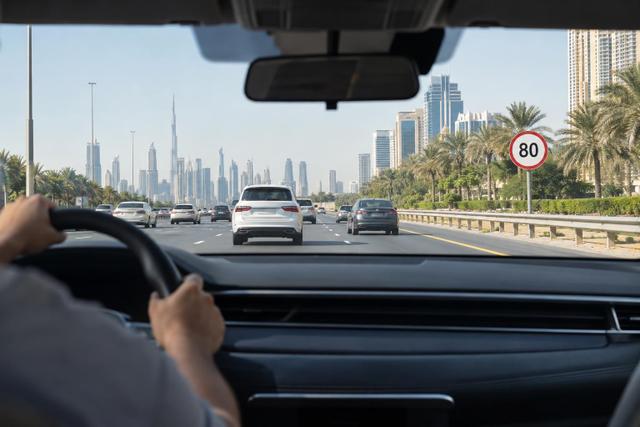
Key takeaways for Dubai motorists
The 1 November update is not a citywide increase or decrease. It is a targeted revision affecting five roads, with three limits rising and two falling.
- Dubai-Al Ain Road: 100km/h to 120km/h.
- Sheikh Zayed bin Hamdan Al Nahyan Street: 100km/h to 110km/h.
- Al Yalayis Street: 80km/h to 100km/h.
- Sheikh Mohammed bin Zayed Road: 120km/h to 110km/h.
- Al Khail Road: 100km/h to 90km/h.
The most important habit is simple: follow the latest posted sign, not the limit you remember. Radar cameras will be aligned with the revised limits, so drivers should adjust from the first day rather than waiting to see how enforcement develops.
People Also Ask
When do Dubai's new speed limits start?
The new limits take effect on 1 November 2026. Motorists should follow the updated roadside signs from that date.
Which Dubai road speed limits are being increased?
Dubai-Al Ain Road will rise to 120km/h, Sheikh Zayed bin Hamdan Al Nahyan Street to 110km/h and Al Yalayis Street to 100km/h on the affected stretches.
Which Dubai roads will have lower speed limits?
Sheikh Mohammed bin Zayed Road will reduce from 120km/h to 110km/h, while Al Khail Road will reduce from 100km/h to 90km/h.
Will Dubai radar cameras be updated for the new limits?
Yes. Radar enforcement systems will be reprogrammed to match the new signed limits, so the enforcement threshold will change with the road limit.
Does Dubai's radar margin mean I can drive above the speed limit?
No. The displayed limit is the legal maximum. Any radar enforcement margin is not an additional allowance for drivers and does not replace the need to follow the posted sign.