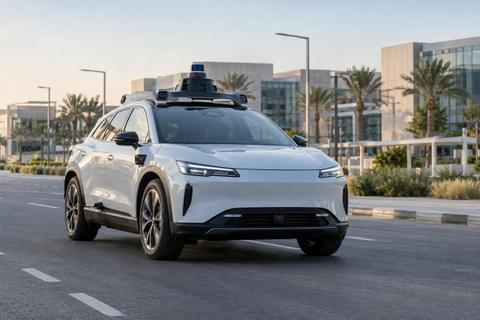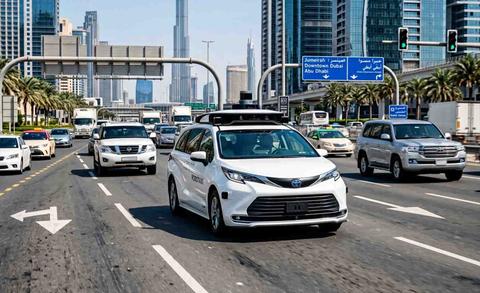

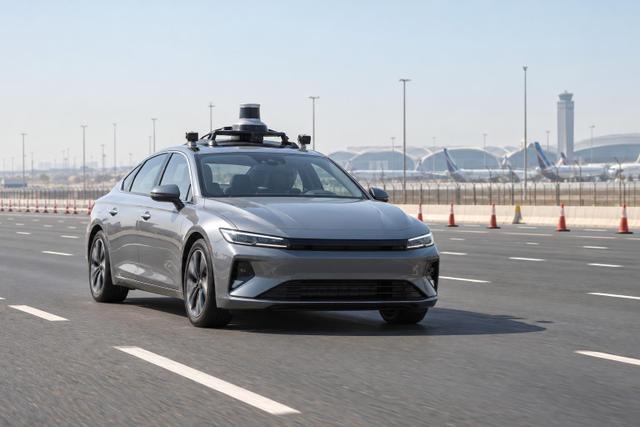
Dubai is closing selected lanes on Emirates Road near Al Maktoum International Airport to allow controlled testing of self-driving taxis. The temporary restrictions affect a busy freight and airport-access corridor, so drivers should allow extra time, follow electronic signs and use alternative routes where practical.
The trial is part of Dubai's wider plan to introduce autonomous mobility in stages, beginning with supervised testing in carefully selected conditions before any broader passenger service is approved.
RTA announces Emirates Road lane closures for autonomous taxi testing
Dubai's Roads and Transport Authority has announced temporary lane closures on Emirates Road, also known as E611, for autonomous taxi testing near Al Maktoum International Airport. The RTA announcement asks motorists to pay attention to road signs and plan their journeys around the affected area.
Also read: WeRide and Uber Launch Robotaxi Rides for Dubai Passengers With RTA Partnership
The closures support on-road validation of autonomous driving systems rather than a public robotaxi launch. Test vehicles need real traffic conditions, lane markings, merges and airport-area road layouts to assess how their systems respond safely.
- Expect restrictions on selected E611 lanes near the airport tunnel and Al Maktoum International Airport.
- Lane availability may change as testing moves between defined road sections.
- Drivers should merge early and avoid sudden lane changes around closure points.
- Emergency vehicles and road users must continue to follow all normal traffic rules.
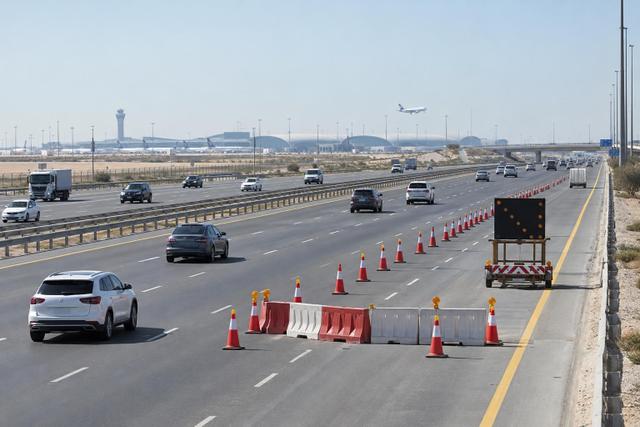
Which lanes and roads are affected near Al Maktoum Airport?
The restrictions are focused on selected lanes of Emirates Road in the vicinity of the Al Maktoum Airport Tunnel. Gulf News reported that the closures cover E611 lanes around the airport-tunnel section, rather than a full closure of Emirates Road.
That distinction matters for regular commuters. The road remains open, but reduced lane capacity can create queues, particularly where airport traffic, heavy vehicles and vehicles joining or leaving the road converge.
Why this location is useful for testing
The airport corridor provides a demanding but manageable environment for autonomous systems. It combines high-speed traffic, lane changes, ramps, large vehicles and road users heading to terminals, logistics facilities and surrounding developments.
It is also a practical location for a controlled trial because test teams can define a route, monitor vehicles closely and limit testing activity to a specific operational area. The National described the measures as lane closures introduced to facilitate self-driving taxi tests.
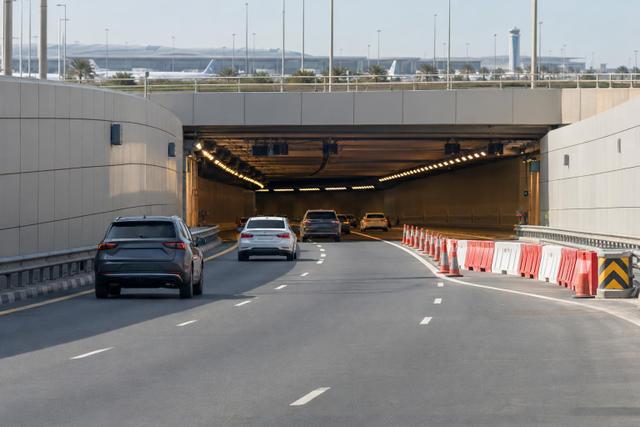
When exactly will the closures take place?
The RTA said the lane closures begin from Monday, with the exact active periods and affected stretches communicated through road signage and traffic updates. Motorists should not assume that a lane restricted on one journey will necessarily be restricted at the same time on the next.
Testing-related closures are typically temporary and may be adjusted for safety, traffic flow or the needs of the trial. Before travelling through the airport area, check live navigation information and overhead electronic signs.
Best times to avoid the affected area
Delays are most likely when traffic volumes are already high. This includes morning and evening commuting periods, airport arrival and departure peaks, and times when logistics traffic is heavy.
- Leave earlier if travelling to Al Maktoum International Airport for a flight or collection.
- Allow additional time for delivery, fleet and business journeys using E611.
- Choose a different route if navigation apps show congestion building around the tunnel.
- Stay in the correct lane well before the closure point, rather than trying to merge at the last moment.
What drivers should know about alternate routes and safe driving
There is no single diversion that suits every journey because the best route depends on where you join Emirates Road and whether you are heading towards Dubai, Abu Dhabi, Jebel Ali or the airport. Use a live navigation app before departure and follow temporary diversion signs on the road.
For trips that do not require E611, routes such as Sheikh Mohammed bin Zayed Road, Sheikh Zayed Road or local access roads may be useful alternatives depending on the destination. Drivers should only change route where signs and navigation instructions make it safe to do so.
Do not stop to watch test vehicles, take photos while driving or follow them closely. Autonomous-test vehicles can be fitted with visible sensors and may drive differently from surrounding traffic, but they remain part of normal road traffic and deserve the same space as any other vehicle.
It is also worth noting that Emirates Road is treated differently from roads covered by the city's latest truck restrictions. The new Dubai truck movement restrictions exempt Emirates Road, which can make traffic conditions around E611 especially important for commercial drivers to monitor.
Also read: Are Driverless Taxis About To Change Everyday Driving In The UAE?
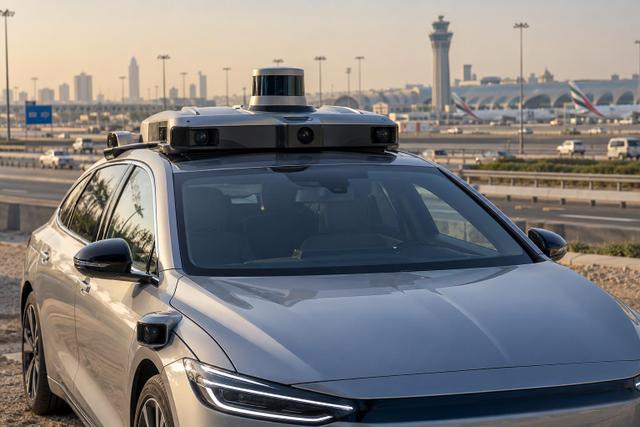
How this fits into Dubai's broader robotaxi ambitions
Road testing is one stage in Dubai's longer transition towards autonomous transport. The city aims for autonomous transport to account for a meaningful share of journeys by 2030, but that target involves more than driverless taxis: it also includes technology, regulation, mapping, communications and passenger confidence.
For motorists, this means self-driving vehicles are likely to become more visible before they become common. A safety operator may still be present during early trials, while later stages can expand only after regulators are satisfied with performance in local conditions.
Dubai is building testing capability alongside road trials. The Dubai Mobility Labs testing ground at Silicon Oasis provides controlled scenarios that complement the unpredictable situations vehicles face on public roads.
What makes UAE testing different?
Autonomous vehicles operating in the UAE must handle intense heat, glare, dust, sudden sand build-up and dense multi-lane traffic. Airport routes add further challenges because vehicles may encounter tourists unfamiliar with local roads, luggage-carrying taxis, buses and commercial traffic.
Trials on Emirates Road therefore help developers test more than basic lane keeping. They can assess how the vehicle identifies road markings, predicts other drivers' behaviour and responds when traffic patterns change quickly.
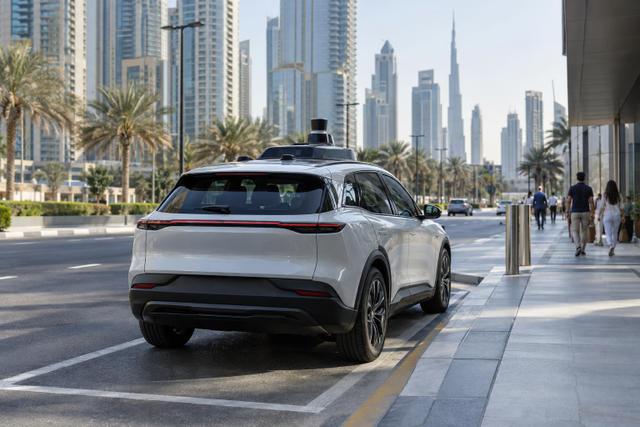
What comes next for autonomous taxis in the UAE?
Following road trials, operators and authorities will review safety data, operational performance and how the service interacts with other road users. Any move from testing to a passenger service will depend on regulatory approval and the results achieved during local validation.
Dubai is not relying on one company or one operating model. Several technology groups are exploring the market, including firms planning future services such as Momenta's proposed Dubai robotaxi launch, while Abu Dhabi has already expanded autonomous vehicle activity.
For now, the most immediate effect for the public is temporary traffic management around the trial corridor. The longer-term effect could be a gradual expansion of autonomous ride-hailing, starting in defined areas and under closely monitored conditions.
People Also Ask
Are Emirates Road lanes fully closed for the self-driving taxi tests?
No. The announcement concerns selected lanes near Al Maktoum International Airport and the airport tunnel area, not a full closure of Emirates Road. Drivers should follow signs because the exact affected lane can vary during the testing programme.
Can drivers still use Emirates Road near Al Maktoum Airport?
Yes, Emirates Road remains available to traffic, but reduced lane capacity may cause delays near the test area. Plan extra time, particularly during peak travel periods and airport-related traffic peaks.
Will the self-driving taxis carry passengers during these tests?
The lane closures are for testing autonomous taxi technology. Public passenger availability, if planned, would require a separate operational rollout and the necessary regulatory approvals.
Why are autonomous taxis tested on public roads?
Controlled facilities are useful for repeatable safety tests, but public roads expose vehicles to real traffic, changing road conditions and varied driver behaviour. Authorities use defined routes and operational controls to manage this testing safely.
When will driverless taxis be widely available in Dubai?
There is no single date for citywide availability. Services are expected to expand gradually after successful trials, approvals and evidence that they can operate safely in Dubai's road and weather conditions.