

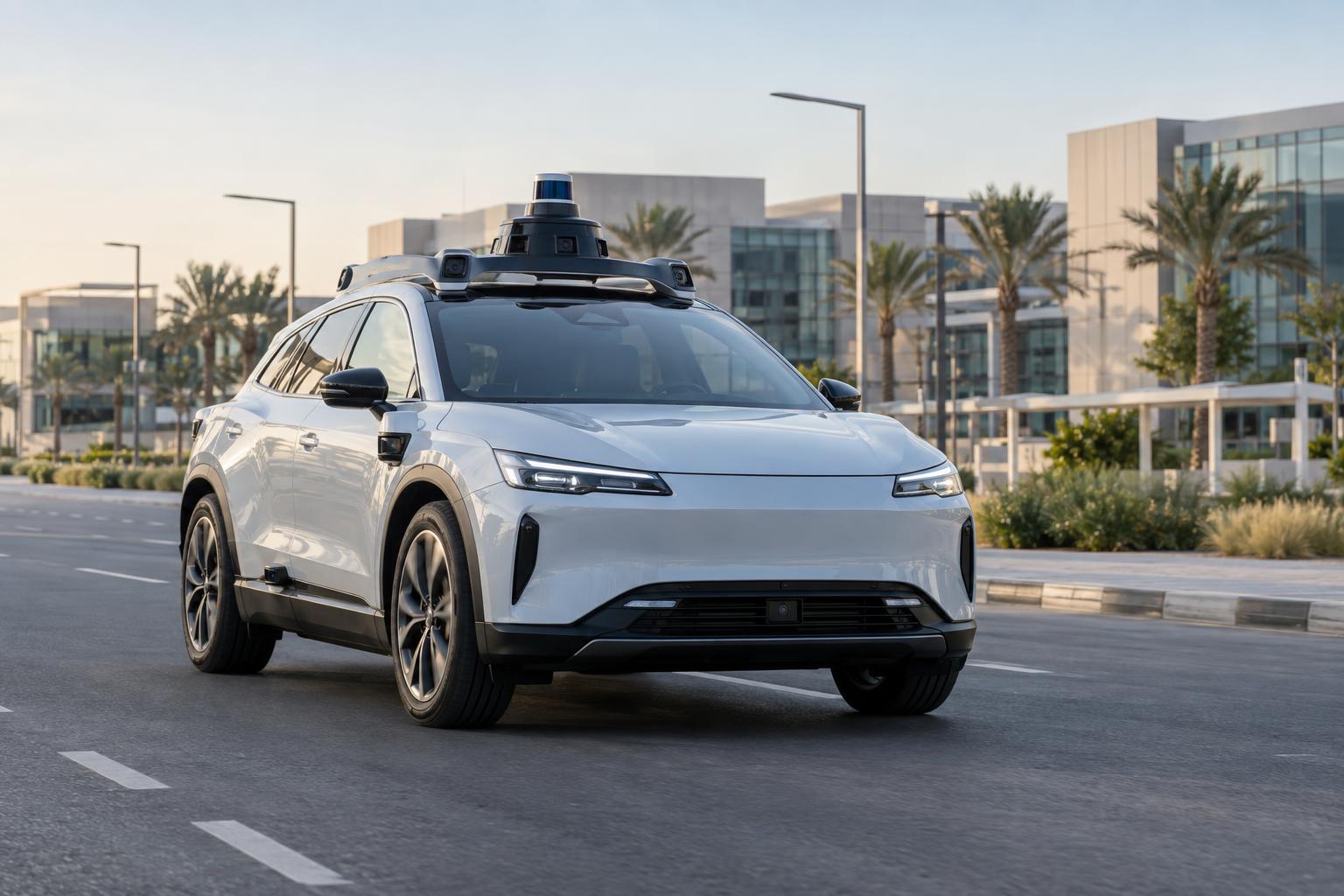
Dubai Mobility Labs is a new autonomous-vehicle testing ground at Dubai Silicon Oasis designed to help self-driving cars prove they can operate safely in conditions that reflect real life in the emirate. It gives vehicle developers a structured place to test sensors, software, road behaviour and emergency responses before wider deployment on Dubai roads.
The facility matters because autonomous driving is not only about making a vehicle move without a human at the wheel. It also requires reliable performance around roundabouts, lane changes, pedestrians, delivery vehicles, heat, glare, roadworks and the fast-moving traffic patterns common in Dubai.
What is Dubai Mobility Labs?
Dubai Mobility Labs is a dedicated validation and testing environment for connected and autonomous vehicles. It combines controlled test tracks with selected public-road routes, allowing companies to move from low-risk technical checks to more realistic on-road trials in stages.
The project is part of Dubai's broader effort to become an early adopter of autonomous transport. Rather than allowing every new system to be tested only in live traffic, the facility provides repeatable scenarios where a vehicle's reactions can be measured, compared and improved.
- Controlled areas for predictable and repeatable safety tests.
- Road-based testing to assess vehicles in genuine urban conditions.
- Test scenarios covering traffic, infrastructure and vulnerable road users.
- Support for passenger vehicles, robotaxis and other future mobility services.
Key facts: location, launch and organisations involved
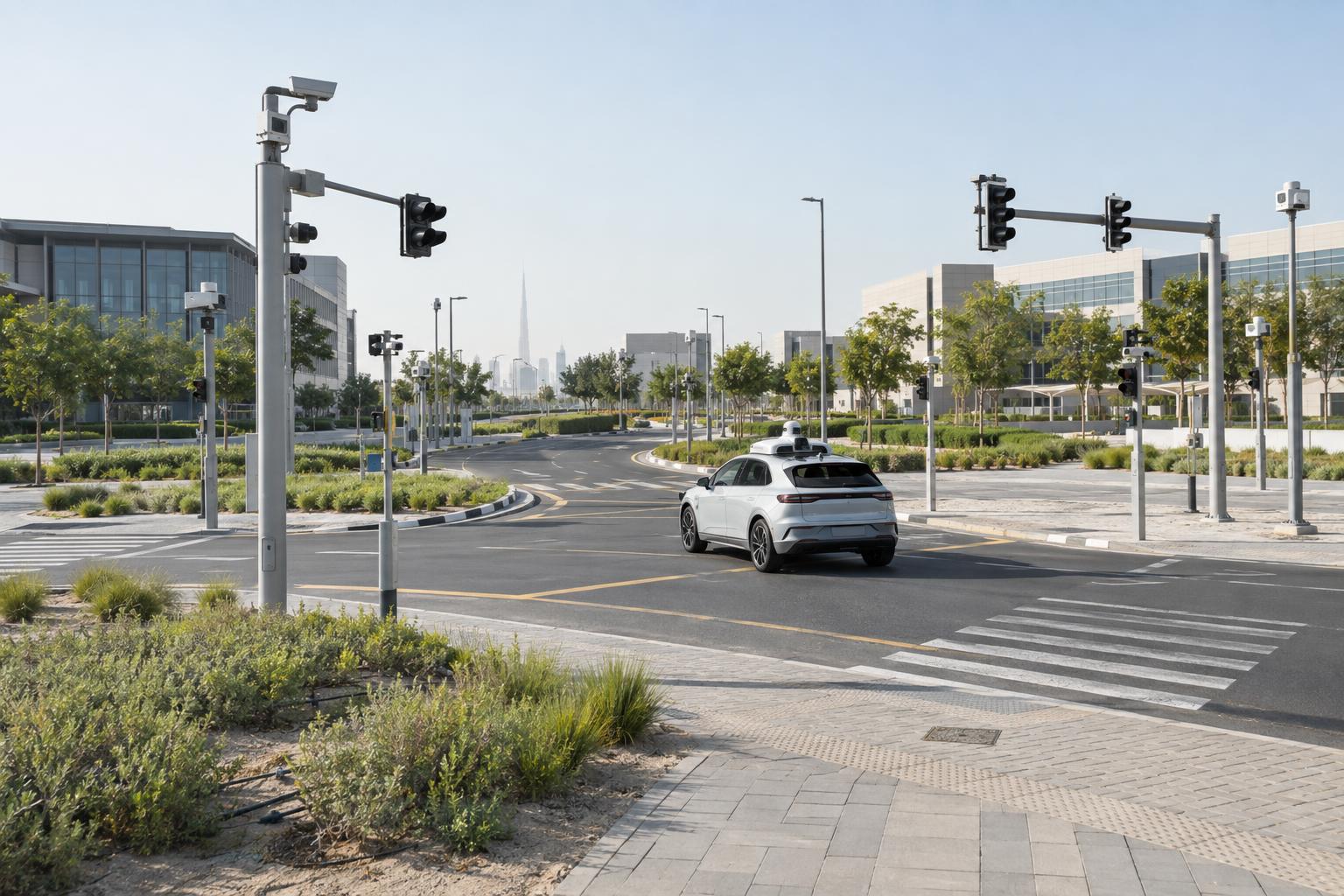
The testing ground is located in Dubai Silicon Oasis, a technology-focused district that provides a suitable setting for smart-city and mobility trials. Its position allows developers to test close to urban streets and infrastructure while retaining a managed environment for early-stage validation.
Dubai Mobility Labs was introduced as part of Dubai's continuing autonomous transport programme, with the Roads and Transport Authority, Dubai Silicon Oasis and specialist testing partners playing central roles. The facility's launch supports the practical testing needed before autonomous services can move beyond demonstrations and limited pilot projects.
| Item | Details |
|---|---|
| Facility | Dubai Mobility Labs |
| Location | Dubai Silicon Oasis, Dubai |
| Purpose | Testing and validating autonomous and connected vehicles |
| Test coverage | 248 scenarios across controlled tracks and public roads |
| Operating partner | Dekra, under a three-year operating role |
| Strategic target | 25% of journeys in Dubai to be autonomous by 2030 |
What does the facility offer?
A headline feature of the site is its 248 test scenarios. These are designed to recreate the situations an automated vehicle may face before it can be trusted with passengers or allowed to operate more widely in public.
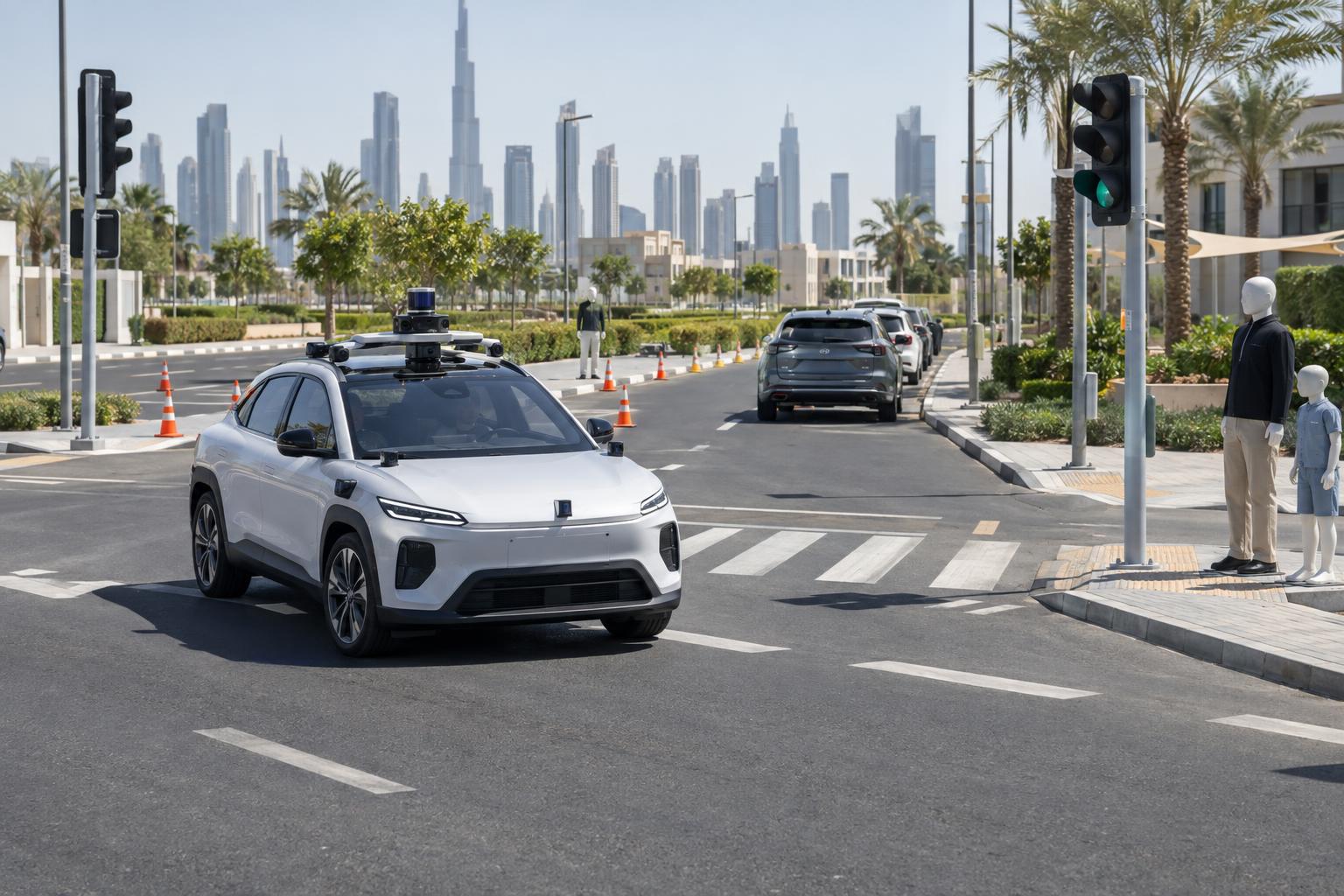
Some scenarios can be repeated on a controlled track, where variables such as vehicle speed, object position and weather simulation can be managed. Others require public-road testing, where the vehicle must deal with real drivers, changing traffic flow and the unpredictability of an active city.
Testing beyond a simple straight road
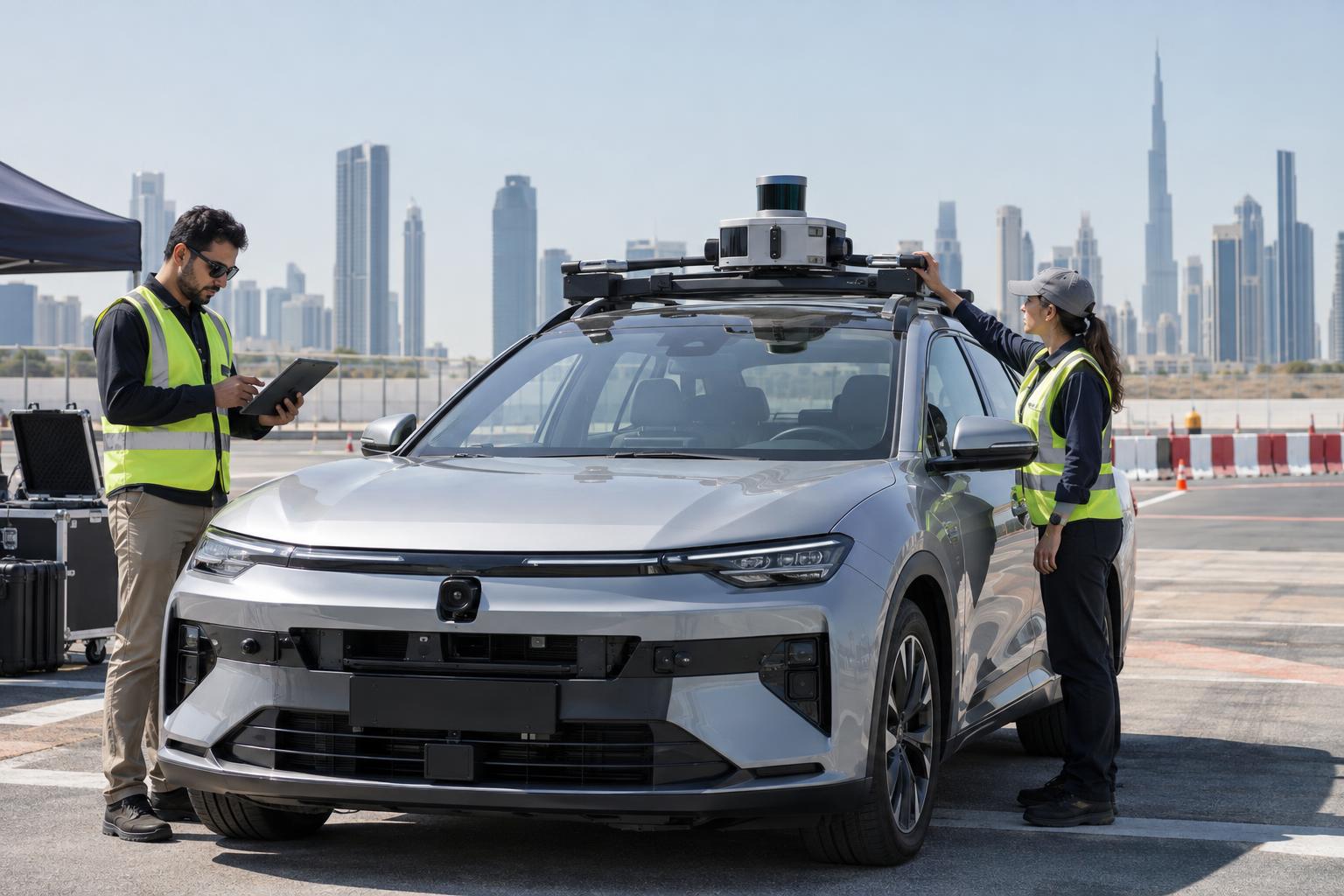
A self-driving vehicle needs to identify its surroundings and make safe decisions in fractions of a second. Testing therefore goes far beyond checking whether the car can stay in its lane or stop at a red light.
- Detecting pedestrians, cyclists and parked vehicles.
- Responding to vehicles merging, braking suddenly or changing lanes.
- Handling junctions, roundabouts, traffic lights and road markings.
- Recognising temporary lane closures, cones and roadworks.
- Operating in bright sunlight, dust, heat and reduced visibility.
- Maintaining safe behaviour when sensors or communications are disrupted.
For GCC conditions, environmental testing is especially important. Strong sunlight can affect cameras, high temperatures can place extra demands on hardware, and dust can reduce the effectiveness of sensors. A system that performs well in a different climate still needs validation for Dubai's roads and weather.
Dekra's three-year role in operating the testing ground
Dekra has been appointed to operate Dubai Mobility Labs for a three-year period. The company's role is significant because autonomous driving needs independent, methodical testing rather than claims made solely by the vehicle manufacturer.
As operator, Dekra is expected to support the management of test procedures, scenario execution and assessment processes. This helps create a common framework for different developers, making it easier for authorities and mobility providers to evaluate whether a vehicle has met the required performance and safety expectations.
For manufacturers, a specialist operator can reduce the need to build a separate test site for every programme. For regulators and the public, it provides a more structured route for assessing systems that may eventually carry passengers on ordinary roads.
Which companies have already tested vehicles there?
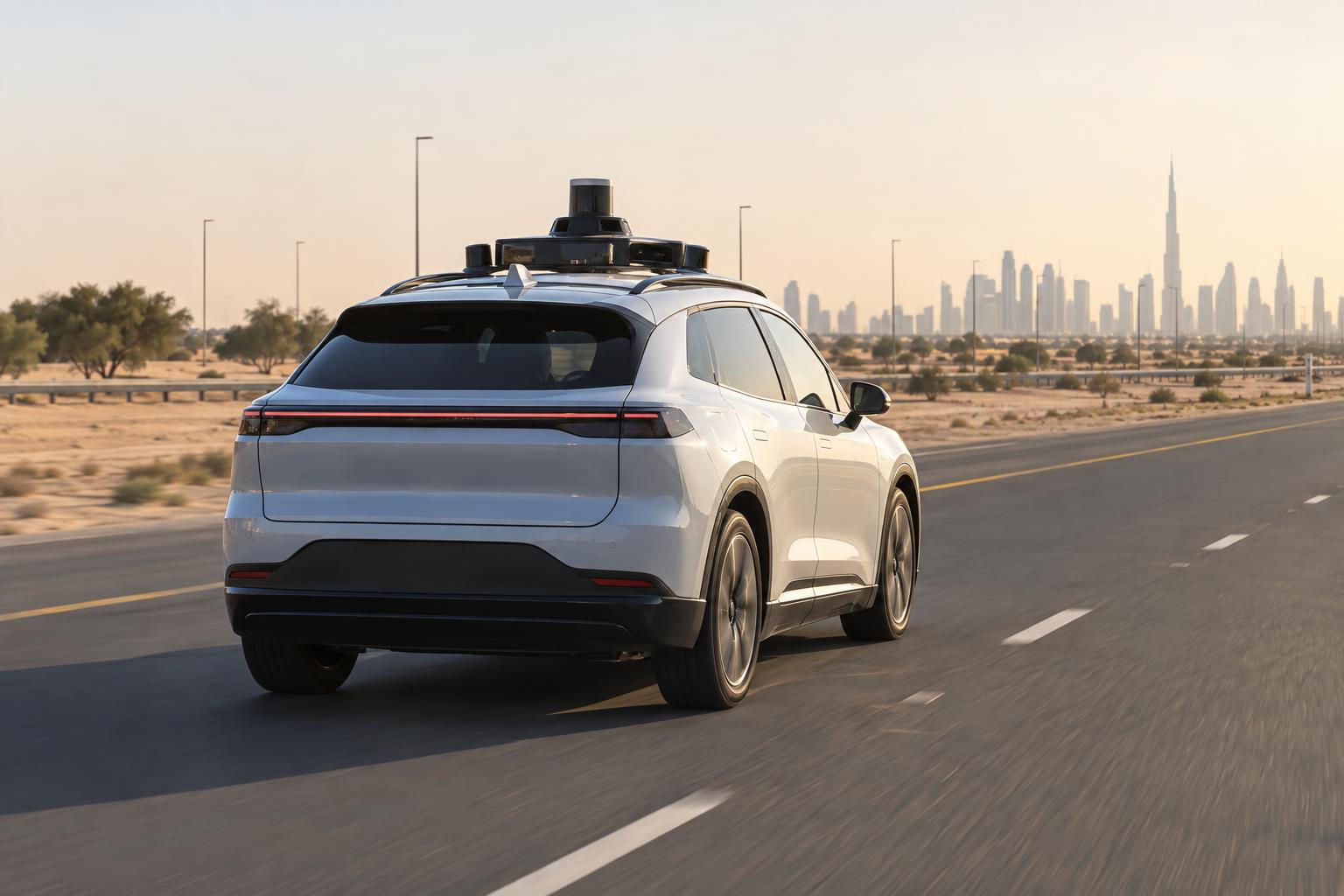
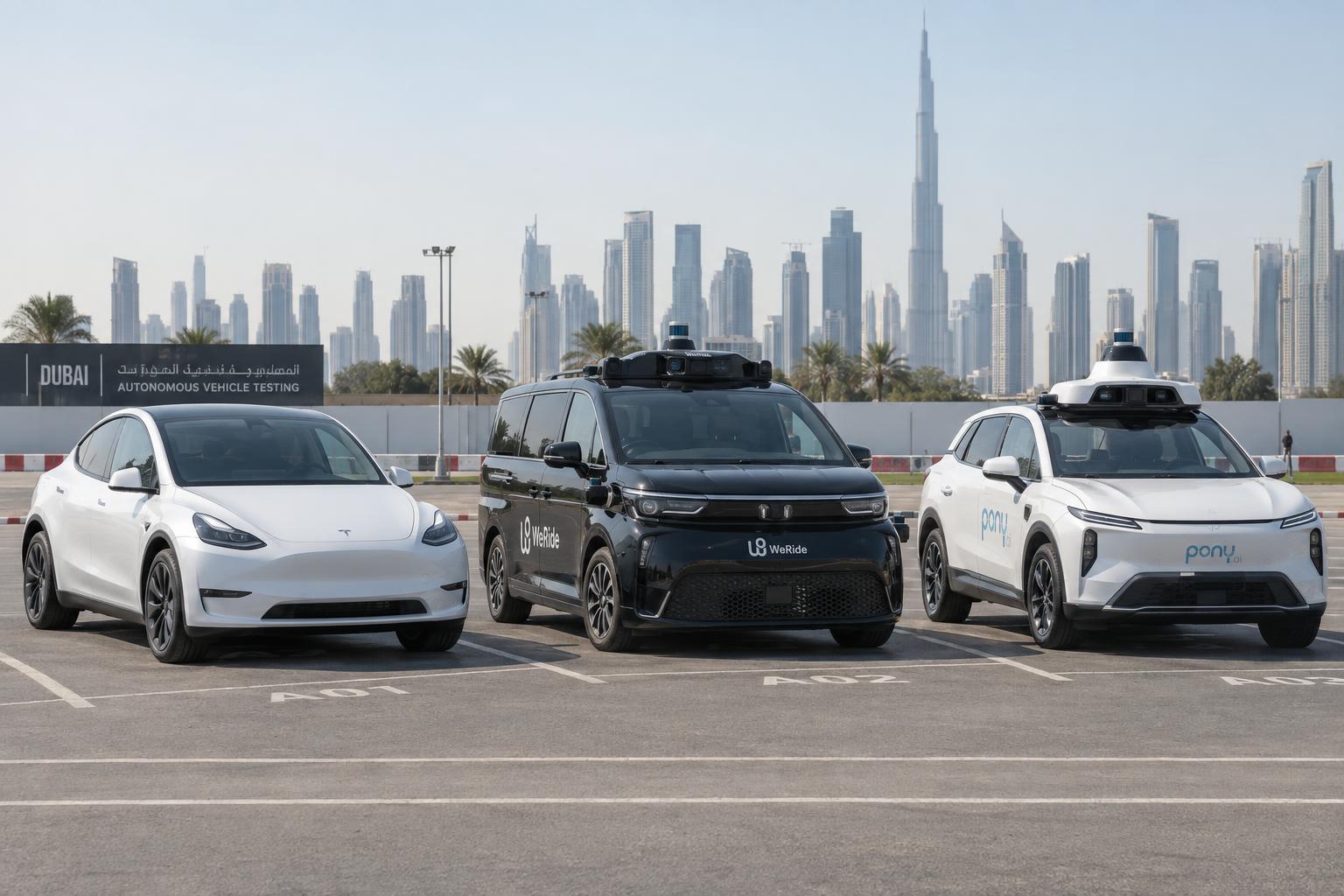
The testing ground has attracted interest from major autonomous-driving developers, including WeRide, Pony.ai and Tesla. Their presence illustrates the range of technologies being assessed, from robotaxi platforms to advanced driver-assistance and automated-driving systems.
It is important to distinguish between testing a vehicle and approving it for unrestricted use. A company may test hardware, mapping, perception software or a specific driving function at the site without that meaning every one of its vehicles is cleared to operate without a driver across Dubai.
Why different developers need the same test environment
Autonomous systems use different mixes of cameras, radar, lidar, maps and artificial intelligence. A shared testing framework makes it possible to assess how these different approaches respond to comparable risks, rather than relying only on each company's internal testing programme.
For consumers, this means progress should be judged by real-world safety evidence and regulatory approval, not simply by a vehicle's marketing label. Terms such as “autopilot”, “self-driving” and “autonomous” can describe very different levels of capability.
How this supports Dubai's 25% autonomous journeys target
Dubai's autonomous transport strategy aims for 25% of all journeys in the city to be autonomous by 2030. That target is broader than private cars. It can include robotaxis, autonomous shuttles, delivery systems and other mobility services where automation can make travel safer, more efficient or more accessible.
A testing ground is one of the practical building blocks needed to reach that goal. Before automated services can scale, operators need evidence that their vehicles can cope with local roads, authorities need a consistent way to assess them, and passengers need confidence that the service has been tested properly.
- It speeds up local validation for autonomous vehicle developers.
- It supports safer pilot programmes before wider deployment.
- It helps Dubai develop local knowledge in testing and certification.
- It can encourage investment from mobility and technology companies.
- It creates a pathway from controlled trials to commercial services.
Dubai Mobility Labs and the UAE self-driving vehicle regulation are not the same thing
Dubai Mobility Labs is a physical testing and validation facility. The UAE Cabinet's self-driving vehicle regulation is a federal legal framework that sets rules for how autonomous vehicles can be licensed, operated and supervised in the country.
In simple terms, the lab helps developers demonstrate how a vehicle performs, while regulation determines what must happen before that vehicle can legally operate. Both are needed, but they serve different purposes.
Testing versus legal approval
A successful test result does not automatically give a company permission to launch a driverless service. Operators may still need approvals relating to vehicle registration, insurance, cybersecurity, data handling, remote supervision, maintenance, passenger safety and the areas where the service may run.
The federal regulation provides a national legal direction, while Dubai can establish local operational requirements for its roads and transport network. This combination allows innovation to move forward while keeping responsibility for safety and oversight clear.
What this means for residents and the future of mobility in Dubai
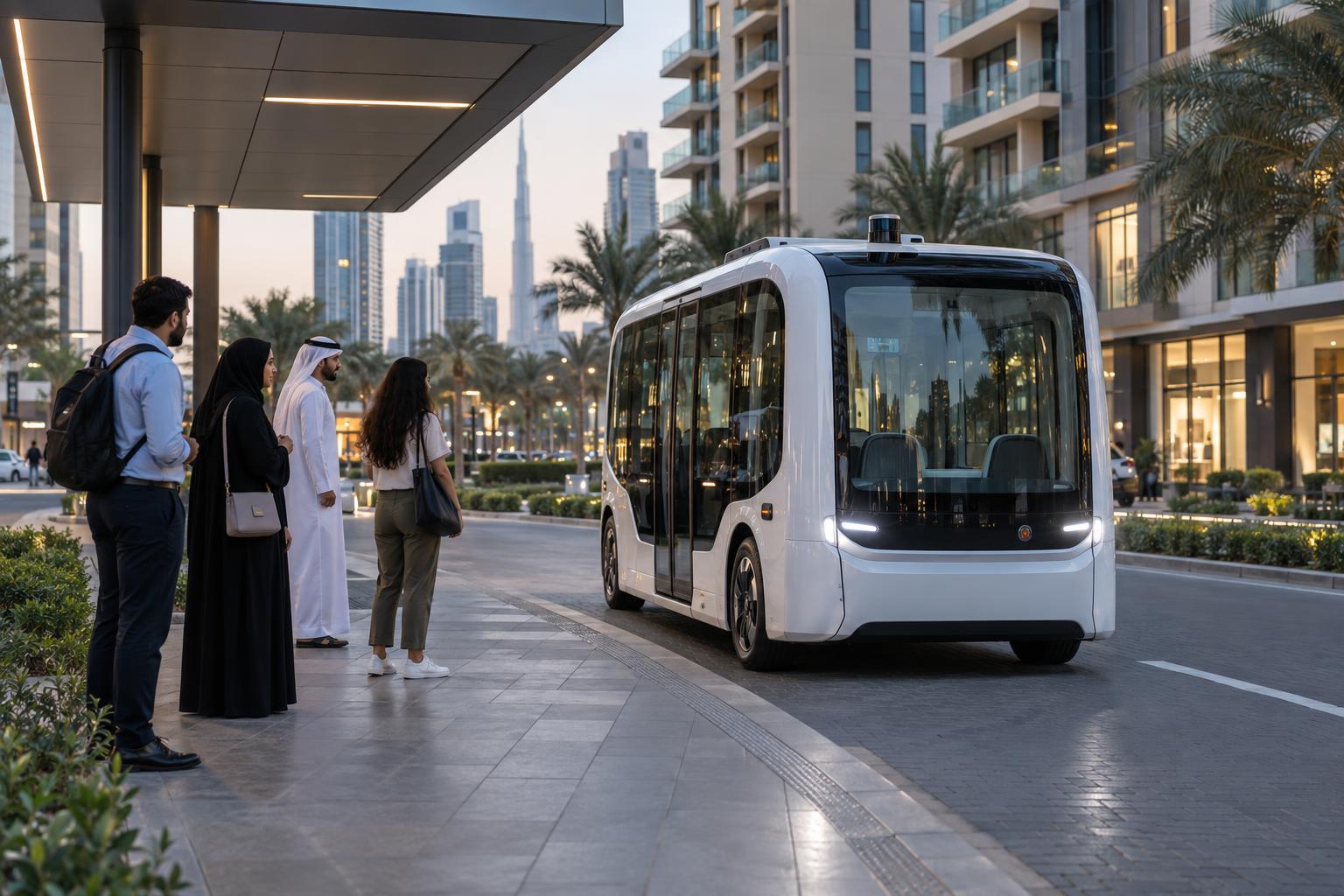
For residents, the most visible effect is likely to be a gradual expansion of autonomous transport services rather than an overnight change to every private car. Robotaxi trials, first-mile and last-mile shuttles, airport links and selected delivery services are more likely to appear before fully driverless private ownership becomes common.
Potential benefits include more transport choices, improved mobility for people who cannot drive, and smoother use of vehicles through better routing and shared services. However, residents should still expect a cautious rollout, with defined operating zones, remote monitoring and safety operators remaining part of many early services.
For car buyers and owners, Dubai Mobility Labs is also a reminder that advanced driver-assistance systems should be used according to the vehicle manual and local laws. Features such as adaptive cruise control, lane-centring and automated parking can be helpful, but they do not necessarily make a privately owned car fully autonomous.
People Also Ask
Where is Dubai Mobility Labs located?
Dubai Mobility Labs is located in Dubai Silicon Oasis. The technology-focused district provides access to both managed test facilities and nearby urban road conditions.
How many test scenarios are available at Dubai Mobility Labs?
The facility offers 248 test scenarios. These cover controlled-track exercises and public-road situations that autonomous vehicles may encounter in Dubai.
Who operates Dubai Mobility Labs?
Dekra has a three-year role operating the testing ground. Its work includes supporting structured testing and validation processes for autonomous vehicle developers.
Does testing at Dubai Mobility Labs mean a car is approved for driverless use?
No. Testing is only one part of the process. A vehicle or service must still meet applicable legal, regulatory, safety and operational requirements before it can be deployed commercially.
What is Dubai's autonomous transport target for 2030?
Dubai aims for 25% of all journeys in the city to be autonomous by 2030. The target can include robotaxis, shuttles, delivery vehicles and other automated mobility services.


