

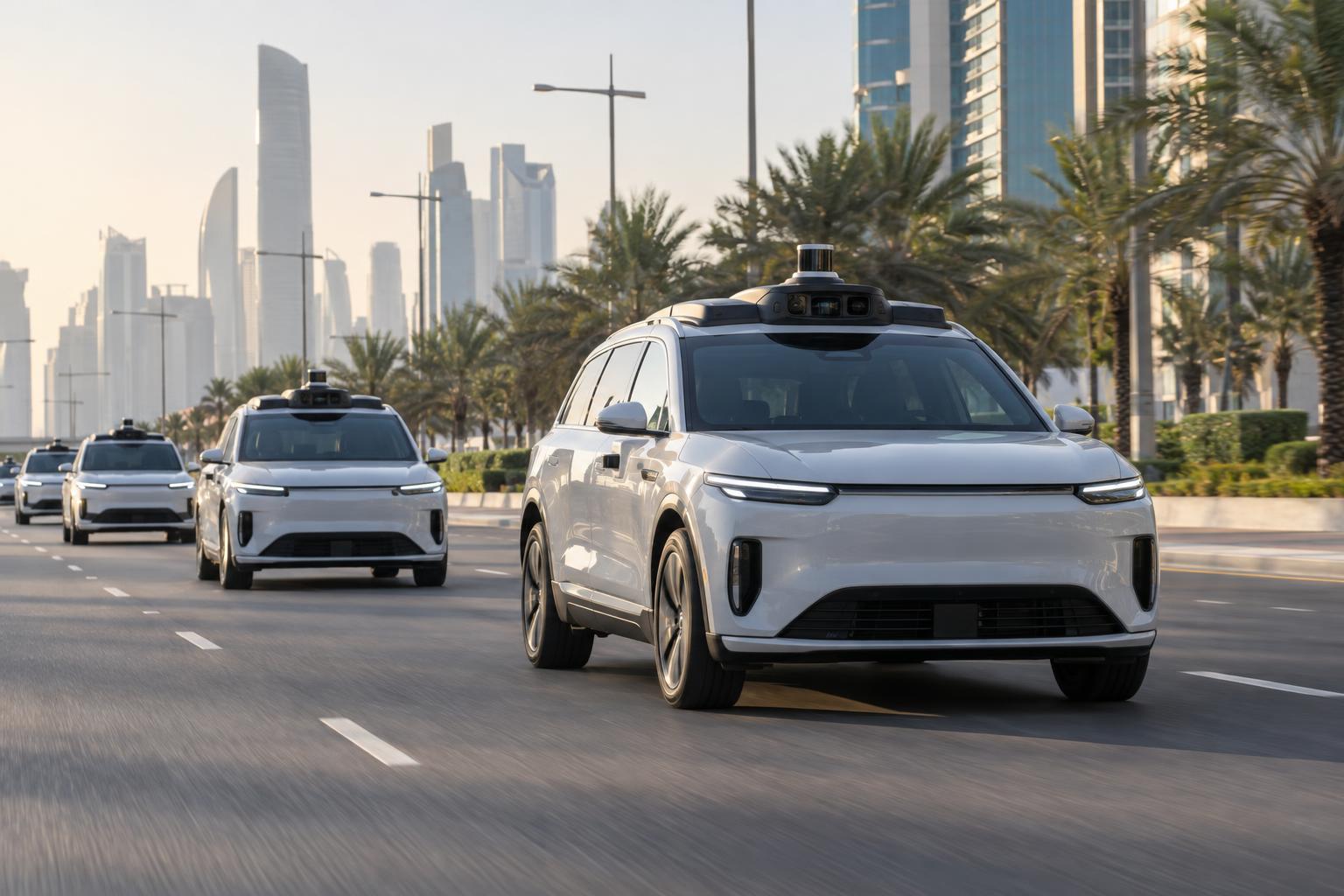
The UAE says it plans to deploy more than 10,000 autonomous taxis and delivery vans by 2027, a major expansion from the hundreds of self-driving vehicles currently operating or being tested across the country. The target reflects a shift from limited pilot programmes towards wider commercial services, although the speed of rollout will depend on approvals, infrastructure, fleet operators and public confidence.
For residents, the announcement could eventually mean more app-based autonomous taxi journeys, automated last-mile deliveries and new transport options in selected urban areas. For businesses, it signals a growing market for fleet management, mapping, charging, maintenance, insurance and mobility technology.
UAE announces plan for more than 10,000 autonomous vehicles by 2027
The UAE's stated ambition covers autonomous taxis and delivery vans, rather than privately owned self-driving cars alone. These vehicles are expected to operate within defined service areas and under operating conditions approved by the relevant transport authorities.
Autonomous vehicle deployment is usually gradual. A city may begin with mapped routes, low-speed districts, airport connections or delivery zones before allowing a fleet to cover more roads and operate for longer hours.
- Autonomous taxis could supplement conventional ride-hailing and public transport services.
- Delivery vans could support last-mile logistics for retail, food, e-commerce and business deliveries.
- Remote monitoring is likely to remain part of operations, particularly during early expansion stages.
- Geofenced service areas will probably be used until systems are approved for a wider range of roads and weather conditions.

What did Faisal Al Bannai say at AI Everything Abu Dhabi 2026?
At AI Everything Abu Dhabi 2026, Faisal Al Bannai, adviser to the UAE President for Strategic Research and Advanced Technology, highlighted the country's intention to scale autonomous mobility rapidly. The headline figure was a planned fleet of more than 10,000 autonomous taxis and delivery vehicles by 2027.
The message was not simply about putting more vehicles on the road. It positioned autonomous transport as part of the UAE's wider artificial intelligence and advanced technology strategy, alongside locally developed systems, smart-city infrastructure and commercial deployment.
A target of this size should be understood as a deployment ambition rather than a guarantee that every vehicle will be carrying passengers or goods on every road from day one. Individual fleets will still need operational permits, tested technology, mapped routes and clear responsibility for safety.
How is the UAE scaling from hundreds of autonomous vehicles today to thousands next year?
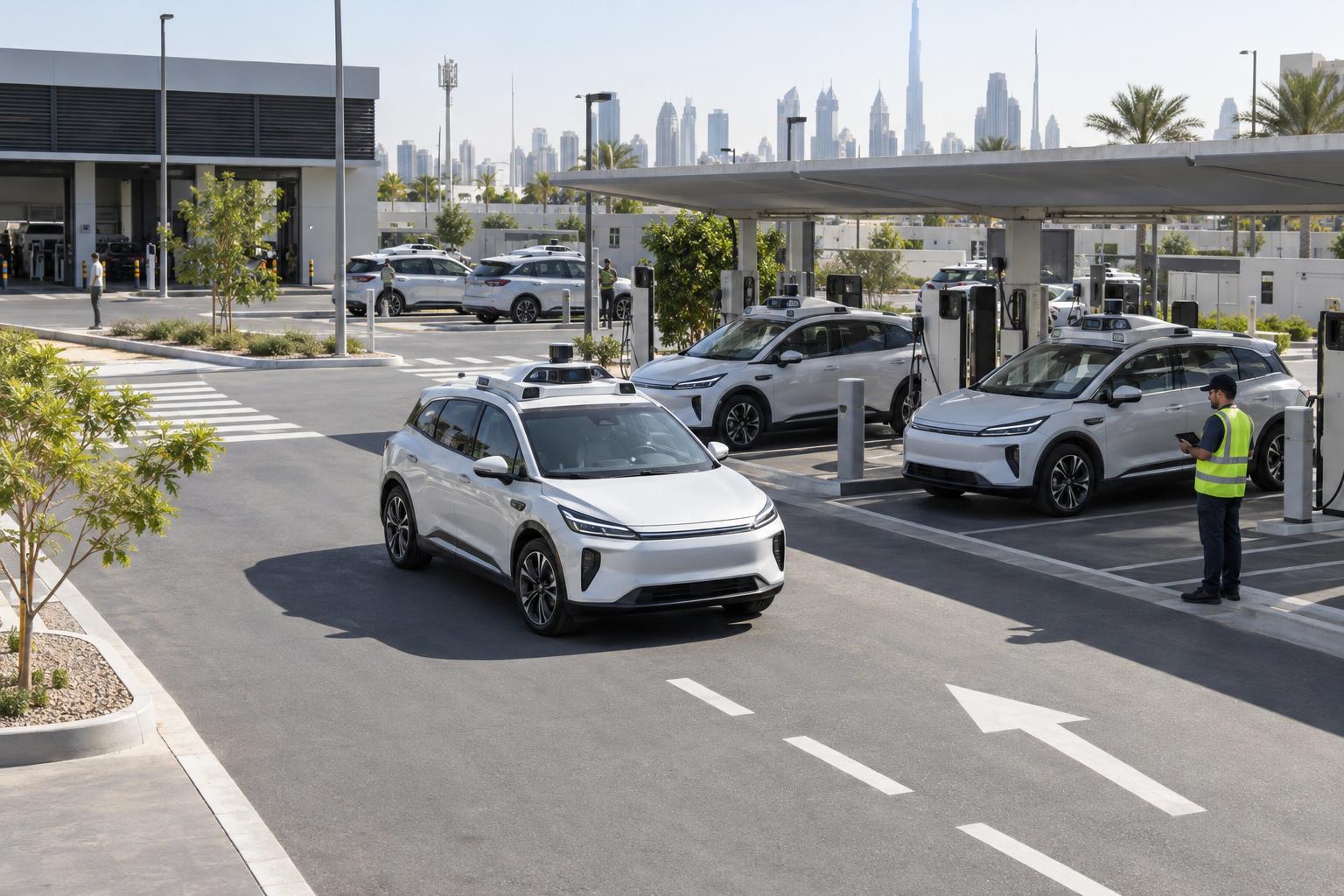
Moving from small fleets to thousands of vehicles requires more than buying autonomous cars or vans. Operators need a reliable operating model that combines vehicle hardware, artificial intelligence software, high-definition mapping, communications networks, customer support and maintenance facilities.
The UAE has several advantages for testing and early commercial deployment. Cities have modern road infrastructure, relatively predictable urban layouts, strong mobile connectivity and authorities that can coordinate closely with transport providers and technology companies.
Fleet growth will need a practical operating framework
Large-scale deployment will likely happen in phases, with operators increasing vehicle numbers after proving performance in specific locations. The first growth areas may include major business districts, planned communities, airport corridors, tourist destinations, logistics hubs and routes that are easier to map and supervise.
- Detailed digital mapping and frequent map updates
- Vehicle inspection, servicing and cleaning facilities
- Charging or refuelling arrangements suitable for larger fleets
- Remote assistance centres for unusual road situations
- Emergency response procedures with police, ambulance and road authorities
- Clear passenger support, accessibility and incident-reporting channels
Weather is also an important local factor. Autonomous systems must perform reliably in heat, glare, dust, reduced visibility and occasional heavy rain, rather than only in ideal test conditions. That makes local validation essential, even when a technology has already operated in another country.
Why does the UAE claim to be the largest deployer of autonomous vehicles outside China?
The claim reflects the UAE's efforts to move autonomous mobility from demonstrations into real passenger and delivery services. China has deployed autonomous vehicle fleets at a scale that few markets can match, while many other countries remain focused on smaller trials or tightly limited commercial operations.
In the UAE, autonomous vehicles have already appeared in public-facing pilots and services, particularly in Abu Dhabi and Dubai. The planned expansion would strengthen the country's position if vehicles are deployed in commercially meaningful numbers and used regularly by passengers and businesses.
It is worth noting that comparisons can vary depending on what is counted. Some figures may include robotaxis, autonomous delivery vehicles, low-speed shuttles, test fleets or vehicles operating with safety drivers. For consumers, the more useful measure is whether a service is available, safe, affordable and dependable in their area.
How is this different from Dubai Mobility Labs and the UAE's self-driving vehicle regulation?
The new deployment target, Dubai Mobility Labs and the UAE Cabinet's self-driving vehicle regulation are connected, but they serve different purposes. One is a national-scale deployment ambition, one is a testing and innovation environment, and one provides the legal and regulatory framework needed for safer operation.
Dubai Mobility Labs is focused on testing and development
Dubai Mobility Labs is intended as a space for mobility companies to test, validate and develop future transport solutions. A controlled testing environment can help developers assess sensors, software, vehicle-to-infrastructure systems and customer use cases before moving into broader public-road operations.
Testing grounds are valuable because they allow technology to be challenged safely. However, successful testing does not automatically mean a vehicle is ready for every road, neighbourhood or traffic condition in the UAE.
Federal regulation sets the rules for operation
The UAE Cabinet's regulation for self-driving vehicles provides a national regulatory direction for licensing, approvals, safety responsibilities and oversight. Such rules are necessary because autonomous transport raises practical questions that do not apply in the same way to conventional vehicles.
- Who is responsible when an autonomous vehicle is involved in an incident?
- What safety standard must a vehicle meet before operating on public roads?
- How should remote operators, fleet owners and software providers be licensed?
- What data should be recorded and shared after a collision or system failure?
- How will vehicles interact with local police, emergency services and road authorities?
The 10,000-vehicle goal is the commercial and operational outcome the UAE is working towards. Testing facilities and regulations are among the tools needed to make that outcome possible.
What does this mean for residents, commuters and businesses in the UAE?
In the short term, most people should expect autonomous services to remain location-specific. Residents may see more robotaxi options in selected zones, while delivery customers could encounter automated vans or other autonomous logistics vehicles serving defined routes.
For commuters, the main benefit could be additional transport capacity. Autonomous taxis may help cover first- and last-mile trips between homes, offices, metro stations, attractions and transport hubs, particularly when conventional taxis are in high demand.
Potential benefits for passengers
- More mobility choices through taxi and ride-hailing platforms
- Potentially shorter waiting times as fleet availability grows
- Consistent driving behaviour programmed around approved safety standards
- Better access to transport in areas with limited conventional taxi coverage
- New accessibility opportunities if services are designed for different passenger needs
Passengers should not assume that every autonomous taxi will operate without human support. Depending on the service, there may be a safety driver in the vehicle, a remote support team, or restrictions on where and when the vehicle can travel.
What businesses should watch
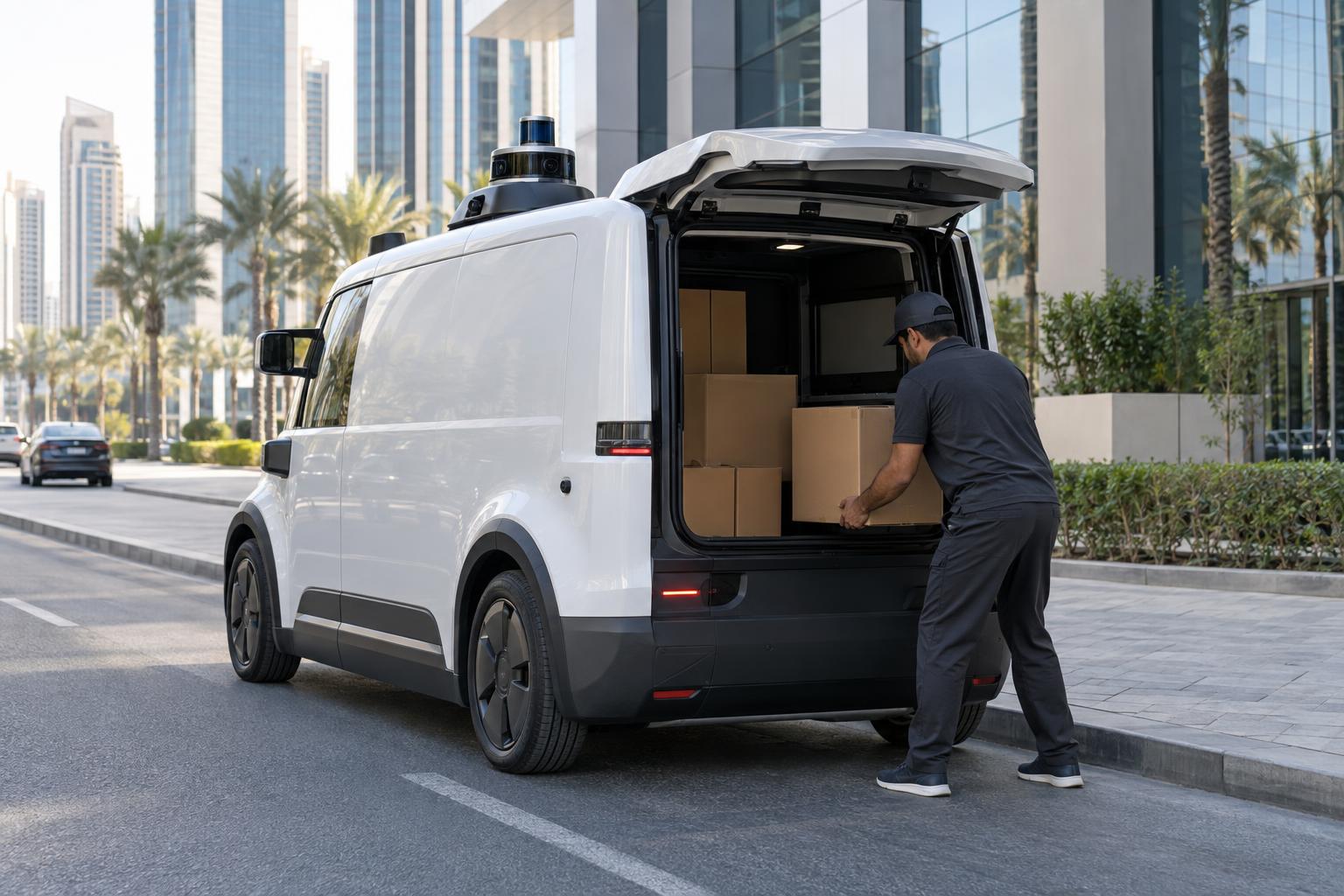
Retailers, logistics firms and delivery platforms could benefit from more flexible last-mile transport, especially for repeatable routes and scheduled deliveries. Autonomous vans may also create opportunities for businesses that provide charging, vehicle servicing, telematics, fleet cleaning, cybersecurity, mapping and insurance.
At the same time, commercial users should assess practical issues such as delivery handover, loading access, parking, customer verification and liability. A driverless delivery vehicle still needs a secure way to collect goods, reach its destination and confirm that an order has been received.
Key takeaways
- The UAE plans to deploy more than 10,000 autonomous taxis and delivery vans by 2027.
- The goal represents a significant increase from the hundreds of autonomous vehicles currently operating or being tested.
- Deployment is likely to begin and grow through approved zones, mapped routes and supervised operating models.
- Dubai Mobility Labs supports testing and innovation, while federal regulation provides the legal basis for safe operation.
- Residents may gain new taxi and delivery options, but availability will vary by emirate, service area and operator.
- The long-term opportunity extends beyond vehicles to charging, maintenance, mapping, connectivity, insurance and fleet services.
The real test of the programme will be how smoothly autonomous vehicles integrate into everyday transport. Scale matters, but so do safety, affordability, customer experience and the ability to operate reliably in UAE road and weather conditions.

People Also Ask
When will autonomous taxis be available in the UAE?
Autonomous taxi services are already being tested or offered in limited areas, while wider availability will depend on each emirate's approvals, the operator's fleet size and the roads covered by the service. The UAE's stated target is to deploy more than 10,000 autonomous taxis and delivery vans by 2027.
Are self-driving taxis legal in the UAE?
Self-driving vehicles can operate when they meet applicable approvals, licensing requirements and safety rules set by UAE authorities. Legal operation does not mean every autonomous vehicle can travel on every public road, as services may be limited to approved areas and conditions.
Will autonomous taxis replace regular taxi drivers?
Autonomous taxis are expected to supplement existing transport services rather than replace all conventional taxis quickly. Human roles will still be needed in fleet operations, remote support, maintenance, customer service, safety oversight and other parts of the mobility sector.
Are autonomous vehicles safe in UAE weather?
Autonomous vehicles must be tested for local conditions, including intense heat, sun glare, dust, sand and rain. Operators need to demonstrate safe performance within their approved operating conditions, and vehicles may have restrictions when weather or road conditions are unsuitable.
What is the difference between an autonomous taxi and a driver-assistance car?
An autonomous taxi is designed to perform the driving task within a defined operating area, often with remote support or oversight. A driver-assistance car has features such as adaptive cruise control or lane support, but the human driver remains responsible for supervising the vehicle and taking control when necessary.


