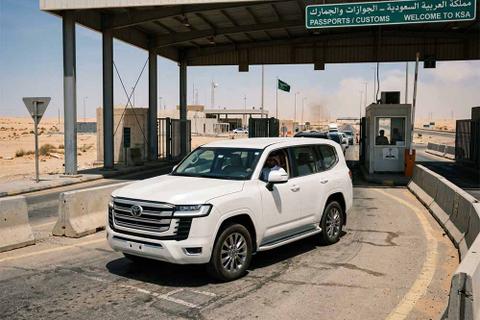


Saudi Arabia has introduced an annual limit of 90 days for privately registered vehicles from other GCC countries. GCC residents who drive an eligible UAE, Oman, Kuwait, Bahrain or Qatar-registered vehicle into the Kingdom must now track the vehicle’s total time in Saudi Arabia carefully, as overstays can lead to fines and eventual impoundment.
The rule is intended to regulate temporary entry rather than stop normal cross-border travel. A vehicle can enter Saudi Arabia more than once during the year, but its combined stays must not exceed the permitted 90 days unless an approved extension applies.
What the new 90-day rule actually says
Under the rules published by the Zakat, Tax and Customs Authority (ZATCA), a privately registered vehicle from another GCC state may remain in Saudi Arabia for a maximum of 90 days in a calendar year.
Also read: Saudi Arabia Limits Foreign Drivers to One Year on International Licences
The 90 days are a total allowance, not a limit for each individual border crossing. Leaving Saudi Arabia and returning later does not restart the count.
- The vehicle must be registered in another GCC country.
- The vehicle must be for private use, rather than commercial transport.
- The eligible driver must be the owner or an authorised user under the applicable entry procedures.
- All stays in Saudi Arabia during the year count toward the 90-day allowance.

Why Saudi Arabia introduced the cap
The measure is linked to Cabinet Resolution No. 637 and its executive procedures for temporarily admitted GCC-registered vehicles. The official procedures published through the Umm Al-Qura Gazette set clearer controls around vehicles entering the Kingdom on a temporary basis.
In practical terms, the cap distinguishes a genuine short-term visitor’s vehicle from one that is effectively being kept and used in Saudi Arabia on a long-term basis without local registration or the normal import process.
The change also gives border and customs authorities a consistent way to calculate permitted stays. That matters for frequent GCC travellers, including UAE residents who regularly drive to Saudi Arabia for work, family visits or holidays.
Who is affected by the Saudi Arabia vehicle stay limit?
The rule primarily affects GCC residents driving privately registered vehicles from outside Saudi Arabia. It is especially relevant to motorists whose cars remain in the Kingdom for extended periods, or who make frequent trips that add up over the year.
A UAE-plated car, for example, may enter Saudi Arabia several times. However, the time spent inside the Kingdom across those visits is added together, rather than treated as separate 90-day periods.
- Owners of privately registered GCC vehicles.
- Authorised drivers using an eligible GCC-registered vehicle.
- Residents who keep a vehicle in Saudi Arabia between regular cross-border trips.
- Frequent visitors who may assume that each exit resets the allowance.
Drivers should not confuse this temporary-entry rule with Saudi requirements for insurance, licensing or vehicle roadworthiness. For broader background on cross-border motoring rules, see Khaleej Cars’ report on the proposed unified GCC road transport system.

Key dates: the August 26 to November 23, 2026 grace period
The implementation date is August 26, 2026. Vehicles already in Saudi Arabia when the new system begins have a 90-day grace period, running until November 23, 2026, to leave the Kingdom or regularise their position where applicable.
ZATCA’s announcement explains that the grace period is designed to give affected motorists time to comply before enforcement action applies to vehicles that remain beyond the permitted period.
For a car that is already in Saudi Arabia at the start of the grace period, it is sensible to treat November 23 as a firm planning deadline. Do not assume that a late border exit, weekend travel or an administrative delay will automatically protect the driver from a violation.
How is the 90-day period calculated?
The key point is that the limit is calculated across the calendar year. Every day the vehicle is recorded as being inside Saudi Arabia contributes to the 90-day total.
For example, a vehicle that stays for 30 days in January, 25 days in May and 35 days in October has used its full annual allowance. A further entry during that same year could create an overstay.
- Keep a record of every entry and exit date.
- Count all trips together, including short visits.
- Allow a buffer before reaching 90 days.
- Check whether an extension is available before the permitted period expires.
Border records, rather than a driver’s own estimate, will be important if there is a dispute. Save entry documents and any approved extension confirmation, particularly if the vehicle crosses the border often.
Also read: Saudi Arabia Recalls 2,888 Lucid Air Sedans Over Fire Risk From Faulty Lighting Circuit

Fines and impoundment for vehicles that overstay
Vehicles that exceed the permitted stay can face financial penalties, with reported fines reaching SAR 2,000. Saudi Gazette reported that the measures can also escalate to impoundment where the vehicle remains in violation.
Impoundment is the part of the rule that should concern drivers most. It can disrupt travel plans, create storage and recovery complications, and leave the owner needing to resolve the issue with the relevant Saudi authorities before the vehicle can be released.
The exact outcome may depend on the circumstances and the applicable procedures at the time. The practical approach is simple: leave before the allowance ends, or seek a valid extension early if one is available.
What GCC drivers should do before the grace period ends
Drivers with an eligible vehicle already in Saudi Arabia should check its entry date immediately and make a plan well before November 23, 2026. This is particularly important for a vehicle that has been left at a residence, workplace or family property inside the Kingdom.
- Confirm the vehicle’s latest recorded entry date.
- Add up all Saudi stays during the relevant calendar year.
- Arrange an exit before the 90-day limit or grace-period deadline.
- Check that registration, insurance and authorisation documents are current.
- Keep digital and paper copies of border and customs documents.
Drivers planning repeated Saudi trips should build a simple travel log rather than relying on memory. Khaleej Cars has also published a detailed guide to how the 90-day GCC vehicle rule affects UAE drivers, including the practical implications of multiple entries.
Motorists should also check their insurance cover before crossing the border, as vehicle-entry compliance does not replace the need for valid cover. Saudi Arabia has separately introduced changes to motor insurance pricing standards, covered in our report on the new Saudi motor insurance pricing rules.

Planning for regular Saudi road trips
The annual cap does not make road travel to Saudi Arabia impractical for most visitors. A 90-day total is still substantial for occasional tourism, family visits and business trips, but it requires more care from drivers who spend long periods in the Kingdom.
If a car needs to remain in Saudi Arabia for most of the year, the owner should consider whether local registration, formal importation or another lawful arrangement is more appropriate. The temporary-entry system is not designed as a permanent substitute for those options.

People Also Ask
Does leaving Saudi Arabia reset the 90-day limit?
No. The rule applies to the vehicle’s combined time in Saudi Arabia during the calendar year. Exiting and re-entering does not create a new 90-day allowance.
Can a UAE-registered vehicle stay in Saudi Arabia for 90 days?
Yes, provided it meets the temporary-entry conditions and the total time it spends in Saudi Arabia does not exceed 90 days in the calendar year. The same principle applies to eligible vehicles registered in other GCC countries.
What happens if a GCC vehicle stays in Saudi Arabia for more than 90 days?
The vehicle may be subject to fines, reported at up to SAR 2,000, and continued non-compliance can lead to impoundment. Drivers should leave before the limit expires or secure an approved extension where available.
Does the grace period end on November 23, 2026?
Yes. Vehicles covered by the transition arrangement have until November 23, 2026 to comply with the new stay requirements. Drivers should avoid waiting until the final day to arrange a border exit.
Does the rule apply to commercial vehicles?
The 90-day arrangement discussed here concerns privately registered GCC vehicles entering Saudi Arabia temporarily. Commercial vehicles may be subject to different transport, customs and operating requirements.