
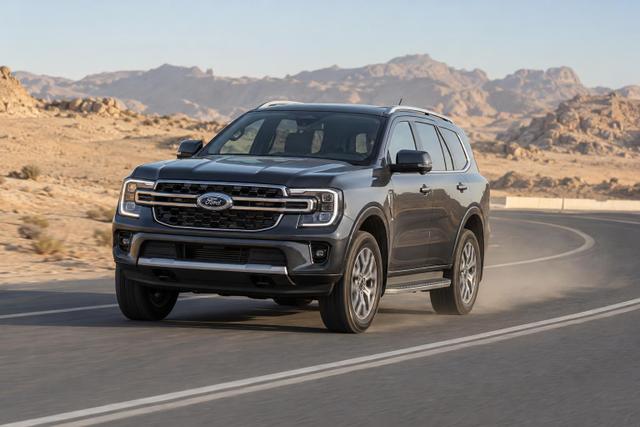
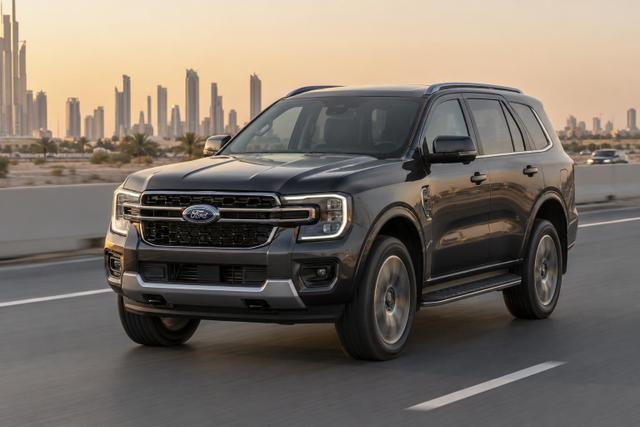
Ford has begun Middle East testing of the Everest V6 ahead of a planned November 2026 regional launch. The seven-seat SUV is being assessed in local heat, dust, highway and off-road conditions, with the aim of confirming that its powertrain, cooling and cabin systems suit Gulf driving before customer deliveries begin.
The new variant will give buyers a more powerful petrol option in Ford's regional SUV range. It is expected to appeal to families who need three rows, drivers who regularly travel long distances, and owners who want stronger towing and overtaking performance than a smaller turbocharged engine can provide.
Ford confirms local testing of the new Everest V6
Ford is testing the Everest V6 in Middle East conditions before its launch rather than relying only on validation completed in other markets. Ford's regional testing programme includes work intended to assess performance in high ambient temperatures and demanding driving environments.
Also read: Honda Brings the Rugged Pilot TrailSport Trim Rugged Pilot TrailSport Trim to UAE Showrooms
For GCC buyers, that matters because extreme summer heat places extra load on an SUV's engine, transmission, air-conditioning and cooling systems. Sand, dust and long periods of high-speed motorway driving can also reveal issues that may not be obvious in milder climates.
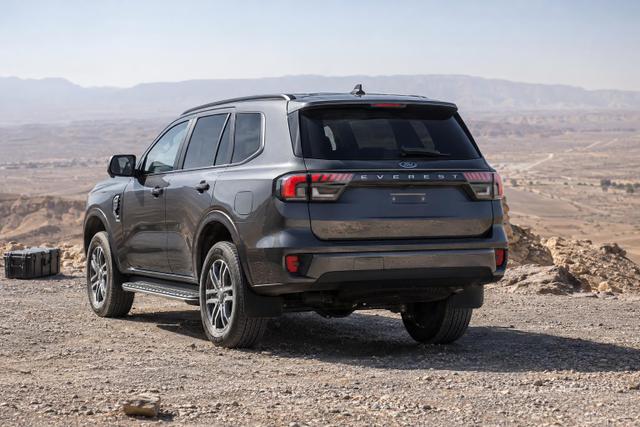
According to Al Jazirah Ford, the Everest V6 is being prepared specifically for the region ahead of its arrival. Final market specifications, equipment grades and local pricing have not yet been confirmed.
What is the 2.7-litre V6 engine in the Everest?
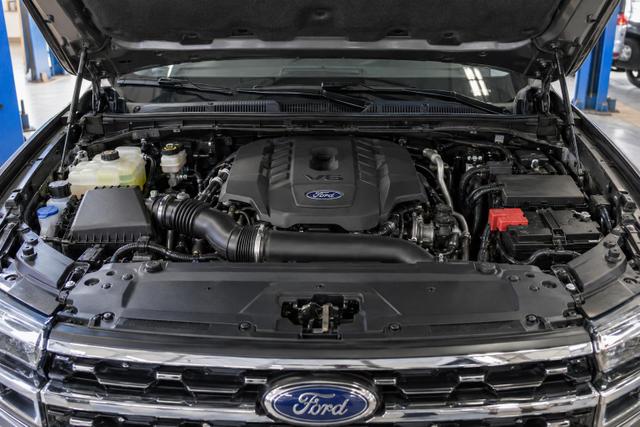
The Everest V6 uses Ford's 2.7-litre EcoBoost petrol V6, a twin-turbocharged engine designed to provide more low- and mid-range pulling power than a conventional four-cylinder petrol unit. That extra torque should be most noticeable when the vehicle is fully loaded, towing or climbing steep gradients.
Ford has not published final Middle East output figures for the Everest V6. Buyers should therefore treat power, torque, fuel-consumption and towing claims from other markets as a guide only until regional specifications are released.
- Configuration: 2.7-litre twin-turbo petrol V6.
- Purpose: stronger performance for loaded family use, highway travel and towing.
- Expected character: smoother and more effortless acceleration than a smaller four-cylinder engine.
- Important caveat: official GCC output and trim details are still to be announced.
A V6 is not automatically the right choice for every owner. It will likely use more fuel than a smaller hybrid or four-cylinder SUV, particularly in city traffic, so buyers should consider their annual mileage and typical use before choosing a grade.
Why does Ford test vehicles specifically for Middle East conditions?
Regional testing helps manufacturers tune and verify a vehicle for conditions that are common across the UAE, Saudi Arabia, Oman, Kuwait, Qatar and Bahrain. It goes beyond simply checking whether the engine starts and runs in hot weather.
- High-temperature operation in stop-start traffic and at motorway speeds.
- Cooling performance for the engine, transmission and cabin air-conditioning.
- Dust and sand exposure affecting filters, seals and moving components.
- Suspension and tyre behaviour on broken roads, gravel tracks and desert routes.
- Performance when carrying passengers, luggage or towing a trailer.
YallaMotor reports that the regional programme is linked to the Everest V6's 2026 introduction. Testing does not mean every buyer should expect a desert-racing SUV, but it is relevant reassurance for owners who expect their family vehicle to handle Gulf heat and varied road surfaces.
When will the Everest V6 launch in the region?
The Everest V6 is scheduled to arrive in the Middle East in November 2026. CarPrices also identifies November 2026 as the expected UAE launch timing.
Launch timing can vary between markets, particularly where distributors need to finalise allocations, homologation and showroom stock. Buyers interested in a particular colour, seating configuration or trim should wait for the local dealer's final order details.
It is also worth separating an announcement date from delivery availability. A model can be launched publicly in November while some customer cars arrive later, depending on demand and shipping schedules.
How does the Everest V6 differ from the recently launched Territory Hybrid?
The Everest V6 and Territory Hybrid serve different needs, despite both being Ford SUVs aimed at family buyers. The Everest is the more rugged, body-on-frame, three-row option, while the Territory is a more road-focused crossover with a hybrid powertrain.
Also read: Mercedes-AMG Unveils Its First Ground-Up Electric GT SUV With 1,153 Horsepower
The 2026 Ford Territory Hybrid now available in UAE showrooms uses a 1.5-litre turbo hybrid system that does not require external charging. Its focus is on everyday urban efficiency and easy family use rather than V6 performance or heavy-duty capability.
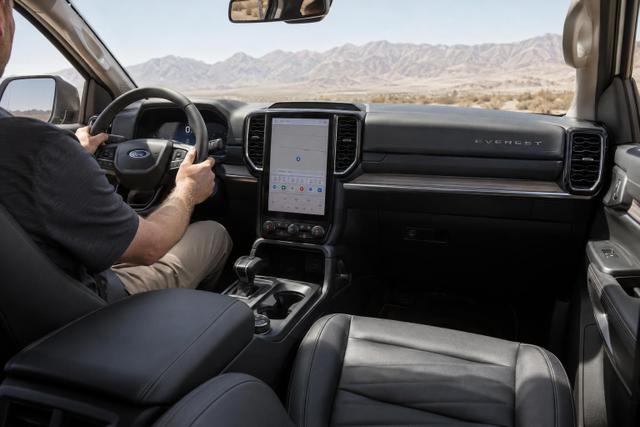
- Everest V6: suited to buyers prioritising seven seats, stronger towing potential, long-distance travel and more demanding terrain.
- Territory Hybrid: suited to drivers prioritising fuel efficiency, city commuting and crossover-style road manners.
- Powertrain approach: the Everest uses a twin-turbo V6 petrol engine, while the Territory combines petrol and electric assistance.
Neither approach is inherently better. An owner covering a daily Dubai or Riyadh commute may value the hybrid's efficiency, whereas a family frequently travelling with a full cabin, gear or a trailer may find the Everest V6 more suitable.
What this means for Ford's regional SUV lineup
The Everest V6 gives Ford a clearer step-up option for buyers who want more space and capability than a mainstream crossover can offer. It also places the brand in a competitive part of the market occupied by seven-seat SUVs used for school runs, road trips, towing and weekend desert access.
The upcoming model will face alternatives ranging from traditional ladder-frame SUVs to newer three-row crossovers. Buyers also have an expanding selection of electrified models, including the Toyota RAV4 Plug-in Hybrid planned for the Middle East, although it targets a different size and use case.
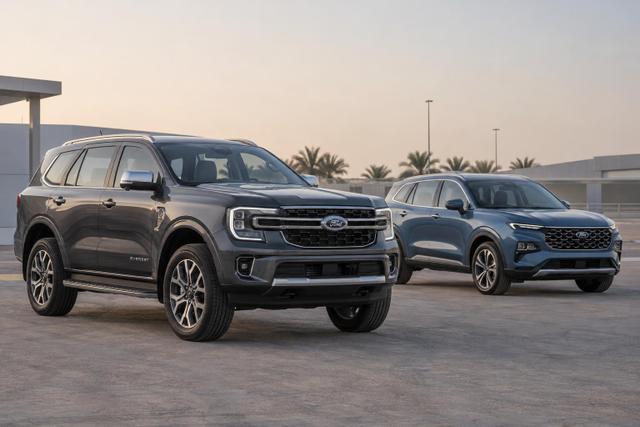
The key distinction is likely to be capability rather than just equipment. The Everest V6 should appeal to customers who want a single vehicle that can cover daily family duties while retaining the confidence to carry heavier loads or venture beyond paved roads.
Key takeaways for prospective buyers in the Middle East
The most important information is confirmed: Ford is conducting Middle East testing and plans to launch the Everest V6 in November 2026. The details that buyers still need, including pricing, specifications, grades and standard equipment, should emerge nearer to the on-sale date.
- Wait for local specifications: GCC power, torque, towing and equipment figures may differ from overseas versions.
- Consider how you drive: a V6 is most compelling for regular highway travel, full loads, towing or tougher terrain.
- Budget for running costs: fuel use, insurance, tyres and servicing can be higher than for a smaller hybrid crossover.
- Compare seating and practicality: inspect third-row space, cargo room with all seats occupied, and child-seat access.
- Check delivery timing: early demand and allocations can affect when a chosen specification becomes available.
For buyers replacing an older seven-seat SUV, the new Everest V6 is worth monitoring if stronger petrol performance is a priority. Those mainly looking for lower urban fuel consumption may find a hybrid crossover to be the more sensible fit.
People Also Ask
When is the Ford Everest V6 coming to the Middle East?
Ford plans to launch the Everest V6 in the Middle East in November 2026. Availability and delivery dates may differ by country and dealer allocation.
What engine will the Middle East Ford Everest V6 use?
The model is expected to use a 2.7-litre twin-turbo EcoBoost petrol V6. Ford has not yet confirmed final GCC power and torque figures.
Will the Ford Everest V6 have seven seats?
The Everest is positioned as a three-row family SUV, so seven-seat practicality is expected. Buyers should confirm the final seating layout and equipment in their local market when orders open.
Is the Ford Everest V6 better than the Territory Hybrid?
They are designed for different uses. The Everest V6 should suit buyers wanting more space, stronger performance and greater capability, while the Territory Hybrid is the more efficiency-focused urban crossover.
Why are vehicles tested in Middle East conditions?
Testing in the region helps manufacturers assess cooling, air-conditioning, dust resistance, tyres and overall durability in high heat, long-distance driving and rougher road conditions.