
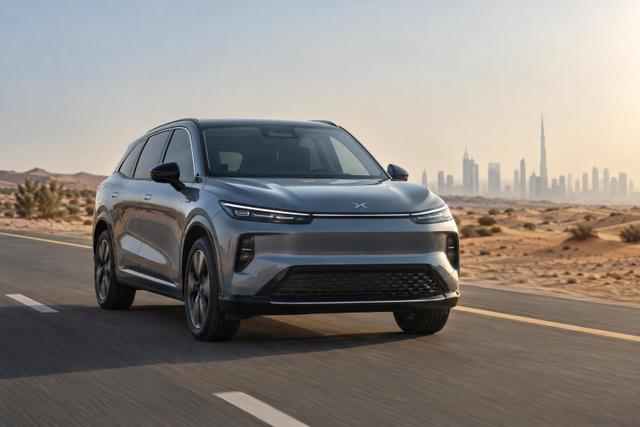
XPENG is using the Gulf to demonstrate why a range-extended electric vehicle, or REEV, may be a practical alternative to both pure EVs and conventional plug-in hybrids. Its Kunpeng Super Range Extender combines electric drive with an onboard petrol generator, and the company says the GX SUV can achieve up to 1,585km of claimed combined range.
The technology was introduced at a Dubai media workshop alongside the Grand Xplore tour, a six-country driving programme designed to test the system in heat, dunes and long-distance highway conditions. For GCC buyers, the central promise is straightforward: electric-style driving without relying on a charging stop for every long trip.
What is the Kunpeng Super Range Extender?
Kunpeng is XPENG's range-extender system for its upcoming extended-range electric models. The vehicle's wheels are driven by electric motors, while a petrol engine operates primarily as a generator to replenish the battery when its charge is low.
Also read: XPENG Signs New Dealer Agreements to Enter Kuwait and Expand in Oman
This differs from a conventional hybrid, where an engine may directly drive the wheels, and from a plug-in hybrid, which generally has a shorter electric-only range. The aim is to retain the smooth, immediate response of an EV while removing much of the concern around charger availability on longer journeys.
- Electric motors provide the main driving power.
- A battery supplies energy for electric driving and acceleration.
- A petrol range extender generates electricity when required.
- A fuel tank allows the vehicle to continue travelling when charging is inconvenient.
Absolute Geeks reported that XPENG is positioning the technology specifically around Gulf realities, including high temperatures, inter-city distances and uneven public-charging coverage outside major urban areas.
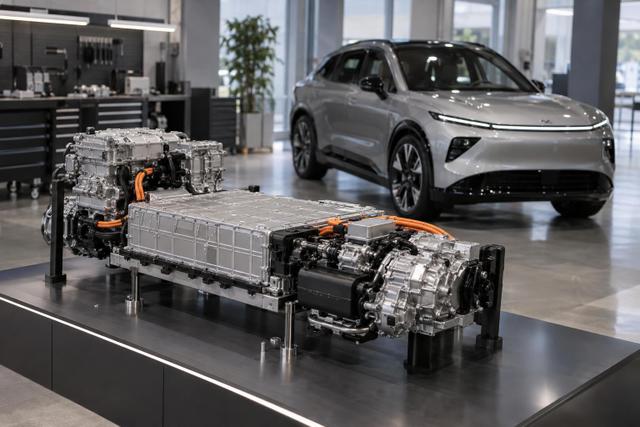
Inside XPENG's Dubai media workshop unveiling
The Dubai workshop focused on the GX, an expected flagship SUV using Kunpeng REEV technology. Rather than treating range as a laboratory figure alone, XPENG used the event to explain how the system is intended to handle real regional use, from urban commuting to cross-border travel.
YallaMotor's workshop report highlighted the claimed 1,585km total range for the GX. As with any manufacturer range claim, drivers should expect actual results to vary with speed, air-conditioning demand, terrain, passenger load and driving style.
The GX is also relevant because it gives buyers another large, electrified SUV option in a market where three-row practicality and long-distance capability remain priorities. Readers looking at the production model can see the details of the XPENG GX launch in the UAE.
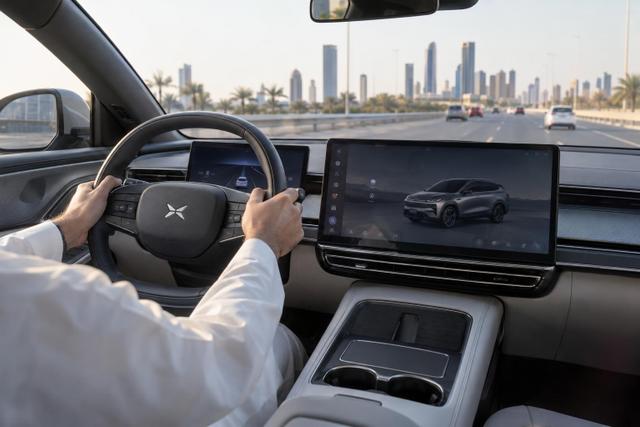
How the GX SUV performs with Kunpeng REEV technology
In a REEV, the electric powertrain remains central to the driving experience. The petrol engine is not meant to deliver the familiar feel of a conventional combustion SUV, but to maintain battery energy when a charger is unavailable or a journey exceeds the usable electric range.
This arrangement can be particularly useful during sustained motorway travel. At higher speeds, an EV consumes energy more quickly, while a range extender provides a way to keep moving by refuelling at a conventional petrol station.
DubiCars noted that the Dubai showcase positioned the GX as a vehicle for regional conditions rather than simply an urban electrified SUV. That distinction matters when journeys can involve long motorway stretches, remote desert routes and high cooling loads.
Range figures need context
The 1,585km figure is a claimed combined range, not a guarantee that every owner will see the same result. It includes energy from both the battery and petrol fuel, and the testing method, weather and route will influence the final number.
Prospective owners should ask for the vehicle's certified electric-only range, fuel-tank capacity, battery capacity and local test-cycle figures. Those details make it easier to judge how often the range extender is likely to run in daily use.
The Grand Xplore tour explained
The Grand Xplore tour is XPENG's six-country regional demonstration programme for Kunpeng technology. It is intended to take the GX through different road, climate and terrain conditions rather than relying only on controlled tests.
Zigwheels UAE reported that the route includes a 1,200km Dubai-to-Salalah challenge and regional testing in Kuwait and Liwa. These are useful demonstrations, although they should still be viewed as manufacturer-organised exercises rather than independent consumer tests.
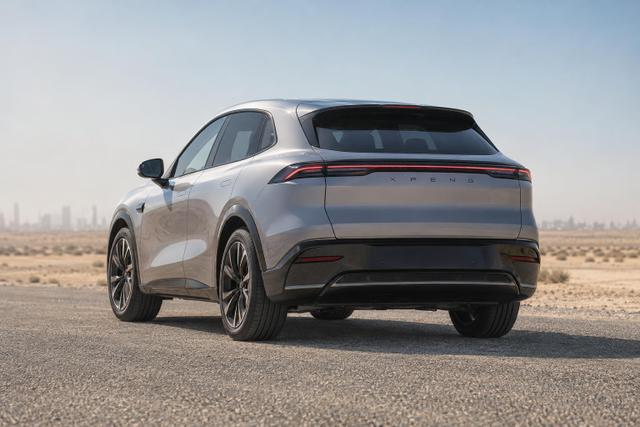
Extreme heat testing in Kuwait
Kuwait provides one of the region's most demanding environments for any electrified vehicle. Extreme summer temperatures can increase air-conditioning use, place added demand on battery thermal management and affect how efficiently a vehicle uses energy.
For a range-extender system, the test is not only about battery range. It also examines whether the generator, cooling systems and energy-management software can keep performance predictable when ambient temperatures are severe.
GCC buyers should not assume that a vehicle tested in another climate will behave identically in a Gulf summer. Local validation, warranty terms and dealer support remain important considerations before purchase.
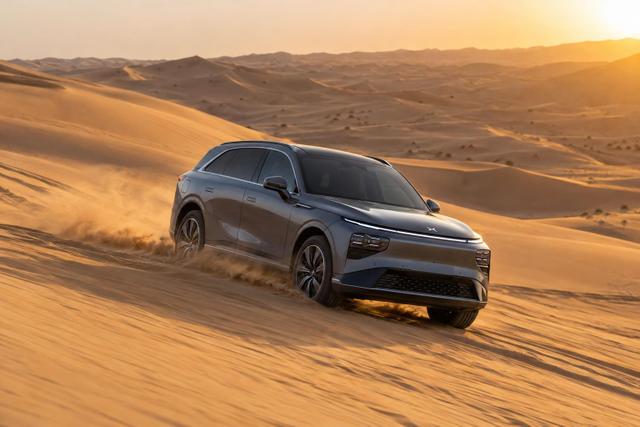
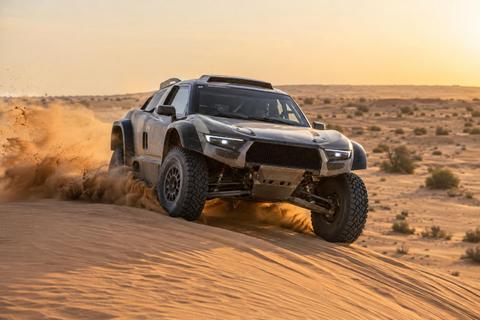
Dune driving trials in Liwa
Liwa's soft sand and steep dunes create a different kind of challenge. Sand driving often involves repeated acceleration, variable traction and sustained power demand, all of which can consume battery energy more quickly than steady road driving.
A REEV can potentially offer an advantage over a battery-only vehicle on a remote desert trip because petrol can be carried or obtained more easily than a fast charger. However, off-road driving still requires correct tyre pressures, recovery equipment, route planning and a suitable vehicle setup.
The technology does not replace sensible desert-driving preparation. Drivers should also remember that prolonged high-load driving can increase fuel consumption once the range extender is active.
Also read: WeRide and Uber Launch Robotaxi Rides for Dubai Passengers With RTA Partnership
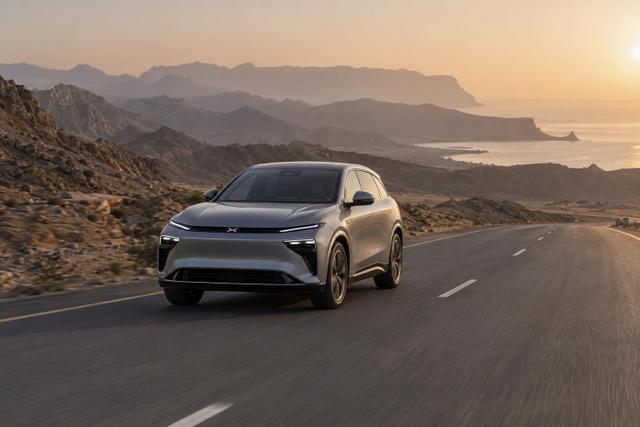
The 1,200km Dubai to Salalah no-refuel challenge
The Dubai-to-Salalah route is designed to illustrate the GX's long-distance potential. Covering about 1,200km without refuelling would be a notable result if completed under the stated conditions, but it should be considered a demonstration of a specific vehicle, route and driving strategy.
Real-world cross-border journeys can include delays, headwinds, changing elevations, traffic, heavy luggage and longer periods of air-conditioning use. Fuel availability, border procedures and insurance coverage should also be checked before planning a similar trip.
The more practical point is that a claimed range above 1,500km gives drivers a large reserve for regional road travel. It may reduce the need to plan charging stops closely, while still allowing routine short journeys to be completed mainly on battery power.

Why range extenders may suit Gulf driving conditions better than plug-in hybrids
Plug-in hybrids can be an effective solution when owners charge regularly and most journeys are short. Their limitation is that the combustion engine often takes a larger role after the battery is depleted, which can reduce the benefit of carrying a large battery.
A REEV instead keeps the electric motor as the primary source of propulsion. The range extender is there to create electricity, which may offer a more consistently electric driving feel on journeys beyond the battery's practical range.
- Daily city travel can potentially be completed using battery power.
- Long road trips do not depend entirely on rapid-charging infrastructure.
- Remote routes can be more manageable where petrol is easier to find than chargers.
- High air-conditioning demand is less likely to create a stranded-driver scenario.
There are trade-offs. A REEV still requires petrol, servicing for its combustion components and attention to fuel consumption once the generator is operating. It is also not a substitute for charging, because regular charging is what allows an owner to maximise electric driving.
The regional market is already gaining more extended-range options. Bahrain's introduction of the DEEPAL S05 and S07 REEV SUVs shows that XPENG is entering a growing segment rather than creating one in isolation.
What this means for GCC buyers
XPENG's demonstration makes the REEV proposition easier to understand: buyers who are interested in electric mobility but regularly drive between emirates, travel across borders or visit remote areas may not have to choose between electric propulsion and long-range flexibility.
That does not automatically make a REEV the right choice for every household. Drivers with reliable home charging and predictable urban journeys may still find a pure EV more efficient, while drivers who rarely charge could see fewer benefits from the battery component.
Questions to ask before buying a range-extended SUV
- What is the certified electric-only range in local conditions?
- How much fuel does it use when the range extender is running?
- Can the battery be charged at home, work or public chargers near you?
- What are the battery, electric-drive and petrol-generator warranty terms?
- Which dealer workshops are trained to service the model locally?
Buyers should also compare purchase price, insurance, servicing arrangements and resale prospects against petrol, hybrid, plug-in hybrid and battery-electric alternatives. For context, the Li Auto L9's UAE launch is another example of an extended-range flagship SUV now available in the region.
Key takeaways
- Kunpeng is a REEV system that uses electric motors for propulsion and a petrol engine as a generator.
- XPENG claims the GX can deliver up to 1,585km of combined range.
- The Grand Xplore programme includes heat testing in Kuwait, dune trials in Liwa and a Dubai-to-Salalah distance challenge.
- REEVs may appeal to Gulf drivers who want electric driving but need confidence for long or remote journeys.
- Actual range, fuel use and ownership costs will depend on how often the vehicle is charged and how it is driven.
People Also Ask
What is a range-extended electric vehicle?
A range-extended electric vehicle uses electric motors to drive the wheels and carries a petrol engine that generates electricity when the battery charge becomes low. It combines electric driving with the ability to refuel at petrol stations on longer trips.
How far can the XPENG GX travel with Kunpeng technology?
XPENG claims up to 1,585km of combined range for the GX with its Kunpeng range-extender system. Actual range will vary with speed, temperature, air-conditioning use, terrain, load and driving style.
Does a range-extender vehicle need charging?
It can operate without charging because it has a petrol generator, but charging remains important. Regular charging allows owners to use more battery power and reduce petrol consumption for everyday driving.
Is a REEV better than a plug-in hybrid for long trips?
It depends on the vehicle and how it is used. A REEV may feel more like an EV because electric motors provide propulsion, while its generator reduces dependence on charging during long journeys.
Can a range-extended SUV be used for desert driving?
It can be used for desert driving if the vehicle has suitable ground clearance, tyres, traction systems and off-road capability. Drivers should still prepare properly, reduce tyre pressures as appropriate and avoid travelling into remote areas alone.