Compact SUVs have become an easy fit for Saudi buyers who want a higher driving position and useful cabin space without moving up to a large, thirsty SUV. The challenge in 2026 is choice. The Saudi market now covers everything from affordable urban crossovers to turbocharged models with large screens, driver assistance technology and increasingly long warranties.
For most buyers, the right compact SUV in Saudi Arabia is not simply the cheapest one. A car that spends most of its life commuting through Riyadh or Jeddah has different priorities from one regularly covering long motorway distances or carrying a family in summer heat.
The shortlist should therefore consider air-conditioning performance, rear-seat comfort, fuel consumption, safety equipment, tyre costs, service support and warranty terms alongside the purchase price.
Current official Saudi listings put several small and compact crossovers below SAR 100,000, including the MG ZS, Toyota Raize, Chevrolet Groove, Kia Seltos, GAC EMZOOM, Toyota Urban Cruiser, Hyundai Creta, Nissan Kicks and Honda HR-V.
Compact SUVs in Saudi Arabia: what should buyers prioritise?
The term "compact SUV" is used fairly loosely. Some cars in this guide, such as the Toyota Raize, sit towards the smaller end of the crossover market, while models such as the Seltos, Creta and HR-V offer more cabin space.
Most are front-wheel-drive road-focused crossovers. They may have SUV styling and additional ground clearance, but that does not automatically make them suitable for serious desert driving.
Before choosing a model, decide where the car will spend most of its time:
- Heavy city use: prioritise manoeuvrability, fuel economy, parking cameras and good low-speed comfort.
- Frequent highway driving: look more closely at engine performance, stability, adaptive cruise control and cabin refinement.
- Family use: rear air vents, second-row space, boot capacity and safety equipment become more important.
- High annual mileage: fuel consumption, warranty mileage and scheduled servicing can matter more than extra equipment.
That simple split can remove several unsuitable models before you even visit a showroom.
Compact SUV prices in Saudi Arabia in 2026
These are current starting prices displayed by official Saudi brand or distributor websites at the time of writing in September 2026. Specifications, stock and prices can change, so buyers should obtain a final written quotation before placing a deposit.
| Model | Current Saudi starting price | Why it deserves a look |
| MG ZS | SAR 67,675 | Affordable entry point, turbo engine option and available driver assistance technology. |
| Toyota Raize 2026 | SAR 68,827.50 | Small dimensions and official fuel consumption of 21.1 km/L for the 1.2-litre XLE. |
| Chevrolet Groove 2026 | SAR 73,700 | 1.5-litre turbo engine, 145 hp and 255 Nm in a compact package. |
| Kia Seltos | SAR 76,935 | More substantial dimensions than the smallest crossovers, with a broad equipment range. |
| GAC EMZOOM 2026 | SAR 80,454 incl. VAT | 174 hp turbo engine and an official 18.3 km/L fuel consumption figure. |
| Toyota Urban Cruiser 2026 | SAR 84,755 | 1.5-litre engine with mild-hybrid assistance and claimed 19.8 km/L. |
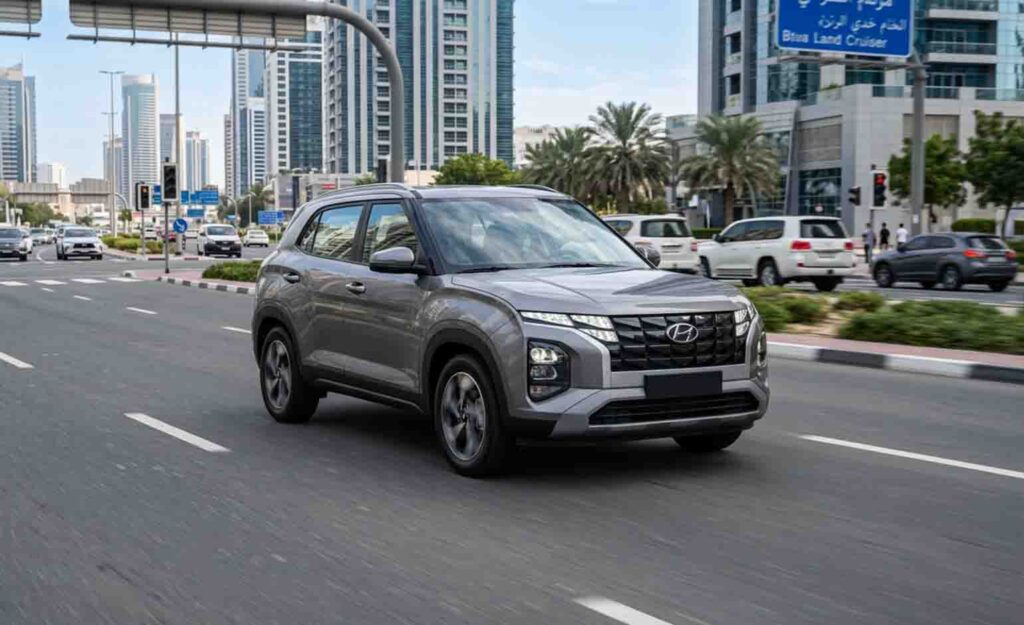
| Hyundai Creta 2026 | SAR 87,904 | Familiar compact crossover format with several current Saudi trim choices. |
| Nissan Kicks 2025 | SAR 89,599 | 2.0-litre engine producing 142 PS and 190 Nm, with current 2025 stock still promoted in Saudi Arabia. |
| Honda HR-V | SAR 93,035 | 1.5-litre engine, 119 hp and an official 18.7 km/L fuel economy figure. |
A 2026 buying guide does not necessarily mean every new car in showrooms carries a 2026 model-year badge. Nissan, for example, is still running an official Saudi promotion on the 2025 Kicks through September 2026.
That can create opportunities, but buyers should compare the discount against depreciation and the arrival of any newer model-year stock.
Which compact crossover suits your type of driving?
There is no single model that works best for every Saudi buyer. How and where you drive should narrow the choice.
Mostly urban driving in Riyadh, Jeddah or Dammam
For congested roads, underground parking and daily commuting, a smaller crossover can make considerable sense.
The Toyota Raize measures just 4,030 mm long and offers a turning radius as tight as 4.9 metres depending on wheel size. Its 1.2-litre version is rated at 21.1 km/L, making efficiency and manoeuvrability two of its strongest attractions.
The MG ZS and Chevrolet Groove also sit towards the more affordable end of the market. The Groove adds a 145 hp turbo engine, which may appeal to buyers who want more performance without moving into a larger SUV.
Regular motorway journeys
Drivers frequently travelling between Saudi cities should spend more time evaluating overtaking performance, seat comfort, wind noise and driver assistance systems.
The Nissan Kicks uses a 2.0-litre four-cylinder petrol engine producing 142 PS and 190 Nm, while the GAC EMZOOM offers a 174 hp 1.5-litre turbo engine. On paper, both provide considerably more power than some economy-focused alternatives.
Do not choose on horsepower alone. Test the vehicle at motorway speeds and check whether adaptive cruise control, lane assistance or blind-spot monitoring is actually included on the trim you are buying.
Small families
A compact SUV may look spacious from the driver's seat but feel very different once a child seat, passengers and luggage are added.
The Kia Seltos measures 4,385 mm long with a 2,630 mm wheelbase, while Kia also quotes up to 433 litres of luggage capacity.
When visiting the showroom, bring the equipment you normally use. A pushchair or child seat will tell you more about practicality than a brochure measurement.
Saudi heat changes what matters during a test drive
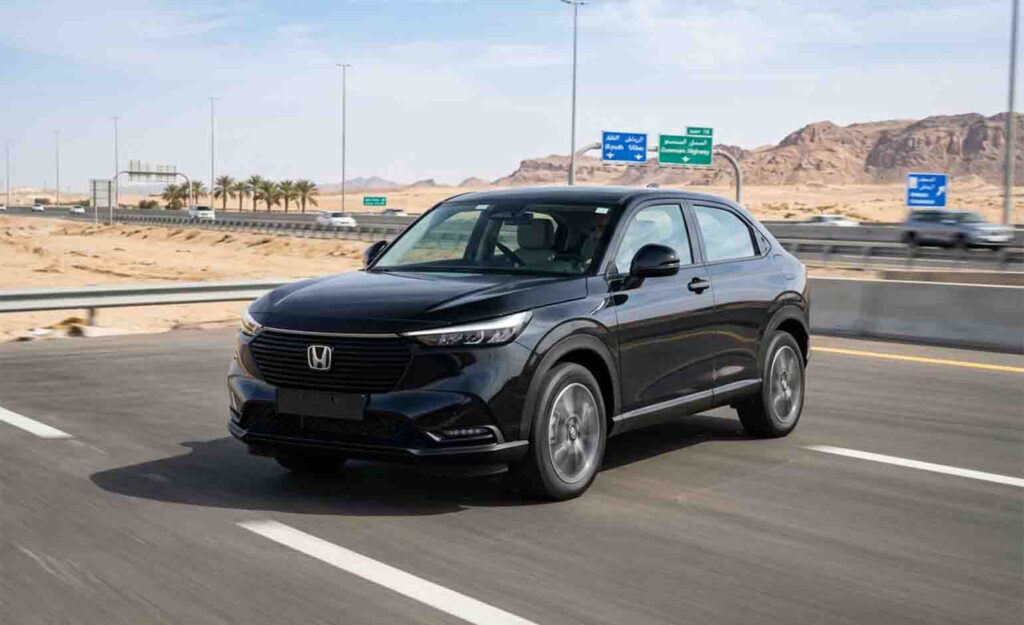
A panoramic roof, large infotainment screen and ambient lighting can make a strong first impression, but Saudi ownership exposes cars to conditions that a short showroom inspection does not.
Air-conditioning should be treated as a core vehicle system rather than just another comfort feature. Try the car after it has spent time outside, rather than only testing a pre-cooled demonstrator.
Pay particular attention to:
- Cooling at idle: useful when spending long periods in slow traffic.
- Rear air vents: especially important when regularly carrying children or adults.
- Seat material: dark synthetic upholstery can become extremely hot after extended sun exposure.
- Cabin glass area: panoramic roofs may increase the amount of heat entering the cabin.
- Remote start: useful where offered, but availability varies between models and grades.
You should also check the battery specification and replacement cost. High temperatures can be demanding on vehicle batteries, particularly when the car regularly sits outdoors.
Bigger wheels can make a compact SUV more expensive to own
Many manufacturers use larger alloy wheels to differentiate higher trim levels. They look good, but they are not automatically the best choice for a daily Saudi car.
The Toyota Raize uses 16-inch wheels on the XLE and 17-inch wheels on the Limited, while the Kia Seltos offers 17 and 18-inch wheels. Some GAC EMZOOM variants use 19-inch alloys.
Before upgrading, check:
- Replacement tyre prices for the exact size.
- Availability from several tyre brands.
- Whether the lower-profile tyre noticeably changes ride comfort.
- The cost of replacing one damaged alloy wheel.
A higher specification does not always mean lower long-term running costs.
Fuel economy figures need Saudi context
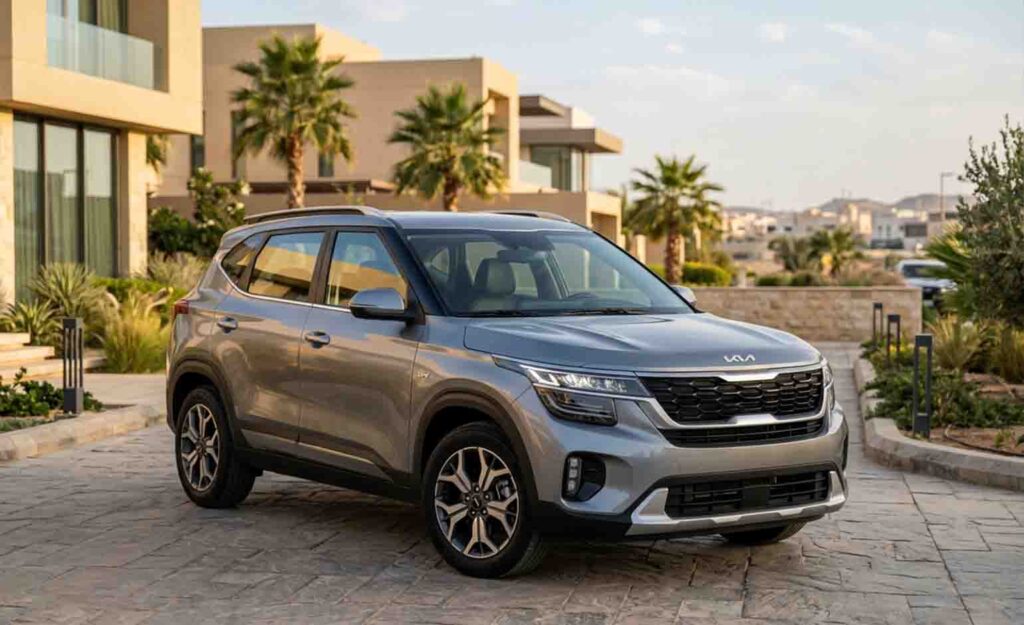
Official fuel consumption figures are useful for comparing vehicles under standardised conditions, but they should not be treated as guaranteed real-world results.
For example, Toyota rates the 1.2-litre Raize at 21.1 km/L and the Urban Cruiser at 19.8 km/L. Honda quotes 18.7 km/L for the HR-V, while GAC lists 18.3 km/L for the 2026 EMZOOM.
Actual consumption depends on traffic, driving speed, vehicle load and air-conditioning use. Honda itself notes that real-world economy can vary according to road conditions, driving style and driving environment.
For a buyer doing mostly urban commuting, an efficient small engine may make sense. A driver spending more time at higher speeds may place greater value on stronger acceleration and relaxed overtaking.
Safety equipment can change dramatically between trims
One of the biggest mistakes when comparing compact SUVs is checking the model's headline safety equipment without checking the actual grade.
The 2026 Chevrolet Groove is a good example. Chevrolet lists two airbags on the entry LT, while the more expensive RS receives six airbags, adaptive cruise control and additional advanced safety technology.
Toyota lists driver and front-passenger airbags on both current Raize grades. Hyundai's current Creta information highlights equipment including a six-airbag system, forward collision avoidance and blind-spot assistance, but equipment should still be confirmed against the specific Saudi trim being ordered.
Before signing, ask the salesperson to confirm in writing whether your exact vehicle includes:
- Number of airbags.
- Autonomous emergency braking.
- Blind-spot monitoring.
- Rear cross-traffic alert.
- Adaptive cruise control.
- Lane departure or lane-keeping assistance.
- Front, rear and 360-degree cameras.
Do not assume the specification shown in an advertisement applies to the entry-level car.
Warranty coverage deserves as much attention as the purchase price
Warranty periods differ considerably across the segment.
Toyota currently states three years or 100,000 km for the Raize, while Honda gives the HR-V a three-year or 100,000 km limited warranty. Kia advertises five years or 100,000 km for the Seltos.
Aljomaih Automotive currently lists a six-year or 250,000 km warranty for the 2026 GAC EMZOOM, together with five years of roadside assistance for eligible Aljomaih showroom customers.
Nissan's current Kicks promotion states a manufacturer warranty of three years or 100,000 km. Chevrolet says the 2026 Groove is backed by its standard three-year or 100,000 km manufacturer warranty.
A longer headline warranty is attractive, but read what it actually covers. Ask about servicing requirements, wear items, roadside assistance, transferability and whether missing scheduled maintenance can affect a claim.
Do not judge financing by the monthly payment
Saudi dealers regularly advertise low monthly instalments, cashback or zero down-payment campaigns. Those offers can be useful, but the monthly number alone does not show the true purchase cost.
Current Nissan Kicks promotion terms, for example, state that instalments can exclude insurance, transportation and registration fees, while the final amount varies according to the financing provider. Hyundai's September 2026 Creta campaign also notes that instalments exclude insurance and vary according to vehicle specification and finance eligibility.
Compare:
- Cash purchase price.
- Total finance amount.
- APR or profit rate.
- Down payment.
- Final or balloon payment.
- Insurance cost.
- Administration and registration charges.
A slightly more expensive vehicle with stronger standard equipment can sometimes make more financial sense than financing a cheaper base model and then paying to upgrade it.
Five mistakes to avoid when buying a compact SUV in Saudi Arabia
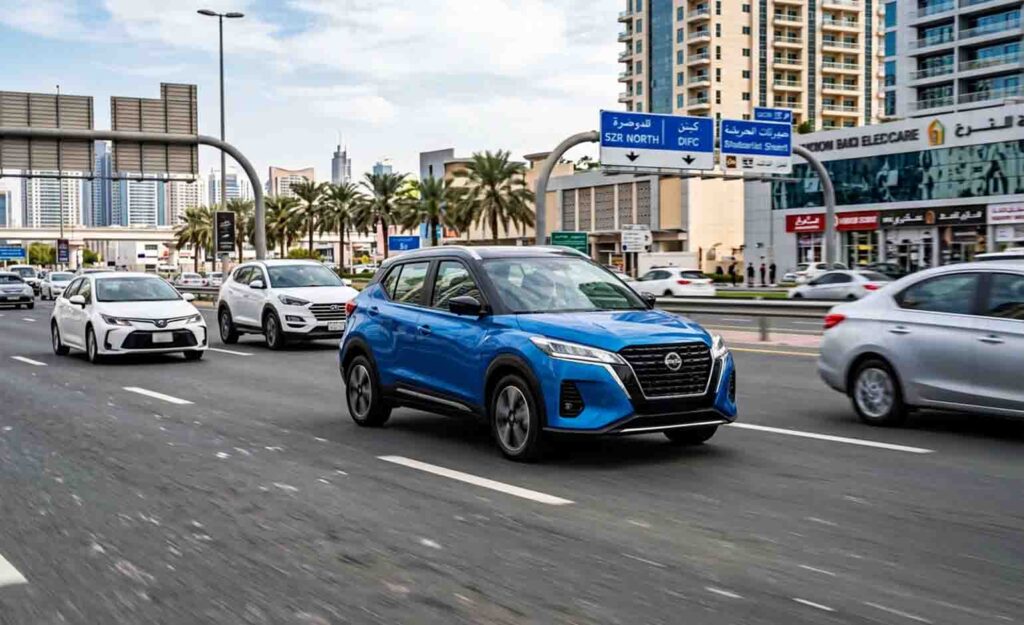
With so many closely priced models, it is easy to focus on the wrong details.
Avoid these common buying mistakes:
- Buying by screen size: safety, cooling and comfort matter more after the novelty wears off.
- Assuming every SUV can handle dunes: most vehicles here are road-focused front-wheel-drive crossovers.
- Ignoring tyre prices: large wheels can increase replacement costs.
- Skipping the rear-seat test: check cooling, legroom and child-seat access yourself.
- Choosing finance before insurance: get an insurance quote for the exact trim first.
Also avoid assuming a well-equipped showroom vehicle represents the specification of the car being quoted. Ask for the exact trim name and specification sheet.
Service support and resale should be checked before you buy
It is difficult to predict future resale values accurately, especially as more brands and models enter the Saudi market.
Instead of relying on general assumptions about a badge, look at two or three-year-old examples of the model you are considering. Compare asking prices, mileage and how quickly similar vehicles appear to sell.
Service access is even easier to check. Before purchasing, identify the authorised workshop closest to your home or workplace and ask about routine service intervals, approximate scheduled maintenance costs and parts availability.
If you are considering a vehicle sold outside the authorised Saudi distributor network, confirm the GCC specification, manufacturer warranty and service eligibility before handing over any money.
The Saudi shortlist should start with how you actually drive
Saudi buyers have more compact SUVs to choose from than ever, but the growing number of models makes careful comparison more important.
A Toyota Raize may make sense for someone prioritising low purchase cost, easy parking and fuel economy. The Urban Cruiser offers another efficiency-focused Toyota option with more space. Buyers wanting stronger turbo performance can look at models such as the Chevrolet Groove, MG ZS or GAC EMZOOM, while the Creta, Seltos, Kicks and HR-V deserve consideration from buyers looking for a more substantial everyday crossover.
The most useful test, however, happens away from the specification sheet. Drive the exact trim you intend to buy, test its air-conditioning and rear seats, check the safety equipment, price the tyres and insurance, and obtain the full warranty and finance terms in writing.
That will tell you far more about whether a compact SUV suits life in Saudi Arabia than a long equipment list.