A low daily rate can look convincing until the booking adds insurance upgrades, mileage charges and collection fees. Renting a car in Dubai becomes easier to budget for when you know the total payable amount, your damage liability and the conditions for getting your deposit back.
Before paying, confirm that your licence is accepted, read the insurance excess and mileage allowance, and get the return terms in writing. Those checks matter whether you are visiting Dubai for a week or need a temporary car while your own vehicle is being repaired.
Check your licence before choosing the car
Residents and tourists should not assume they can use the same documents. UAE residents generally need a valid UAE driving licence. Visitors may qualify to use an accepted foreign licence, while others need an International Driving Permit, or IDP, alongside their original licence. Hertz UAE publishes separate requirements for these groups.
An IDP does not replace your home driving licence. Ask the supplier to confirm eligibility against your nationality, licence issuing country and UAE visa status before making a non-refundable booking.
Prepare the documents the actual rental company requests, including:
Your original, valid driving licence and an IDP where required.
Your passport and entry or visa documentation if visiting.
Your Emirates ID and any requested residency documents if resident.
An accepted payment card in the main renter’s name.
Age and driving experience requirements also depend on the supplier and vehicle category.
Renting a car in Dubai starts with the full price
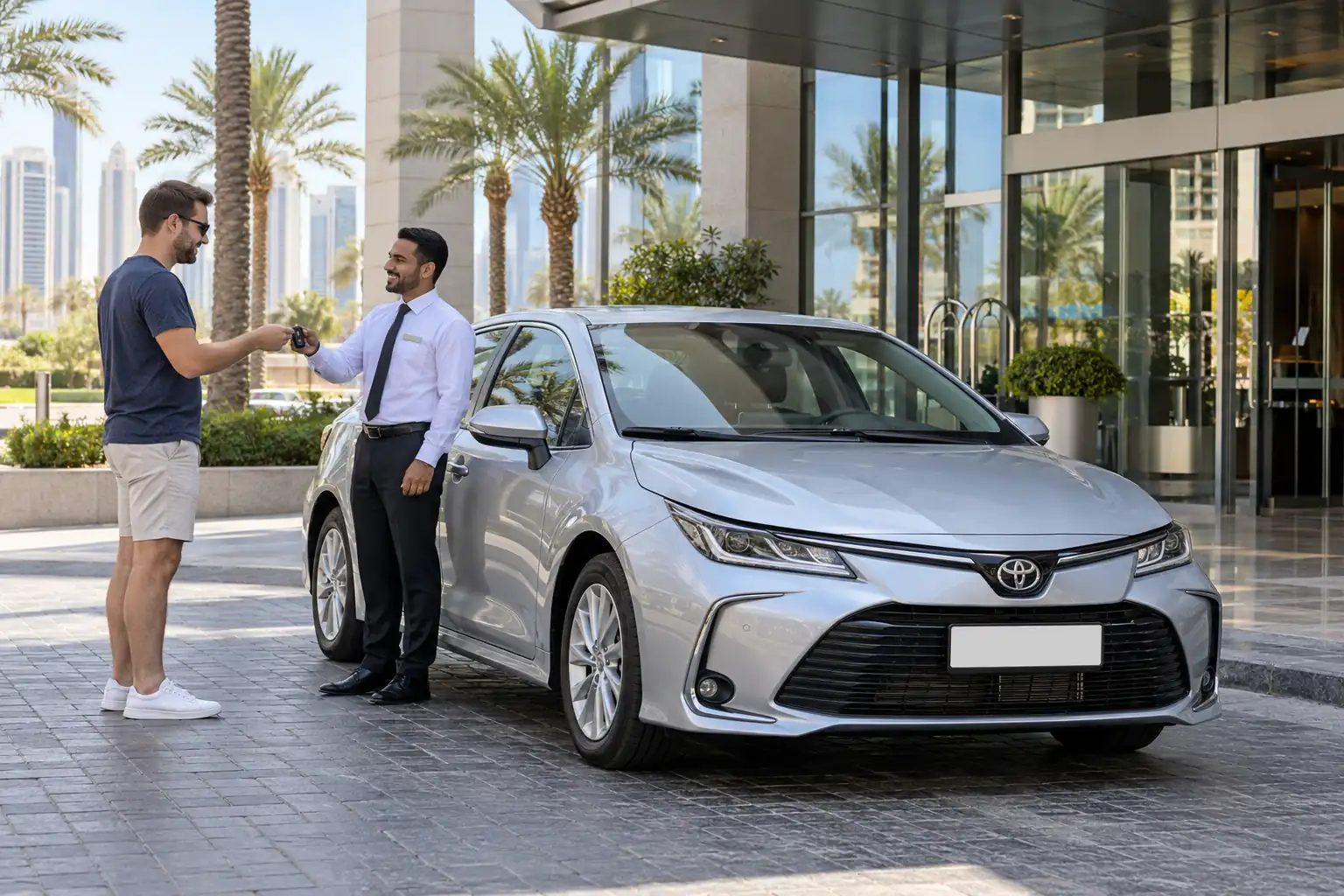
Compare written quotations for the same dates, collection arrangements and insurance protection. A cheaper headline rate is difficult to judge if one quotation includes useful extras and another leaves them for the counter.
Ask for an itemised booking total
Request a quotation showing the rental charge, VAT treatment and every compulsory fee. Thrifty UAE, for example, lists airport and one-way rental fees in its terms, so collection and return locations can affect the bill.
Before paying, check the parts of the booking most likely to change its cost:
Airport pickup, hotel delivery and vehicle collection charges.
Additional drivers, child seats and optional protection.
Cancellation, no-show and flight-delay conditions.
Fuel requirements, cleaning charges and late-return fees.
If booking through a comparison website, identify the company supplying the vehicle. Save both the booking confirmation and the supplier’s rental terms. Ask which business handles changes, refunds and disputes.
Treat the deposit as part of your travel budget
A security deposit and an insurance excess serve different purposes. The deposit secures potential charges under the agreement; the excess is the amount you may owe towards a covered damage claim. Paying a deposit does not buy extra insurance.
Check whether the supplier blocks funds on a credit card or takes a payment. Hertz UAE says its deposit is a card hold, which can take up to 29 days to be released, depending on the bank or card provider. That timing is specific to its published policy.
Keep enough available credit for accommodation and other spending. For a no-deposit offer, ask whether there is a non-refundable fee, and confirm how later tolls, fines or damage charges will be collected.
Match the mileage allowance to your itinerary
Ask whether the kilometre limit applies daily, across the whole booking or monthly. Get the excess-kilometre rate in writing and confirm whether unused daily mileage carries forward.
This matters if your plans include Abu Dhabi, Fujairah or Ras Al Khaimah alongside Dubai sightseeing. Estimate the complete route, including airport journeys and detours, rather than judging the allowance by your first day’s driving.
For a monthly rental, also request the servicing arrangements and early-return calculation. A monthly quotation needs more scrutiny than simply multiplying a daily rate.
Understand your insurance excess before signing
“Insurance included” does not explain how much you would pay after damaging the rental car. A Collision Damage Waiver, or CDW, limits liability for covered damage under the agreement, but an excess may remain.
Additional protection may reduce that excess, subject to conditions. Hertz’s Super CDW guidance, for example, still requires a valid police report and lists exclusions. A description such as “full cover” should prompt a request for the actual wording.
Before accepting or declining protection, ask for clear answers on:
The excess amount and whether it applies separately to each incident.
Cover for tyres, windscreens, wheels, the underside and interior.
Theft, lost keys and damage found while the car was parked.
Exclusions for floodwater, unsuitable roads or incorrect fuel.
If relying on travel insurance or a credit-card benefit, ask the insurer to confirm UAE rental cover, eligible vehicle categories and the claims process. Establish whether you would need to pay the rental company first.
Anyone sharing the driving should be authorised under the agreement. Arrange an additional driver before handing over the keys; SIXT offers this as a booking extra.
Salik and parking belong in the budget
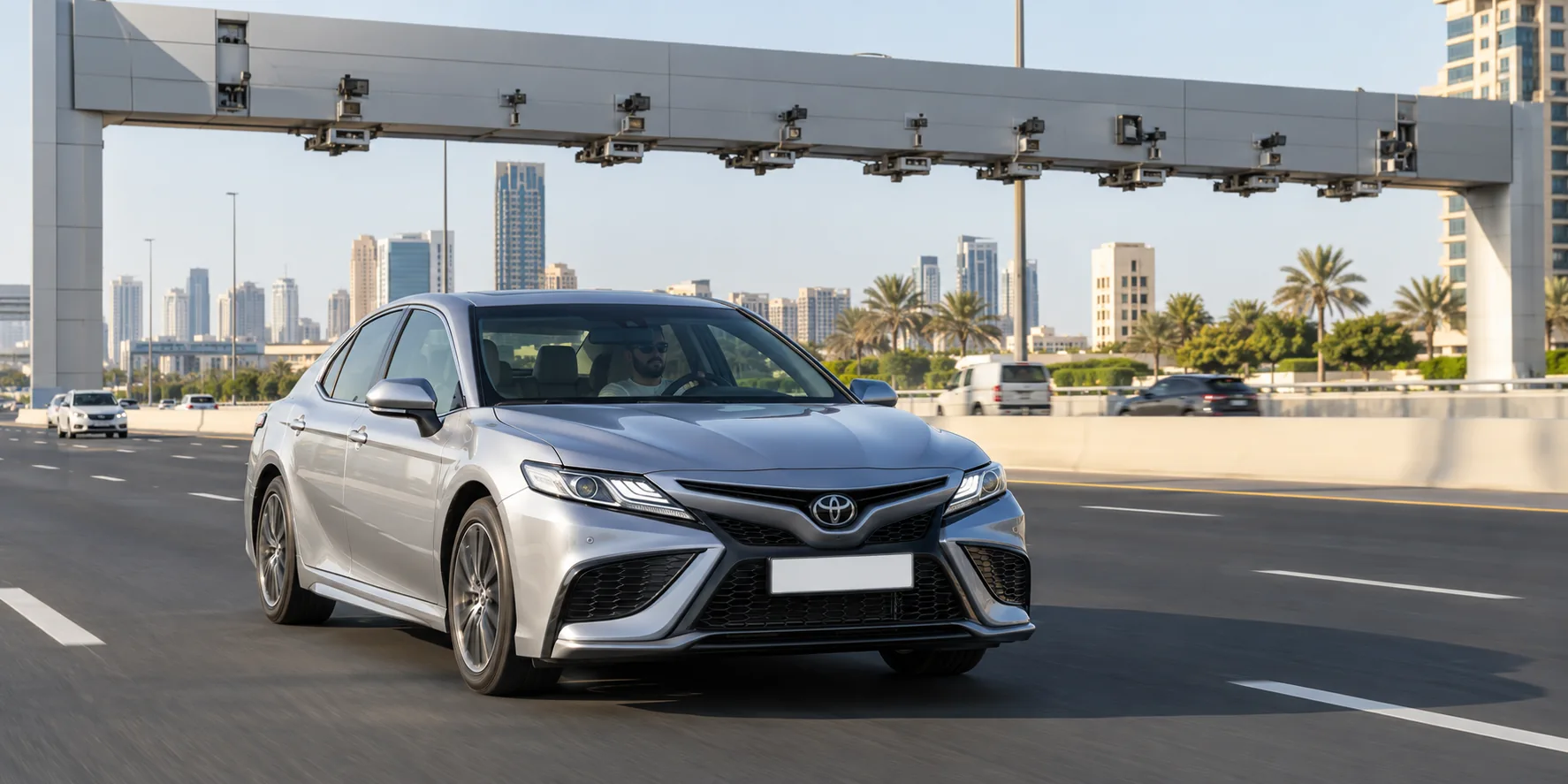
Salik is Dubai’s electronic road toll system. Its variable pricing means the charge depends on when you cross a toll gate, rather than one fixed amount throughout the day.
Under the normal schedule, the current charges including 5% VAT are:
Monday to Saturday, 6am to 10am and 4pm to 8pm: AED 6.30.
Other chargeable Monday-to-Saturday hours: AED 4.20.
Daily, 1am to 6am: no toll charge.
Sundays: AED 4.20 during chargeable hours, except public holidays and public events.
Salik introduced VAT on toll transactions from 1 June 2026. Ramadan has a different timetable, so check the official schedule for your travel dates. These are operator charges before any rental-company administration fee.
Ask how the supplier bills each crossing. Thrifty, for example, publishes a separate administration charge for Salik and DARB transactions. Request the toll breakdown if the final invoice is unclear.
For an Abu Dhabi trip, DARB is a separate toll system. Confirm how the rental company handles those charges before travelling between emirates.
Parking needs its own allowance. Parkin’s public parking tariffs vary by zone and timing. Check the zone code, vehicle registration details and payment confirmation whenever you park, and ask your hotel about overnight parking.
Choose a car that suits Dubai driving
For a couple travelling with modest luggage, a compact hatchback or saloon is worth considering before paying for a large SUV. Judge the vehicle against your passengers, bags, planned routes and confidence in tight hotel car parks.
For families, check the luggage space with every required seat in use. A seven-seat vehicle may leave less room for suitcases than expected. Reserve a suitable child seat and confirm its availability before collection.
Dubai heat makes a working air-conditioning system a priority. Test it before leaving the pickup location, including rear cooling where fitted. Also familiarise yourself with the mirrors, lights, navigation and parking controls while stationary.
An electric rental deserves a charging plan. Confirm access near your accommodation, the required app or payment method, and the charge level expected on return. Request an explanation of any charging or recovery fees.
Photograph the car before the first journey
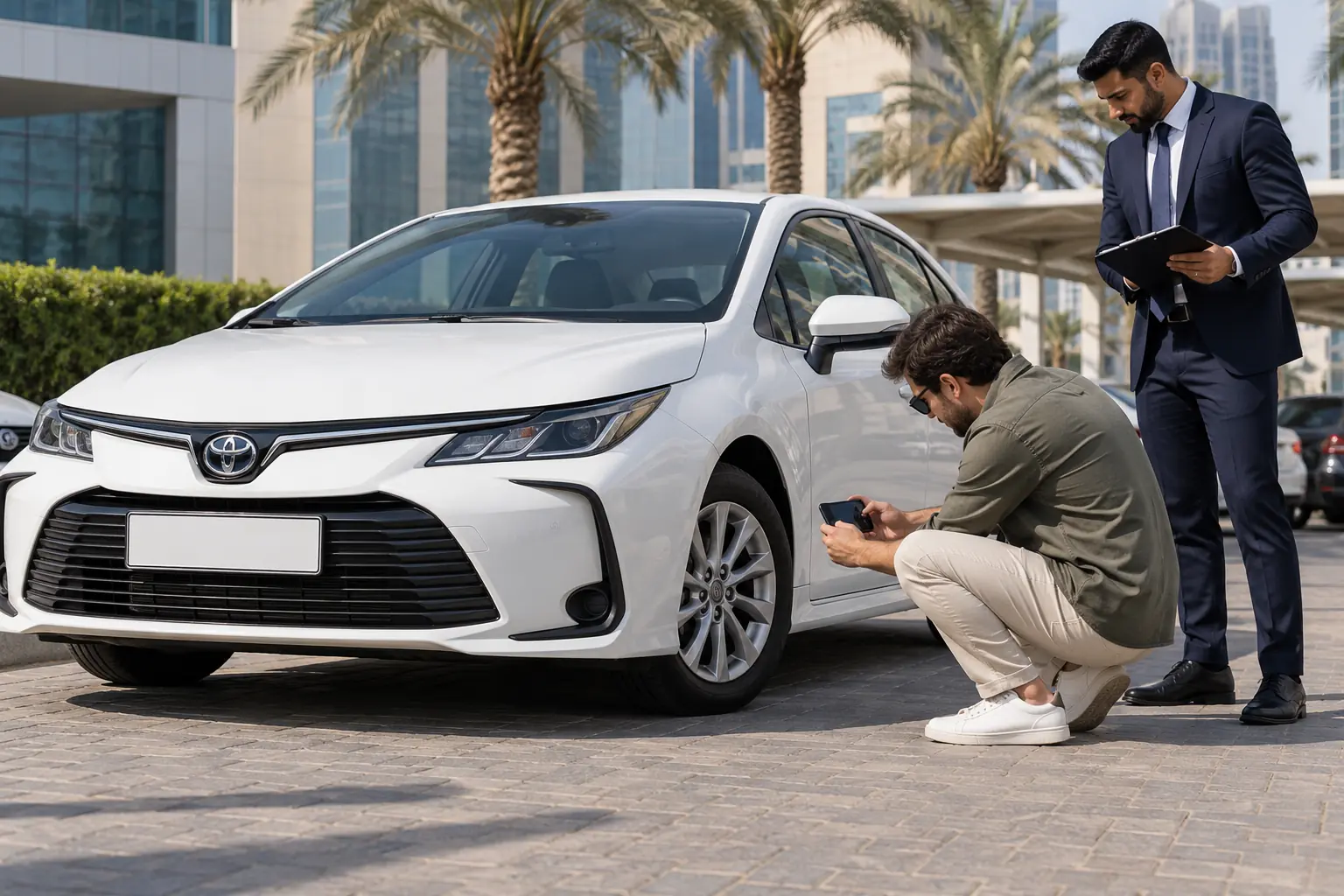
Inspect the vehicle with the rental representative and record existing damage on the handover report. Photographs are useful evidence, but they should support an agreed condition record.
Take clear pictures or video in adequate light, paying particular attention to:
Bumpers, doors, roof and lower bodywork.
Wheel rims, tyre sidewalls and visible tyre damage.
Windscreen chips, lights and mirrors.
Seats, dashboard, upholstery and existing stains.
Odometer, fuel gauge or battery charge level.
Check that the registration document, agreed accessories and emergency contact details are present. If a tyre appears damaged, a warning light stays on or the air conditioning struggles, request another vehicle before starting the rental.
For a car delivered after dark, use a well-lit area for the inspection. Ask the representative to acknowledge anything you cannot inspect properly and agree how it will be checked.
An Oman trip needs permission before departure
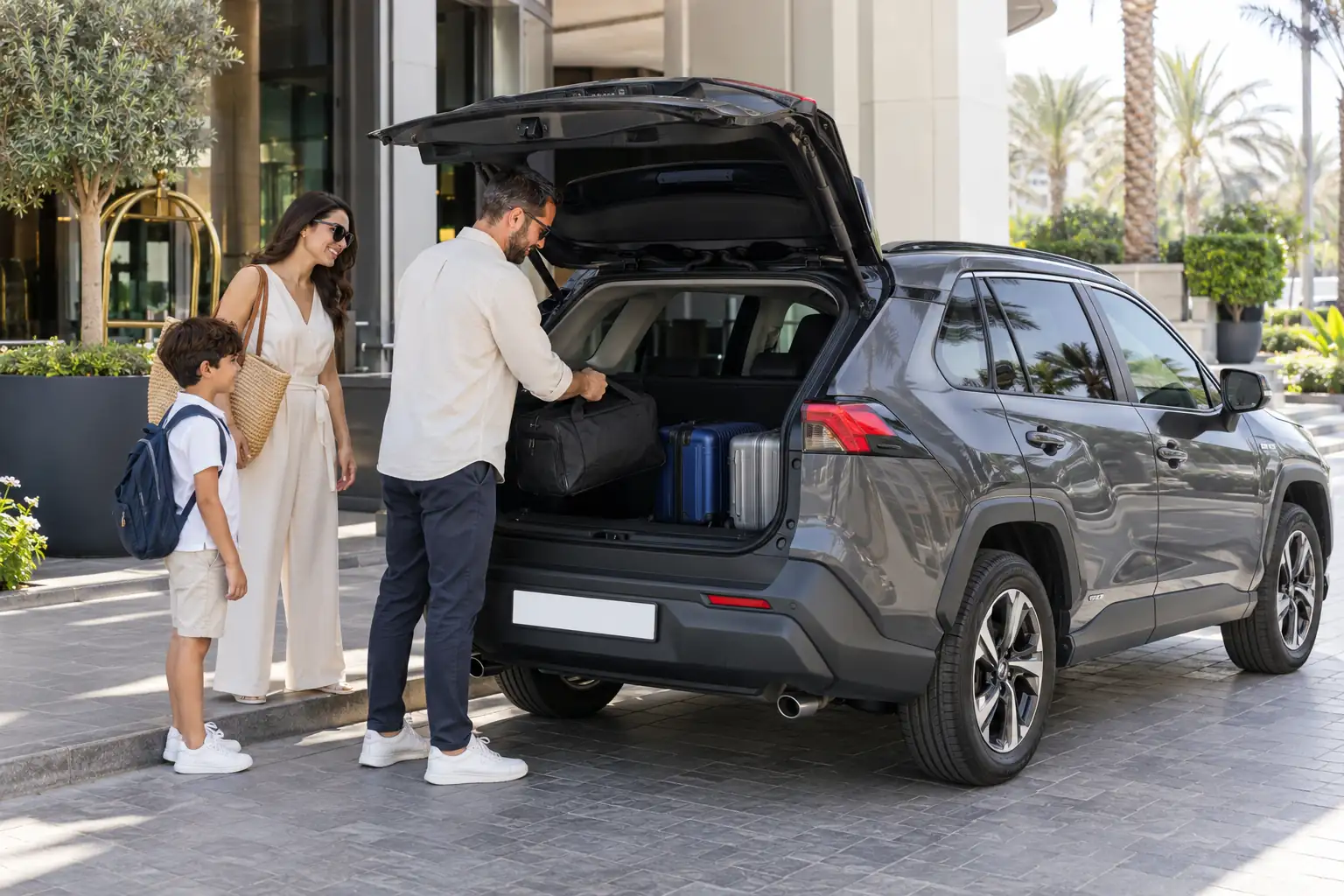
Driving a Dubai rental into Oman requires more preparation than an ordinary journey between emirates. Ask whether the specific vehicle is approved for the trip and what authorisation and insurance documents the supplier requires.
Thrifty says it can provide Oman insurance and a No Objection Certificate for certain vehicle groups at an additional cost. Its terms also place recovery responsibilities on the renter if a breakdown or accident happens in Oman. Other suppliers may prohibit cross-border travel.
Confirm the permitted route, roadside assistance and replacement-car arrangements. Vehicle permission is separate from your own eligibility to enter Oman, so check both before booking accommodation.
An SUV booking also does not establish permission for dune driving. If you want a desert excursion, arrange an activity with the appropriate operator rather than assuming the rental agreement covers it.
Report damage and call for help promptly
Ask for the accident and breakdown procedure at collection, then save the relevant numbers on your phone. After an incident, check for injuries and immediate danger before dealing with photographs or paperwork.
For emergencies, call police on 999. UAE government guidance says vehicles involved in a minor accident without injuries can be moved aside to avoid blocking traffic. Follow police instructions and use the appropriate reporting channel.
Notify the rental company promptly and obtain the required official report. Hertz’s terms require a police report for accident claims and prohibit repairs without prior written approval. A private agreement with another driver may leave the rental claim unresolved.
If a warning light appears or the car develops a fault, stop somewhere safe and contact the supplier’s assistance service. Ask for instructions before continuing or arranging a repair yourself.
Finish the rental with a documented handover
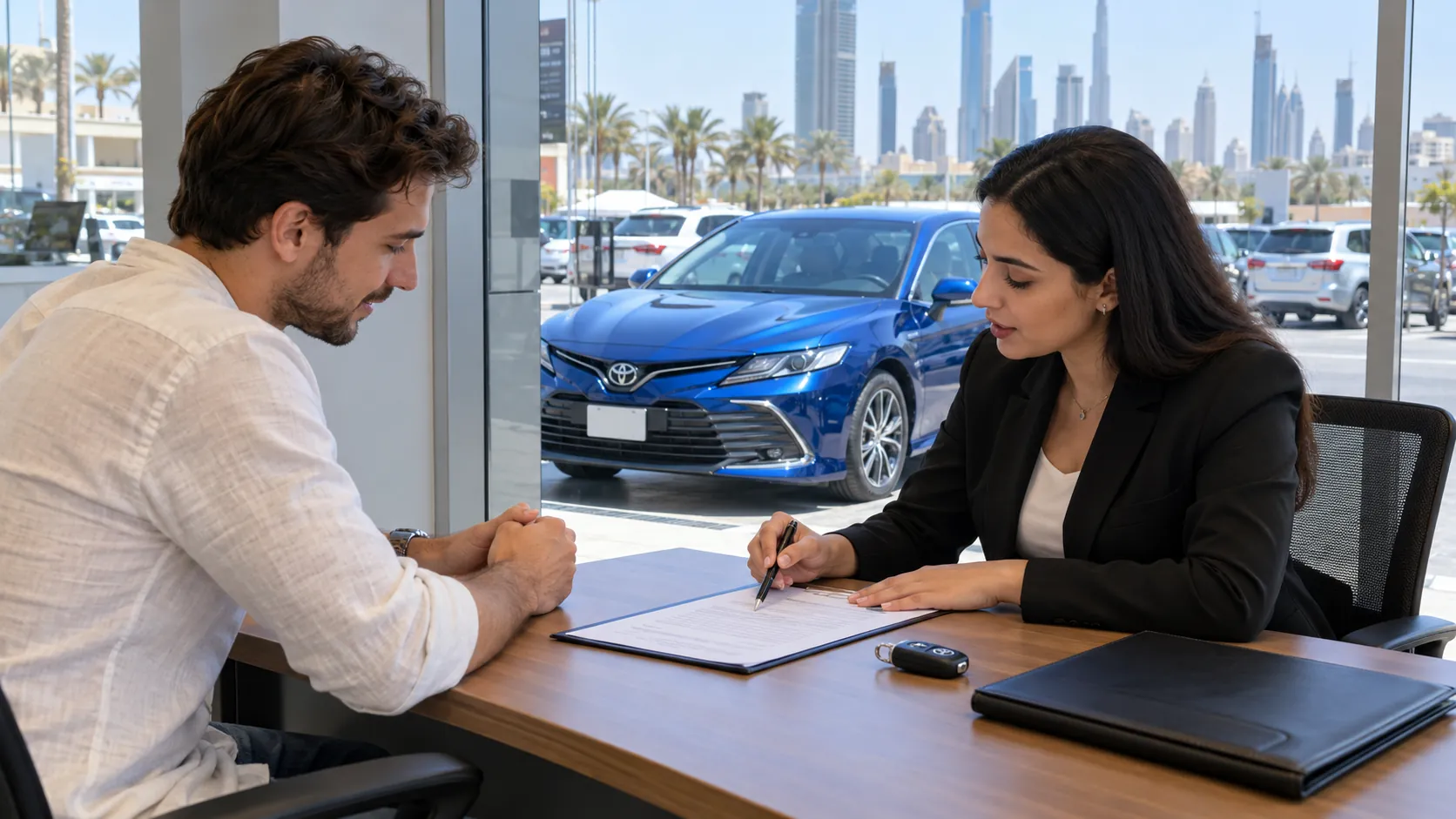
Allow time for traffic, refuelling and inspection before your flight or next appointment. Confirm the exact return location and how the company calculates late charges.
Keep the fuel receipt, photograph the final gauge and odometer, and request a return condition report. Ask for written acknowledgement of the handover and clarification of any charges still pending.
For an unattended return, follow the supplier’s instructions carefully. Hertz’s terms state that responsibility can continue until staff check the vehicle in, including after an out-of-hours drop-off. A key placed in a return box may therefore precede formal acceptance.
Remove personal belongings and delete paired phones or saved addresses from the infotainment system. Keep your booking, inspection records and invoices until the deposit and outstanding charges are settled.
Book the terms you can live with
A sensible Dubai rental gives you a suitable car, an understandable total and a clear answer about what happens if something goes wrong.
Before booking, you should be able to explain your licence eligibility, damage excess, mileage allowance, deposit arrangement and return deadline. If the supplier cannot clarify those points in writing, compare another quotation before committing.