

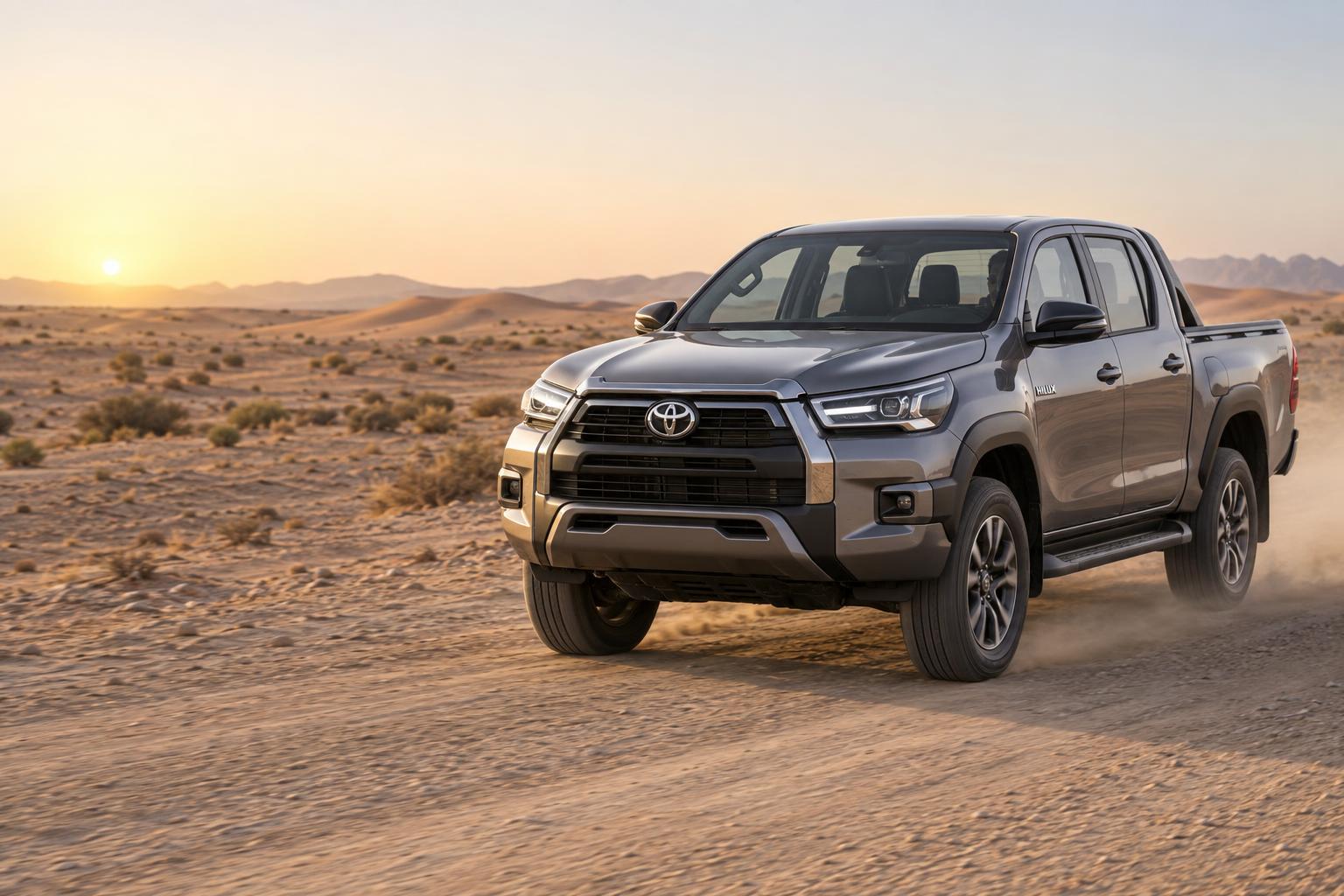
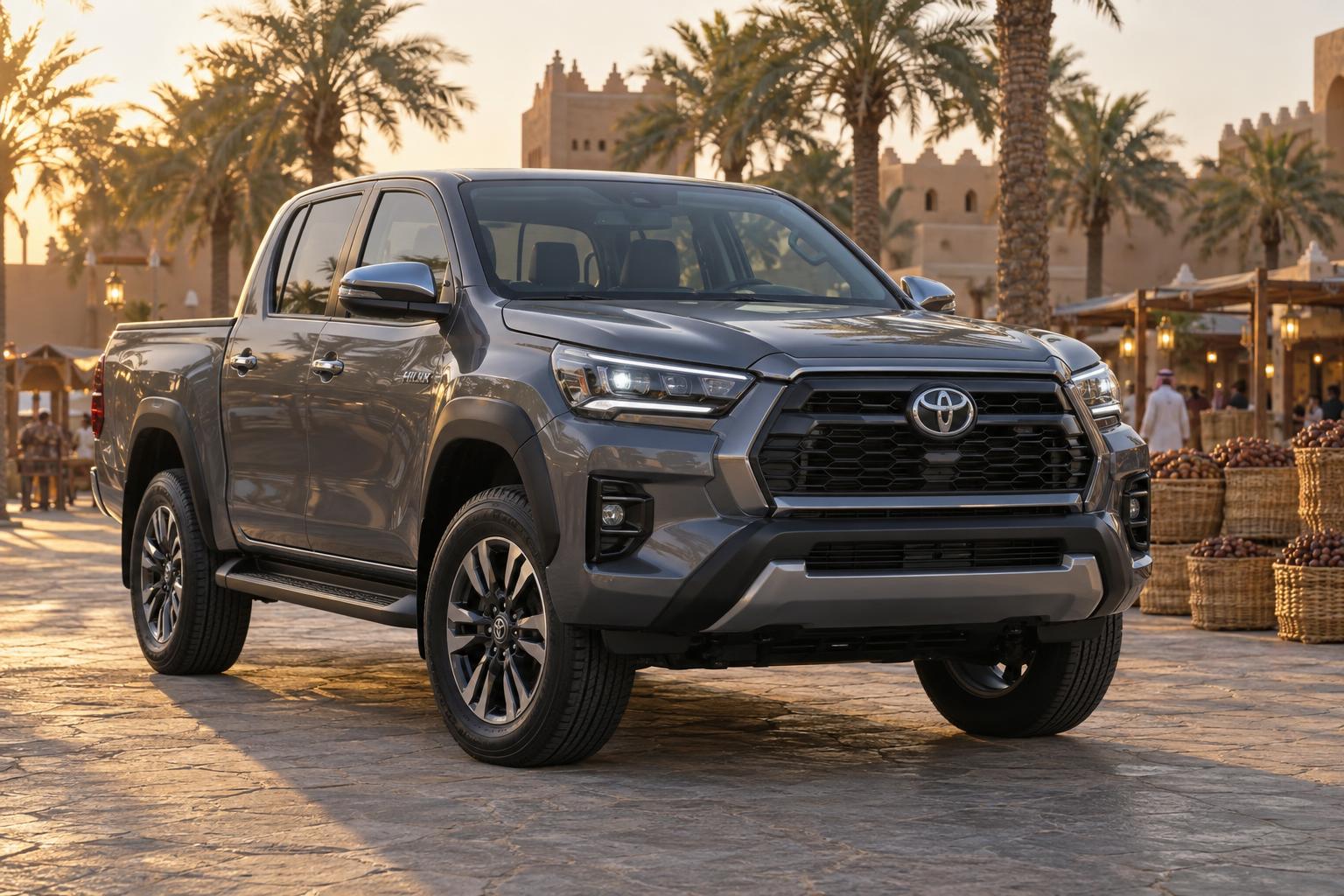
Toyota has introduced the all-new ninth-generation Hilux for Middle East markets, bringing a more modern cabin, revised driving technology and a tougher underlying structure to one of the region’s best-known pickup nameplates. In Saudi Arabia, ALJ Motors marked the local arrival of the 2027 Toyota Hilux at the Buraidah International Dates Carnival, putting the updated truck in front of buyers who use pickups for work, family transport and desert travel.
The new Hilux keeps the practical, body-on-frame formula that made earlier generations popular across the GCC. However, Toyota’s latest changes focus on making it more comfortable and easier to drive every day, while retaining the durability and load-carrying credentials expected from a Hilux.
Toyota introduces the all-new ninth-generation Hilux to the Middle East
The ninth-generation Hilux arrives at an important point for the pickup market. Buyers now expect a work-capable truck to offer the screen technology, safety equipment and on-road refinement normally associated with SUVs, without becoming overly complicated or less dependable in demanding conditions.
Toyota describes the redesign as “Tough and Agile”, combining a more assertive exterior with updates intended to improve manoeuvrability and driver confidence. The Middle East launch is particularly relevant because the Hilux remains a common choice for fleet operators, contractors, rural users and private owners across Saudi Arabia and the wider GCC.
- A redesigned exterior with a stronger, more contemporary pickup stance.
- Improved body rigidity for better ride and handling control.
- Electric power steering for easier low-speed operation.
- New digital displays, including twin 12.3-inch screens on equipped versions.
- Updated Toyota Safety Sense driver-assistance technology.
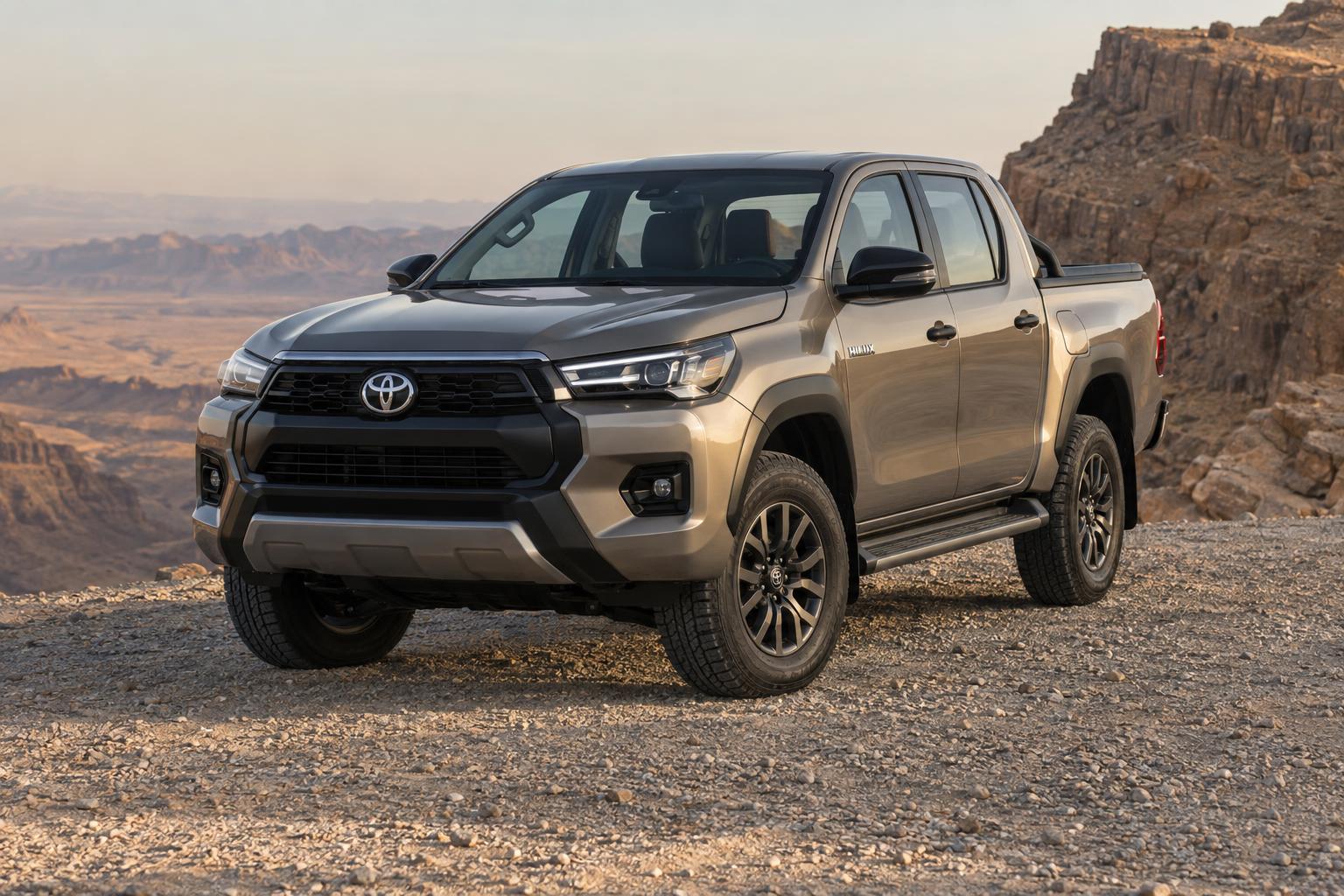
What does the “Tough and Agile” redesign change on the new Hilux?
The “Tough and Agile” description is not only about styling. Toyota has reshaped the Hilux to look more planted and purposeful, while also addressing areas that matter in daily use, including steering effort, visibility of driving information and cabin usability.
For GCC buyers, this approach matters because many pickups have to cover very different roles. A Hilux may spend weekdays at a worksite, carry equipment or passengers on highways, then head onto unpaved roads or into desert areas at the weekend. A more agile feel should make those everyday transitions less tiring, particularly in busy urban areas.
A more modern pickup cabin
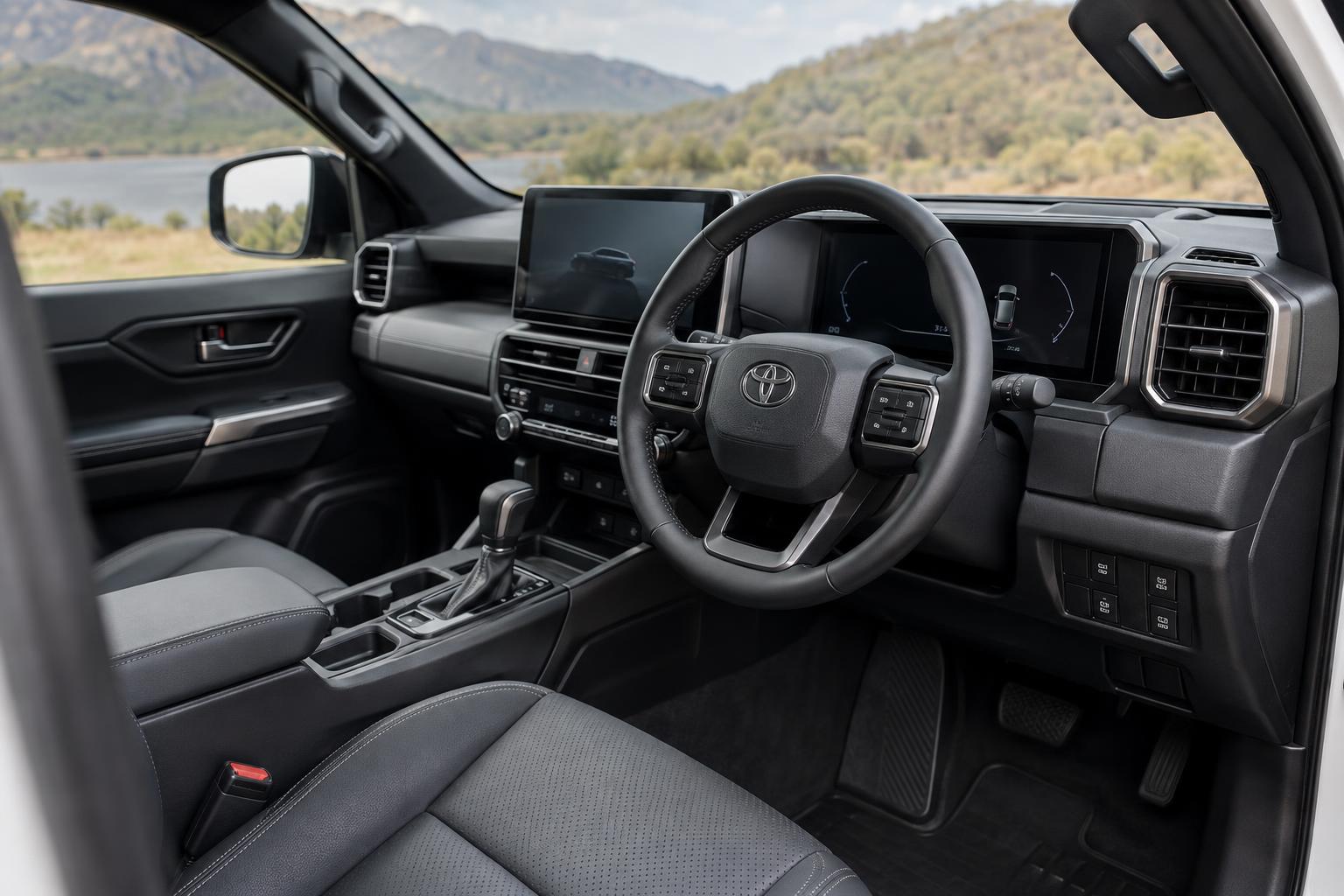
The cabin is one of the most noticeable areas of change. Earlier Hilux generations earned their reputation through durability, but the new model moves further towards the digital layout now expected in modern vehicles. The dashboard has been updated to place key information and entertainment functions more clearly within the driver’s line of sight.
Practicality remains important. Buyers should still check the exact Saudi or GCC specification for storage, upholstery, rear-seat layout and bed configuration, as these can vary between single-cab, extra-cab and double-cab versions.
Reinforced body rigidity and the switch to electric power steering
Toyota has strengthened body rigidity on the new Hilux. In straightforward terms, a stiffer body structure can help the vehicle respond more predictably to steering inputs and can reduce unwanted movement over broken roads, uneven tracks and loaded journeys.
This does not transform a ladder-frame pickup into a crossover, nor is that the goal. The benefit is that the Hilux should feel more settled and controlled while preserving the robust architecture that buyers value for towing, payload work and off-road use.
Why electric power steering is significant
The move to electric power steering is a meaningful change for the Hilux. Unlike traditional hydraulic assistance, an electric system can vary steering assistance more precisely according to speed and driving conditions.
At parking speeds, the steering can be lighter when positioning the truck in tight spaces or lining up a trailer. At highway speeds, the system can provide more consistent weighting and work with selected driver-assistance functions. It may also improve efficiency slightly because the system does not need a continuously driven hydraulic pump.
- Reduced steering effort in car parks and crowded work areas.
- Potentially more controlled steering feel at higher speeds.
- Better integration with lane-support and safety technologies.
- Less engine-driven demand than a conventional hydraulic steering pump.
Drivers who regularly fit larger tyres, carry heavy accessories or modify suspension components should still use approved parts and follow Toyota’s recommendations. Such changes can affect steering behaviour, safety-system calibration and warranty coverage.
New 12.3-inch dual displays and upgraded Toyota Safety Sense
Higher-spec versions of the new Hilux feature a 12.3-inch digital instrument display and a 12.3-inch central multimedia screen. The driver display can present key vehicle information more clearly, while the central screen handles entertainment, connectivity and selected vehicle settings.
This is a substantial step forward from the more conventional instrument and infotainment layouts found in older Hilux models. The usefulness of the system will depend on local trim level, so buyers should confirm smartphone integration, navigation availability, connected services and language options with the dealer before ordering.
What Toyota Safety Sense adds
The latest Hilux also receives upgraded Toyota Safety Sense technology. These systems are designed to support the driver by monitoring traffic, lane markings and potential hazards, but they do not replace careful driving or reduce the need to maintain full control of the vehicle.
Depending on the market and grade, Toyota Safety Sense may include functions such as pre-collision warning and braking support, adaptive cruise control, lane-related assistance and road-sign recognition. Exact equipment can differ by country, cab type and trim, especially on work-focused entry versions.
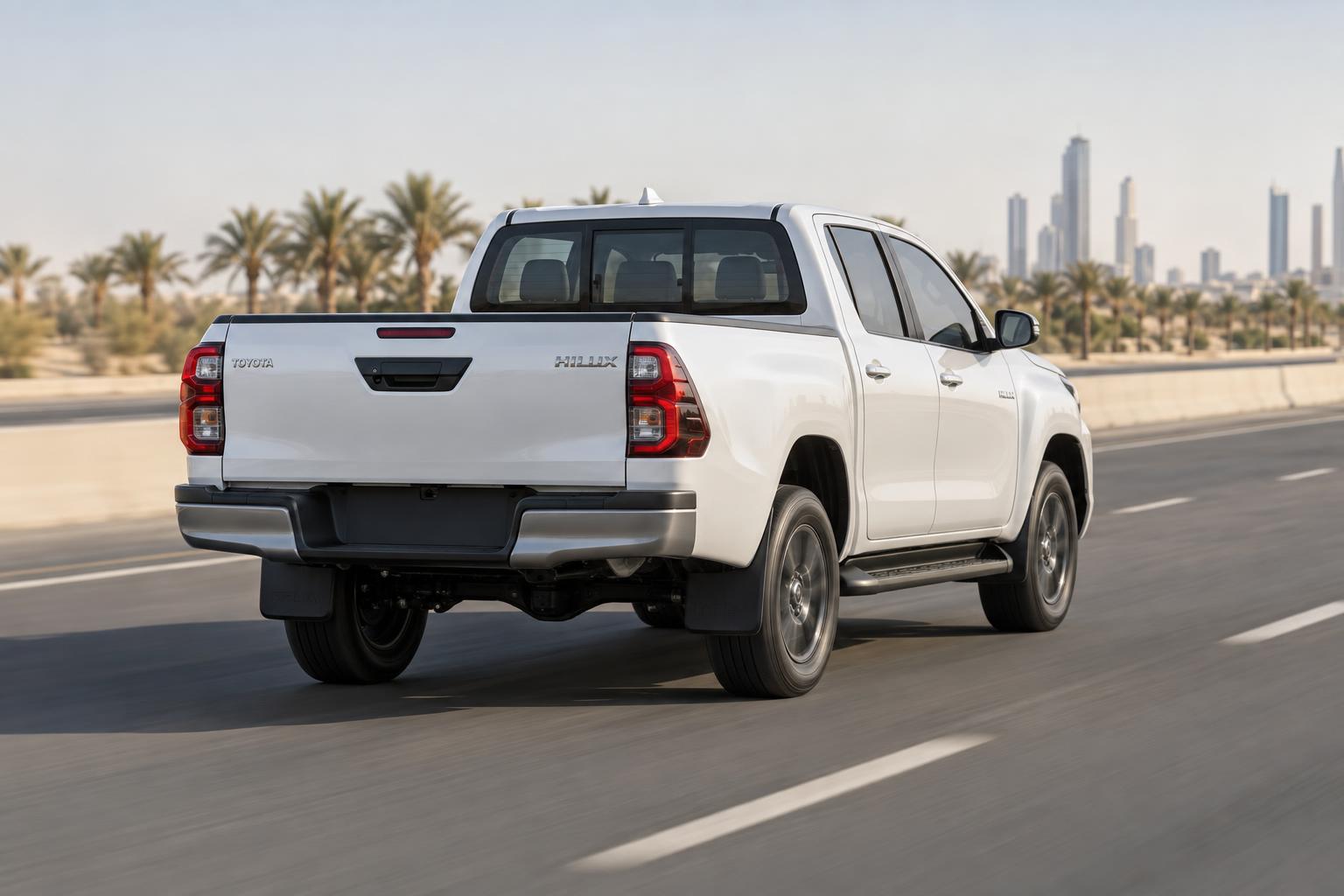
ALJ Motors debuts the 2027 Hilux at the Buraidah International Dates Carnival
In Saudi Arabia, ALJ Motors introduced the 2027 Hilux at the Buraidah International Dates Carnival. The venue is a fitting setting for a pickup with strong appeal beyond major cities, where commercial use, agriculture, family travel and long-distance driving all shape buying decisions.
The local debut also highlights the importance of Saudi Arabia to the Hilux range. Buyers in the Kingdom tend to place particular value on service support, parts availability, resale strength and a vehicle’s ability to cope with heat, dust and high annual mileage. These factors often matter as much as the headline technology.
Prospective owners should ask ALJ Motors about the exact grades being offered, as equipment and mechanical specifications may vary across the range. Key points to confirm include the engine choice, drivetrain, rear differential equipment, payload rating, towing capacity, wheel and tyre size, warranty terms and service intervals.
Is this launch connected to the recent Land Cruiser FJ debut?
The new Hilux and the recently revealed Land Cruiser FJ are separate products with different roles, but their timing reflects Toyota’s continued focus on durable, adventure-oriented vehicles for the Middle East. Both appeal to buyers who value high ground clearance, off-road capability and Toyota’s established regional support network.
The Hilux is primarily a pickup, with an open cargo bed and a stronger focus on payload, towing and commercial versatility. The Land Cruiser FJ is positioned as an SUV, making it a more natural fit for buyers who want enclosed luggage space and passenger-focused practicality. The best choice depends on whether bed utility or SUV comfort is the priority.
Key takeaways for GCC pickup truck buyers
The ninth-generation Hilux appears to be an evolution rather than a complete departure from the familiar formula. It retains the characteristics that built the Hilux reputation, while adding technology that should make it easier to live with as a daily vehicle.
- For work use: Confirm payload, bed dimensions, towing limits and the availability of fleet-friendly grades before making a decision.
- For family use: Focus on double-cab rear-seat space, safety equipment, ride comfort and child-seat mounting provisions.
- For off-road use: Check the drivetrain, traction aids, approach and departure angles, tyre specification and recovery-point arrangement.
- For urban driving: Electric power steering and the updated display layout could be valuable daily-use improvements.
- For long-term ownership: Compare warranty coverage, service packages, insurance costs and genuine-accessory pricing, not just the purchase price.
As with any new model, the most useful comparison will be between the exact local Hilux grades rather than global launch specifications. A well-equipped double-cab may suit private buyers, while a simpler work-grade truck may offer better value for businesses that prioritise durability and operating costs.
People Also Ask
When will the all-new Toyota Hilux be available in Saudi Arabia?
ALJ Motors has debuted the 2027 Hilux in Saudi Arabia. Availability, grades and delivery timing can vary by dealership and specification, so buyers should confirm current stock and order details directly with an authorised Toyota dealer.
Does the new Toyota Hilux have electric power steering?
Yes. The ninth-generation Hilux introduces electric power steering, which is intended to reduce steering effort at low speeds and provide more controlled assistance at higher speeds.
What are the new screens in the 2027 Toyota Hilux?
Selected versions feature a 12.3-inch digital instrument cluster and a 12.3-inch central multimedia display. The exact screen configuration and functions may differ by trim level and market.
Does the new Hilux include Toyota Safety Sense?
The new Hilux receives upgraded Toyota Safety Sense technology. Available functions can vary by specification, so buyers should check whether their chosen grade includes features such as pre-collision support, adaptive cruise control and lane-related assistance.
Is the Toyota Hilux better for off-roading than the Land Cruiser FJ?
They are designed for different needs. The Hilux is the better choice for buyers who need a cargo bed, payload capacity and pickup utility, while the Land Cruiser FJ is likely to suit those who prefer an enclosed SUV body and passenger-oriented layout.


