

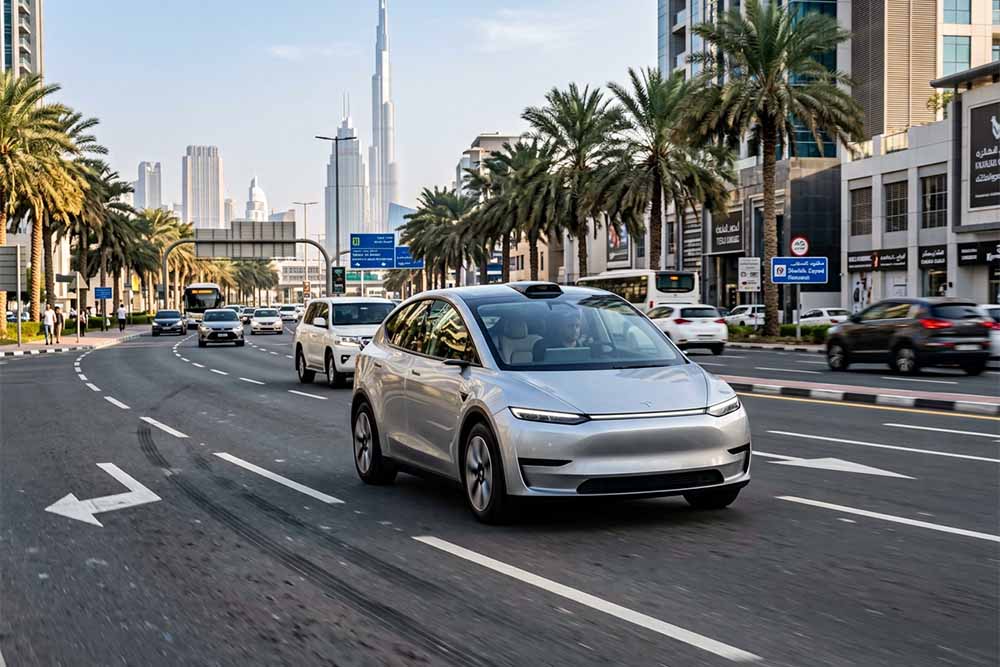
As of 31 August 2026, Tesla’s Cybercab is moving closer to real-world service after entering production in Texas and beginning public-road engineering tests in Austin. The purpose-built two-seat robotaxi has no steering wheel or pedals and is intended to become a core vehicle in Tesla’s autonomous ride-hailing fleet.
Tesla has also confirmed a Cybercab Launch Event in Austin, signalling that the vehicle is nearing its next phase. What remains unclear is exactly when Cybercab will begin carrying paying passengers, how quickly production will scale and when, or if, it will reach markets such as the UAE.
Tesla Cybercab Has Moved From Concept To Production
The biggest change in 2026 is that Cybercab is no longer simply a prototype. Tesla confirmed in its second-quarter update that production had started, while its June-quarter regulatory filing said the company began Cybercab production during the first half of the year.
Tesla has already passed several important milestones:
- Cybercab production has started at Gigafactory Texas.
- Production vehicles began engineering tests on public roads in Austin.
- Tesla began offering employee rides on its Texas factory campus in July.
Tesla’s current Robotaxi service is still using Model Y vehicles. The company says Cybercab is designed to become the workhorse of that fleet as production and autonomous operations expand.
What We Know About The Tesla Cybercab So Far
The production vehicle keeps the radical layout Tesla showed when Cybercab was first revealed. It is a compact two-seater built around autonomous operation rather than a conventional driver.
Powertrain And Efficiency
US Environmental Protection Agency certification documents provide the clearest confirmed technical picture so far. They list the Cybercab as a front-wheel-drive battery-electric vehicle powered by a single permanent-magnet motor.
The certification documents confirm:
- Motor output of 163 kW, equivalent to 219 hp.
- Front-wheel drive with a single-speed automatic transmission.
- A curb weight of 3,113 lb, or roughly 1,412 kg.
- A 326-volt lithium-ion battery system.
Certification data has also pointed to a battery of roughly 48 kWh. EPA testing recorded a calculated charge-depleting range of 418.2 miles, but that figure is an unadjusted certification test result and should not be confused with a final consumer EPA range rating.
Designed Only Around Autonomy
Cybercab is fundamentally different from a Model 3 or Model Y because Tesla has removed conventional driver controls. During public-road engineering testing, a safety monitor has been seated in the passenger position.
That means deployment depends heavily on Tesla’s autonomous-driving system and the regulatory approvals required in each market. For now:
- The production Cybercab has two seats.
- There is no steering wheel or pedal set for a human driver.
- Tesla has not announced a conventional retail version for private buyers.
The Launch Is Close, But Public Rollout Is Still The Key Unknown
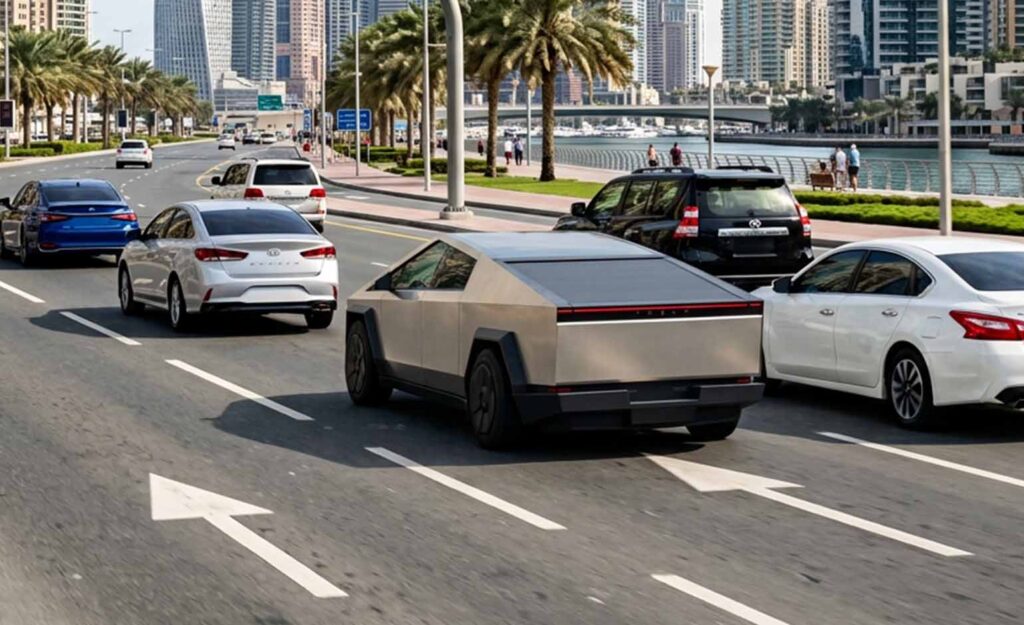
Tesla has officially confirmed that it is holding a Cybercab Launch Event in Austin. The company ran a sweepstakes for Robotaxi riders between 17 and 23 August, with selected entrants given the opportunity to attend the event.
Reuters reported on 17 August that Tesla was preparing for a Cybercab rollout in Austin, beginning with employee rides on public roads before adding the vehicle to its Robotaxi service. Tesla did not confirm that reported timetable at the time.
Tesla’s official Robotaxi page still says Cybercab will offer rides in the future, without providing a firm public-service date.
Several important points therefore remain unresolved:
- The exact start date for paid Cybercab passenger rides.
- How many Cybercabs will operate during the first phase.
- How quickly they could replace Model Y units in the Robotaxi fleet.
- Whether Cybercab will eventually be offered to private customers.
Why UAE And GCC Readers Should Pay Attention
Cybercab matters to Gulf readers because autonomous taxis are already moving into commercial operation in the UAE.
Dubai’s RTA said on 19 August that its Robotaxi programme had surpassed four million kilometres, with a fleet of 144 vehicles and 7,613 passenger trips recorded since launch.
Dubai is already working with operators including Apollo Go and WeRide, while Abu Dhabi has expanded commercial autonomous taxi operations on Yas Island and other areas. Tesla would therefore be entering a Gulf market where driverless mobility is already progressing beyond small-scale demonstrations.
For UAE buyers and passengers, however, the position remains clear:
- Tesla has not announced Cybercab availability in the UAE or wider GCC.
- No UAE Cybercab price, booking system or local launch date has been confirmed.
- Any local rollout would be subject to regulatory approval and operational requirements.
Austin Will Show Whether Cybercab Is Ready For The Real World
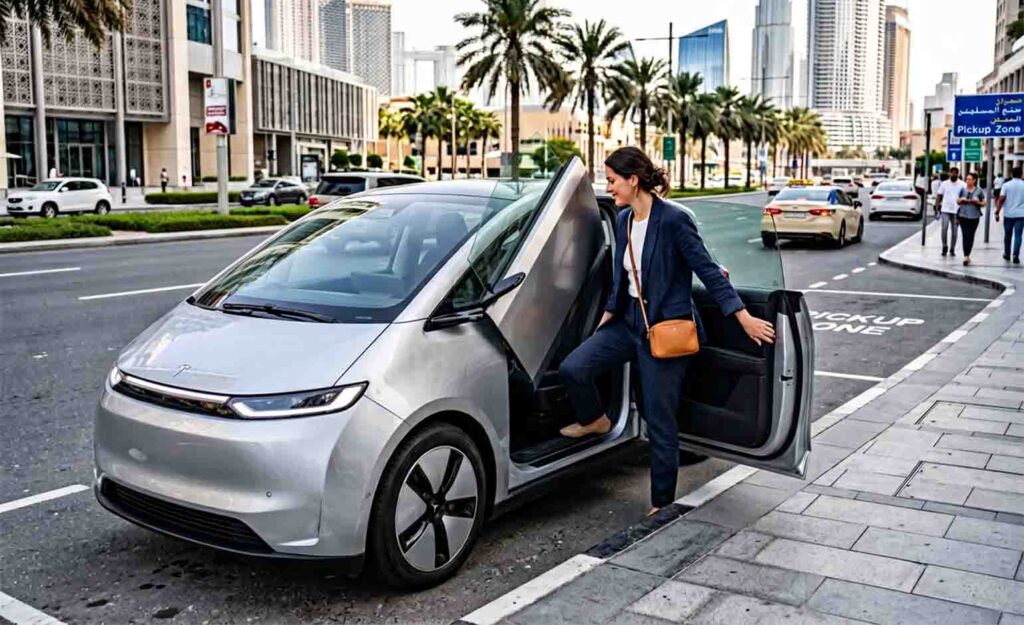
Cybercab’s next milestone is not simply another unveiling. Tesla now has to demonstrate that a vehicle built without conventional driver controls can operate reliably in paid public service and scale beyond limited engineering tests.
For Gulf markets, that progress will be closely watched. The UAE already has a growing autonomous taxi ecosystem, but there is currently no confirmation that Tesla Cybercab will join it.


