

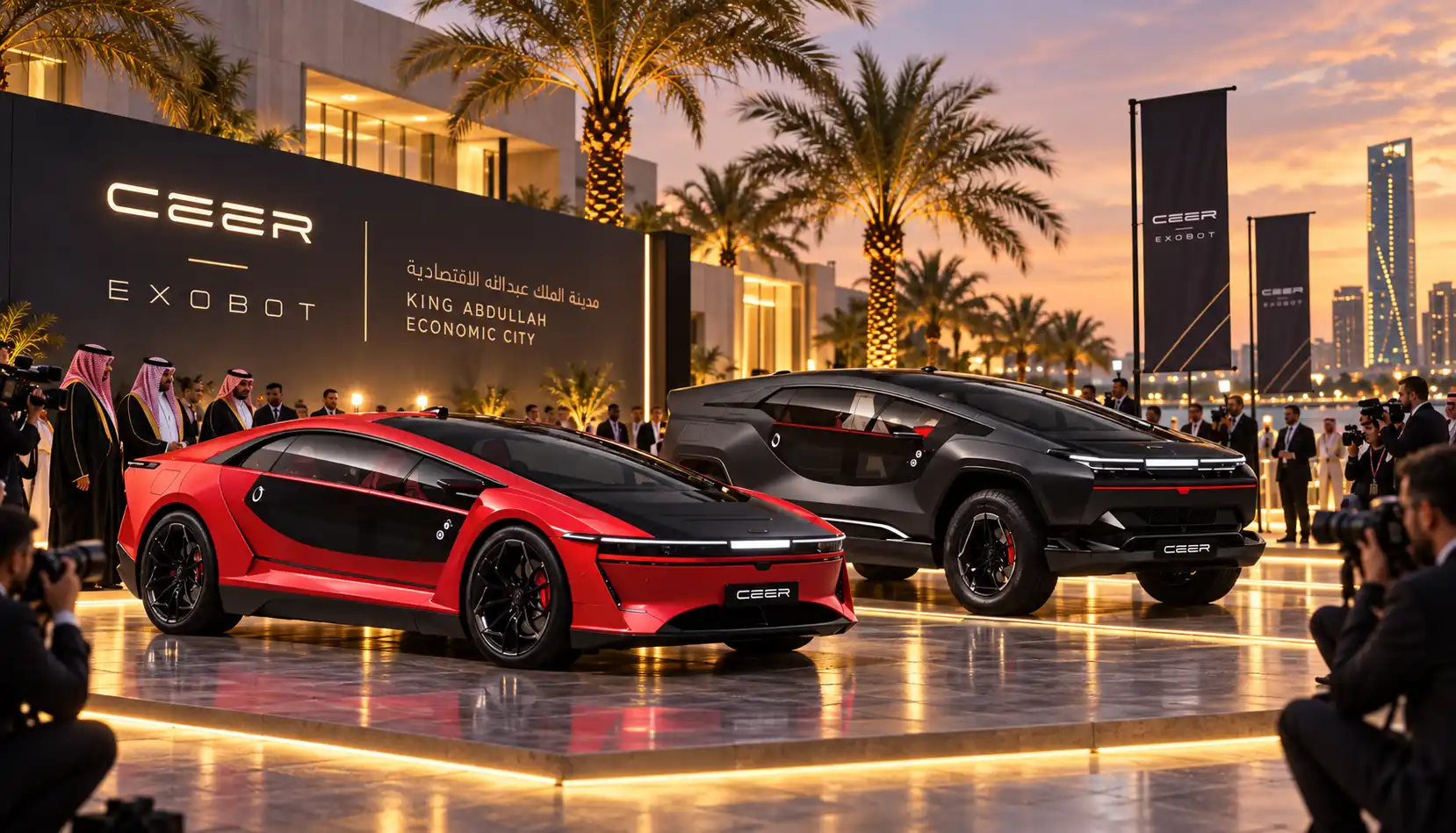
Saudi Crown Prince Mohammed bin Salman Launches CEER's First EXOBOT Sedan and SUV in King Abdullah Economic City
Saudi Arabia has taken another visible step towards building its domestic electric-vehicle industry with the launch of CEER's first EXOBOT sedan and SUV at King Abdullah Economic City. The unveiling gives the Saudi-backed EV brand its first publicly introduced passenger vehicles and signals the beginning of a wider product plan that includes five additional models by 2030.
For buyers and industry watchers across the GCC, the announcement matters because CEER is not simply importing and rebadging cars for the local market. The company is being developed as a Saudi EV manufacturer, with vehicles intended to be engineered, assembled and sold from a Saudi-based operation.
Saudi Crown Prince Mohammed bin Salman Launches CEER's First Vehicles
Saudi Crown Prince Mohammed bin Salman launched CEER's first EXOBOT sedan and SUV during an event in King Abdullah Economic City. The two vehicles represent CEER's first public product reveal and offer an early indication of the brand's direction in the increasingly competitive electric-car market.
The EXOBOT range includes two of the most important body styles for GCC buyers:
A practical electric sedan aimed at daily commuting and longer road journeys.
An electric SUV, a format that remains particularly popular among families and buyers who want extra cabin space and road presence.
Saudi-developed products that support the Kingdom's wider industrial and mobility ambitions.
The first stage of a wider CEER model programme planned through 2030.
While final market specifications, trim levels and prices will be important before buyers can compare the cars properly, the launch establishes CEER as a brand with real production-model ambitions rather than a concept-only project.
What Happened at the King Abdullah Economic City Launch Event?
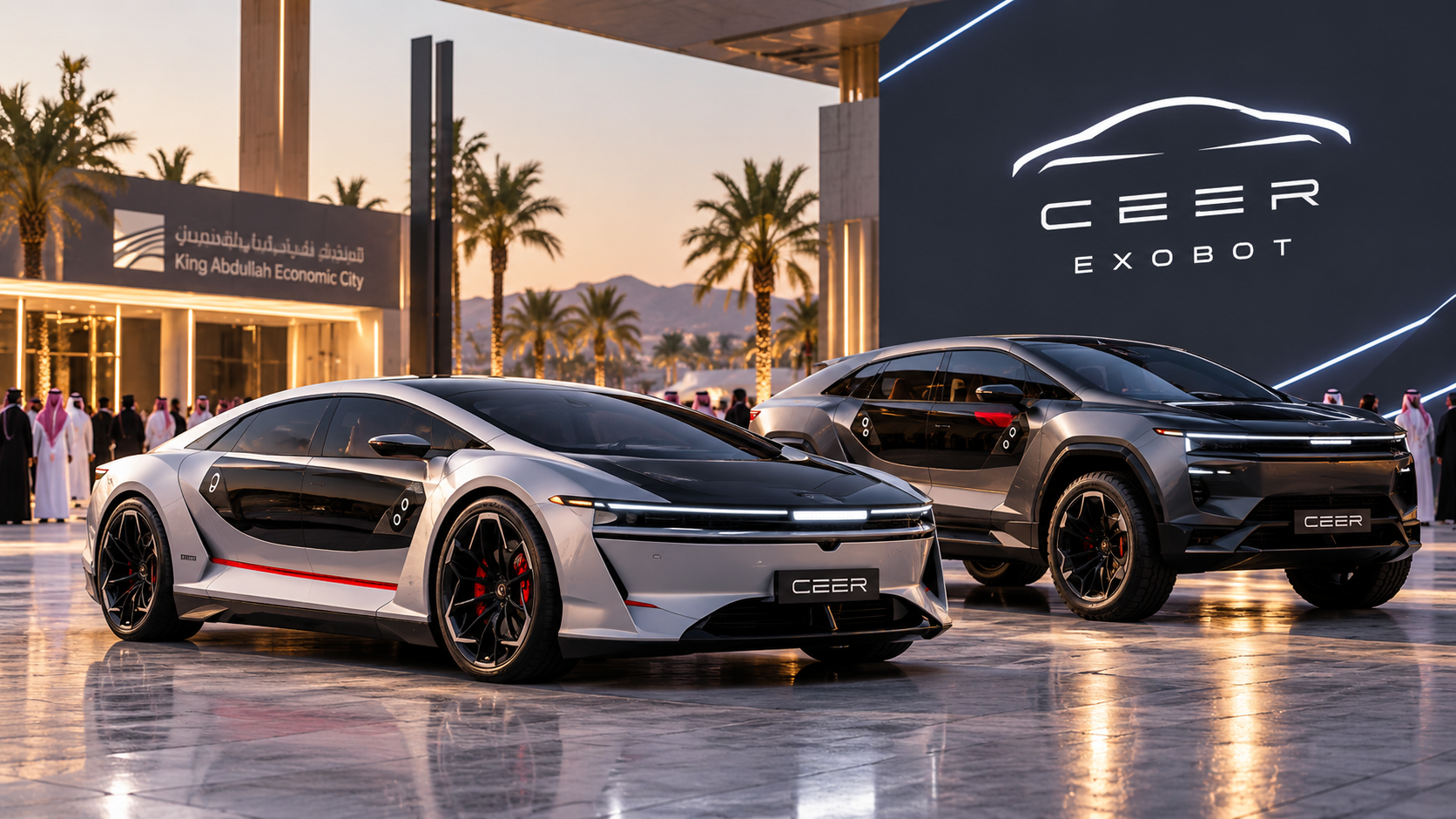
The launch event at King Abdullah Economic City focused on CEER's first vehicle models and the company's role in Saudi Arabia's developing automotive manufacturing sector. King Abdullah Economic City is a significant location for the announcement because it is linked to the Kingdom's plans for advanced industry, logistics and export-oriented manufacturing.
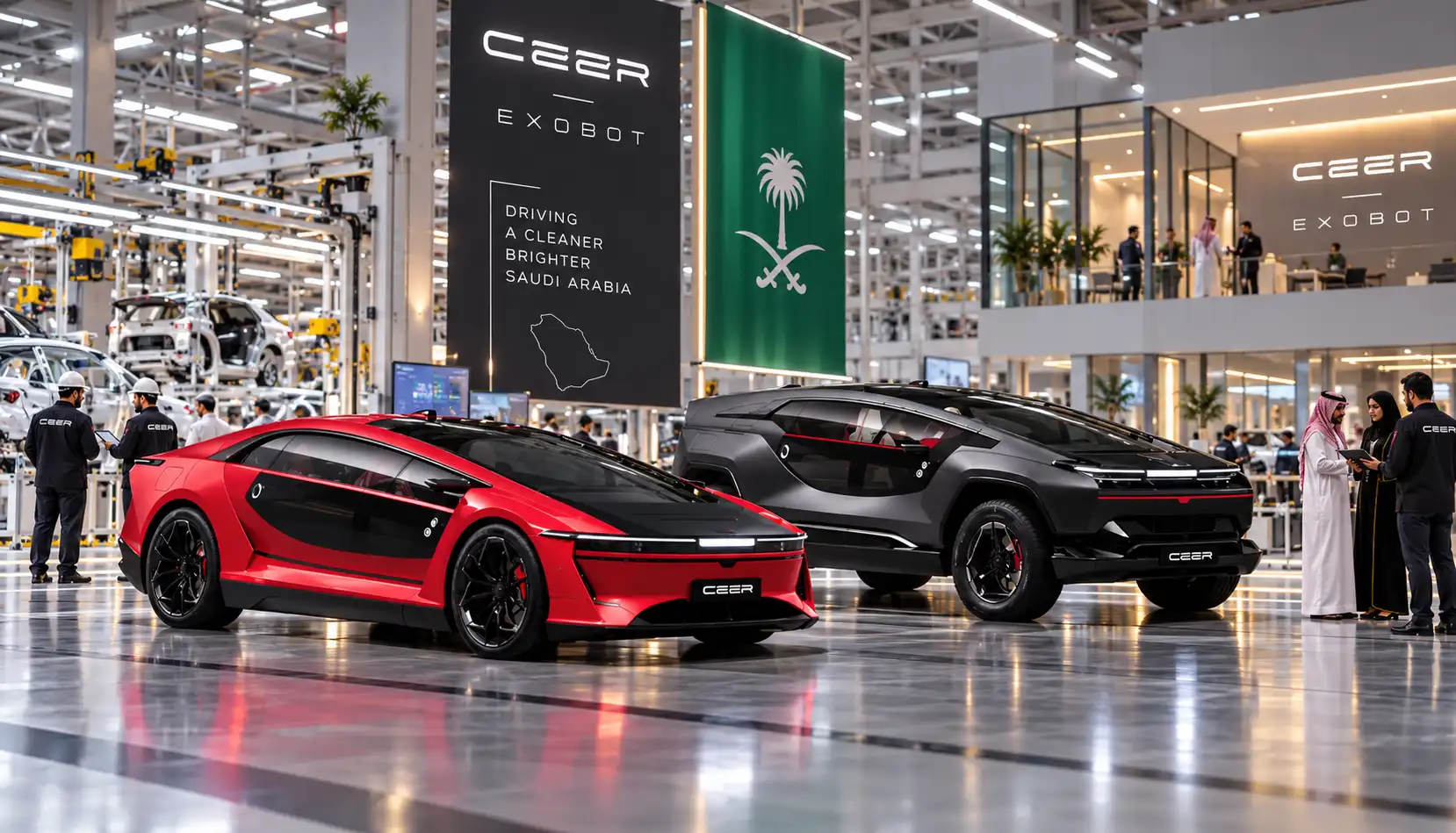
The EXOBOT sedan and SUV were presented as the first vehicles in CEER's planned line-up. The event also highlighted the scale of Saudi Arabia's ambition to create an automotive ecosystem that includes vehicle development, manufacturing, supplier networks, battery-related technology and skilled jobs.
For the public, a launch event is only the first milestone. The more meaningful test will be how the vehicles perform in real GCC conditions, including high summer temperatures, highway driving, charging availability, air-conditioning use and long-distance ownership.
What Is CEER and Why Does This Launch Matter for Saudi Arabia?
CEER is Saudi Arabia's first homegrown electric-vehicle brand. It was established to support the Kingdom's Vision 2030 objectives, which include diversifying the economy beyond oil, developing local manufacturing capability and creating new private-sector opportunities.
The company is expected to play a broader role than simply selling EVs. A successful local manufacturer can encourage investment in suppliers, software, logistics, engineering, training and after-sales services. It can also help Saudi Arabia build experience in a global automotive sector that is rapidly moving toward electrification.
A local EV brand can create a wider industrial network
Vehicle manufacturing depends on a large network of businesses. Even when major components are sourced internationally, local operations can create demand for parts suppliers, workshops, transport providers, charging specialists, body repair facilities and technical training.
Assembly and manufacturing jobs.
Automotive engineering and software roles.
Local supplier and logistics opportunities.
EV servicing, diagnostics and repair training.
Growth in public and private charging infrastructure.
This is why the CEER launch is relevant beyond prospective EV buyers. It is part of a longer-term effort to position Saudi Arabia as a regional automotive and technology hub.
EXOBOT Sedan and SUV Design Highlights
The EXOBOT sedan and SUV give CEER entry points into two mainstream segments. Sedans remain popular with buyers who value efficiency, a lower driving position and a conventional three-box shape, while SUVs continue to dominate demand across much of the GCC.
The vehicles were introduced with a modern EV-oriented design approach, where clean body surfaces, aerodynamic detailing and technology-focused interiors are likely to be central themes. Production specifications may change before customer deliveries begin, so buyers should treat early design details as an indication of the brand's direction rather than final equipment confirmation.
Why offer both a sedan and an SUV?
Launching with both body styles gives CEER a better chance of reaching different types of customers. A sedan can appeal to urban commuters, business users and fleet operators, while an SUV may attract families and buyers looking for a more versatile all-round vehicle.
For GCC conditions, an SUV also has clear market advantages. Buyers often prioritise rear-seat room, luggage capacity, a higher seating position and the ability to handle uneven access roads or kerbs with more confidence.
The launch event introduced CEER's first two vehicles before an invited audience.
What buyers should look for before ordering
Design is important, but EV ownership is decided by practical details. When CEER releases full specifications, prospective owners should focus on usable range, charging time, battery warranty, service coverage and the availability of replacement parts.
Real-world range: Check range figures alongside likely summer air-conditioning use and highway speeds.
Charging compatibility: Confirm whether the car supports the charging standards and connector types used locally.
Battery warranty: Look at the duration, mileage limit and minimum retained-capacity terms.
Service network: Ask where routine servicing, accident repairs and battery diagnostics will be handled.
Residual value: New brands may take time to establish predictable used-car values.
When Will the CEER EXOBOT Go on Sale?
CEER has outlined a wider rollout programme, but buyers should wait for the company to confirm final order dates, production timing, market availability and pricing for the EXOBOT sedan and SUV. A public launch does not always mean that customer deliveries begin immediately.
Before sales open, CEER will need to finalise production readiness, homologation, after-sales arrangements and the customer purchase process. This is especially important for a new manufacturer, as early buyers will want confidence in servicing, warranty support and parts availability.
Potential customers should watch for official announcements covering:
Reservation or pre-order opening dates.
Saudi Arabia delivery timing.
GCC export plans.
Final battery and powertrain specifications.
Trim levels, options and prices.
Charging packages and home-charger support.
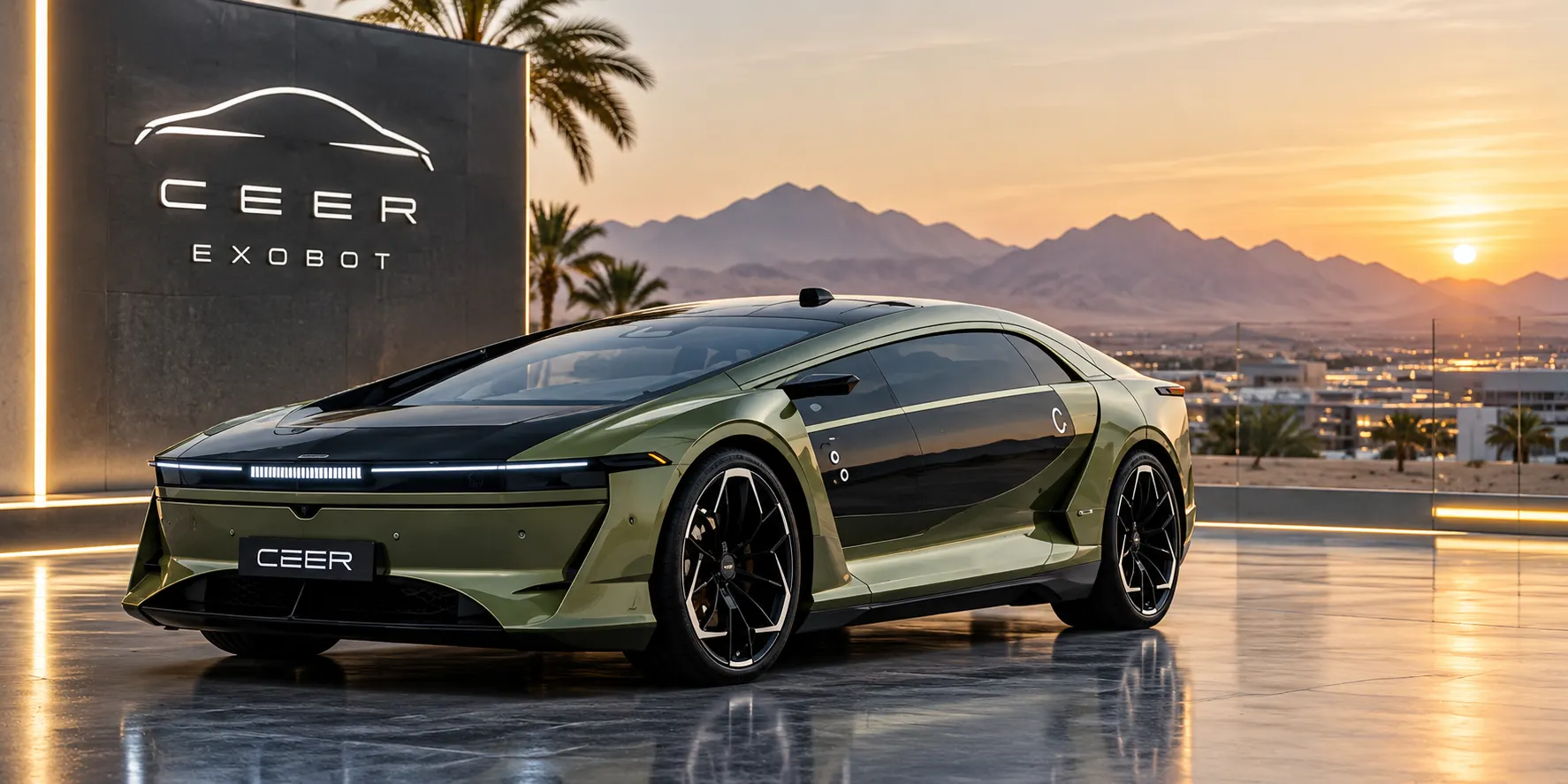
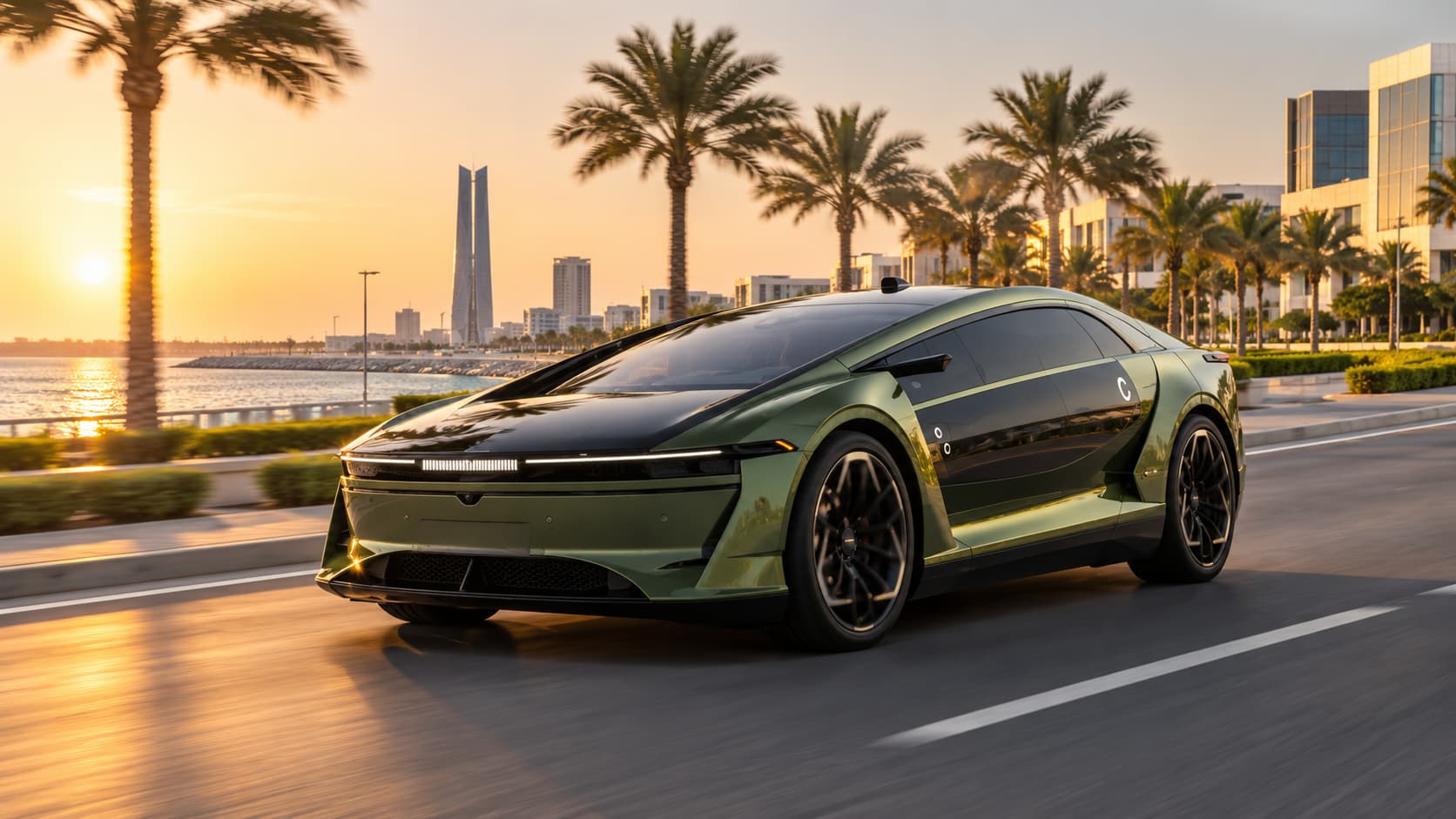
The sedan's gullwing doors and pillarless side opening are key EXOBOT design talking points.
For many GCC buyers, the decision will depend less on the launch presentation and more on the final ownership package. Competitive finance offers, warranty coverage, roadside assistance and a convenient workshop network will all matter alongside the cars themselves.
CEER's Roadmap, Five More Models Planned Through 2030
The EXOBOT sedan and SUV are intended to be the opening products in a broader CEER line-up. The company plans to introduce five more models through 2030, giving it the opportunity to cover more price points and customer needs as the Saudi EV market develops.
A seven-model range could allow CEER to compete across several categories, potentially including compact vehicles, larger family models and more premium offerings. However, the exact segments and specifications of the future models will depend on CEER's confirmed product announcements.
Why a wider range matters
One or two vehicles can establish a brand, but a broader product line is needed to build a lasting market presence. Different households have very different needs, and an EV that works for a city commuter may not suit a large family, a fleet operator or a driver who regularly covers long distances.
A wider line-up also gives CEER more opportunities to build common systems across its vehicles, including software, charging support, service procedures and parts supply. That can make ownership easier if the company develops a strong regional support network.
What This Launch Means for the Regional Auto Industry
CEER enters a GCC market that is becoming more serious about electric mobility. Buyers now have more EV options than they did a few years ago, ranging from affordable city cars to premium SUVs, and charging infrastructure is expanding across Saudi Arabia, the UAE and other Gulf markets.
The arrival of a Saudi-backed local brand could increase competition in several ways. It may encourage more investment in charging networks, fleet electrification, dealership training and EV repair capability. It also gives regional buyers another manufacturer to compare against established global and Chinese EV brands.
Competition will come down to ownership experience
For a new car brand, product design is only part of the challenge. GCC buyers generally expect responsive dealer support, parts availability, clear warranty terms and competent accident repairs. These areas will be particularly important for EVs because some owners may be buying their first battery-electric vehicle.
CEER's opportunity is to understand local driving patterns and ownership expectations from the start. Hot-weather battery performance, strong air-conditioning, easy access to maintenance and practical charging guidance will be more important to many buyers than headline acceleration figures.
The SUV presents the EXOBOT design language in a higher-riding body style.
Could CEER help accelerate EV adoption?
It could, particularly if its vehicles are priced competitively and supported by a reliable ownership package. A local brand may also help make EVs feel more relevant to Saudi consumers, especially if it develops products and services around regional conditions rather than relying only on overseas market assumptions.
However, EV adoption will still depend on practical factors. Home charging access, apartment parking arrangements, public charging reliability, electricity costs and resale confidence all influence whether drivers are ready to switch from petrol vehicles.
Key Takeaways
CEER has launched its first EXOBOT sedan and SUV at King Abdullah Economic City.
The unveiling marks an important milestone for Saudi Arabia's domestic EV and automotive manufacturing ambitions.
The sedan and SUV target two key vehicle segments for Saudi and wider GCC buyers.
CEER plans to add five further models by 2030.
Final customer decisions will depend on confirmed prices, range, charging capability, warranty coverage and after-sales support.
The brand's long-term impact will be measured by production quality, service standards and how well its vehicles perform in real GCC conditions.
People Also Ask
What is CEER?
CEER is a Saudi electric-vehicle brand created to support the Kingdom's automotive manufacturing and economic diversification goals. It is developing EVs for the Saudi market and potentially wider regional markets.
What are the CEER EXOBOT vehicles?
The EXOBOT vehicles are CEER's first publicly launched passenger models, consisting of an electric sedan and an electric SUV. Final production specifications and market details are expected to be confirmed closer to sale.
When will the CEER EXOBOT sedan and SUV be available to buy?
CEER will need to confirm reservation dates, prices and customer delivery timing. Buyers should rely on official CEER announcements for final availability information.
Will CEER vehicles be made in Saudi Arabia?
CEER is being developed as a Saudi automotive manufacturer and is part of the Kingdom's plan to establish local EV production capability and a supporting automotive supply chain.
How many models will CEER launch by 2030?
Following the EXOBOT sedan and SUV, CEER plans to introduce five additional models through 2030, bringing its planned range to seven vehicles.


