

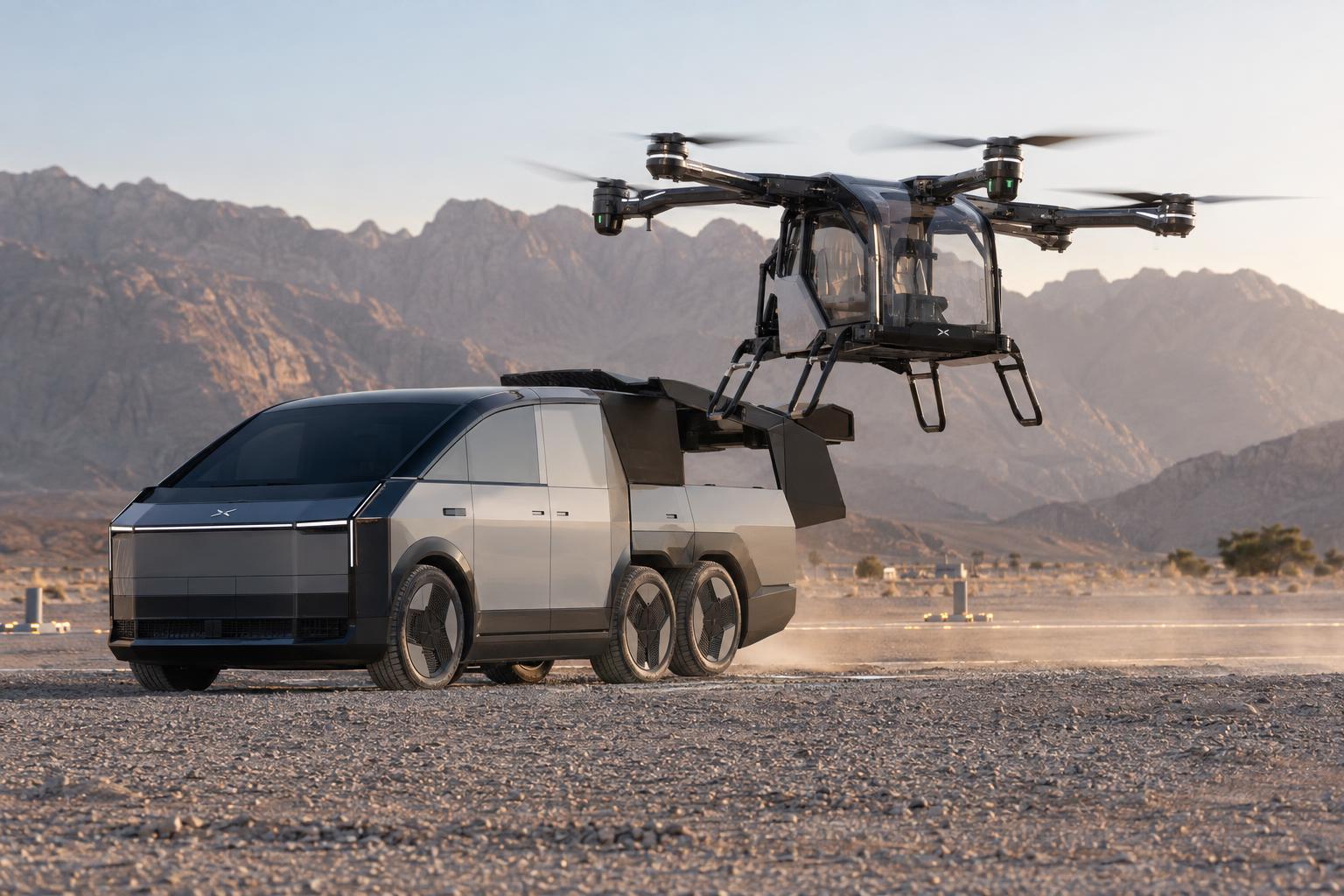
Ras Al Khaimah has signed an agreement with ARIDGE to develop what is described as the world’s first regulatory sandbox for personal flying cars. The initiative is intended to give the company a controlled environment to test, demonstrate and refine its road-to-air vehicle concept under the supervision of UAE transport and aviation authorities.
For motorists and technology enthusiasts in the GCC, the announcement is significant because it moves the flying car conversation beyond concept videos and exhibition displays. It does not mean privately owned flying cars will be immediately available on UAE roads or in UAE airspace, but it creates a formal pathway for testing the technology, operating rules and safety requirements needed before commercial use could be considered.
ARIDGE and Ras Al Khaimah sign landmark flying car agreement
The agreement brings together ARIDGE, the advanced mobility company previously known as XPENG AeroHT, and authorities in Ras Al Khaimah. Their shared aim is to establish a dedicated framework for personal flying car testing, with the emirate providing suitable land, regulatory coordination and an operating environment away from dense urban airspace.
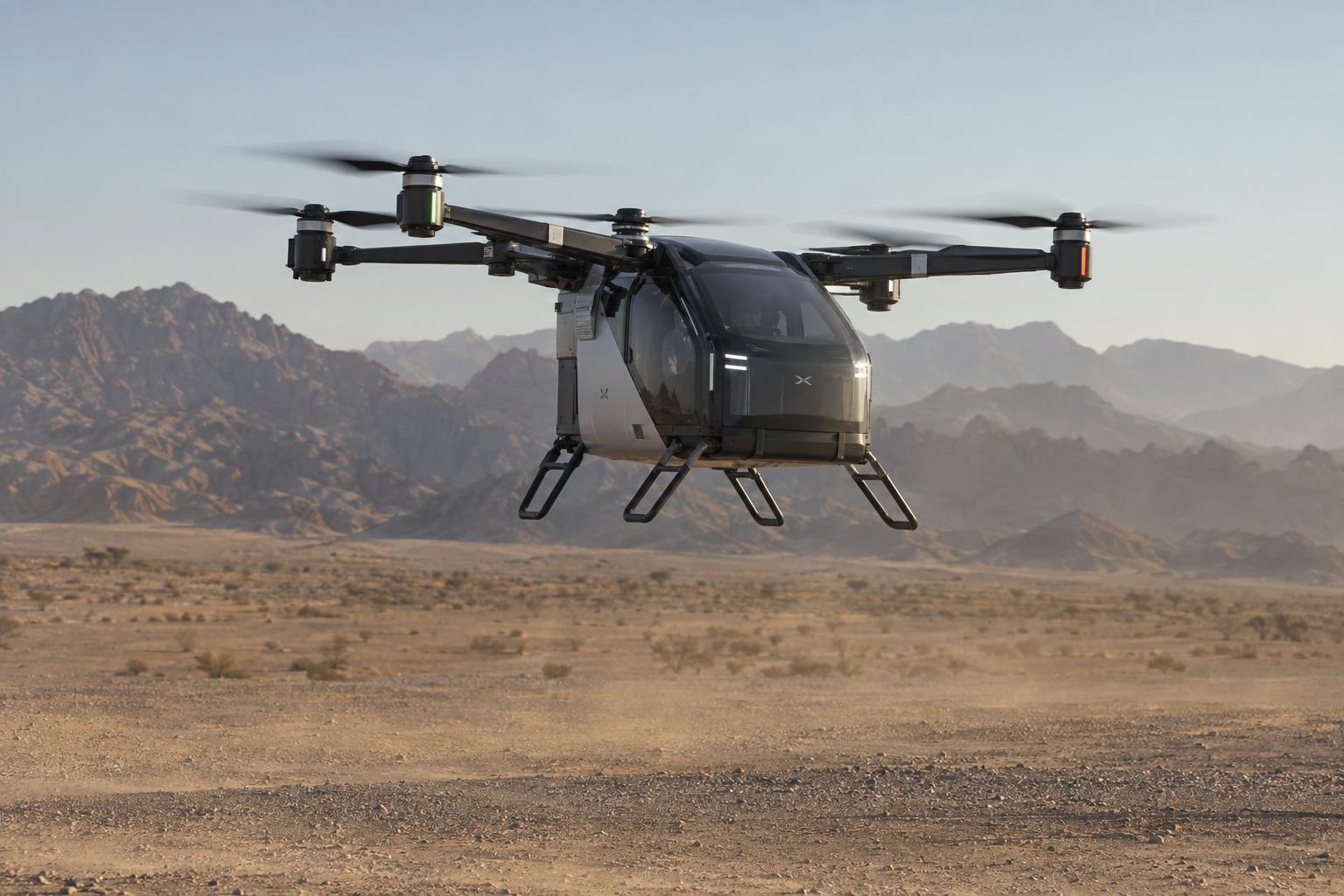
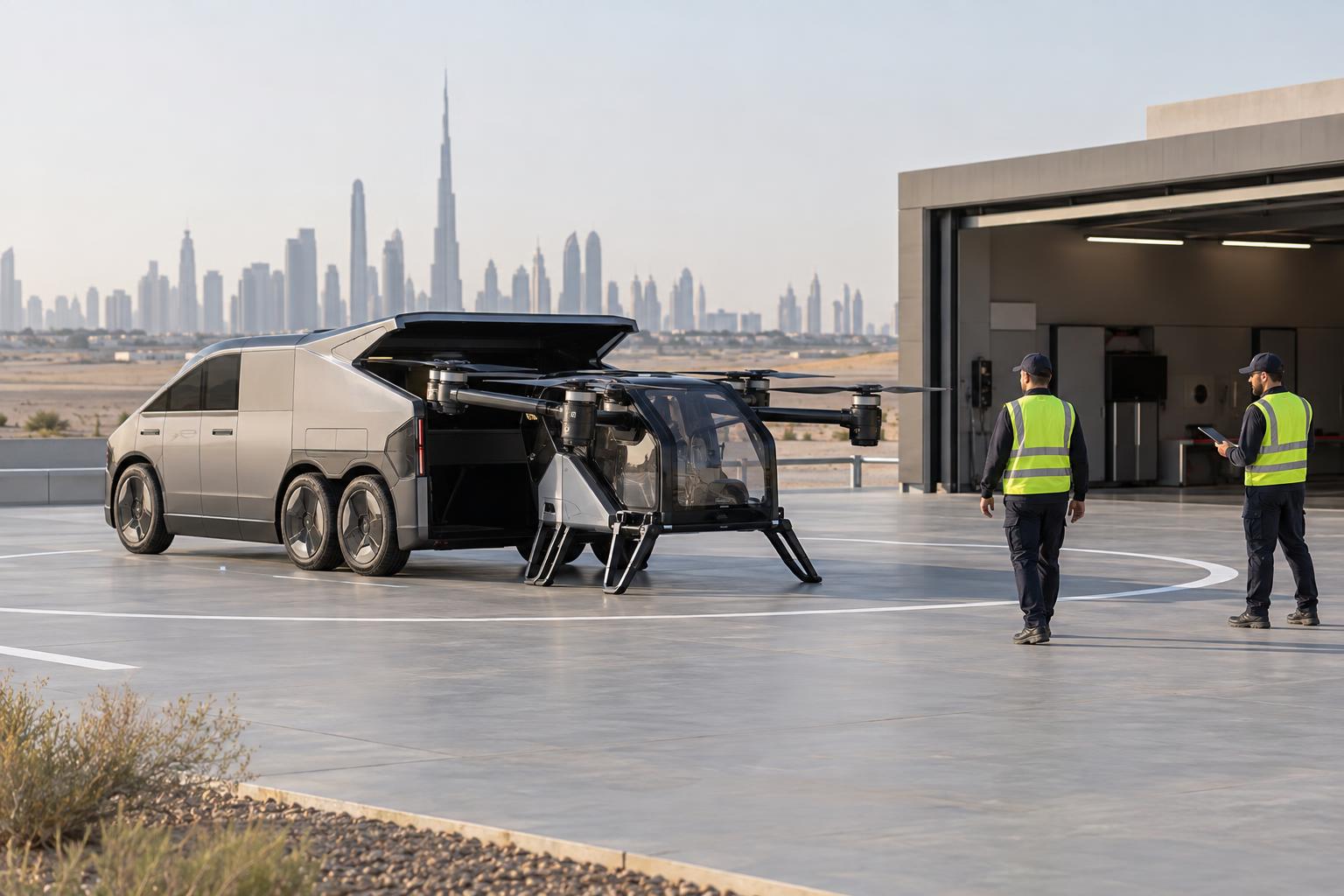
ARIDGE is developing an integrated mobility concept that combines a road-going vehicle with a separate electric vertical take-off and landing aircraft, commonly called an eVTOL. Rather than being a conventional car that sprouts wings and takes off from a public road, the concept uses a modular approach: a ground vehicle transports and supports a detachable flying unit.
- Purpose: test personal flying car technologies and operating procedures in a controlled setting.
- Location: Ras Al Khaimah, with desert areas offering space for practical trials.
- Regulatory focus: safety, airworthiness, pilot or operator requirements, ground operations and airspace coordination.
- Long-term goal: support the eventual development of advanced air mobility services and products in the UAE.
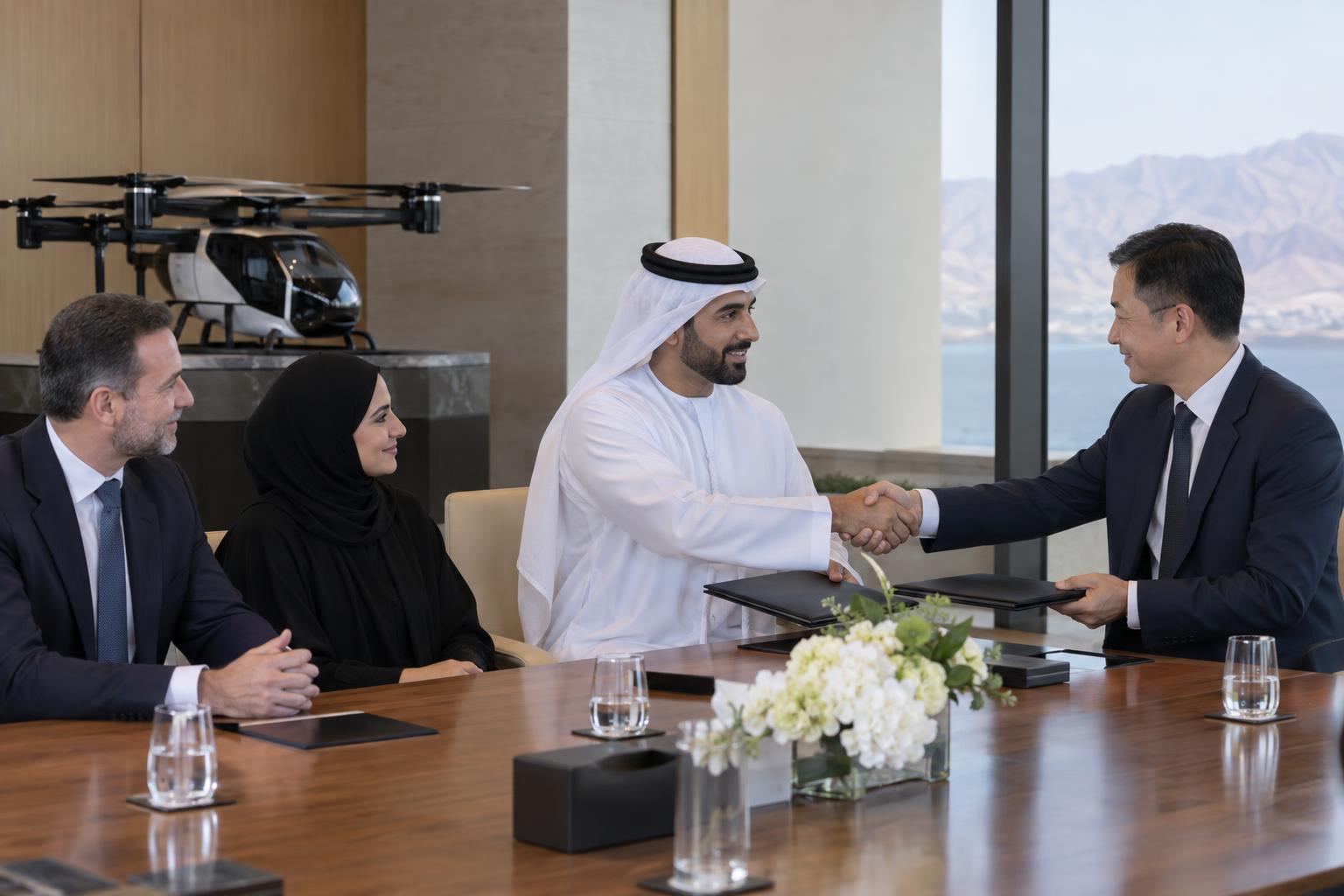
Who is ARIDGE? From XPENG AeroHT to an independent flying car venture
ARIDGE is the new brand and corporate identity associated with XPENG AeroHT, a company formed to develop electric flying vehicles and related low-altitude mobility technology. XPENG AeroHT was originally linked to Chinese electric vehicle manufacturer XPENG, and it gained global attention through prototypes that combine automotive engineering with eVTOL aircraft development.
The company’s best-known product direction is often referred to as a modular flying car. The system is designed around a six-wheel ground vehicle, sometimes called a land aircraft carrier, that can carry a compact eVTOL aircraft. At a suitable launch site, the aircraft is deployed for flight while the ground vehicle remains available for road transport and logistical support.
This approach avoids some of the practical compromises involved in making one vehicle meet full road-car and aircraft requirements at the same time. It also means the proposed product is likely to operate from approved take-off and landing areas, rather than from normal parking spaces, highways or residential streets.
What is a personal flying car regulatory sandbox?
A regulatory sandbox is a supervised test environment in which companies can trial new technology under agreed rules before those rules are applied more broadly. In transport, this can help regulators observe real-world performance without allowing an unproven vehicle to operate freely among the public.
For a personal flying car, the sandbox may cover much more than the aircraft itself. Authorities need to understand how the vehicle is assembled, inspected, stored, transported, launched, flown, landed, maintained and insured. They also need procedures for communications, weather limits, emergency response and the protection of people on the ground.
Aviation regulation is especially demanding because a technical fault in the air can create risks beyond the vehicle’s occupants. The sandbox model allows ARIDGE and regulators to gather evidence step by step, while setting limits on where, when and how flights can take place.
What might be tested in the RAK sandbox?
- Vehicle deployment and recovery procedures.
- Low-altitude flight performance and handling.
- Battery safety, charging and thermal management in Gulf conditions.
- Take-off and landing site requirements.
- Communication with aviation authorities and air traffic systems.
- Emergency procedures, maintenance standards and operational training.
- Noise, environmental impact and community safety measures.
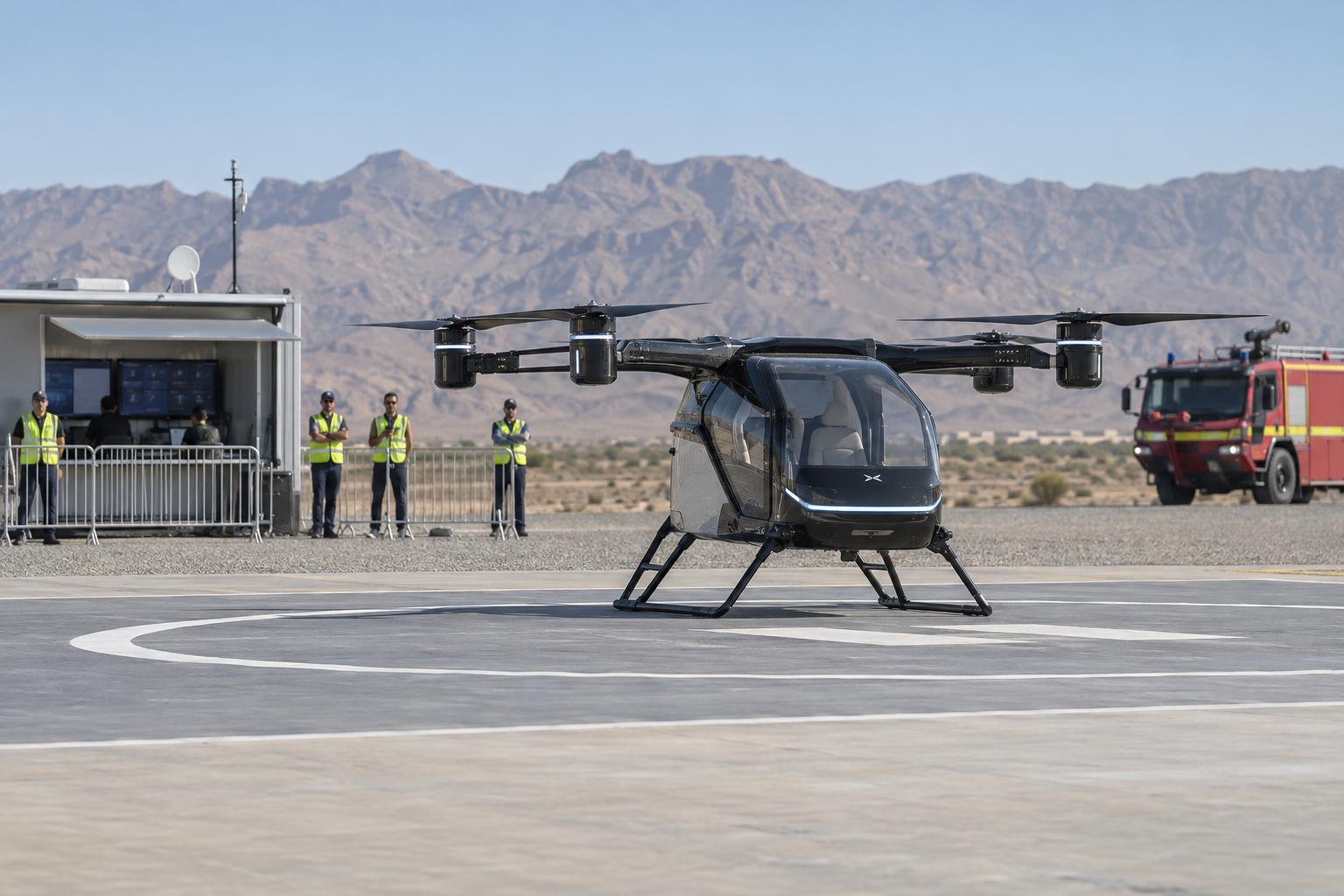
Inside the agreement: RAK Transport Authority, Department of Civil Aviation, and GCAA oversight
The project involves several layers of public-sector coordination. Within Ras Al Khaimah, the Transport Authority and the Department of Civil Aviation are expected to play central roles in planning the test environment, identifying suitable sites and aligning local transport and aviation requirements.
At federal level, the UAE General Civil Aviation Authority, or GCAA, is essential because civil aircraft operations, airworthiness and national airspace matters cannot be governed by an emirate alone. Any future operation involving aircraft in UAE airspace would need to meet applicable federal aviation rules and receive the necessary approvals.
The agreement should therefore be viewed as a framework for cooperation, not a blanket permission for flying cars to begin carrying passengers. Each prototype, test activity and operational stage can require separate technical reviews, permits and safety approvals.
Important: a signed development agreement is not the same as a commercial operating licence. Buyers should not assume that any flying car product can yet be legally driven and flown in the UAE without restrictions.
Why is Ras Al Khaimah's desert testing ground significant?
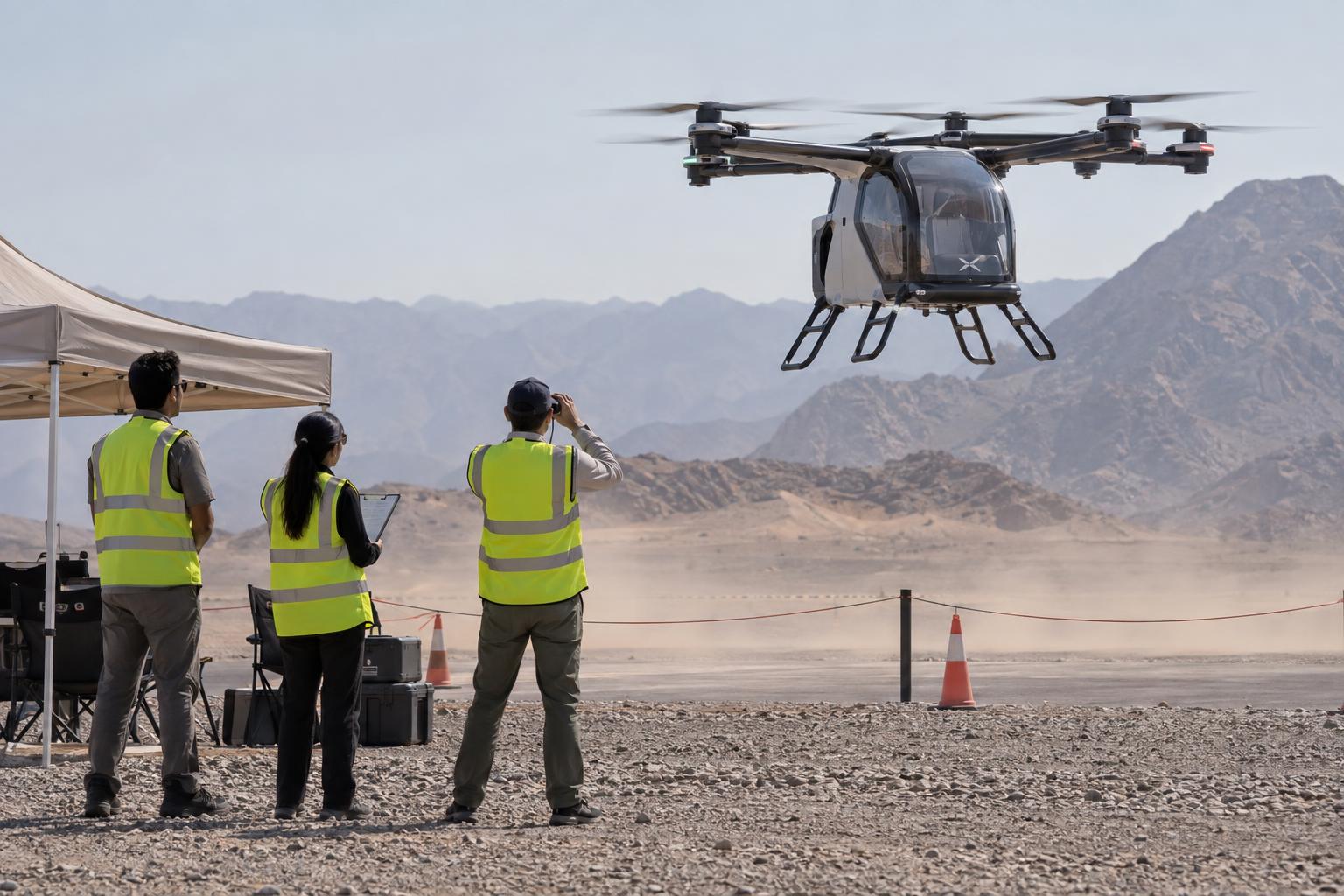
Ras Al Khaimah offers a useful combination of open land, varied terrain, growing infrastructure and proximity to the wider UAE market. Desert areas can provide the clear operating space needed for early testing, away from the crowded roads, towers and busy controlled airspace of major city centres.
The emirate’s climate also makes it a demanding test location. High summer temperatures, dust, wind and strong sunlight can affect battery performance, electric motors, sensors, cooling systems and aircraft reliability. If a personal eVTOL system is intended for Gulf use, proving it can operate safely in these conditions is highly relevant.
Testing in RAK may also help establish the practical requirements for future vertiports or designated launch sites. These facilities would need safe approach paths, charging or energy infrastructure, fire protection, security, passenger handling arrangements and connections to conventional roads.
Is there a planned Abu Dhabi to Ras Al Khaimah flying car route?
No confirmed public passenger route between Abu Dhabi and Ras Al Khaimah has been established through this agreement. The announcement focuses on a regulatory sandbox and testing cooperation, rather than a scheduled inter-emirate air taxi or flying car service.
An Abu Dhabi to Ras Al Khaimah journey is often used to illustrate the potential appeal of advanced air mobility because road travel can take several hours depending on the starting point, destination and traffic. However, a regular aerial service would require far more than a capable aircraft. It would need approved routes, airspace integration, departure and arrival sites, operating certificates, weather procedures and a viable commercial model.
In the near term, any flights connected to the project are more likely to be controlled demonstrations or test operations than a bookable passenger service. Travellers should wait for official announcements from the relevant authorities and operators before making plans around a future route.
Why is the UAE positioning itself as a hub for advanced air mobility?
The UAE has made advanced mobility a visible part of its wider technology, infrastructure and economic diversification strategy. Dubai and Abu Dhabi have already attracted eVTOL developers and discussed future air taxi networks, while federal regulators are working with international partners and manufacturers on safety pathways.
For the country, advanced air mobility could eventually support faster connections between key business districts, airports, tourism destinations and remote areas. It could also create opportunities in aircraft maintenance, battery systems, digital air traffic management, pilot training, infrastructure and manufacturing support.
There is a practical tourism angle as well. A carefully regulated flying experience could become an attraction in its own right, particularly in an emirate with mountain, desert and coastal destinations. Yet the UAE’s emphasis on regulation is important because public acceptance will depend on safety, noise control, affordability and clear rules for operators.
- The UAE has strong aviation infrastructure and established aviation regulators.
- Its cities and emirates can support controlled pilot projects at meaningful scale.
- Government entities are willing to work directly with emerging mobility companies.
- Desert test areas offer space that is difficult to find in many major global cities.
- The region’s heat and dust create valuable real-world validation conditions.
What does this mean for the future of flying cars in the Gulf?
The RAK agreement is a credible sign that the Gulf’s flying car ambitions are progressing from marketing concepts toward practical regulation and testing. It may help define how personal eVTOL products can be evaluated locally, particularly in conditions that differ sharply from those in Europe, China or North America.
That said, widespread private ownership remains a longer-term prospect. Early flying vehicles are likely to be expensive, tightly regulated and limited to approved operating areas. Many may require specialist training or professional operators, and the infrastructure required for safe operation will take time to build.
The first commercial applications may not look like the sci-fi image of commuters lifting off from their driveways. They could begin with demonstration flights, tourism experiences, emergency or logistics use cases, and carefully managed point-to-point services. As aircraft technology, battery capability and regulation mature, more personal use cases may follow.
What should prospective buyers and enthusiasts watch for?
Watch for certified flight testing, official GCAA approvals, published operating rules and announcements about approved sites. A polished prototype or a successful exhibition flight is encouraging, but certification, maintenance support, insurance and training arrangements are the milestones that matter most for real ownership or passenger operations.
It is also worth following how ARIDGE’s product is classified. The legal treatment of the ground vehicle and flying module, including licensing, registration, roadworthiness and aviation certification, will shape whether the system can become a practical consumer product in the GCC.
Key takeaways
- Ras Al Khaimah and ARIDGE have agreed to develop a regulatory sandbox for personal flying car technology.
- ARIDGE is the company formerly associated with the XPENG AeroHT flying car programme.
- The project is intended for controlled testing and regulatory development, not immediate unrestricted public flying.
- RAK authorities will work alongside the UAE’s federal aviation framework, with GCAA oversight central to any flight activity.
- Desert testing can help evaluate eVTOL systems in heat, dust and open-air operating conditions.
- No confirmed Abu Dhabi to Ras Al Khaimah passenger flying car route has been announced as part of the agreement.
- Commercial flying cars in the Gulf remain a developing prospect, with safety certification and infrastructure still major steps.
People Also Ask
What is ARIDGE?
ARIDGE is an advanced mobility company developing electric flying vehicle technology. It is the new identity associated with the business previously known as XPENG AeroHT, which has developed modular flying car and eVTOL concepts.
Will flying cars be available in Ras Al Khaimah soon?
There is no indication that flying cars will be available for general public use immediately. The RAK project is focused on testing, regulatory development and safety validation before any wider commercial operation could be considered.
Can a flying car take off from a public road in the UAE?
Not under normal conditions. Aircraft operations require approved procedures, suitable launch and landing locations, and aviation authority permissions. A flying car project does not give owners the right to take off from public roads or residential areas.
Who regulates flying cars in the UAE?
The UAE General Civil Aviation Authority is central to the regulation of civil aircraft operations and airspace. Emirate-level transport and aviation bodies may also be involved in local facilities, testing sites and transport planning.
What is the difference between a flying car and an air taxi?
A flying car is generally intended to combine personal ground transport with flight capability, while an air taxi is usually an eVTOL aircraft designed to carry passengers between designated locations. In practice, both require strict aviation certification and approved operating infrastructure.


