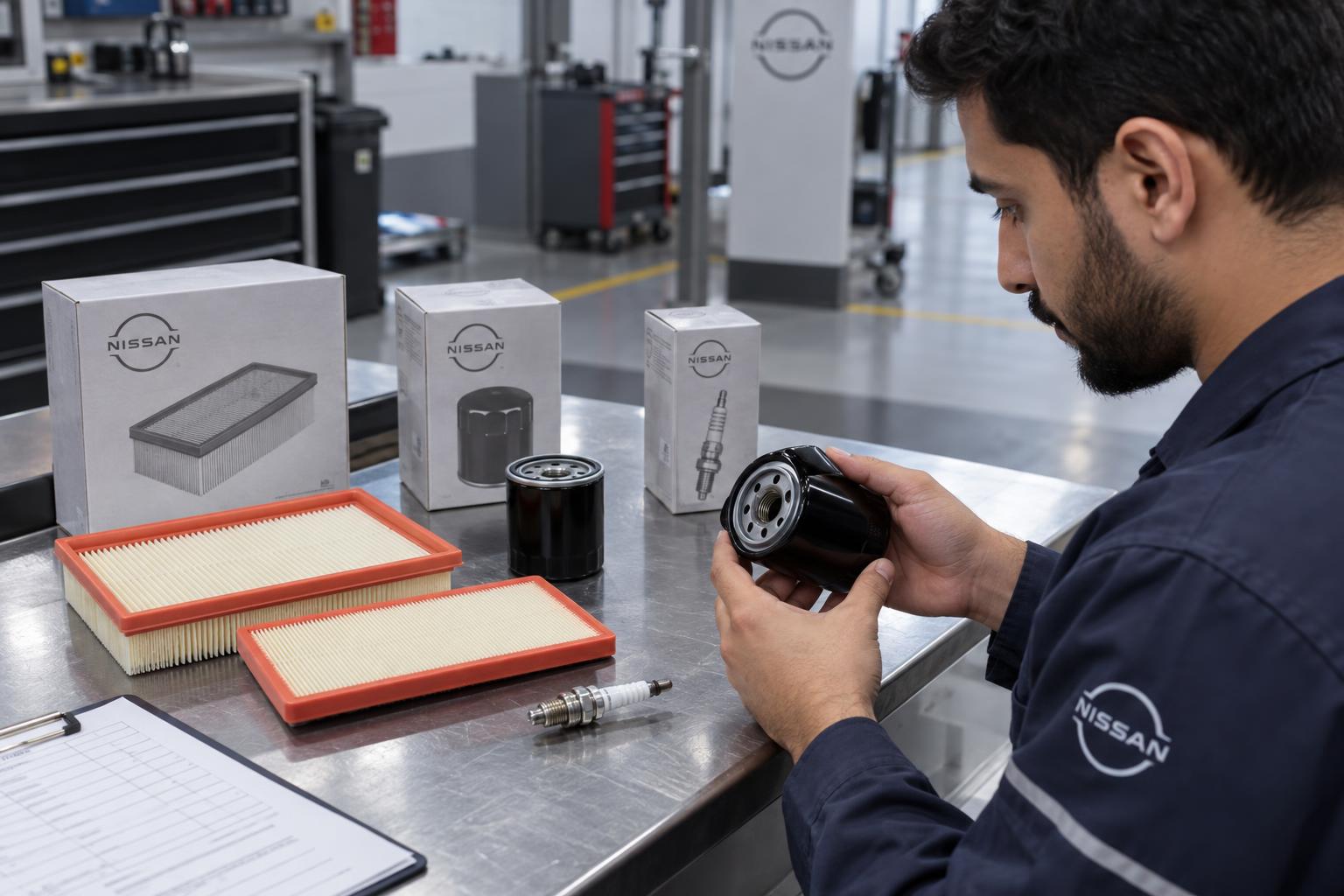
Nissan Saudi Arabia has expanded its counterfeit-parts awareness campaign to reach independent workshops and spare-parts professionals, not only its authorised dealer network. The move is intended to help technicians, retailers and car owners recognise suspicious components before they are fitted, particularly common service items such as filters and spark plugs that can look convincing but may not meet Nissan’s quality and safety standards.
Announced on September 30, the expanded programme focuses on practical education, product identification and the risks associated with non-genuine parts. For GCC motorists, the message is relevant beyond Saudi Arabia because vehicles in the region often share similar maintenance patterns, parts supply channels and demanding operating conditions.
What has Nissan Saudi Arabia found so far?
Nissan Saudi Arabia says its anti-counterfeit work has identified a significant volume of suspected imitation parts in the market. These parts may be sold through informal supply channels, unverified retailers or workshops that do not have clear traceability for the products they install.
The campaign is designed to make the supply chain more transparent. It also aims to give independent automotive professionals a clearer understanding of the differences between genuine Nissan parts and products that use misleading packaging, branding or part references.
Scale of the confiscations
Between May 2025 and September 2026, Nissan Saudi Arabia reported 25,765 suspected counterfeit parts linked to six cases. The figure illustrates why counterfeit-parts awareness is not only a concern for vehicle manufacturers and authorised dealers, but also for independent workshops and everyday owners.
| Reported anti-counterfeit activity | Details |
|---|---|
| Reported period | May 2025 to September 2026 |
| Suspected counterfeit parts | 25,765 |
| Reported cases | Six |
| Frequently targeted items | Air filters, oil filters and spark plugs |
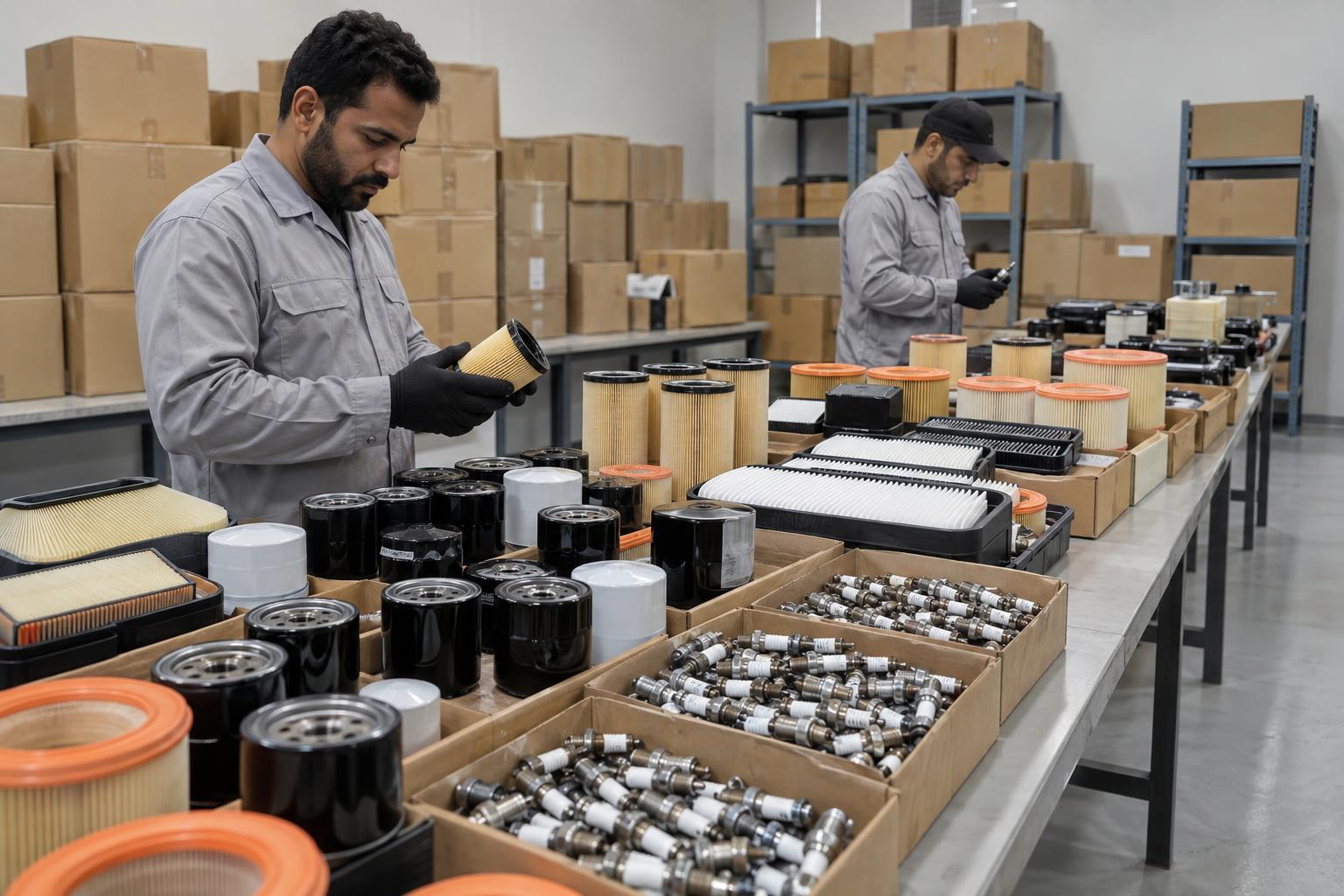
Most commonly counterfeited parts
The most commonly identified items are routine maintenance components. These parts are replaced regularly, are relatively easy to package and are often purchased on price alone, making them attractive targets for counterfeiters.
- Air filters: Poor filter material can allow more dust and contaminants into the engine intake.
- Oil filters: Weak internal construction or incorrect filtration performance can affect oil flow and engine protection.
- Spark plugs: Incorrect materials, heat range or dimensions can lead to rough running, misfires and potential engine damage.
In Saudi Arabia and across the wider GCC, heat, dust and long-distance driving can place extra pressure on service parts. A low-quality filter or spark plug may therefore cause problems sooner than it would in milder conditions.
Why is Nissan extending training beyond its authorised dealer network?
Authorised Nissan dealers already operate within the manufacturer’s parts and service standards, but many owners use independent workshops for routine maintenance, repairs and older vehicles. Reaching those businesses gives the campaign a better chance of stopping suspected counterfeit parts before they reach a customer’s car.
The objective is not to suggest that every independent workshop uses non-genuine parts. Many reputable independent garages source components carefully and provide customers with proper invoices. However, training can help workshops identify red flags, ask better questions of suppliers and explain the value of verified parts to customers.
How the awareness and training sessions work for independent spare-parts professionals
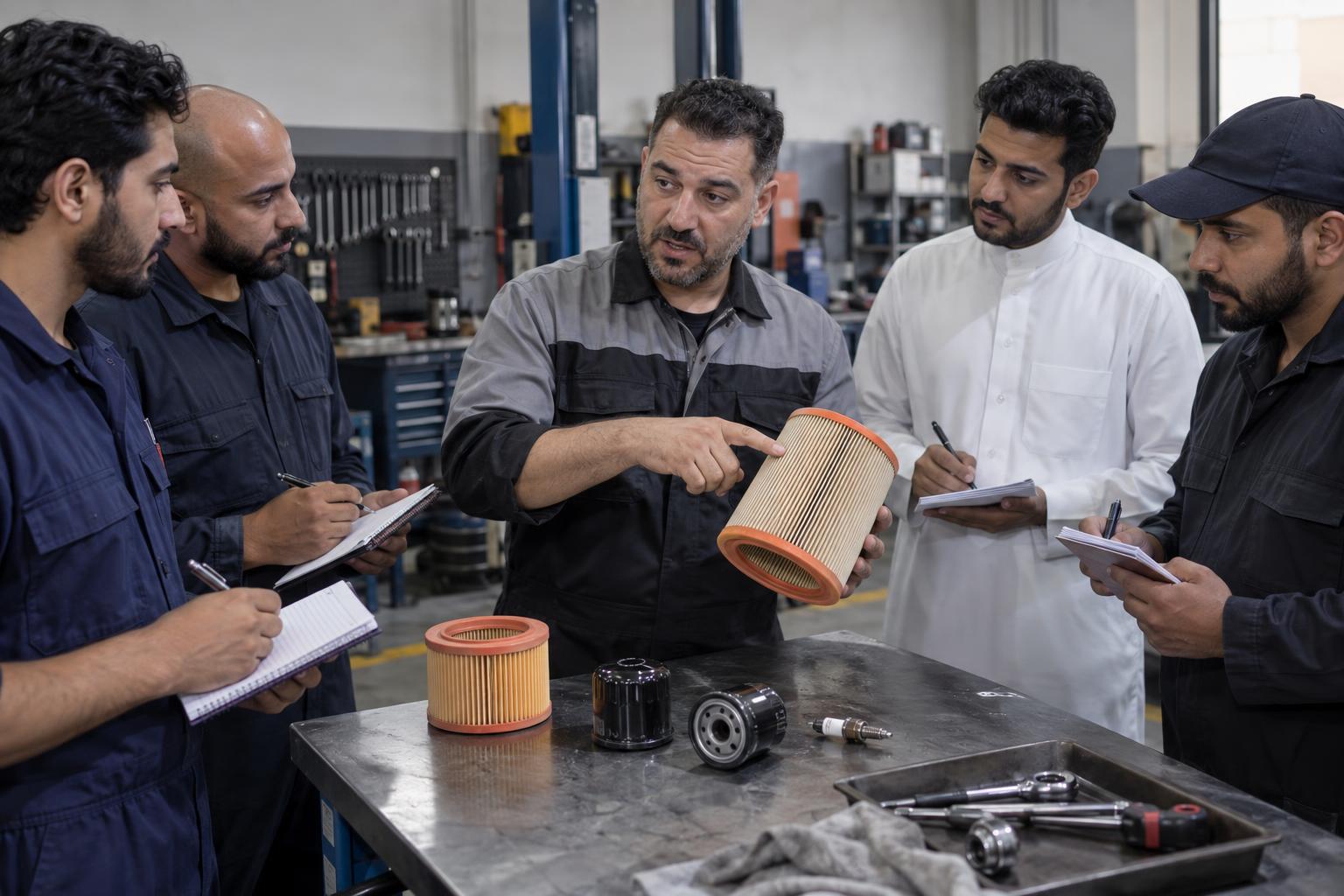
The sessions focus on practical checks that can be used during buying, stocking and fitting. Participants are shown how genuine parts are supplied and how counterfeit items may differ in their labelling, finish, packaging or documentation.
- Recognising official packaging and product markings.
- Checking that part numbers match the intended Nissan model and application.
- Reviewing supplier records, invoices and product traceability.
- Spotting poor printing, incorrect logos, weak materials or inconsistent fitment.
- Understanding the mechanical and safety consequences of installing unverified components.
For workshop customers, this approach should encourage clearer discussions before a service begins. A good workshop should be able to state whether it is fitting genuine Nissan parts, approved aftermarket components or customer-supplied items, and should provide documentation for what was installed.
Why counterfeit parts are a safety concern for GCC drivers
Counterfeit parts are not simply a branding issue. A component can look similar to a genuine item while using cheaper materials, inconsistent manufacturing tolerances or designs that do not meet the original specification.
The risk depends on the part involved, but the consequences can range from reduced engine efficiency to expensive repairs or, in some cases, safety-related failures. The hot, dusty environment found across much of the GCC makes correct filtration, cooling and lubrication especially important.
Reduced filtration and engine protection
An air filter that does not seal properly or uses poor-quality media may allow more airborne dust to enter the intake system. Over time, this can contribute to accelerated wear in areas that depend on clean air for combustion.
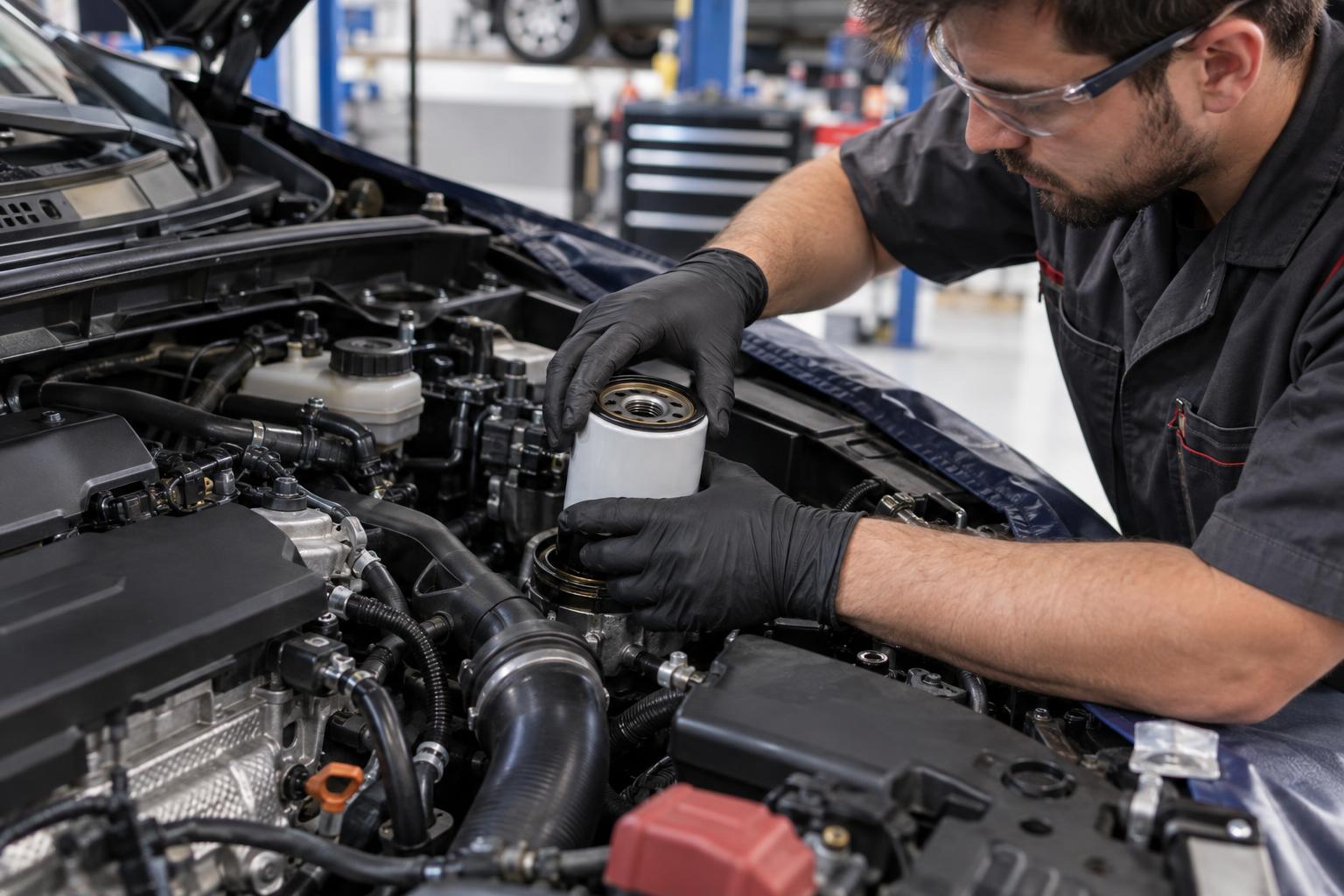
An oil filter is equally important because it must manage oil flow while trapping contaminants. A counterfeit filter may have weaker seals, unsuitable filter media or inconsistent internal construction, reducing the protection that the engine receives between scheduled oil changes.
Risk of premature engine wear or failure
Service parts are often inexpensive compared with the systems they protect. Fitting an unverified oil filter, air filter or spark plug to save a small amount can create a much larger repair bill if it contributes to poor lubrication, contamination, misfires or abnormal engine operation.
Not every problem will appear immediately. Some counterfeit components can work for a short period before their materials degrade, their fitment fails or their performance falls away. That makes traceable sourcing particularly valuable, especially for vehicles that are driven frequently or used for long highway journeys.
Potential safety hazards from substandard components
The safety implications become more serious when counterfeit products involve braking, steering, suspension, electrical or lighting components. Such parts may not have been tested to the same standards as genuine items and can fail unpredictably under load, heat or repeated use.
Even when the reported items are routine service parts, the broader awareness message matters. Drivers should treat unusually cheap components, vague packaging and sellers who cannot provide an invoice or clear product origin as warning signs.
How can car owners identify genuine Nissan parts?
The simplest approach is to buy parts through an authorised Nissan dealer or a verified supplier with a clear reputation and proper documentation. This is particularly worthwhile for engine, braking, electrical and safety-related parts, where the cost of a poor-quality item can exceed any initial saving.
Buying through authorised dealers and verified suppliers
Authorised dealers can confirm the correct part using the vehicle identification number, model year and specification. They also provide a clearer route for warranty support or follow-up if a part is defective.
When using an independent workshop, ask where the part was sourced and request that the invoice identifies the brand and part number. A reputable garage should not object to these questions, particularly when the customer is paying for genuine parts.
- Use authorised Nissan dealers for the highest level of fitment and supply-chain confidence.
- Choose established independent suppliers that provide invoices and product records.
- Be careful with prices that are dramatically lower than normal market levels.
- Avoid sellers who cannot identify the supplier, provide a part number or issue a receipt.
- Keep service invoices and parts documentation for future maintenance and resale records.
Checking packaging, part numbers and documentation
Packaging alone is not a guarantee, as counterfeiters can copy boxes, labels and logos. Still, poor print quality, spelling mistakes, inconsistent colours, damaged seals, missing labels or unusually flimsy packaging are all reasons to investigate further.
Check that the part number is appropriate for the vehicle and that the documentation matches the item supplied. If there is any doubt, contact an authorised Nissan dealer with the vehicle details before fitting the component.
Owners should also be wary of parts that appear new but have unclear origins. A genuine part should have a consistent finish and correct dimensions, while a component that fits poorly, has rough moulding or has markings that differ from the packaging should not be installed until it has been verified.
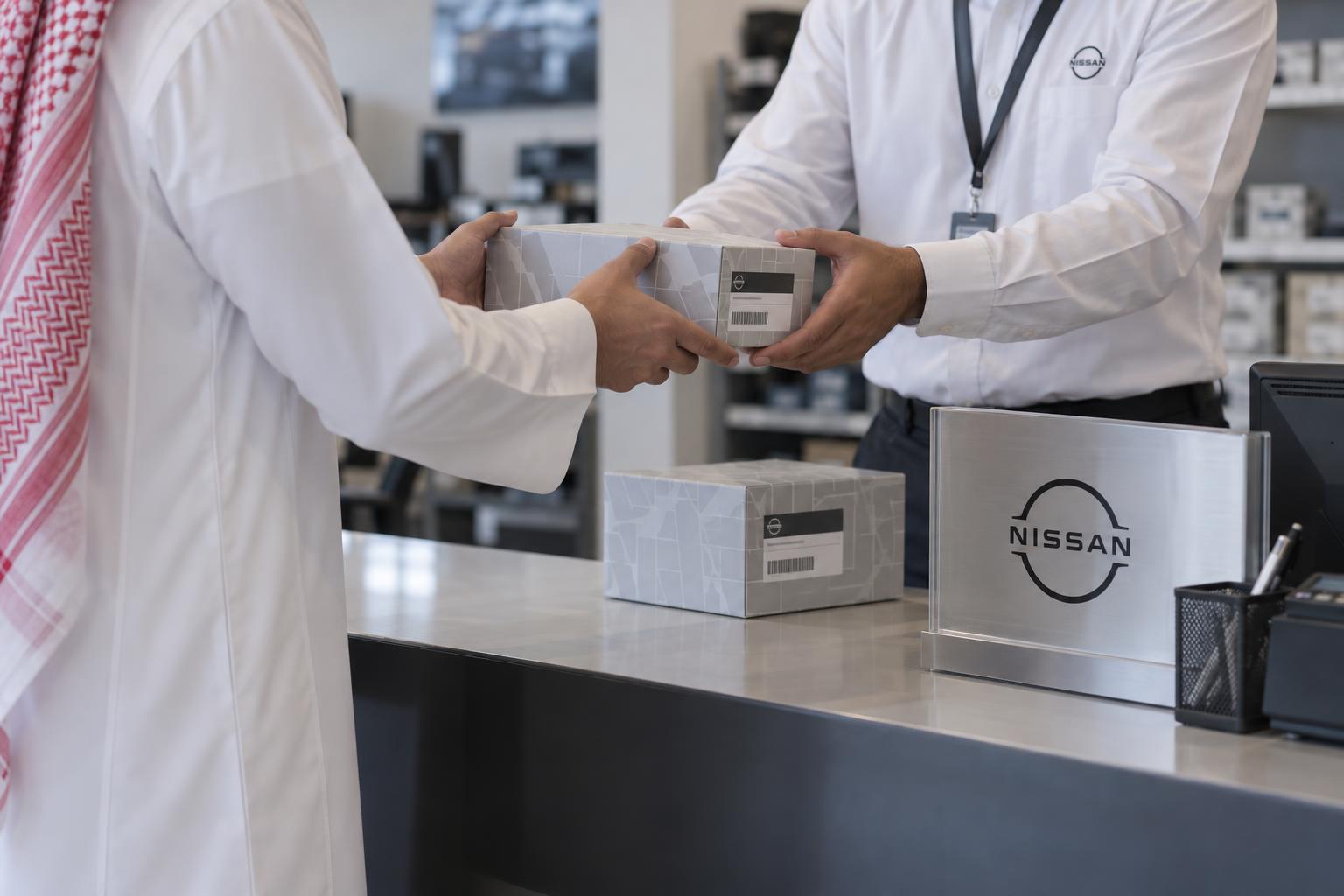
What this campaign means for maintenance choices across the GCC
Nissan Saudi Arabia’s initiative reflects a wider regional issue: many drivers rely on a mixed network of dealer workshops, independent garages, parts shops and online sellers. Choice can be useful, but it makes it important to distinguish between a legitimate value option and a product with no dependable origin.
For owners, the practical lesson is to look beyond the purchase price. A correctly specified, traceable part can protect reliability, preserve service history and reduce the chance of avoidable breakdowns. This is especially important for used-car buyers, fleet operators and drivers who cover high annual mileage.
Independent workshops can benefit as well. Better product knowledge helps them protect their reputation, reduce repeat repairs and give customers a more transparent choice between genuine and approved aftermarket parts.
Key takeaways
- Nissan Saudi Arabia has expanded its counterfeit-parts awareness work to independent workshops and spare-parts professionals.
- The company reported 25,765 suspected counterfeit parts across six cases from May 2025 to September 2026.
- Air filters, oil filters and spark plugs are among the most commonly counterfeited maintenance items.
- Counterfeit parts can reduce engine protection, contribute to premature wear and create potential safety risks.
- Buying through authorised dealers or verified suppliers, and keeping invoices and part details, gives owners stronger protection.
- An unusually low price, unclear source or poor packaging should prompt further checks before a part is fitted.
People Also Ask
Are counterfeit Nissan parts illegal in Saudi Arabia?
Counterfeit goods that unlawfully copy trademarks or misrepresent products are subject to enforcement action. Buyers and workshops should use legitimate suppliers and retain invoices to show where parts were purchased.
What Nissan parts are most likely to be counterfeited?
Frequently replaced service items are common targets, including air filters, oil filters and spark plugs. Other high-demand parts can also be copied, particularly when they are easy to sell through informal channels.
Can a counterfeit oil filter damage an engine?
Yes. A poor-quality oil filter may not filter contaminants effectively, may restrict or leak oil, or may fail internally. These issues can reduce lubrication protection and contribute to engine wear.
How do I know whether a Nissan part is genuine?
Buy from an authorised dealer or verified supplier, check the part number against your vehicle details and ask for an invoice. If the packaging, product finish or price seems unusual, confirm the item with an authorised Nissan dealer before installation.
Is it safe to use aftermarket parts on a Nissan?
Quality aftermarket parts can be suitable when they are correctly specified and sourced from reputable manufacturers. They should not be confused with counterfeit parts, which falsely present themselves as genuine or use copied branding without reliable quality control.