

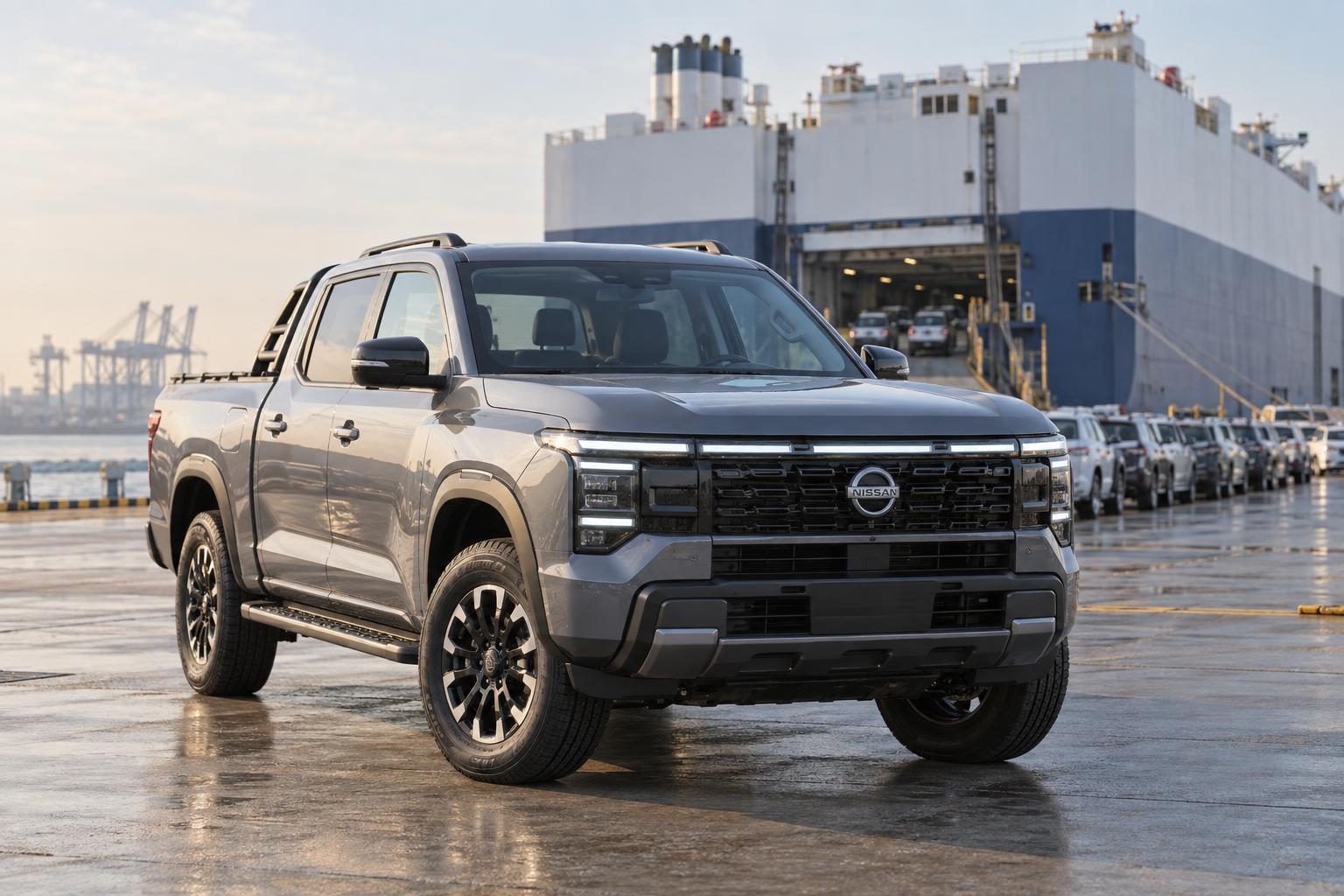
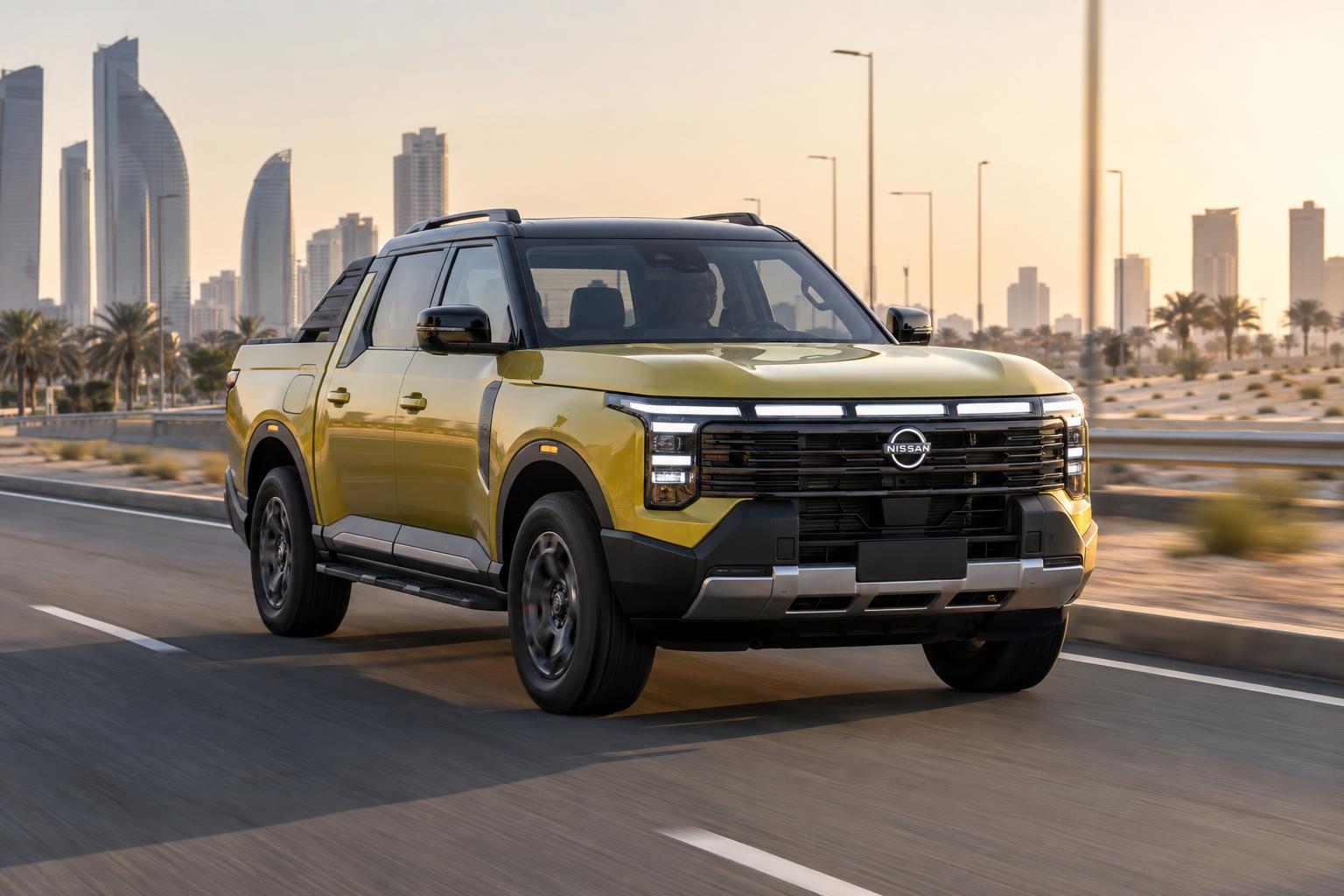
Nissan has begun exporting vehicles built in China to overseas markets, including a new batch of Frontier Pro pickups intended for the Gulf. The move is part of a broader “In China, for the World” strategy that uses Nissan’s Chinese manufacturing base to supply selected export regions with models designed around local demand, including pickups and electric sedans.
For GCC buyers, the immediate model to watch is the Frontier Pro, a new pickup developed through Nissan’s China operations. The N7 electric sedan is also significant, although its initial September export movements were linked to Southeast Asian markets rather than a confirmed full-scale Gulf retail launch.
Nissan ships a second batch of China-built Frontier Pro pickups to the Gulf
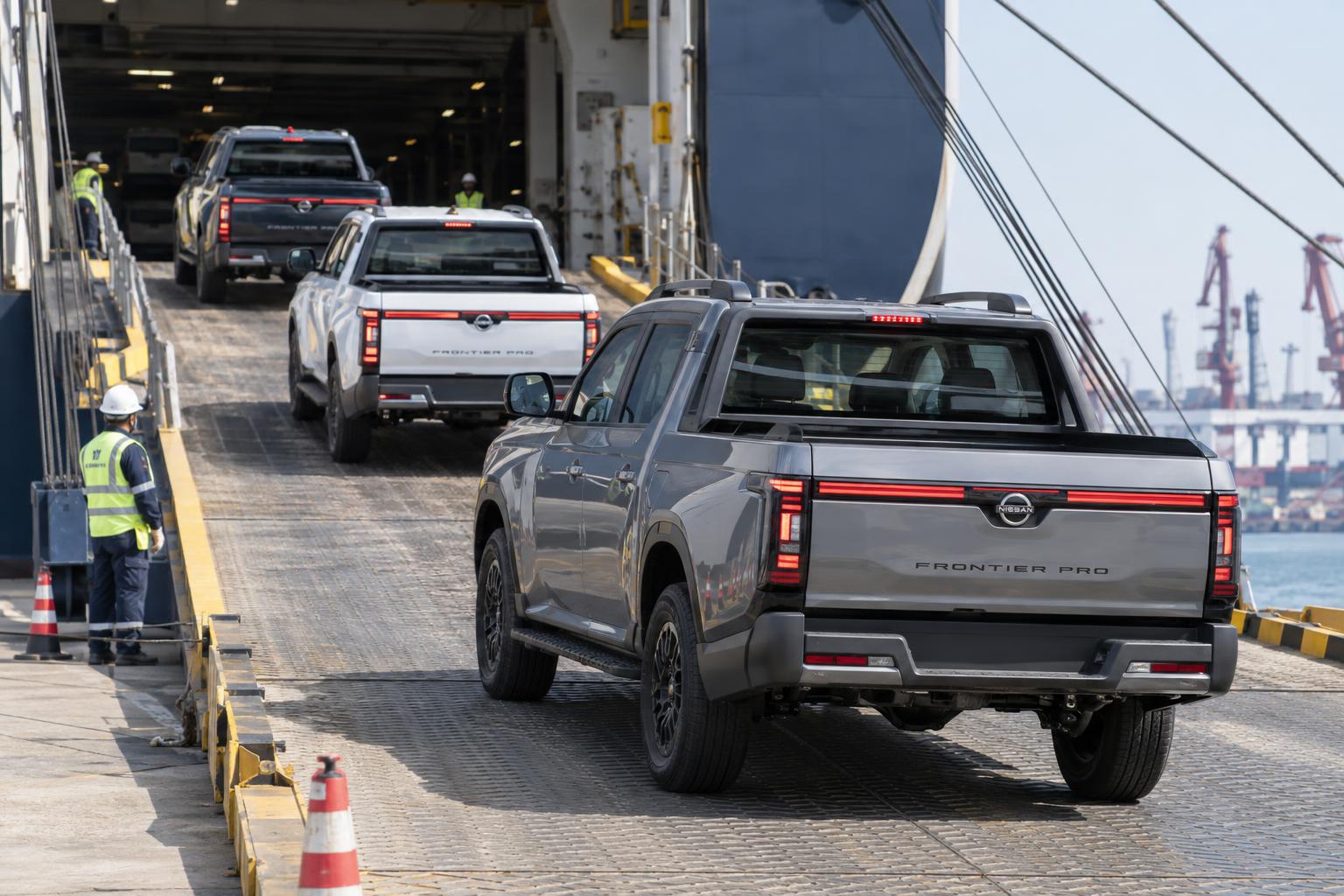
The latest shipment shows that Nissan is moving beyond limited export trials from China. Frontier Pro pickups were loaded for Gulf markets in September, adding to the company’s efforts to use China-built products in regions where practical pickups remain an important part of the vehicle market.
Pickup buyers in the GCC tend to prioritise durability, cooling performance, cabin space, towing ability and access to aftersales support. Exporting the Frontier Pro to the region suggests Nissan sees potential for a modern, competitively positioned pickup alongside its established regional line-up.
- Destination: Gulf markets were included in the September Frontier Pro export batch.
- Production base: The vehicles are manufactured in China through Nissan’s local joint-venture operations.
- Model focus: The Frontier Pro is a pickup aimed at work, family and lifestyle use.
- Wider plan: Nissan is also sending China-built vehicles to other international markets.
What is Nissan's “In China, for the World” export strategy?
“In China, for the World” describes Nissan’s plan to develop and manufacture certain vehicles in China not only for Chinese customers, but also for export markets. China has become one of the world’s largest centres for vehicle production, battery supply and electric-vehicle development, giving manufacturers a large supplier base and the ability to build at scale.
For Nissan, the strategy can shorten development cycles and provide access to products created specifically for changing global demand. It does not mean every Nissan sold in the Gulf will be sourced from China. Instead, it gives the company another production source alongside factories in Japan, the United States, Mexico, Thailand and other countries.
The approach is particularly relevant for newer vehicle categories, including electrified sedans, crossovers and pickups. It can also help Nissan introduce market-specific products where a conventional global model range may not fully match local preferences or price expectations.
Timeline of the September shipments
Nissan’s September export activity involved separate shipments for different markets. The Gulf-bound Frontier Pro movement came first, followed shortly afterwards by exports involving the N7 electric sedan and additional Frontier Pro units for Southeast Asia.
| Date | Vehicles | Export destination | Significance |
|---|---|---|---|
| September 9 | Frontier Pro pickups | Gulf markets | Second export batch of the China-built pickup for the region |
| September 11 | N7 electric sedans and additional Frontier Pro pickups | Southeast Asia | Expansion of Nissan’s China-built vehicle exports beyond the GCC |
Gulf-bound Frontier Pro pickups depart on September 9
The September 9 shipment focused on Frontier Pro pickups for the Gulf. This is important because the GCC remains a strong pickup market, with demand coming from small businesses, fleet users, contractors, outdoor enthusiasts and private owners who need a versatile vehicle.
Official shipment activity is not always the same as a full retail launch in every GCC country. Local distributor announcements, specifications, homologation details, pricing and delivery timing will determine when buyers can actually order the model in each market.
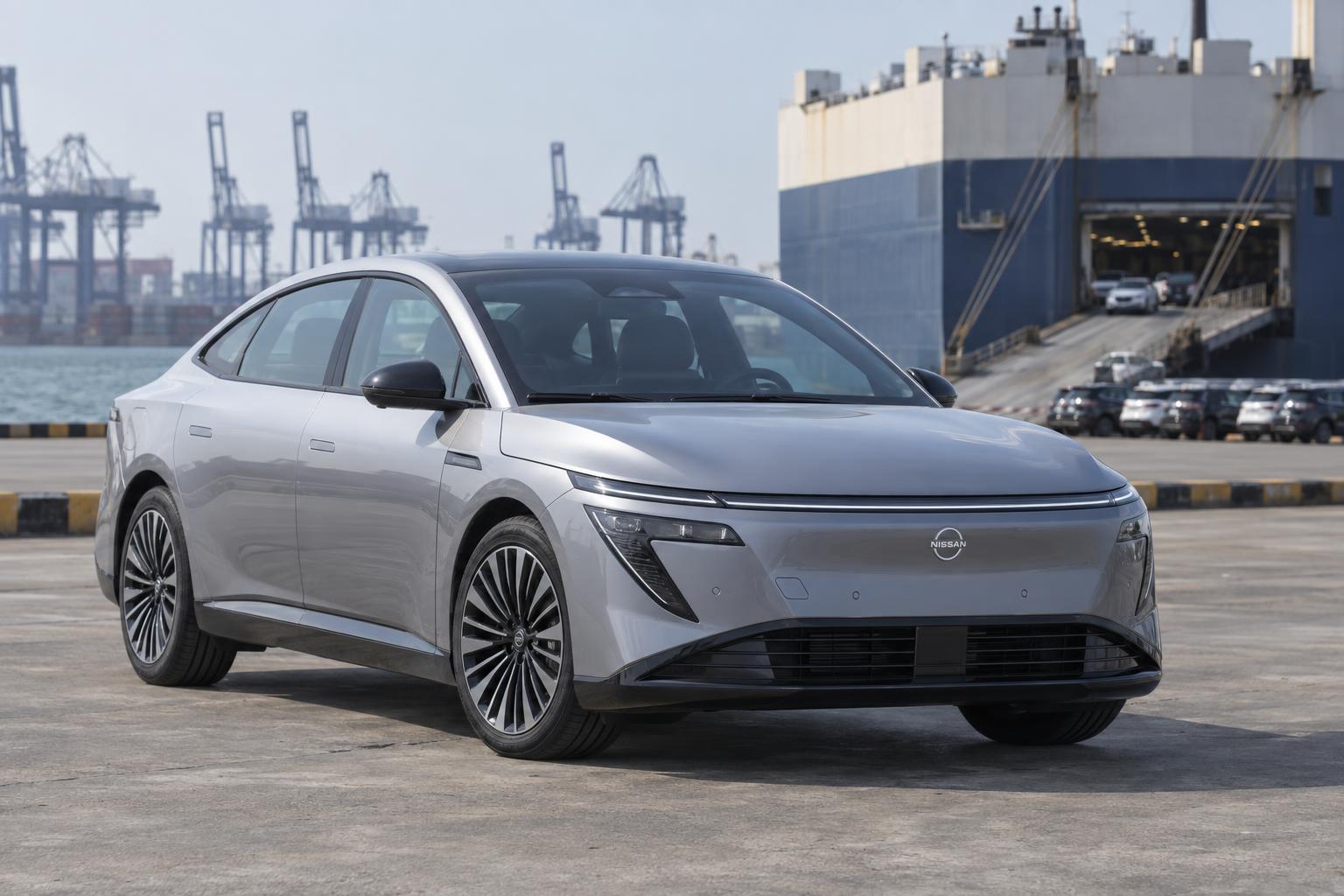
N7 electric sedans and additional Frontier Pro units head to Southeast Asia on September 11
Two days later, Nissan shipped N7 electric sedans and further Frontier Pro pickups toward Southeast Asia. The shipment underlines the fact that Nissan’s export programme is intended to serve multiple regions, not solely the Gulf.
The N7’s involvement is especially notable because it is an electric sedan developed for a market where EV competition is intense. Its export potential will be closely watched by drivers in the GCC, where electric-car interest is growing but charging coverage, hot-weather performance and resale confidence still influence buying decisions.
What is the Nissan Frontier Pro pickup?
The Frontier Pro is a China-built Nissan pickup created through Dongfeng Nissan, Nissan’s joint venture in China. It uses the Frontier name, though buyers should not assume it is mechanically identical to the Frontier sold in North America or the Navara sold in many other international markets.
It is positioned as a contemporary pickup with a more passenger-friendly cabin than a basic work truck, while retaining the utility expected from a double-cab model. Depending on market specification, the range is expected to include conventional combustion power and electrified options.
- Double-cab pickup body style
- Modern digital cabin and driver-assistance technology
- Utility-focused cargo bed and towing capability
- Potential electrified powertrain availability in selected markets
- Design and equipment tailored to Chinese and export-market buyers
A key point for GCC customers is that final specifications can vary by destination. Engine output, four-wheel-drive availability, payload, towing rating, cooling hardware and warranty coverage should be confirmed through the local Nissan distributor before making a purchase decision.
What is the Nissan N7 electric sedan?
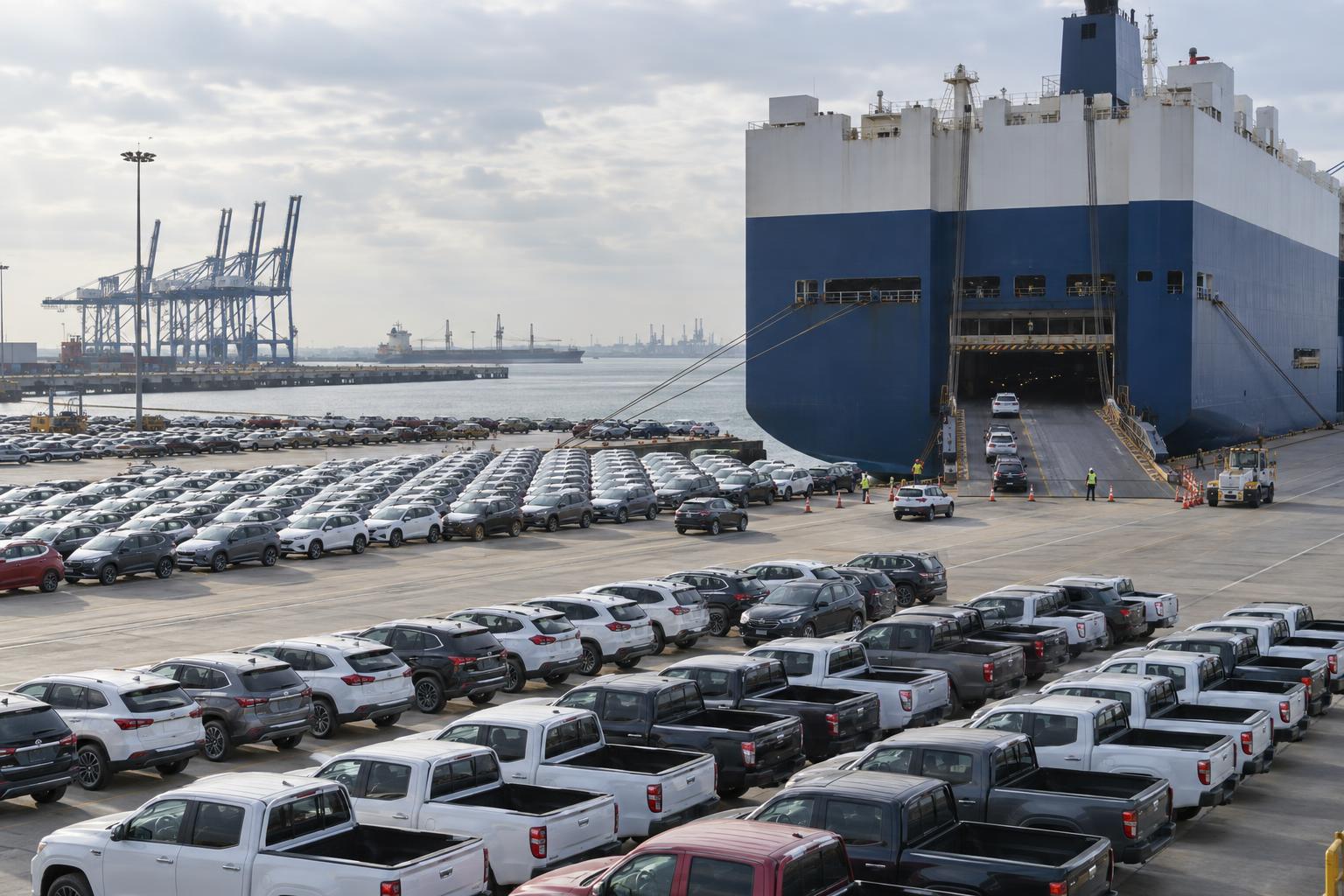
The Nissan N7 is an all-electric sedan developed in China through the Dongfeng Nissan partnership. It is designed as a technology-focused family sedan, competing in the fast-growing Chinese EV market where buyers expect long driving range, large displays, connected features and competitive pricing.
The N7 is important to Nissan because it represents a newer generation of China-developed electric vehicles that may be suitable for export. Its low-slung sedan shape also makes it different from the electric SUVs that currently dominate many GCC discussions around EVs.
Any eventual Gulf version would need to meet local requirements for charging compatibility, software services, air-conditioning performance and warranty support. An export shipment to another region does not itself confirm that the N7 will go on sale in the UAE, Saudi Arabia, Qatar, Kuwait, Bahrain or Oman.
Why is Nissan manufacturing vehicles in China for export markets?
Manufacturing in China gives Nissan access to a very large automotive supply chain. This is particularly valuable for electric vehicles, where battery cells, electric motors, power electronics, displays and software-related components are increasingly concentrated in China.
China also remains one of Nissan’s most important markets, so its local operations have the scale to support product development and production. By exporting selected models, Nissan can spread development and manufacturing costs across more markets.
There are several practical reasons this can make sense:
- Scale: Large production volumes can improve cost efficiency.
- EV supply chain: China has a mature network of battery and EV-component suppliers.
- Faster development: Local teams can respond quickly to changing technology and customer expectations.
- Broader choice: Export markets may gain access to models not produced in traditional Nissan manufacturing hubs.
- Market fit: Pickups and EVs can be adapted for different regions through local specifications and equipment packages.
What does this mean for future GCC availability?
The shipment of Frontier Pro pickups is the clearest sign that GCC buyers may see more China-built Nissan products. However, availability will still vary by country because each distributor makes decisions on model mix, pricing, parts inventory, servicing capacity and customer demand.
For the Frontier Pro, potential buyers should look for official local announcements covering trim levels, powertrains, four-wheel-drive hardware, towing figures and warranty terms. These details matter more than the export news alone, especially for buyers who plan to use a pickup for commercial work, desert driving or towing.
For the N7, the outlook is less certain. It could become relevant to the Gulf if Nissan sees sufficient demand for an electric sedan and can support it with suitable charging partnerships, trained service technicians and a battery warranty that inspires confidence in high-temperature conditions.
People Also Ask
Is the Nissan Frontier Pro coming to the GCC?
Frontier Pro pickups have been shipped to Gulf markets, indicating regional availability is being pursued. Exact launch dates, specifications and prices depend on Nissan’s distributor in each GCC country.
Is the Nissan Frontier Pro the same as the Nissan Navara?
No. The Frontier Pro is a separate China-developed pickup produced through Dongfeng Nissan. It may share the general pickup format and Nissan branding, but its engineering, equipment and powertrain choices can differ from the Navara.
Will the Nissan N7 electric sedan be sold in the UAE or Saudi Arabia?
Nissan’s N7 has been included in export activity, but a confirmed broad retail launch for the UAE or Saudi Arabia would require an official announcement from Nissan or its local distributors.
Are China-built Nissan vehicles reliable?
Vehicle reliability depends on the specific model, powertrain, production standards and local aftersales support rather than the country of manufacture alone. Buyers should check warranty coverage, service-network capability and parts availability for the exact model being considered.
Why are more carmakers exporting vehicles from China?
China offers high production capacity, a deep component supply chain and strong electric-vehicle expertise. These factors allow manufacturers to develop and build some models competitively for sale in overseas markets.


