

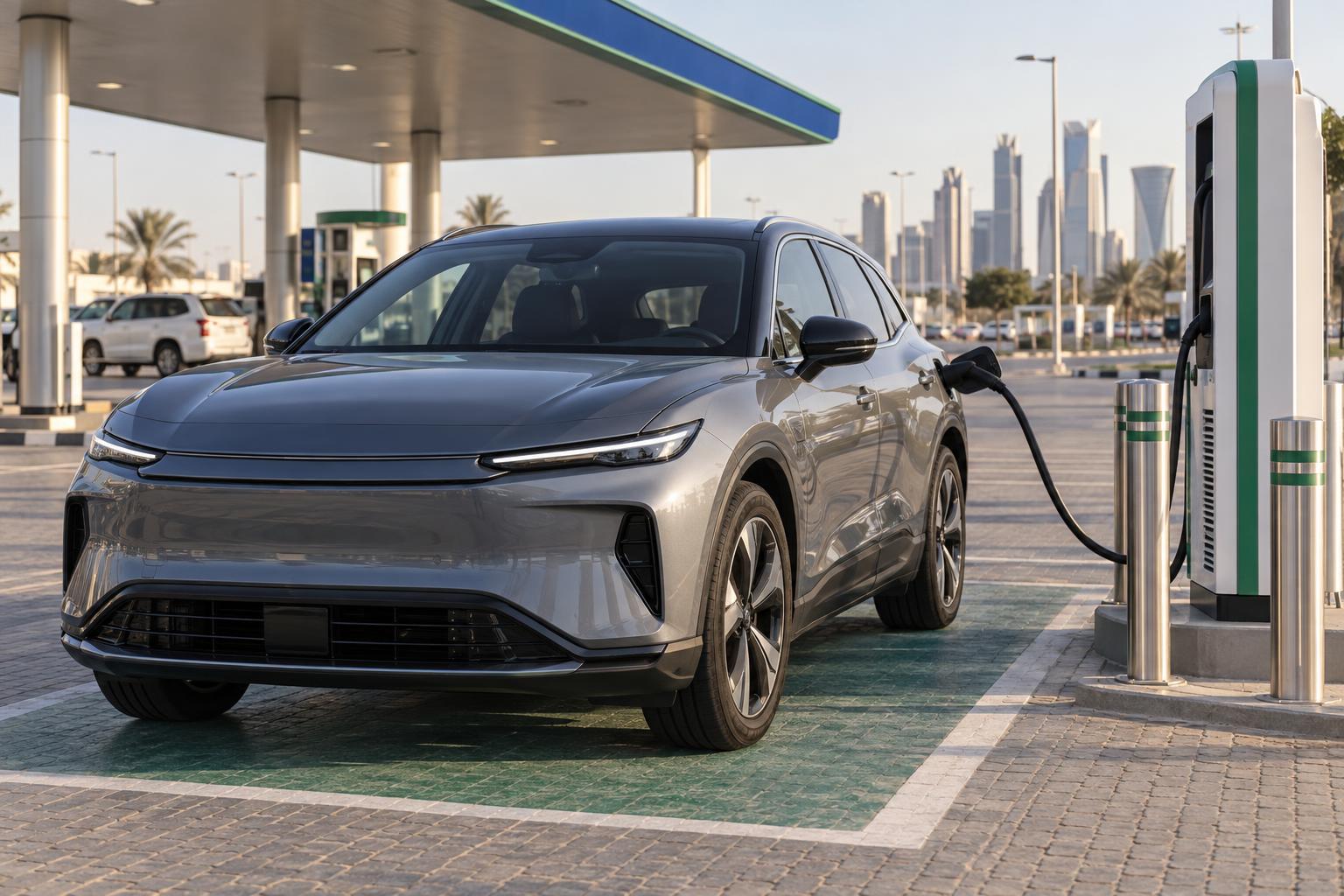
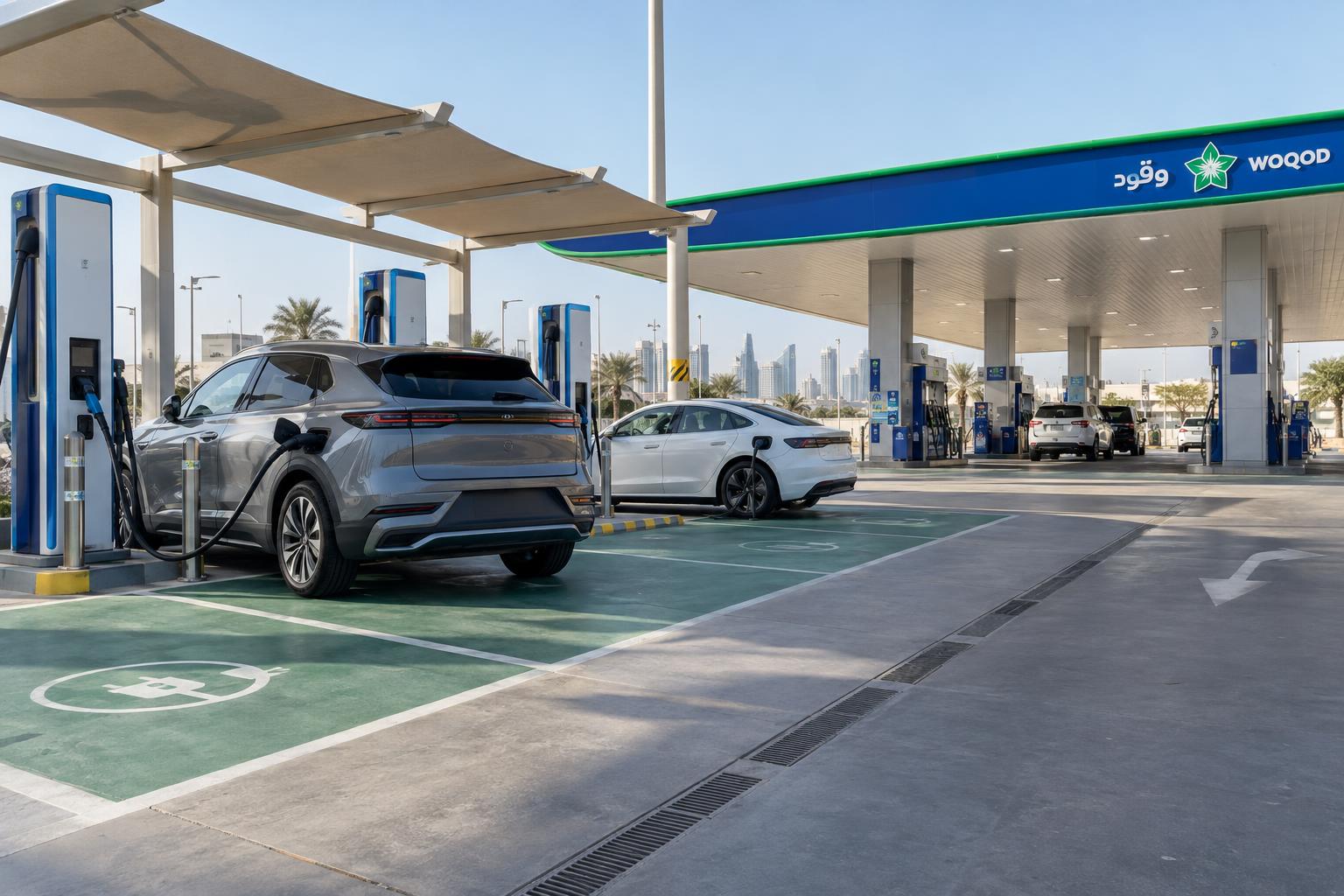
Qatar is expanding its public EV charging network through a new agreement between Kahramaa and Woqod that will bring 37 ultra-fast charging units to selected Woqod fuel stations. The move gives electric vehicle owners more practical charging options on everyday routes, while using the country’s established fuel-station network to make EV ownership easier.
For drivers, the important point is convenience. Rather than relying only on destination chargers at malls, offices or residential locations, EV owners will increasingly be able to charge during a short stop at a familiar service station.
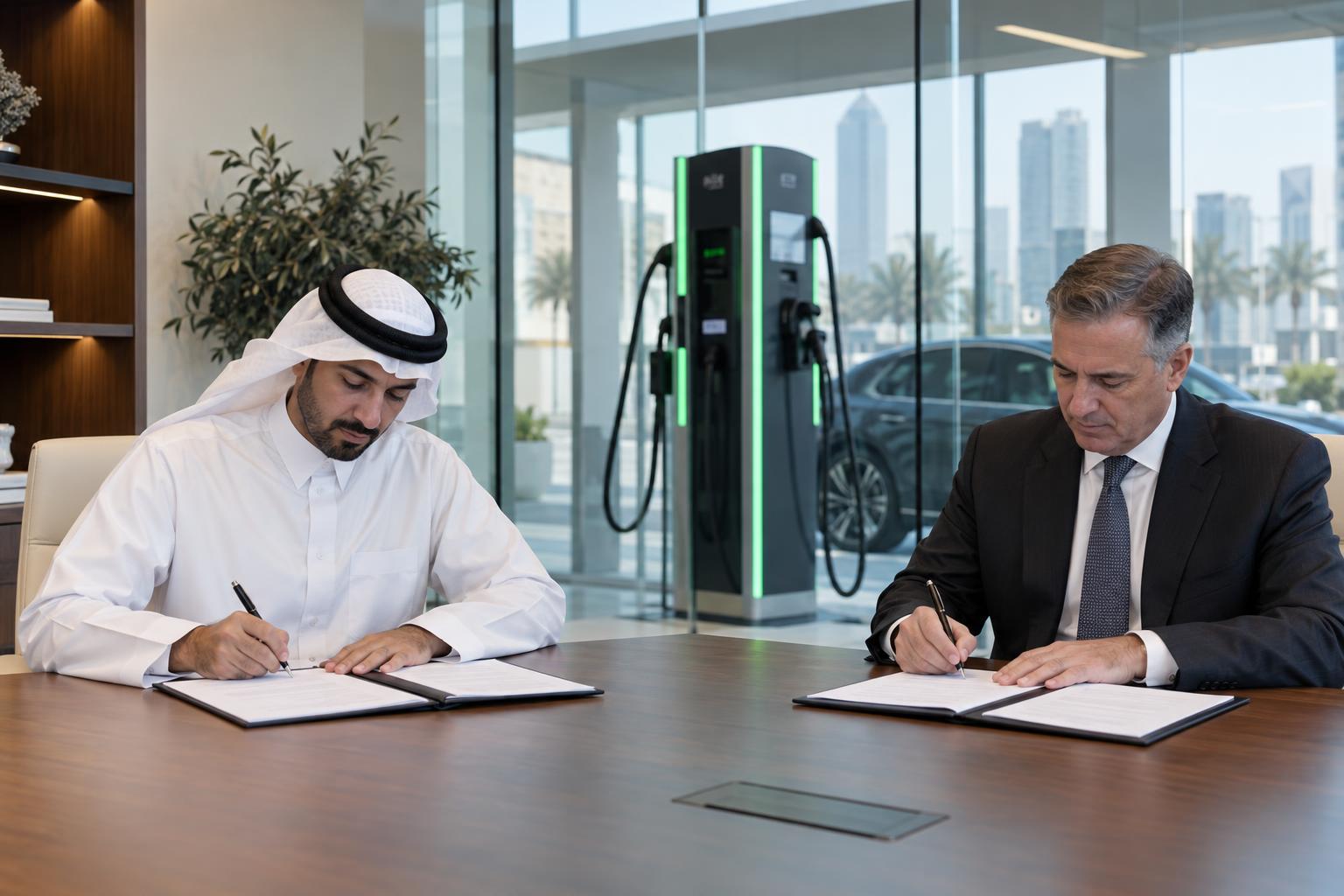
Kahramaa and Woqod sign agreement for EV fast-charging rollout
Kahramaa, Qatar’s General Electricity and Water Corporation, and Woqod have agreed to install ultra-fast EV chargers at Woqod service stations across the country. The partnership combines Kahramaa’s role in electricity infrastructure and charging-network development with Woqod’s nationwide network of accessible petrol stations.
This approach is significant because fuel stations are already designed around quick stops. They typically offer easy road access, lighting, parking areas, convenience stores and other services that make them suitable locations for public rapid charging.
Key details of the partnership
The agreement focuses on expanding public charging availability in high-traffic locations. The chargers are intended to serve both current EV owners and the growing number of drivers considering an electric car in Qatar.
| Item | Details |
|---|---|
| Partners | Kahramaa and Woqod |
| Planned charging units | 37 ultra-fast EV chargers |
| Installation locations | Selected Woqod fuel stations in Qatar |
| Main purpose | Improve convenient public charging access for EV drivers |
| Wider objective | Support cleaner transport and Qatar National Vision 2030 |
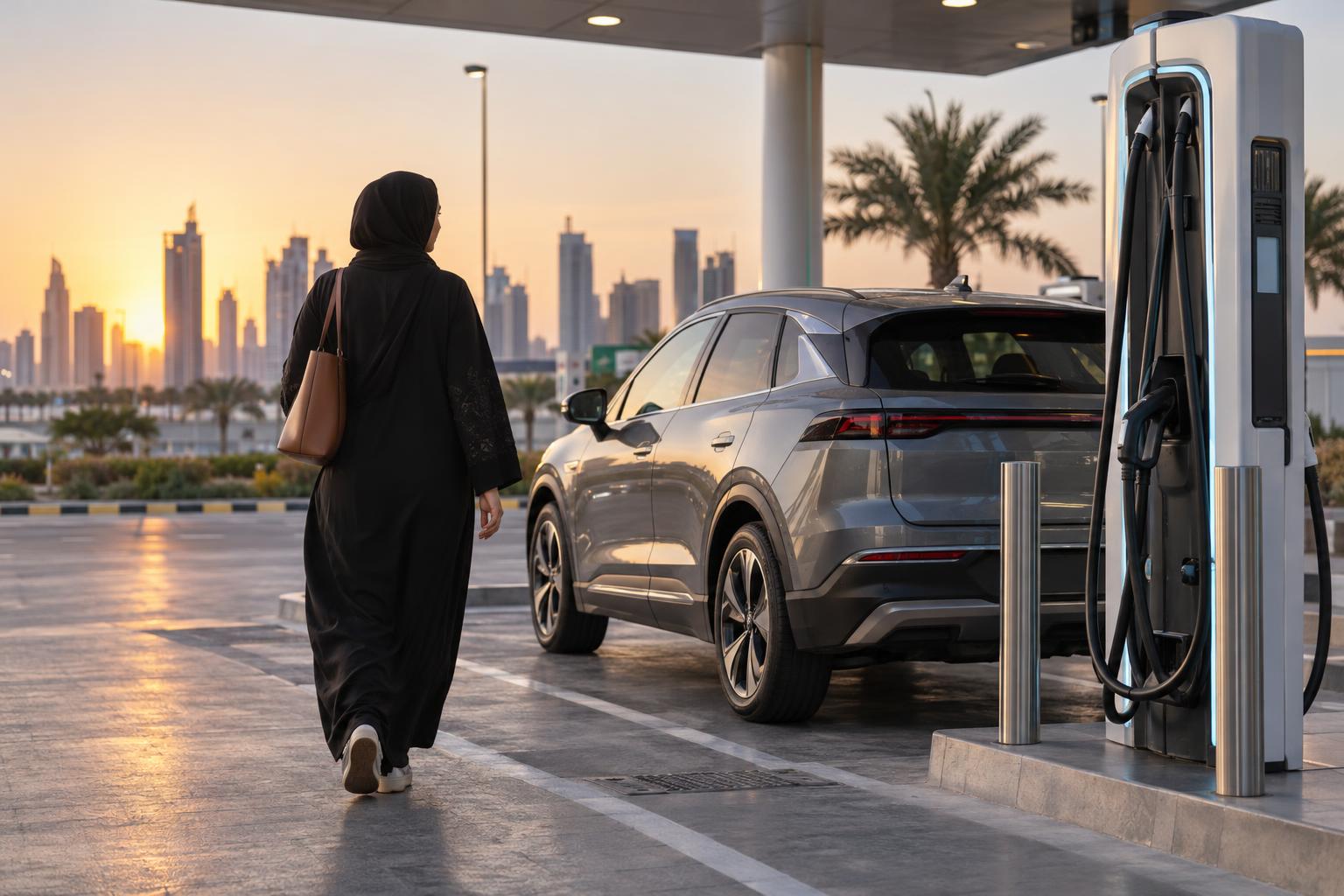
Charging at a Woqod station will not replace home charging for drivers who have private parking. Instead, it gives owners a useful public option for longer trips, busy days, apartment living, airport runs and situations where a home charger is unavailable.
How many charging units and fuel stations are involved?
The agreement covers 37 ultra-fast charging units to be installed at Woqod fuel stations. The chargers will be distributed across selected locations, helping place charging points closer to the routes motorists already use.
The final usefulness of the network will depend not only on the number of chargers, but also on where they are installed, whether multiple connectors are available at each site, and how reliably the units remain operational. For EV drivers, charger uptime and clear payment access matter just as much as headline charging capacity.
- More charging points can reduce waiting times at busy locations.
- Fuel-station sites are generally easier to access from major roads.
- Several locations around the country can make longer EV journeys more predictable.
- Public fast charging is particularly valuable for residents without private home parking.
What does ultra-fast charging mean for EV owners?
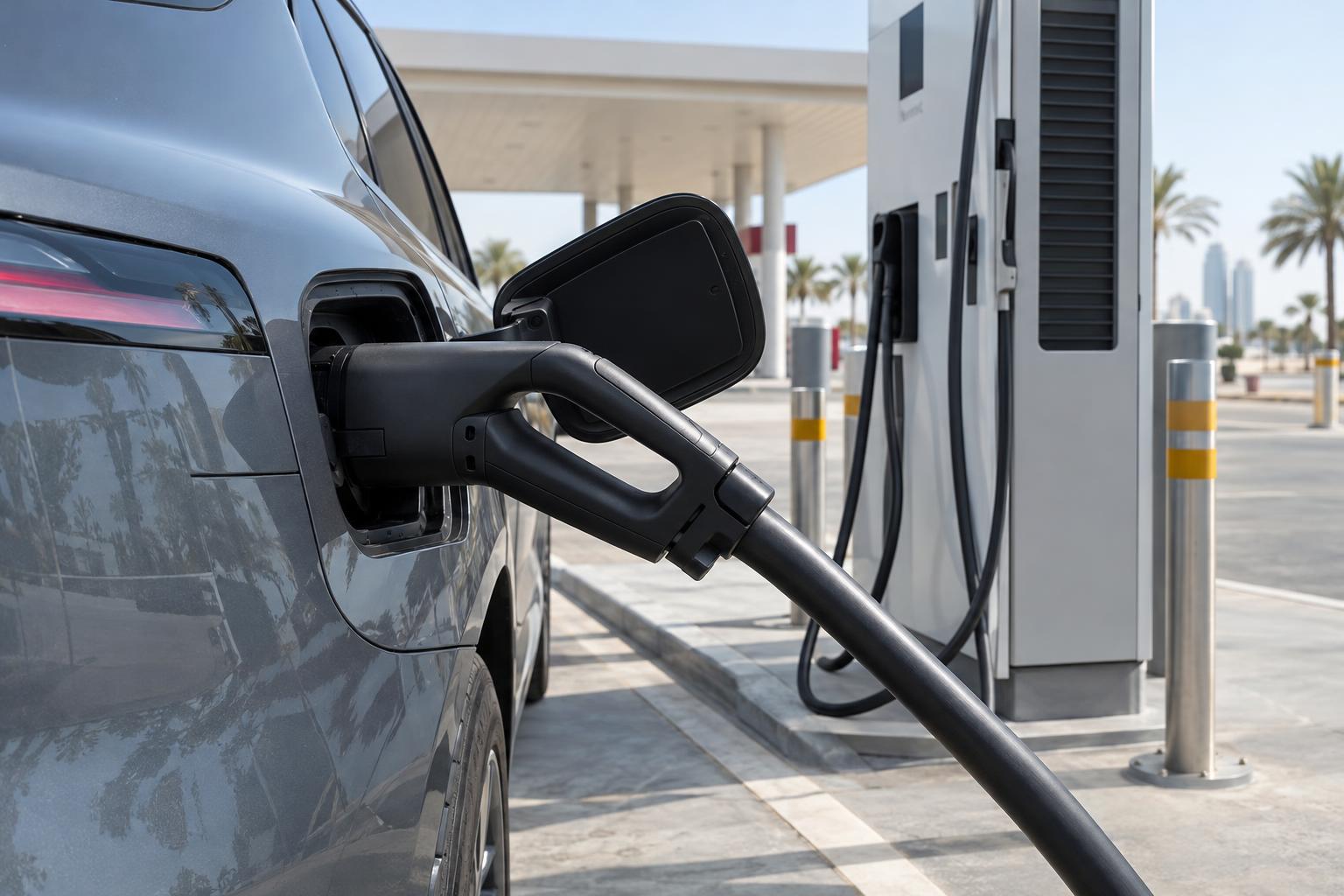
Ultra-fast charging generally refers to high-power DC charging that can add a meaningful amount of driving range much faster than a standard AC charger. Actual charging speed varies substantially by vehicle, battery size, battery temperature, state of charge and the charger’s power output.
In practical terms, a compatible EV can often gain enough range for the next part of a journey during a short break. However, drivers should not assume every EV will charge at the same rate, because older models and some entry-level EVs may accept lower DC charging speeds.
Why charging slows down near a full battery
EV batteries usually charge fastest when they are at a lower or middle state of charge. As the battery approaches a high percentage, the vehicle reduces charging power to protect battery health. This is why a quick top-up from a low level is often more efficient than waiting to charge to 100% at a public rapid charger.
Owners should check their vehicle’s maximum DC charging capability before planning around ultra-fast chargers. A car limited to a lower charging rate can still use a high-power unit, but it will only draw the power it is designed to accept.
Why Qatar is expanding its EV charging infrastructure now
Public charging infrastructure is one of the main factors that affects confidence in electric cars. Even drivers who mostly charge at home want to know that they can find a reliable charger when travelling across Doha, visiting another part of the country or dealing with an unexpected low battery.
Qatar’s relatively compact geography can make EV use practical, but the country’s climate creates specific considerations. High summer temperatures can affect energy consumption and battery conditioning, especially during long motorway journeys. A broader rapid-charging network gives drivers more flexibility in these conditions.
Supporting Qatar National Vision 2030
The Kahramaa and Woqod agreement supports the broader direction of Qatar National Vision 2030, which includes environmental development alongside economic and social progress. Encouraging cleaner transport can help reduce local tailpipe emissions and support more efficient energy use as the vehicle fleet evolves.
Charging infrastructure alone does not make transport sustainable, but it is a necessary foundation for wider EV adoption. Drivers are more likely to consider an electric vehicle when charging is available at home, workplaces, shopping destinations and convenient roadside locations.
- It supports the transition toward lower-emission transport options.
- It helps prepare public infrastructure for a larger EV fleet.
- It makes electric mobility more practical beyond private villas and home garages.
- It links charging access with locations motorists already understand and use.
How does this differ from Kahramaa’s earlier smart app EV charging network expansion?
Kahramaa has already worked on expanding EV charging through a network linked to smart digital services. Those earlier efforts focused on making public chargers easier to locate and use through connected systems, including app-based access and monitoring.
The Woqod agreement is different because it places a strong focus on ultra-fast charging at fuel stations. It adds a roadside charging layer to the wider network, targeting drivers who need a quicker recharge while travelling rather than a longer stay at a destination charger.
Both approaches are needed. App-connected public chargers improve visibility and day-to-day access, while high-power units at service stations can make longer journeys and unplanned charging stops more manageable.
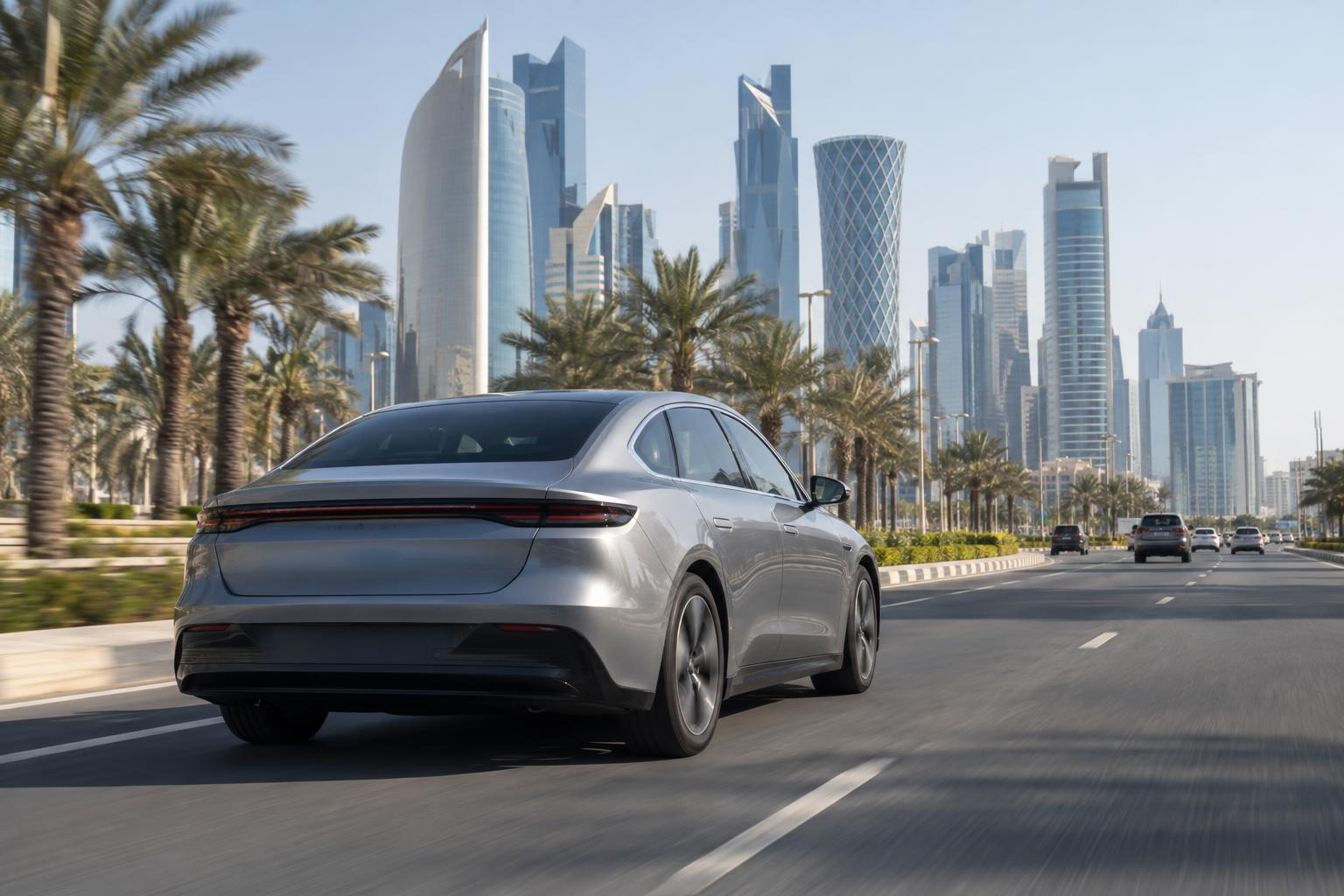
What this means for current and future EV owners in Qatar
For current EV owners, the new chargers should provide more confidence when planning journeys beyond their usual home and workplace routines. They may also reduce the need to schedule every trip around a specific private charger or destination charging point.
For buyers, the rollout addresses one of the most common concerns about switching from petrol to electric: where to charge when away from home. A growing network does not remove every ownership consideration, but it makes an EV more realistic for a wider range of households.
What buyers should still check before choosing an EV
Public charging is useful, but the best ownership experience usually starts with suitable charging where the car is parked most often. Buyers should consider their home parking setup, building management rules, expected daily mileage and the availability of chargers near their regular routes.
- Check whether the vehicle supports DC fast charging and its maximum charging rate.
- Confirm the connector type and compatibility with local public chargers.
- Ask about home-charger installation if you have dedicated parking.
- Consider summer range, air-conditioning use and motorway driving in your expected mileage.
- Keep a charging plan for longer journeys, especially during peak travel periods.
The Kahramaa and Woqod rollout is a practical step rather than a complete solution on its own. As more chargers are installed at familiar, easy-to-reach locations, Qatar’s EV market should become more accessible to owners who cannot depend entirely on charging at home.
People Also Ask
How many EV chargers will Kahramaa and Woqod install?
Kahramaa and Woqod plan to install 37 ultra-fast EV charging units at selected Woqod fuel stations in Qatar.
Can all electric cars use ultra-fast chargers in Qatar?
Most modern EVs with compatible DC charging ports can use rapid chargers, but the charging speed depends on the vehicle’s maximum DC charging capability and connector compatibility.
How long does ultra-fast EV charging take?
Charging time depends on the car, battery level, battery temperature and charger output. A short charging stop can add useful range, while charging from a low battery to nearly full will take longer.
Will Woqod EV chargers replace home charging?
No. Home charging remains the most convenient option for many owners, but Woqod charging stations can provide useful rapid charging during trips, errands and situations where home charging is not available.
Why is Qatar investing in more EV charging stations?
Qatar is expanding charging infrastructure to support electric vehicle adoption, improve public charging access and contribute to sustainable transport goals under Qatar National Vision 2030.


