

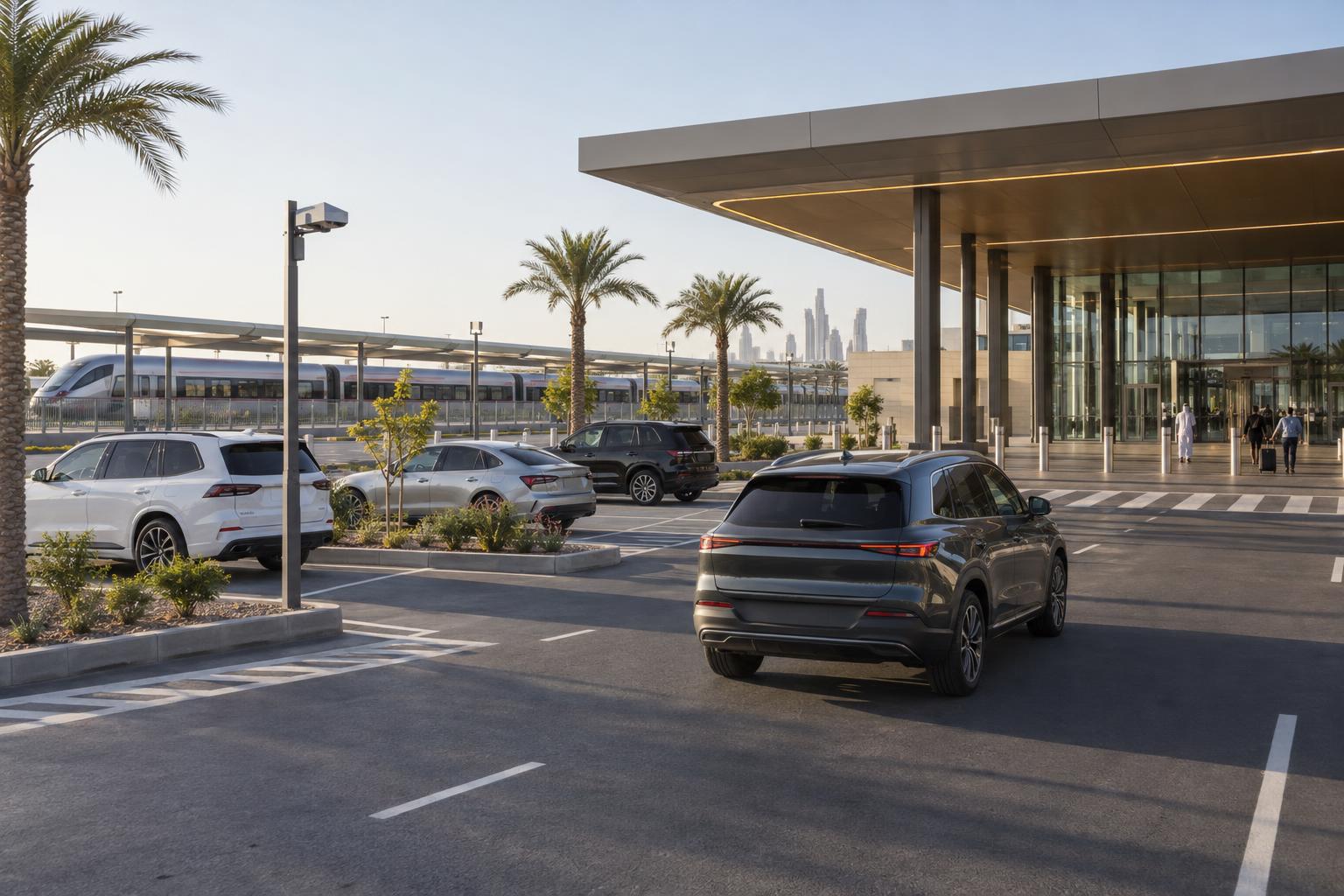
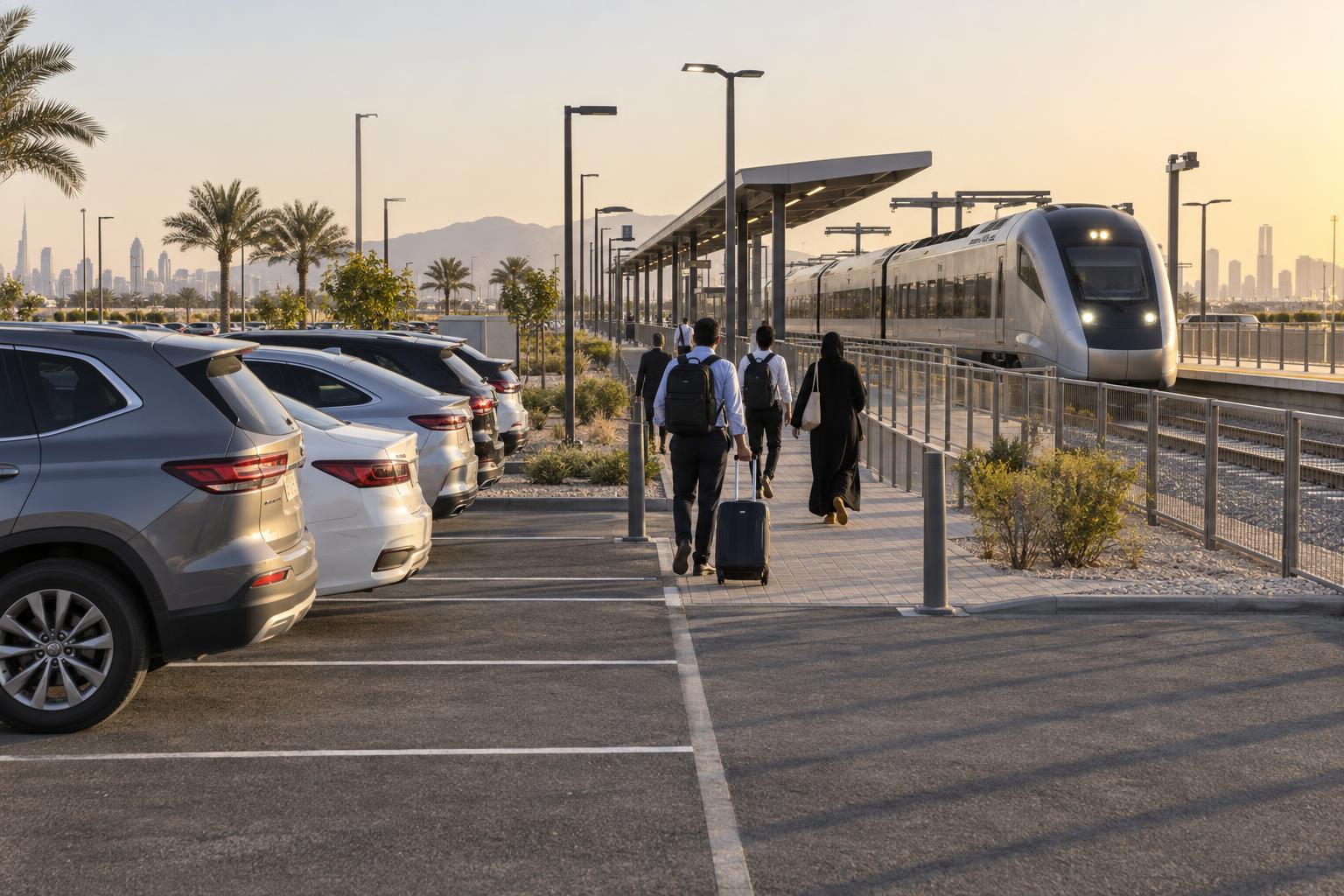
Etihad Rail is preparing to make access to its future passenger stations easier with AI-powered, barrierless smart parking. Through a strategic partnership with Q Mobility and Parkin, the rail operator plans to connect station parking, digital payments and traffic management into a smoother door-to-door travel experience for commuters across the UAE.
The arrangement is important because rail journeys do not begin and end at the platform. For many passengers, especially those travelling from suburban communities, business districts or areas with limited public transport connections, convenient parking can determine whether taking the train is practical.
Etihad Rail signs strategic partnership with Q Mobility and Parkin
Etihad Rail has signed a strategic partnership with Q Mobility and Parkin to develop smart parking solutions for its passenger rail network. The initiative is intended to support a more connected mobility system, linking private cars, parking facilities and rail travel through digital technology.
The partners will focus on parking that is easier to enter, pay for and manage. Rather than relying solely on traditional ticket machines, physical barriers and cash payments, the planned system will use vehicle-recognition technology and digital platforms to automate much of the process.
| Partner | Expected role in the partnership |
|---|---|
| Etihad Rail | Integrates station parking into the passenger rail travel experience and station network. |
| Q Mobility | Supports smart mobility, parking technology and traffic-management solutions. |
| Parkin | Brings parking operations, customer services and payment-management expertise. |
What is the new smart parking partnership about?
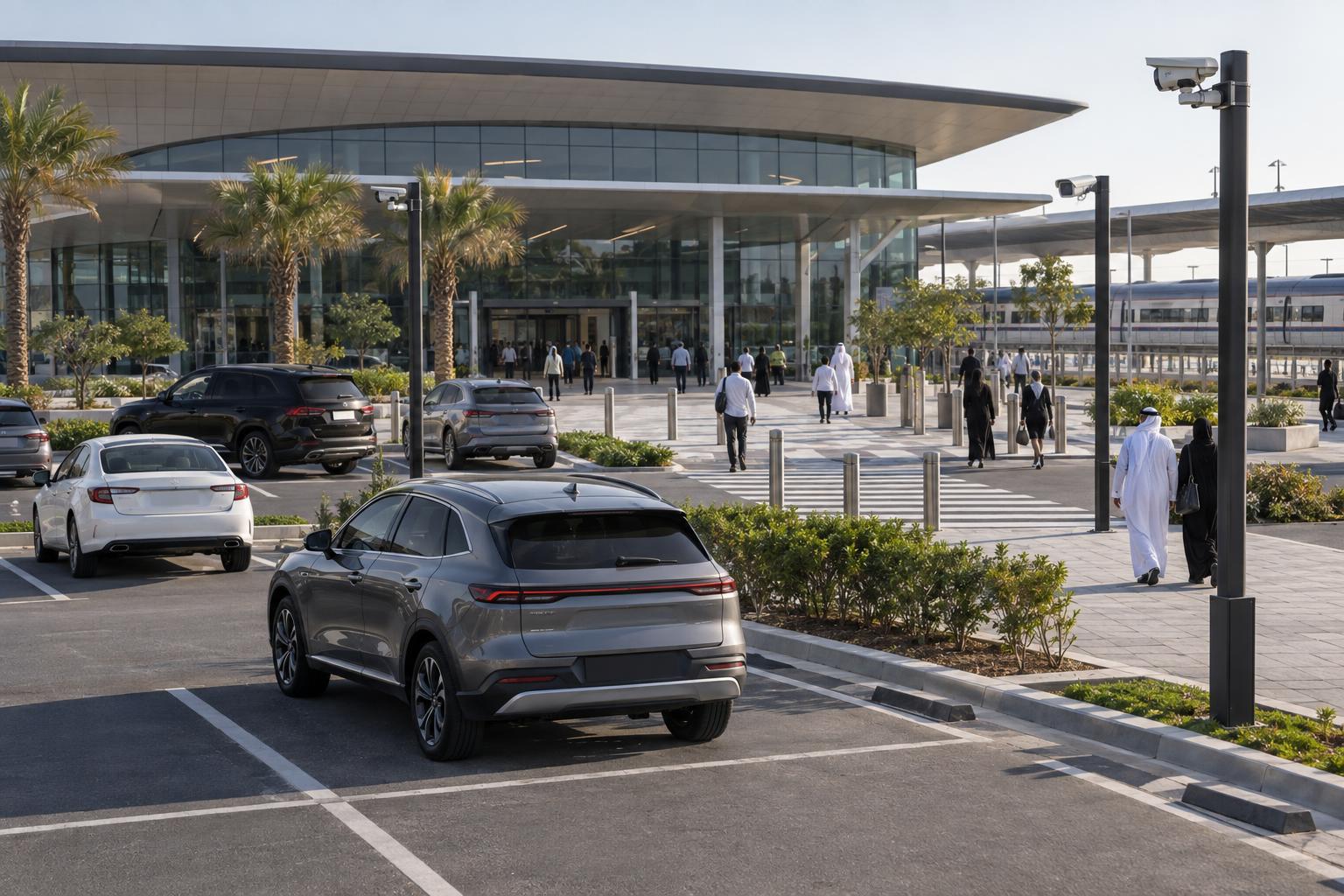
The partnership is designed to create a unified approach to parking at Etihad Rail passenger stations. Its aim is not simply to add more parking spaces, but to make the existing parking journey more efficient through artificial intelligence, number-plate recognition and digital payment tools.
For drivers, the expected benefit is a simpler arrival and departure process. A vehicle can be identified as it enters and exits a station car park, while charges can be processed through a connected digital account or approved payment method.
- Barrierless entry and exit using vehicle-recognition technology.
- AI-supported monitoring of parking usage and available capacity.
- Digital payment options designed to reduce queues at machines or barriers.
- Centralised parking management across participating stations.
- Better data to help operators plan parking supply and traffic flow.
The project also gives Etihad Rail a way to understand how passengers reach stations. That information can help identify busy arrival periods, likely demand for drop-off areas and where feeder buses, taxis or additional parking may be needed.
Which Etihad Rail stations will get smart parking?
The smart parking concept is intended for Etihad Rail passenger stations across the UAE network. Specific station-by-station parking layouts, opening dates, tariffs and capacity details will depend on the rollout schedule and the final design of each station.
That distinction matters for buyers and commuters following the project. A nationwide partnership does not necessarily mean every station will receive identical facilities on the same day. Larger intercity stations may need extensive long-stay parking, while stations in denser areas may place greater emphasis on taxis, buses, drop-off zones and short-stay spaces.
As the passenger network moves closer to operation, travellers should look for official station information covering parking availability, pricing, payment methods, accessibility spaces and electric-vehicle charging where provided.
How will Q Mobility and Parkin divide operations?
Q Mobility and Parkin bring different but complementary capabilities to the project. Q Mobility is associated with intelligent mobility systems and digital infrastructure, while Parkin contributes experience in operating and managing paid parking services.
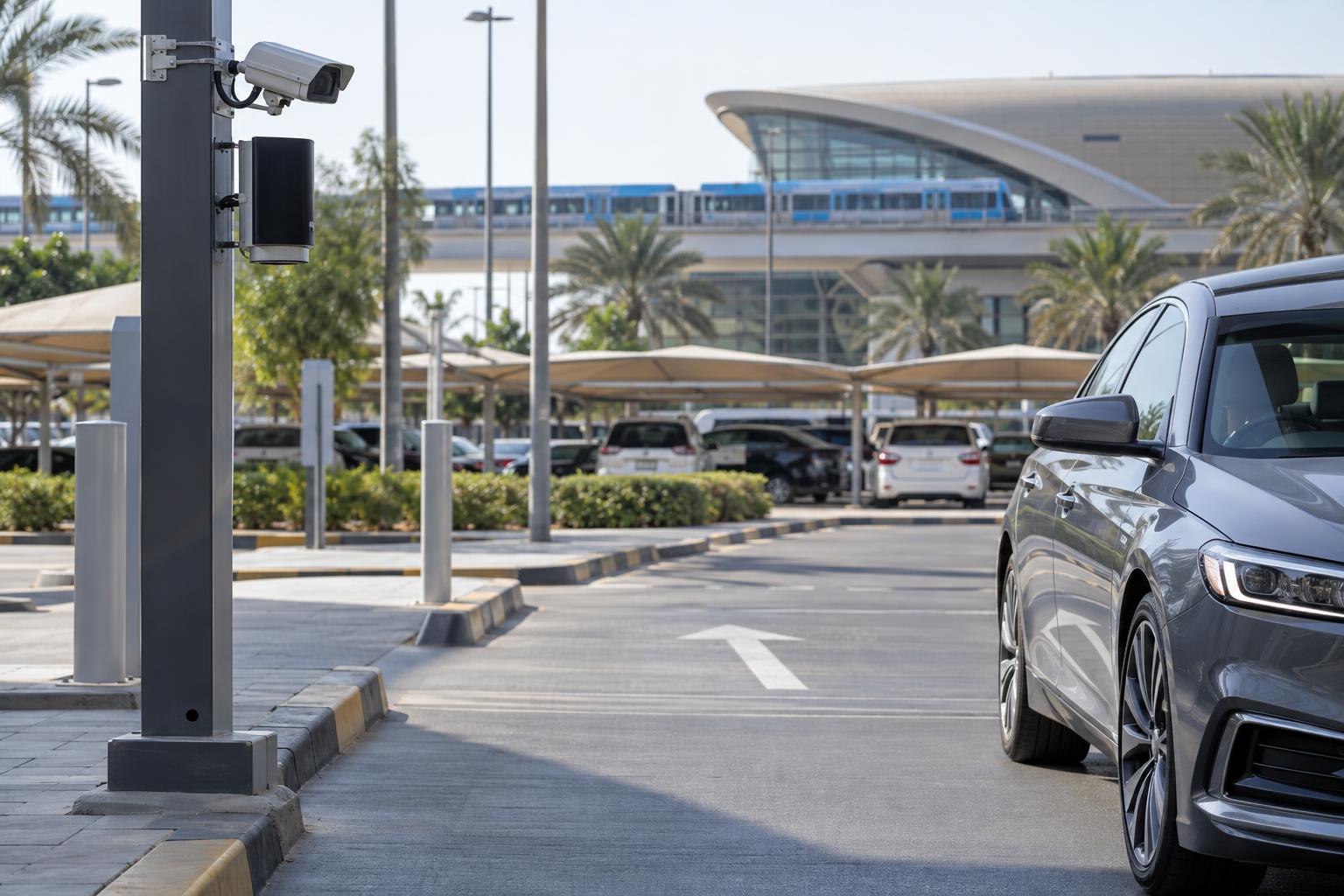
In practical terms, Q Mobility can support the technology layer behind the service, including smart systems that monitor vehicle movements and parking activity. Parkin can support the operational side, such as customer-facing parking services, enforcement processes, payment administration and day-to-day site management.
Etihad Rail remains the party connecting those services to the passenger journey. The objective is for parking to feel like part of using the station, rather than a separate and inconvenient step before boarding the train.
What does barrierless, AI-powered parking mean for commuters?
Barrierless parking generally means drivers do not need to stop at a rising gate, take a paper ticket or present a card at a physical barrier. Cameras and automatic number-plate recognition identify the vehicle as it enters and leaves the car park.
AI-powered management can then analyse parking occupancy, traffic patterns and vehicle movements. This can help operators identify congested areas, manage demand at peak times and improve the flow of cars around station entrances.
- Faster entry and exit: fewer stops at gates can reduce queues during busy periods.
- No paper ticket to lose: the vehicle registration can act as the parking identifier.
- Clearer occupancy management: operators can monitor how full a car park is in real time.
- Improved enforcement: parking activity can be recorded digitally rather than checked only manually.
- Potentially better station access: smoother parking circulation can keep drop-off and pick-up routes clearer.
Drivers should not assume barrierless means free parking. The term describes the access method, not the tariff. If paid parking is introduced at a station, motorists will still need to check the applicable fees, grace periods, permitted parking duration and the process for settling charges.
A unified digital payment system across the network
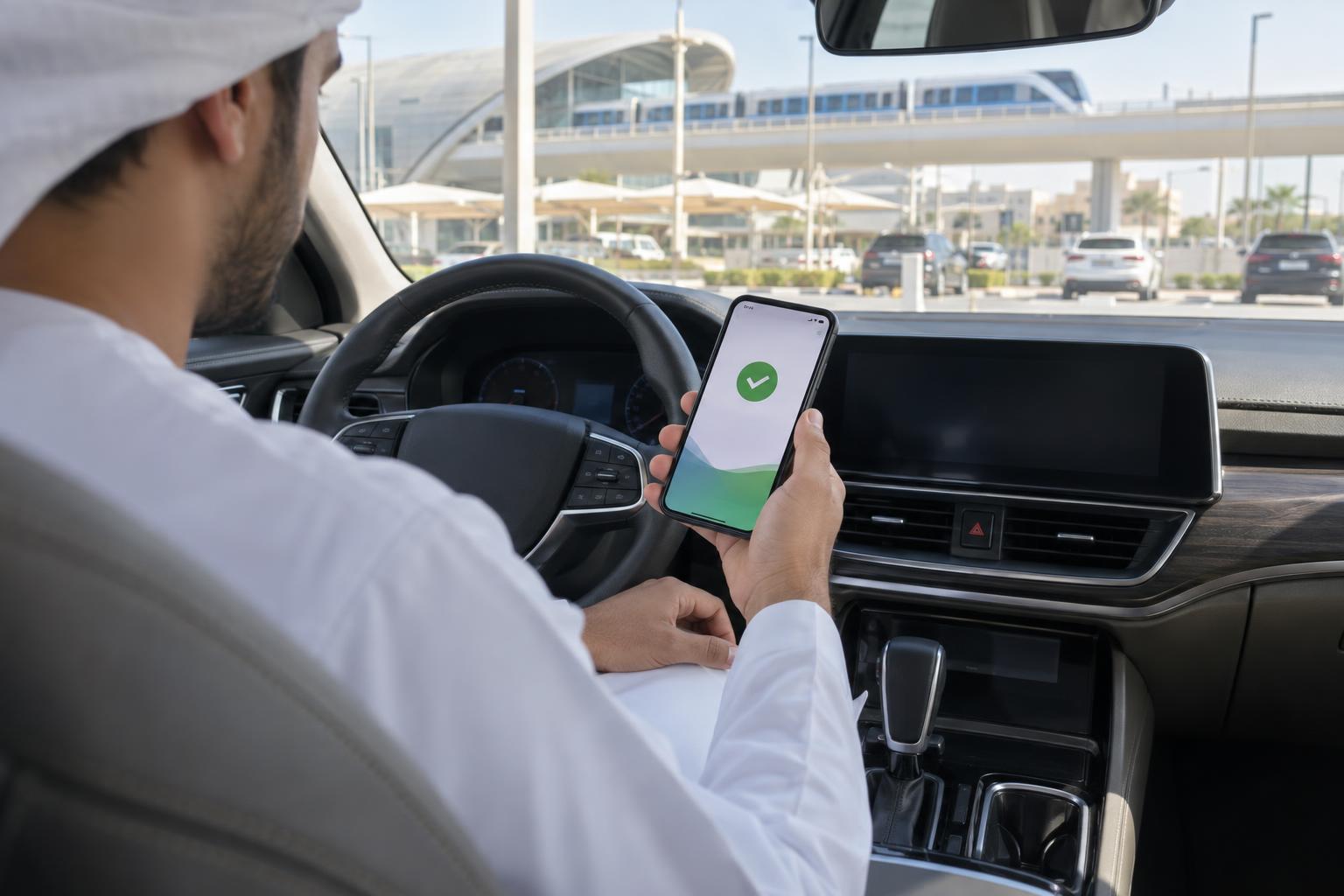
A major goal of the partnership is a more consistent digital payment experience across the rail network. Instead of learning a different process at every station, commuters may be able to use a connected account or supported digital payment method wherever the system is available.
This can be particularly useful for regular travellers who drive to one station during the week but use another for business trips or weekend travel. A common payment system also makes it easier for operators to communicate tariffs, send receipts and manage parking-related customer support.
The final customer journey will depend on the platforms selected for the rollout. Before travelling, motorists should check whether payment is automatic, app-based, linked to a registered vehicle, payable through a website, or supported through another approved method.
Why this matters for UAE rail and road commuters
For the UAE, the value of rail is closely tied to how easily people can reach stations. Many future passengers will arrive by car, whether they are driving themselves, being dropped off by family, using a taxi or combining rail with a shared-mobility service.
Well-managed station parking can make rail a more realistic alternative to long inter-emirate drives. It can also reduce the frustration often caused by searching for a space, waiting at exit barriers or dealing with separate payment systems at different locations.
There are broader road-network benefits too. If more commuters can park efficiently and complete longer journeys by train, pressure on major highways may be reduced over time. The result will depend on train schedules, station locations, fare levels, first- and last-mile transport links, and whether parking remains convenient and fairly priced.
For car owners, the practical takeaway is simple: station parking is becoming part of the UAE's wider smart-mobility infrastructure. As Etihad Rail passenger services develop, drivers will need to think of a station car park less as a basic amenity and more as a digitally managed part of the journey.
People Also Ask
Will Etihad Rail station parking be free?
Parking charges and any free periods will be set by the relevant operators and may vary by station. Barrierless access does not automatically mean parking will be free.
What is barrierless parking?
Barrierless parking uses technologies such as automatic number-plate recognition to record vehicle entry and exit without a traditional gate or paper ticket.
How does AI improve parking at railway stations?
AI can help analyse parking occupancy, traffic flow and peak demand. This allows operators to manage capacity, identify congestion and improve the movement of vehicles around stations.
Will drivers need an app to pay for Etihad Rail station parking?
The final payment methods have not been detailed for every station. Digital payment may be app-based, account-based, website-based or linked to a registered vehicle, depending on the final system.
Which companies are involved in Etihad Rail's smart parking project?
Etihad Rail is working with Q Mobility and Parkin. The partnership combines rail-station planning, smart-mobility technology and parking operations expertise.


