

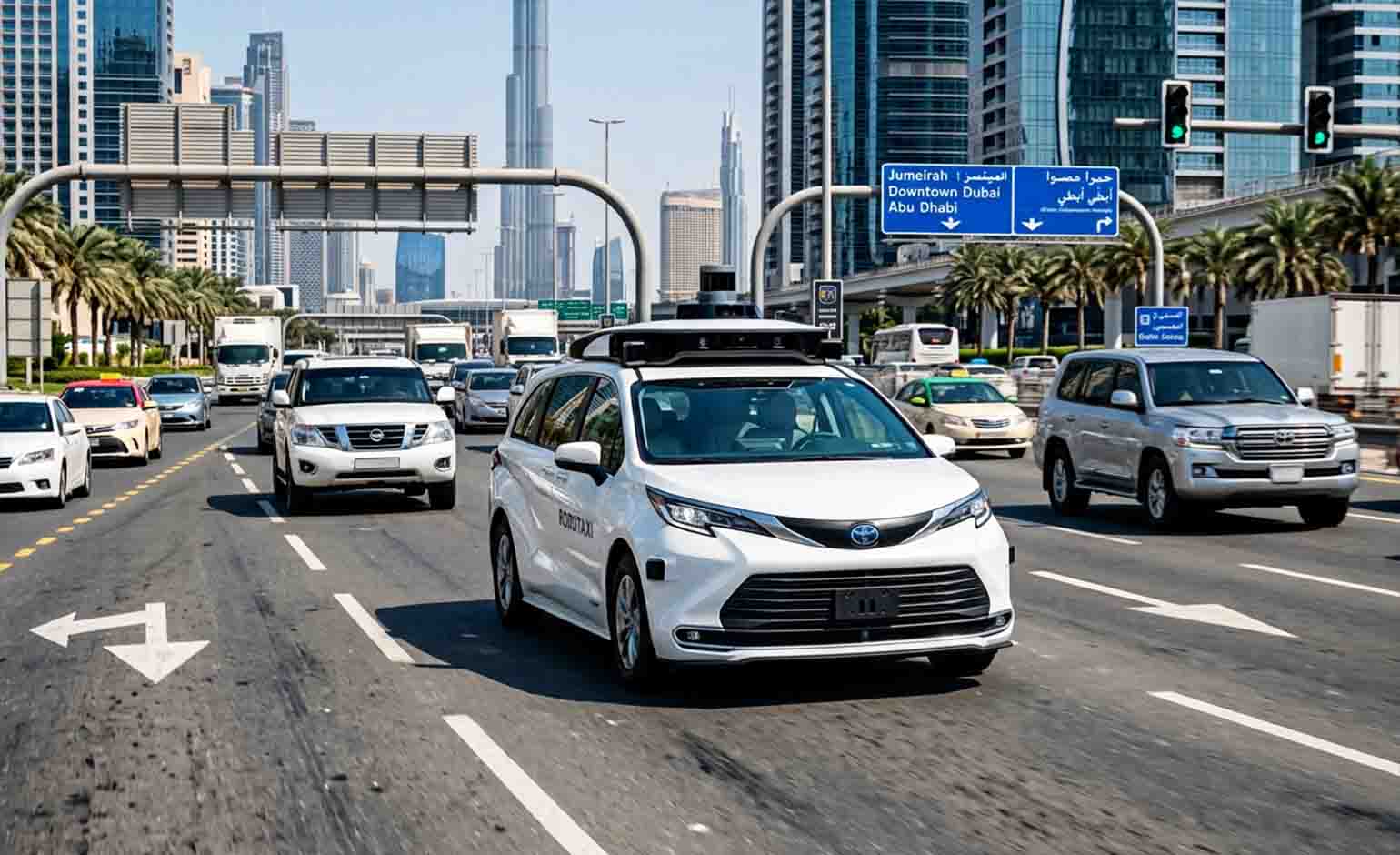
DiDi Autonomous Driving has started fully driverless passenger-service trials of its next-generation DiDi Robotaxi R2 in selected areas of Beijing and Guangzhou, China, as the company prepares for planned testing in the UAE.
Announced on 31 August 2026, the move puts the purpose-built Level 4 Robotaxi into passenger operations without a safety driver. The UAE is set to become DiDi Autonomous Driving’s first international market, with testing and pilot initiatives planned during 2026, although a local start date has not yet been confirmed.
DiDi Robotaxi R2 Moves Into Fully Driverless Passenger Service
The R2 was jointly developed by DiDi Autonomous Driving and GAC Aion specifically for autonomous passenger transport. It is now available for bookings through the DiDi app within designated demonstration zones in Beijing and Guangzhou.
The latest stage follows regular public-road testing of the R2 after vehicles were delivered in January 2026. DiDi says the model has since been tested in Beijing, Guangzhou, Shenzhen and other Chinese cities.
The confirmed rollout currently includes:
- Fully driverless passenger trials in Beijing and Guangzhou.
- Bookings through the DiDi app within selected operating zones.
- Level 4 autonomous operation using DiDi’s own software and hardware.
DiDi also says its wider autonomous-driving operation has recorded more than 2,200 consecutive days of safe operations. That figure relates to the company’s broader autonomous-driving programme rather than the R2 alone.
What Powers The DiDi Robotaxi R2?
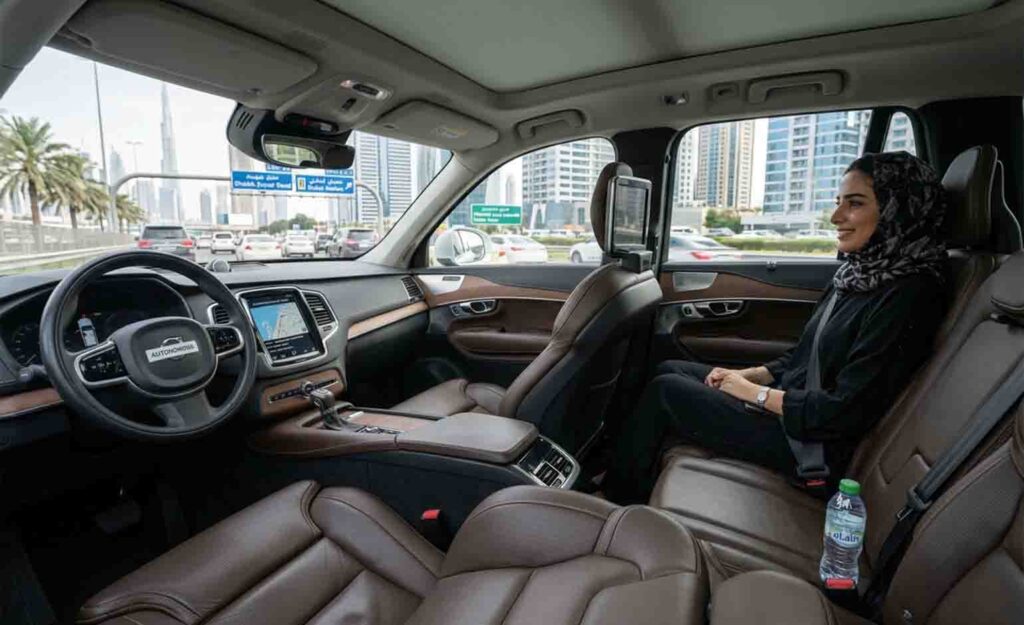
Unlike an autonomous system added to a conventional taxi, the R2 has been developed around Robotaxi operation from the outset. That gives DiDi and GAC Aion more scope to integrate the autonomous-driving hardware, safety systems and passenger cabin into one vehicle.
Level 4 Hardware Uses 33 Sensors
DiDi says the R2 runs its full-stack Level 4 autonomous-driving system and carries 33 sensors. Data from the sensing hardware is processed through what the company calls a triple-domain fusion central computing platform.
Key confirmed technical details include:
- 33 sensors supporting the vehicle’s perception system.
- A central computing architecture designed for complex road situations.
- Multi-layer redundancy intended to support autonomous operation.
DiDi also says the R2 meets five-star safety standards under C-NCAP and Euro NCAP requirements. The statement comes from the company’s announcement and should not be confused with an independently reported Euro NCAP test result for a production vehicle.
The Cabin Is Designed Around Driverless Travel
Without a conventional taxi driver forming part of the passenger experience, the R2 places greater emphasis on the rear cabin and digital controls.
DiDi has confirmed several passenger-focused features:
- High-angle adjustable seats and increased rear passenger space.
- A 17.3-inch ceiling-mounted entertainment display.
- AI voice controls for air conditioning, windows and ambient lighting.
Passengers can also use voice commands for PIN verification and to start their journey. DiDi says the vehicle can ventilate its cabin before reaching the pickup location, while further features are planned, including cabin temperature presets and external vehicle-locating functions.
Why The UAE Is Important To DiDi’s Robotaxi Expansion
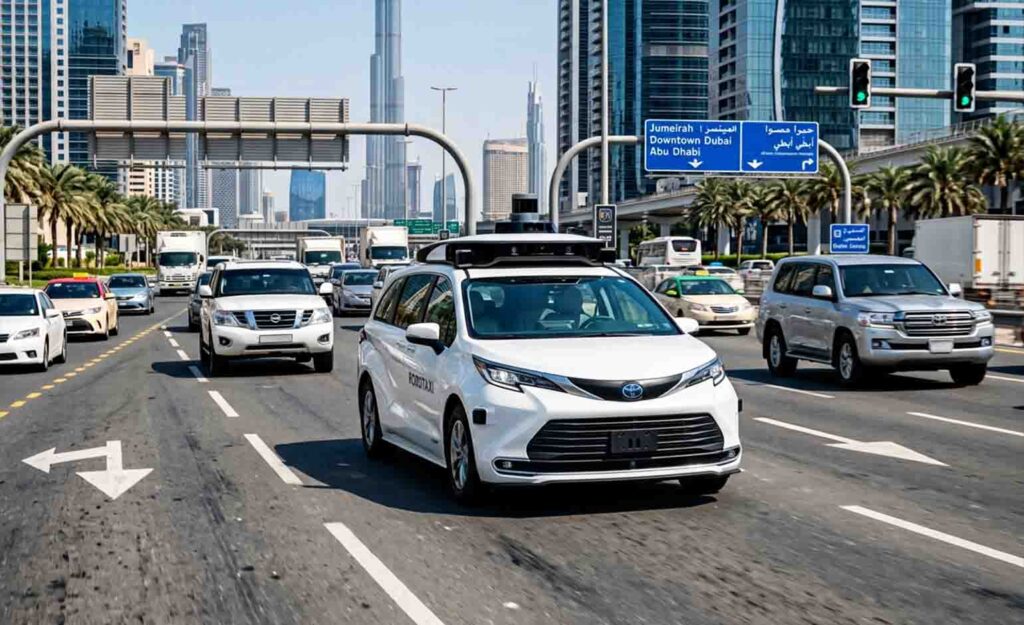
DiDi identified the UAE as the first overseas market for its autonomous-driving business in April 2026. The company said it intended to work with local partners on Robotaxi applications, with testing and pilot programmes planned within the year.
That plan builds on an agreement announced in November 2025 between DiDi Autonomous Driving and the Abu Dhabi Investment Office. DiDi joined Abu Dhabi’s Smart and Autonomous Vehicle Industries, or SAVI, cluster, with cooperation covering autonomous-driving applications, AI talent and wider ecosystem development.
The partnership also gives DiDi a route into a Gulf market where autonomous taxis are already moving beyond small-scale demonstrations.
Dubai reported in August that its Robotaxi programme had surpassed four million kilometres of autonomous operation and completed 7,613 passenger trips. Its fleet stood at 144 vehicles, including 48 in active operation, according to the Government of Dubai Media Office.
What Is Still Not Confirmed For The UAE
DiDi’s Chinese trials provide a clearer picture of the vehicle that could eventually operate in the Emirates, but several important local details remain open.
As of 5 September 2026, DiDi has not publicly confirmed:
- The exact UAE city or roads where R2 testing will begin.
- The number of R2 vehicles planned for the initial programme.
- Whether passengers will participate during the first local trials.
- A UAE commercial launch date, booking platform or fare structure.
There is also no confirmed retail price because the R2 is designed as a Robotaxi fleet vehicle rather than a conventional privately owned car.
The R2 Now Faces Its Most Important Test Outside China
Moving the DiDi Robotaxi R2 into fully driverless passenger trials gives the company operational experience with its latest purpose-built platform before its planned UAE expansion.
For the Gulf market, the more important milestone will come when DiDi confirms where and under what regulatory framework the R2 will begin testing locally. With Abu Dhabi already supporting autonomous mobility through the SAVI cluster and Dubai expanding commercial Robotaxi services, DiDi will be entering a UAE market where driverless mobility is already becoming part of the transport system.


