

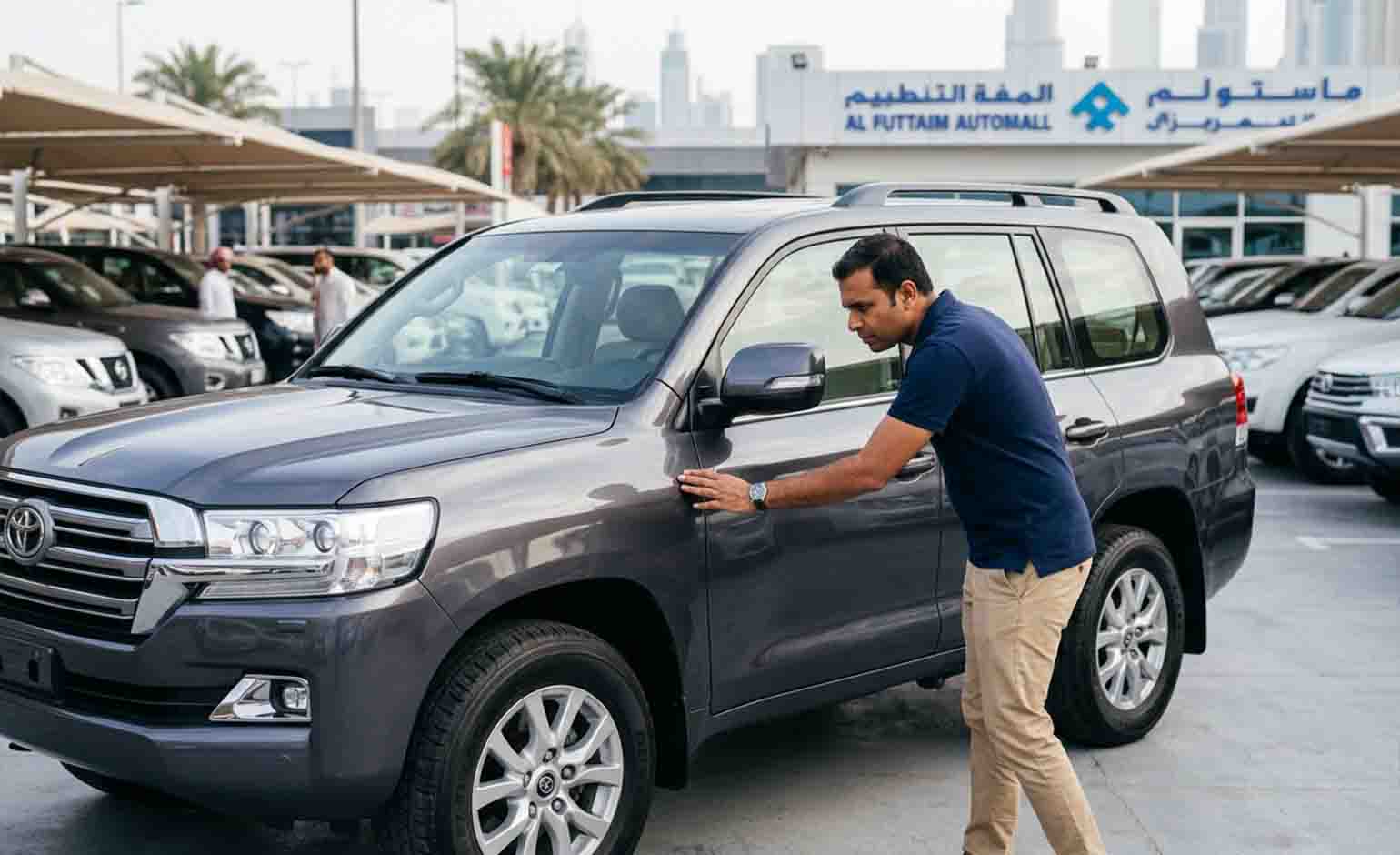
Buying a used car in the UAE can make excellent financial sense, but a low advertised price does not automatically make a car a bargain. The condition underneath, its accident and service history, specification and the repairs waiting after purchase matter far more.
The safest approach when buying a used car in the UAE is to verify the history first, inspect the vehicle properly, test drive it and calculate what you will actually spend during the first year of ownership.
Dubai buyers also have access to official RTA services for vehicle history, inspection and ownership transfer, while Abu Dhabi Police provides a chassis-number accident inquiry. None of these checks should be relied upon alone.
A good used-car deal starts before you see the car
An attractive advert can tell you the model year, mileage and asking price, but it cannot tell you how the car has been treated.
Before travelling across Dubai or Abu Dhabi for a viewing, ask the seller for enough information to decide whether the car is worth inspecting.
Start with:
- Vehicle chassis number or VIN.
- Current mileage.
- Service history and invoices.
- GCC or imported specification.
- Number of previous owners, if known.
- Details of previous accidents or major repairs.
A seller refusing to provide basic information before a viewing is a reason to be cautious.
Check the vehicle history before judging the paintwork
One of the biggest mistakes used-car buyers make is focusing on how clean the car looks. Detailing can improve a car in a few hours. A complicated ownership or repair history is much harder to hide once you start checking records.
Use the chassis number to verify the car
The chassis number should match across the vehicle and its official documentation. It can also be used for available accident and vehicle-history searches.
For Dubai-registered vehicles, RTA offers an individual Technical Vehicle Status Report for AED 120. The report can include information such as insurance validity and ownership history, although the vehicle owner's consent is required before the data can be disclosed.
RTA also makes clear that its report does not include accident data and may not contain every registration, maintenance, recall or odometer record. A clean report therefore does not automatically prove that a car has never been damaged.
Accident history needs a separate check
Abu Dhabi Police operates an online Vehicle Accidents Inquiry that allows users to enter a vehicle's chassis number.
Accident records should still be compared with the physical condition of the car. When viewing it, look for:
- Uneven gaps between body panels.
- Different shades of paint between panels.
- Overspray around rubber seals or trim.
- Welding or repair marks around the chassis.
- Headlamps or glass with noticeably different production dates.
Minor cosmetic repairs are not necessarily a reason to reject a car. Poorly repaired structural damage is a very different matter.
Do not confuse an RTA test with a pre-purchase inspection
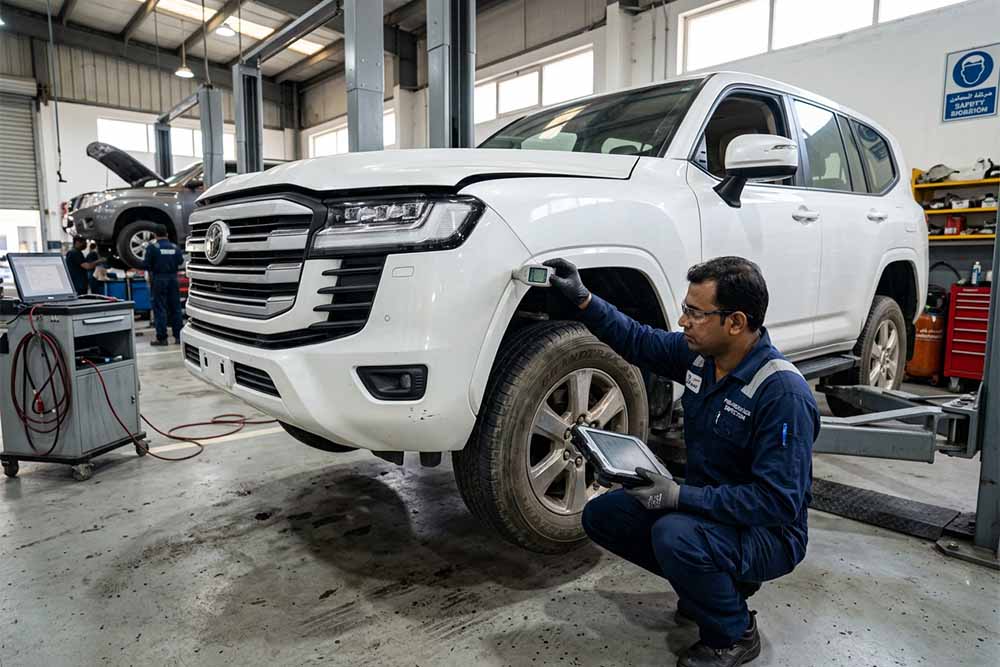
A vehicle passing its required technical test is useful, but buyers should not treat that as a complete mechanical health check.
RTA describes its vehicle inspection service as a roadworthiness inspection used for purposes including registration, renewal and export. The technical inspection certificate is valid for 30 days.
RTA itself recommends having a used vehicle checked by an authorised inspection centre, authorised agent or independent vehicle inspector and test driving it before making a purchase decision.
A proper used car inspection in the UAE should look more deeply at components that could become expensive after purchase, including:
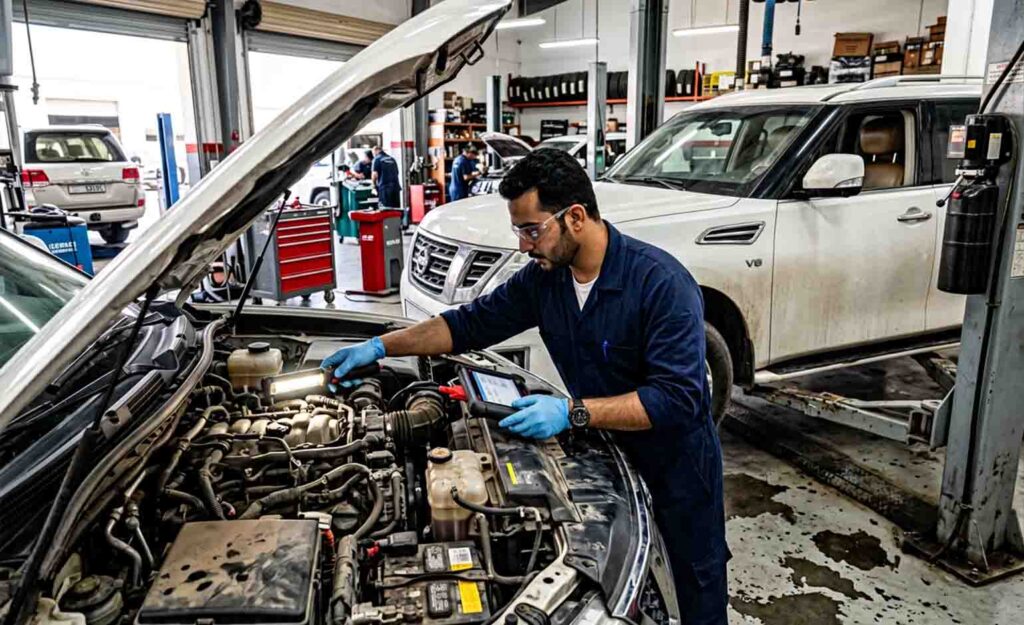
- Engine condition and oil or coolant leaks.
- Automatic gearbox operation.
- Cooling system and radiator condition.
- Air-conditioning performance.
- Suspension, bushes and shock absorbers.
- Brake condition and tyre wear.
- Diagnostic fault codes and warning lights.
- Chassis and evidence of previous repairs.
Spending money on an inspection before buying can be far easier to absorb than discovering a major engine, gearbox or air-conditioning problem afterwards.
UAE heat makes maintenance history especially important
Cars in the Gulf live in demanding conditions. High ambient temperatures, prolonged air-conditioning use, dust and long motorway journeys mean maintenance cannot be judged purely by mileage.
Cooling and air-conditioning systems deserve particular attention. A system that appears acceptable during a five-minute evening test may struggle during daytime summer traffic.
Check the condition and history of:
- Engine coolant and cooling-system maintenance.
- Battery and charging system.
- Air-conditioning system.
- Rubber hoses, seals and bushes.
- Tyres, including age as well as tread depth.
A car with slightly higher mileage but detailed service records can sometimes be a more reassuring purchase than a lower-mileage example with unexplained gaps in its maintenance history.
The test drive can reveal what the advert cannot
Never make a final decision based only on a stationary inspection.
Ideally, start the car when the engine is cold. Some noises, smoke or rough running can become less obvious once an engine has warmed up.
During the drive, pay attention to how the car behaves rather than how powerful or comfortable it feels.
Check whether:
- The engine starts cleanly without warning lights.
- Gear changes are smooth under light and harder acceleration.
- The steering remains straight without vibration.
- The car brakes without pulling to either side.
- Suspension noises appear over bumps.
- The air-conditioning stays cold while stationary.
- Engine temperature remains stable.
Try the electrical equipment as well. Electric seats, cameras, parking sensors, infotainment systems, sunroofs and powered tailgates can all become costly inconveniences if they are faulty.
GCC-spec versus imported cars needs closer attention
The UAE used-car market contains both GCC-specification vehicles and cars imported from markets such as the United States, Japan and Europe.
An imported vehicle is not automatically a bad purchase. What matters is why it was imported, its history and whether servicing, parts and software support are straightforward locally.
RTA says its Technical Vehicle Status Report can provide additional information for vehicles imported from Japan, Europe and the United States for additional fees.
Before buying an imported car, confirm:
- Its original market and previous history.
- Whether previous accident repairs can be documented.
- Local parts and servicing availability.
- Whether manufacturer warranty coverage applies in the UAE.
- Whether its equipment differs from GCC-market cars.
Specification can also matter during registration. RTA's Dubai ownership-transfer requirements state that proof of Gulf Specifications compliance may be required where compliance is not recorded on the customs card.
Work out the real price, not just the asking price
A used car advertised at AED 50,000 can become more expensive than a better-maintained AED 55,000 example if it immediately needs tyres, brakes and a major service.
Before negotiating, make a list of upcoming expenses. This gives you a much better idea of what the car is actually worth to you.
Factor in:
- Immediate repairs identified during inspection.
- Upcoming scheduled servicing.
- Tyres and brakes approaching replacement.
- Insurance.
- Registration and transfer costs.
- Warranty or service contract costs, if required.
Get an insurance quote before finalising the deal, particularly when considering performance, luxury or higher-value cars.
Service history can matter more than a suspiciously low mileage figure
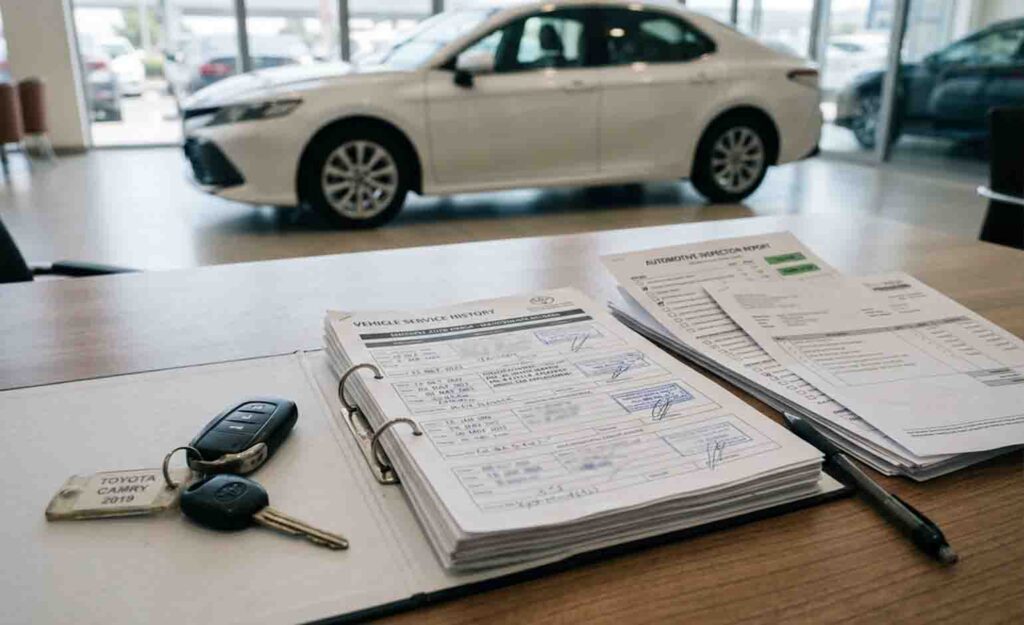
Mileage is useful, but it should never be viewed in isolation.
A UAE car driven regularly on highways may accumulate kilometres quickly while receiving regular servicing. Another vehicle might show low mileage but have spent long periods unused or missed maintenance.
Look for evidence that supports the number displayed on the odometer.
Useful records include:
- Dated authorised dealer service invoices.
- Independent workshop invoices.
- Previous inspection records where available.
- Tyre and battery replacement receipts.
- Recorded mileage at earlier services.
If the mileage rises consistently through the records, the history is easier to understand. Large gaps or contradictory figures deserve further investigation.
Be careful with deals that create unnecessary urgency
Private sellers and dealers naturally want to complete a sale, but buyers should be cautious when they are being pressured to pay a deposit before completing basic checks.
Common warning signs include:
- Refusal to allow an independent inspection.
- Refusal to share the chassis number.
- Missing ownership or maintenance documents.
- Explanations that change during the viewing.
- Pressure to transfer money immediately.
- A price substantially below comparable cars without a clear reason.
There can be legitimate reasons for a quick sale. That does not remove the need for proper checks.
If a seller will not allow the car to be inspected, walking away is usually cheaper than taking the risk.
Check the paperwork before money changes hands
The final stage is making sure the vehicle can legally and cleanly be transferred into your name.
For individual vehicle ownership transfers in Dubai, RTA currently lists requirements including valid Emirates IDs for the buyer and seller, electronic insurance and electronic technical inspection. Any vehicle mortgage must also be released where applicable, and relevant traffic fines need to be settled.
RTA states that its online Vehicle Sale and Purchase Agreement is valid for 14 days, and the required licensing transactions must be completed within that period.
Before completing the transaction:
- Confirm the seller is authorised to sell the vehicle.
- Check that any vehicle finance or mortgage has been cleared.
- Arrange insurance in the buyer's name.
- Complete the required inspection.
- Make sure the chassis number matches every document.
Do not rely solely on photographs of documents sent through messaging apps when the originals or official digital records can be checked.
Think about resale before buying an unusual bargain
The cheapest car today is not necessarily the cheapest car to own.
A heavily modified vehicle, uncommon specification, poorly documented import or car with a questionable accident history may also be harder to sell later.
For buyers expecting to change cars again within a few years, resale should form part of the original purchase decision.
A well-documented vehicle with sensible mileage, straightforward specification and recognised service history will generally give the next buyer fewer reasons to negotiate aggressively or walk away.
The best UAE used-car deals are the ones you can verify

Buying a used car in the UAE does not require avoiding every older, imported or previously repaired vehicle. It requires understanding exactly what you are buying and paying a price that reflects its condition.
Check the chassis number and available records first. Then inspect the car properly, drive it, verify its servicing and calculate the repairs or maintenance likely to arrive after purchase.
Most importantly, do not allow an attractive asking price to rush the process. A good used-car deal should still look good after the history check, workshop inspection, test drive and ownership paperwork are complete.