

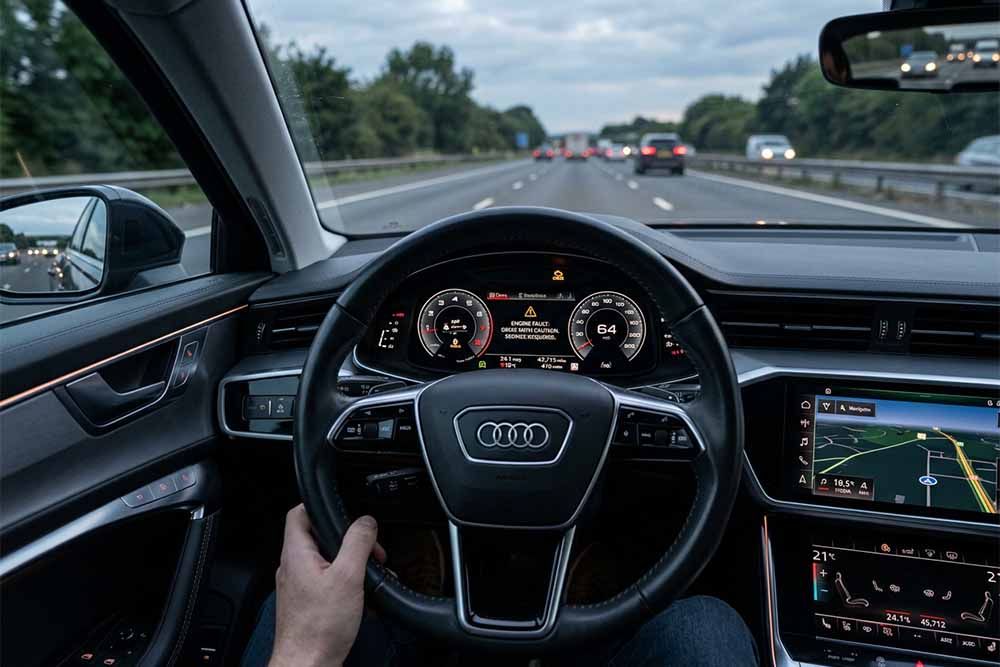
For decades, power has carried unusual weight in the Gulf car market. Strong engines suit long motorway journeys, large family SUVs, towing, desert driving and a regional appetite for performance cars. But the buying conversation is changing.
Automatic emergency braking, blind-spot monitoring, adaptive cruise control, lane support and driver-monitoring systems are moving from premium extras towards mainstream expectations. Global safety bodies are also giving these systems more weight. Euro NCAP’s 2026 framework assesses new cars across Safe Driving, Crash Avoidance, Crash Protection and Post-Crash Safety, while the EU already requires several advanced driver-assistance systems on new vehicles sold there.
So, are smart safety features becoming more important than engine power? For most UAE commuters and family buyers, yes. Once a vehicle has enough performance for safe merging, overtaking and carrying its normal load, additional safety capability is likely to matter more in daily use than another block of horsepower.
That does not make engine power irrelevant. In the GCC, there are still buyers and driving conditions where strong performance is a genuine functional requirement rather than a specification-sheet luxury.
Smart Safety Features Are Winning More of the Argument
The strongest case for smart safety features is simple: some of them have measurable crash-prevention benefits.
Insurance Institute for Highway Safety research found that front crash prevention systems were associated with a 53% reduction in rear-end crash rates when the vehicle ahead was another passenger vehicle. Earlier IIHS research found forward collision warning combined with automatic emergency braking reduced rear-end striking crashes by about 50% in the study population.
These are US findings, not UAE crash statistics, so they should not be treated as a prediction of identical results on Gulf roads. They do show that well-designed driver-assistance systems can reduce certain common collision types.
For everyday UAE driving, the most useful systems are often the least glamorous:
- Automatic emergency braking: Can intervene when a frontal collision is imminent and the driver has not reacted sufficiently.
- Blind-spot monitoring: Adds another warning layer during lane changes on busy multi-lane roads.
- Adaptive cruise control: Helps manage following distance on long motorway drives while still requiring driver supervision.
- Lane support: Can warn or assist when a vehicle begins to leave its lane unintentionally.
- Driver monitoring: Increasingly checks whether the person behind the wheel is attentive and engaged.
Dubai traffic makes the safety case harder to ignore
Dubai Police reported 157 traffic deaths in 2024, with major causes including sudden swerving, failure to leave a safe distance, negligence, stopping in the road and red-light violations.
No assistance package can prevent every crash caused by those behaviours. AEB cannot make an aggressive driver patient, and lane keeping cannot compensate for someone who deliberately drives recklessly.
But systems that watch closing distance, lane position, surrounding traffic and driver attention are aimed at situations that occur repeatedly on urban and motorway roads. That gives them practical relevance beyond showroom marketing.
Family SUVs gain more from prevention than extra performance
The UAE remains a strong market for large SUVs, and modern versions make an interesting point: buyers increasingly do not have to choose between power and safety.
Toyota’s UAE-spec 2026 Land Cruiser is offered with a 3.5-litre twin-turbo V6 producing 409 hp, and its listed high-specification configuration includes Toyota Safety Sense 3. Nissan’s current Patrol range in Dubai offers a 425 hp 3.5-litre twin-turbo V6, while selected grades include ProPILOT and lane-keeping assistance.
That combination reflects where the market is heading. Plenty of power remains available, but advanced assistance is becoming part of what makes a flagship SUV feel complete.
For a family carrying children through Dubai, Abu Dhabi or Sharjah traffic, the value of an extra warning or braking intervention may be more meaningful than a small improvement in acceleration that is rarely used.
Smart safety systems still have limits
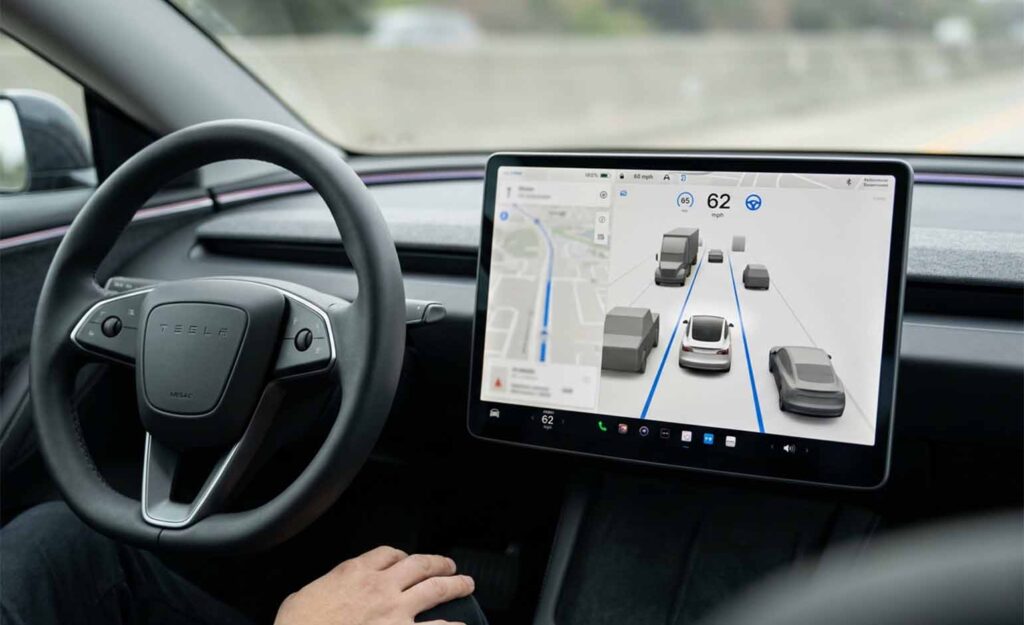
The case for ADAS becomes weaker when buyers assume the technology is infallible.
Manufacturer guidance makes those limitations clear. Hyundai’s owner documentation, for example, notes that forward collision systems can be affected by contaminated sensors, high or low temperatures, sun glare, dust or sand obscuring lane markings, and driving in open areas such as deserts.
That is directly relevant to GCC ownership.
Owners should therefore treat advanced safety technology as an additional layer of protection, not an excuse to reduce attention. In Gulf conditions, a few practical habits matter:
- Keep windscreen camera areas, radar covers and parking sensors clean.
- Take warning messages seriously instead of assuming the system will recover by itself.
- Check calibration requirements after windscreen, bumper, suspension or alignment work.
- Learn what the system can and cannot detect before relying on it in unfamiliar conditions.
Why Engine Power Still Earns Its Place in the Gulf
The argument for power is stronger in the GCC than it is in many congested European cities. Gulf motorists routinely use fast inter-emirate motorways, carry several passengers, tow, travel long distances and take capable 4x4s off-road.
The key distinction is between adequate power and surplus power.
A seven-seat SUV loaded with passengers and luggage still needs confident acceleration to join fast-moving traffic and complete overtaking manoeuvres safely. A vehicle used for towing or desert driving also needs a powertrain that can deliver useful torque consistently.
Power matters most when the vehicle is regularly used for:
- Full-load family travel: Especially large SUVs carrying passengers and luggage over long distances.
- Towing: Boats, trailers and recreational equipment can make torque and cooling capacity more important.
- Desert driving: Strong low-end response helps, although tyres, gearing, four-wheel-drive hardware and driver skill matter just as much.
- Performance driving: Sports-car and supercar buyers are purchasing character and capability, not only transport.
- Frequent motorway use: Responsive acceleration can make merging and overtaking easier when used responsibly.
Headline horsepower alone, however, is a poor measure of whether a car is well suited to these tasks. Torque delivery, gearing, brakes, tyres, cooling, chassis control and vehicle weight can matter just as much.
The UAE market also shows that power itself is not disappearing. Toyota lists the 2026 Land Cruiser Hybrid at 457 hp and 790 Nm, while Nissan’s Patrol NISMO reaches 495 hp in Dubai specification. Gulf buyers can still buy very powerful vehicles even as the same market adds more sophisticated driver assistance.
What Makes Smart Safety Features vs Engine Power Different in the UAE and GCC?
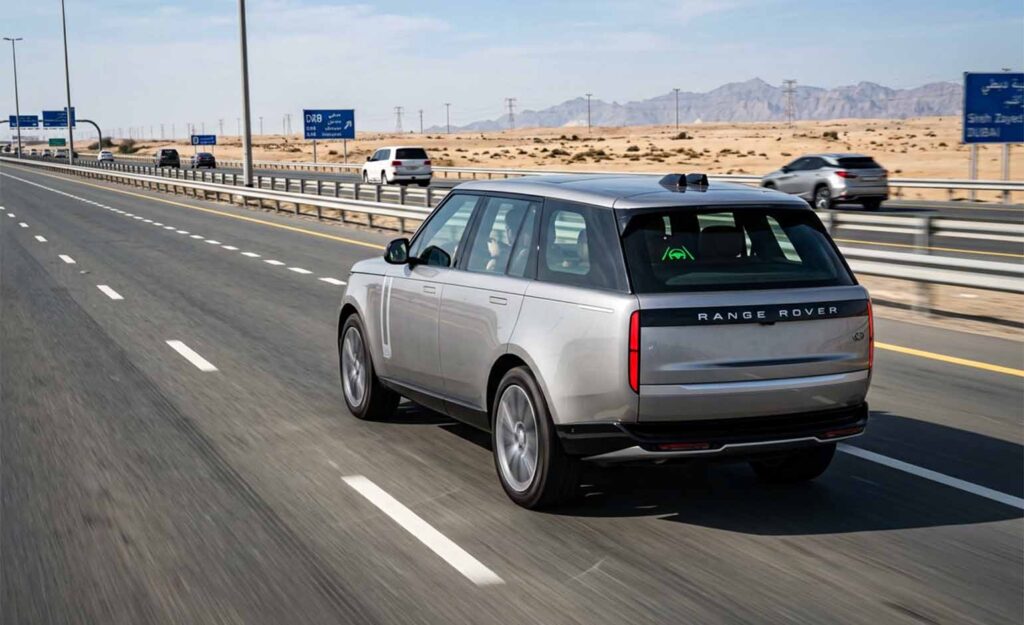
This debate cannot be separated from local ownership conditions. A feature that works brilliantly on a clean test track still has to live through Gulf summers, dusty roads, motorway commuting and years of servicing.
Several local factors should influence the decision:
- Heat and dust: Cameras and radar need clean, correctly aligned sensing surfaces. Dust, glare and extreme temperatures can affect some systems.
- Long highway journeys: Adaptive cruise, lane assistance and collision warning can reduce workload, but they do not replace an attentive driver.
- Fuel prices: The UAE uses a monthly fuel-pricing mechanism, and September 2026 petrol prices increased from August. Efficiency therefore remains part of the equation when choosing a powerful SUV or performance car.
- EV charging: In an EV, strong acceleration is already relatively easy to deliver. Charging access, range and daily usability may deserve more attention than a higher power figure.
- Family SUV demand: Seven-seat buyers should prioritise occupant protection, braking performance and useful driver assistance alongside engine output.
- Desert use: Power helps, but off-road hardware, tyre choice, recovery preparation and driver experience remain essential.
- Luxury and supercar culture: For enthusiasts, performance is part of the purchase. The sensible question is whether the car also delivers modern active and passive safety.
- Dealer support and warranty: Sensor calibration and software diagnostics make competent aftersales support increasingly important.
There is also a repair-cost issue. AAA research in the US found that ADAS components could account for up to 37.6% of the total repair cost in the vehicles and crash scenarios it studied, largely because cameras and radar may require replacement or recalibration. Those figures are not UAE repair prices, but the underlying issue is relevant to Gulf owners.
UAE buyers should ask insurers and workshops how sensor replacement and recalibration are handled before buying a highly equipped car, particularly if the model has expensive cameras or radar integrated into bumpers, mirrors or windscreens.
RTA’s Dubai vehicle-inspection service checks roadworthiness for registration, renewal and other transactions. Smart assistance should therefore never distract owners from basic vehicle condition and maintenance.
The Real Shift Is From Horsepower to Complete Capability
A decade ago, two cars with similar prices might have been compared mainly on cylinders, displacement, horsepower and acceleration. Today, buyers can reasonably ask a much wider set of questions.
Before choosing a more powerful trim over a better-equipped safety trim, compare:
- Does the lower-powered version already have enough performance for your normal load and routes?
- Is AEB standard, and does it detect vehicles, pedestrians or cyclists?
- Are blind-spot monitoring and rear cross-traffic alerts included?
- Does adaptive cruise work across the speeds you normally use?
- How clearly does the manufacturer explain system limitations?
- What happens to calibration after a windscreen or bumper repair?
- Are the tyres and brakes appropriate for the vehicle’s weight and performance?
This is where smart safety features gain the advantage. An extra 50 hp may only be noticeable during hard acceleration. A useful safety system is potentially available every time the car is driven.
That does not mean every electronic feature is equally valuable. A poorly tuned lane warning that constantly irritates the driver can end up being switched off. A complicated interface can also create distraction rather than reduce it.
Euro NCAP’s 2026 protocols recognise this issue by placing greater emphasis not only on assistance technology but also on driver monitoring and human-machine interface quality. Its revised assessment also gives credit to systems that continuously monitor driver attention and links this to how driver-assistance systems respond.
Who Should Choose Which Side?
For most buyers, the sensible answer is not safety or power. It is to establish how much performance is genuinely required, then maximise safety within the budget.
Different UAE and GCC buyers should prioritise differently:
- Daily Dubai or Abu Dhabi commuter: Choose AEB, blind-spot monitoring and good crash protection before paying for a stronger engine you rarely use.
- Family SUV buyer: Prioritise safety systems, tyres, braking, visibility and rear-seat protection, then ensure the engine is adequate when fully loaded.
- Frequent inter-emirate driver: Look for both sufficient overtaking performance and well-tuned adaptive cruise, lane support and driver monitoring.
- Desert and towing user: Give more weight to torque, cooling, 4WD hardware and durability, but do not dismiss useful road-safety technology.
- Sports and supercar enthusiast: Engine performance remains central to the purchase, although strong brakes, stability systems and modern crash avoidance still matter.
- Used-car buyer: Check that ADAS sensors have not been damaged, poorly repaired or left out of calibration after previous body or glass work.
The Balanced Verdict: Safety First, But Not Power at Any Cost
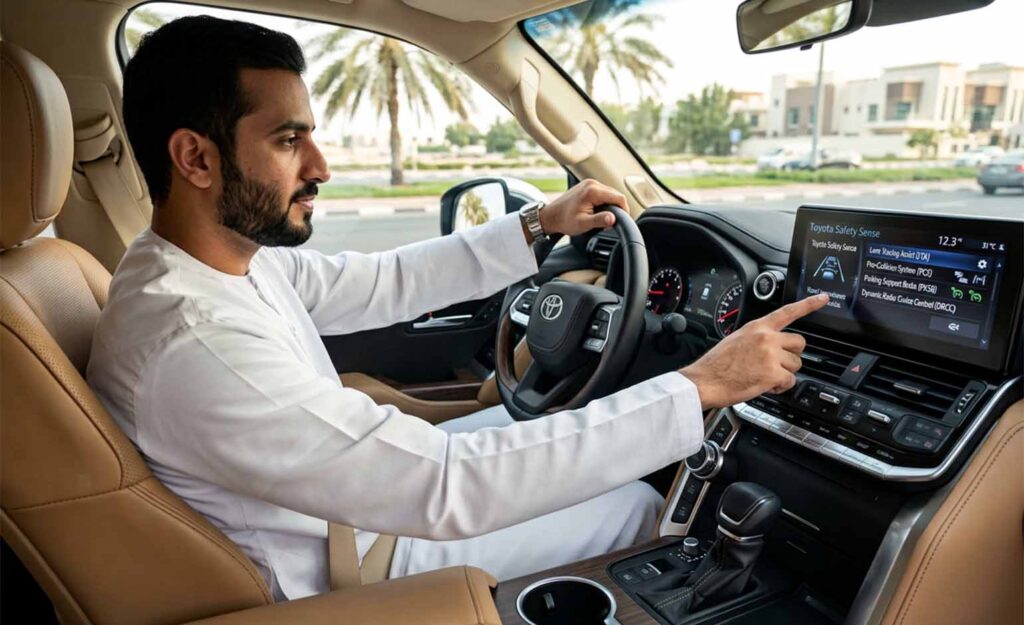
Smart safety features are becoming more important than engine power for the majority of everyday UAE drivers because the market has reached a point where even relatively ordinary cars can provide adequate performance.
Once that threshold is met, the next 50 or 100 hp often adds less day-to-day value than effective emergency braking, blind-spot monitoring, better driver attention systems or stronger crash protection.
The Gulf still provides legitimate reasons to care about power. Large SUVs, towing, long-distance travel, desert use and the region’s performance-car culture ensure that strong engines will remain important.
The best buying hierarchy is therefore straightforward: first demand enough power for the job, then prioritise safety, braking, tyres and control before paying for performance you are unlikely to use.
For most family and commuter cars in the UAE, smart safety features have moved from “nice to have” towards something much closer to a purchase priority. Engine power still matters, but beyond the point of adequacy, safety increasingly deserves the bigger share of the budget.