

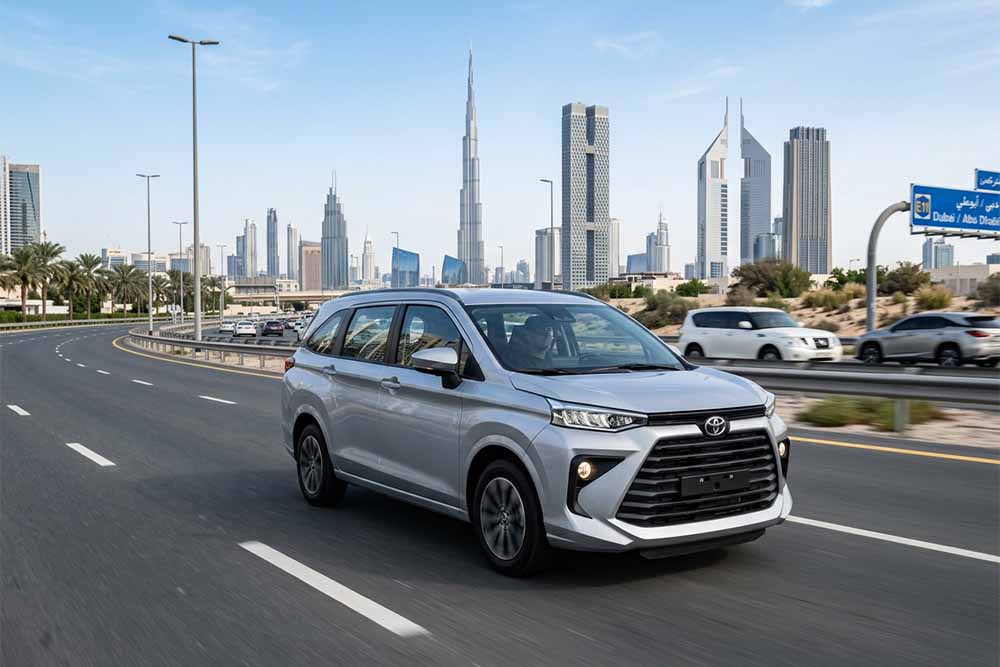
For years, the UAE family-car conversation has revolved around SUVs. Seven-seat crossovers, Toyota Land Cruisers, Nissan Patrols and other large 4x4s fit neatly into the Gulf’s preference for space, road presence and the ability to leave the tarmac when required.
Yet MPVs in the UAE are becoming difficult to ignore again. Toyota currently offers both the eight-seat Innova Hybrid and six-seat Granvia, Hyundai continues with the Staria, GAC has positioned the M8 as a luxury seven-seater, and Zeekr’s UAE website now lists the electric 009 luxury MPV.
So, are MPVs making a comeback in the UAE? Yes, but it is a selective comeback rather than an SUV takeover. The modern MPV is becoming more attractive for large families, chauffeur-driven buyers and people who prioritise passenger comfort. The SUV, however, still has major advantages in versatility, image and Gulf-specific usability.
Why MPVs In The UAE Are Getting Harder To Ignore
The strongest argument for an MPV revival is simple: manufacturers are giving UAE buyers better reasons to consider one.
The category is no longer limited to basic people carriers. There are conventional petrol models, hybrids, premium chauffeur-focused options and even fully electric luxury MPVs.
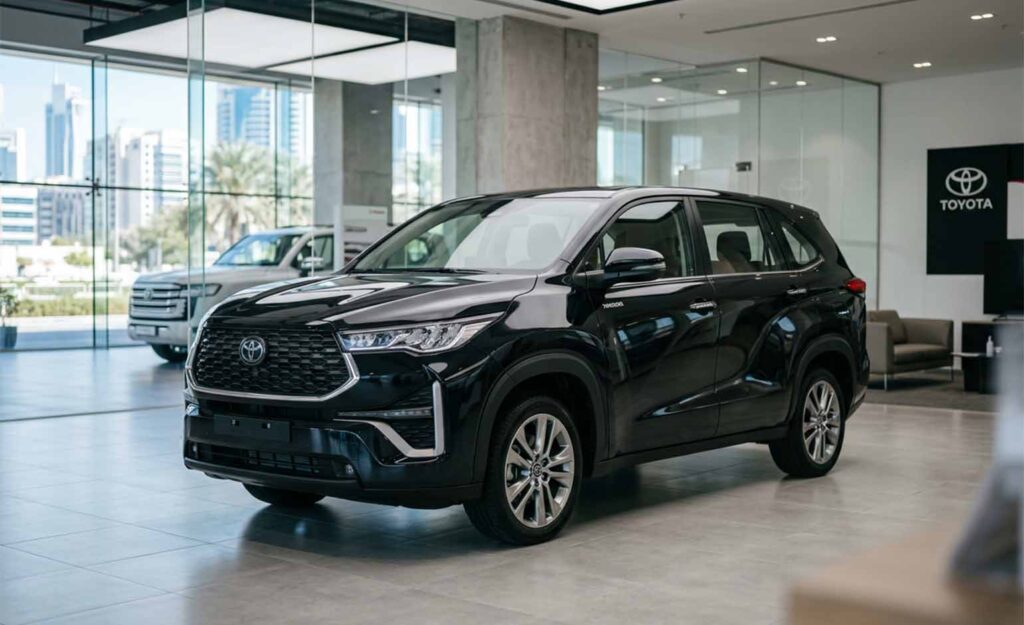
Toyota's 2026 Innova Hybrid, for example, is currently listed in the UAE from AED 126,900 with eight seats and a 2.0-litre hybrid powertrain. At the other end of Toyota's people-carrier range, the six-seat Granvia starts from AED 216,900 and focuses more heavily on captain-seat comfort.
GAC's 2026 M8 starts from AED 149,900 and includes seven seats, with higher emphasis on second-row luxury through features such as power adjustment, ventilation, heating and massage functions.
That spread alone shows how much broader the MPV proposition has become.
Family-first packaging is still difficult to beat
A large SUV can carry seven or eight people, but simply having three rows does not automatically make it the best vehicle for moving a family.
MPVs are generally designed around passenger space first. Their long cabins, relatively square bodies and wide door openings allow manufacturers to devote more of the vehicle's footprint to usable interior room.
Sliding rear doors are another practical advantage, particularly in busy school car parks and narrow parking spaces where opening a large conventional rear door can be awkward.
For families regularly carrying children, grandparents or several adults, the differences can become noticeable:
- Third-row access: MPVs are often easier to enter than high-riding seven-seat SUVs.
- Second-row space: Captain chairs can provide significantly better long-distance comfort.
- Loading children: Sliding doors and lower entry heights can make daily school runs easier.
- Cabin flexibility: MPVs are designed from the start around passengers, luggage and changing seat layouts.
Hyundai's UAE Staria range illustrates this flexibility particularly well, with petrol versions listed in seven-seat and nine-seat configurations.
Luxury MPVs are changing the old image problem
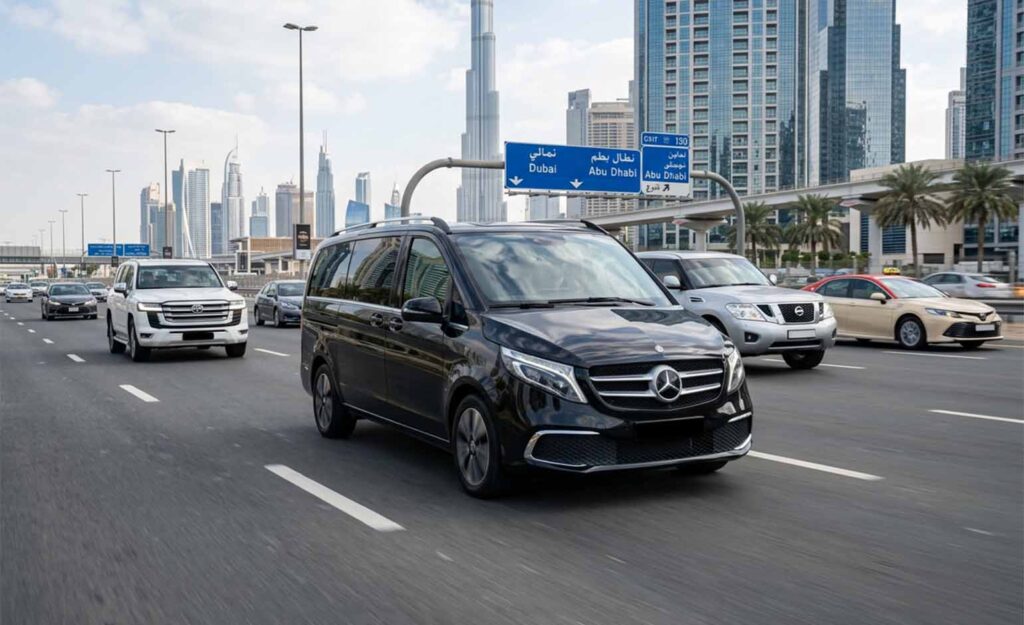
MPVs traditionally struggled against SUVs partly because they were viewed as practical transport rather than desirable cars.
Manufacturers are now attacking that weakness directly.
The GAC M8 uses an imposing grille, large digital displays, power sliding doors and highly specified second-row captain seats. GAC launched the current-generation M8 in the UAE in 2024 specifically as a luxury MPV rather than simply another family van.
Zeekr is pushing the idea further. Its UAE website now features the 009 as a "Pure Electric Luxury MPV", although the UAE model page currently directs customers to register their interest rather than publishing a confirmed retail price.
That distinction matters. An MPV comeback is more believable when buyers are being offered alternatives that can compete on comfort and technology rather than just carrying capacity.
Hybrid and electric options give the segment another angle
Powertrain choice could also help revive the category.
An eight-seat vehicle is likely to spend plenty of time carrying passengers through Dubai, Abu Dhabi or Sharjah traffic. Hybridisation therefore has obvious appeal for buyers concerned about fuel use without wanting to rely on public charging.
Toyota's Innova Hybrid gives the segment a mainstream electrified option, while the Zeekr 009 demonstrates how manufacturers are beginning to combine full-electric drivetrains with large luxury MPV packaging.
That makes today's MPV market considerably more interesting than the petrol-only people-carrier segment of the past.
Why SUVs Still Hold The Stronger Hand In The Gulf
The MPV argument may be improving, but SUVs have not suddenly become less relevant.
In fact, many of the characteristics that made SUVs successful in the GCC remain unchanged.
A large SUV can carry a family during the working week, tackle rough tracks at the weekend and provide the high seating position that many Gulf drivers prefer. Proper 4x4 models also offer capabilities that most MPVs simply do not attempt to match.
An MPV's lower floor and road-focused chassis are advantages in the city. They become disadvantages when the road ends.
For UAE and GCC drivers who regularly travel to farms, desert camps, wadis or rough rural areas, the differences matter:
- Ground clearance: SUVs are generally better suited to uneven surfaces and deep sand.
- Four-wheel drive: Many established Gulf SUVs offer genuine off-road hardware.
- Approach angles: Long, low MPV bodywork is not designed for steep dunes or rough tracks.
- All-round flexibility: A capable SUV can cover family, highway and off-road duties in one vehicle.
There is also an emotional element.
Large SUVs have a deeply established place in Gulf motoring culture. Vehicles such as the Patrol and Land Cruiser are not bought solely according to seating dimensions or luggage capacity.
For some buyers, switching to an MPV would mean sacrificing the commanding driving position, visual presence and lifestyle capability that attracted them to a large SUV in the first place.
An MPV May Be More Practical, But That Does Not Always Make It Easier To Own
Practicality inside the cabin is only part of a UAE car-buying decision.
Resale prospects, dealer support, replacement parts, insurance costs and long-term reliability can become more important than an impressive second row once the vehicle is several years old.
This is where established models can have an advantage.
Toyota's continuing UAE presence with the Innova and Granvia and Hyundai's established Staria range provide buyers with recognisable products backed by existing regional dealer operations. Newer luxury and electric MPVs need to build the same level of long-term owner confidence.
That does not mean newer brands should automatically be avoided. It means buyers should investigate the ownership package rather than assuming a long specification sheet tells the whole story.
Before choosing a newer or less established MPV, check:
- Warranty coverage: Confirm both vehicle and battery terms where electrification is involved.
- Service network: Check whether maintenance is convenient where you live.
- Parts supply: Ask about typical availability for accident and mechanical repairs.
- Insurance: Compare actual quotations before ordering, especially for premium EVs.
- Resale: Consider how long you intend to keep the vehicle rather than relying on predicted values.
Resale is particularly difficult to forecast for newer electric and Chinese luxury MPVs because their UAE used-car history is still developing. Buyers should be wary of anyone claiming precise future depreciation figures.
What Makes The MPV Debate Different In The UAE And GCC?
A vehicle that works brilliantly in Europe or East Asia does not automatically make equal sense in Dubai, Riyadh, Doha or Muscat.
Climate, driving distances and road use all change the equation.
Heat and dust put cabin comfort under pressure
The UAE's climate makes air-conditioning performance especially important in any three-row vehicle.
A large glasshouse and three rows of passengers create a lot of cabin volume to cool. Buyers should therefore test rear air vents, fan strength and cooling performance rather than judging climate control from a specification sheet.
Ventilated captain chairs, such as those available in the GAC M8, are more than a luxury gimmick in Gulf summer conditions.
Dust introduces another consideration. Electric sliding doors, tracks, sensors and powered steps add convenience, but owners should keep mechanisms clean and follow manufacturer maintenance recommendations.
These are not reasons to avoid MPVs. They are simply Gulf-specific details worth checking during ownership.
Long-distance highway driving plays to an MPV's strengths
The UAE's motorway network and frequent inter-emirate travel arguably suit premium MPVs extremely well.
On a Dubai to Abu Dhabi journey, outright ground clearance matters much less than seating comfort, cabin quietness, air-conditioning and space.
A family carrying six people along Sheikh Zayed Road does not benefit greatly from an SUV's ability to cross dunes. It may benefit considerably from easier third-row access and reclining captain seats.
The same logic applies to chauffeur services, hotel transfers and airport transport, where rear-seat comfort can matter more than an SUV badge.
Electric MPVs are becoming more viable, but charging still needs planning
Dubai's charging network has expanded significantly. DEWA said in January 2026 that there were more than 1,860 charging points across Dubai, including points operated with government and private-sector partners.
That makes an electric MPV easier to consider for buyers who mainly drive within Dubai and have convenient home or workplace charging.
It does not remove every concern.
DEWA's network is specific to Dubai, and buyers regularly making longer journeys across the UAE or GCC still need to consider charging availability along their actual routes.
A petrol or hybrid MPV therefore remains the simpler option for families undertaking frequent long-distance regional trips without predictable charging stops.
SUVs Still Win When One Car Has To Do Everything
The strongest case against an MPV appears when a household wants one large vehicle for several completely different jobs.
A family might need something for:
- School runs during the week.
- Abu Dhabi to Dubai motorway journeys.
- Camping trips during winter.
- Rough tracks outside the city.
- Carrying luggage during regional road trips.
An MPV may beat an equivalent SUV at the first two. A capable four-wheel-drive SUV can make considerably more sense once the final three enter the equation.
This is why the MPV revival has limits.
The vehicles are becoming more luxurious and technologically sophisticated, but most are still fundamentally road-focused passenger carriers.
Trying to make an MPV imitate a serious off-roader would undermine the very packaging advantages that make the category useful.
Who Should Choose An MPV In The UAE?
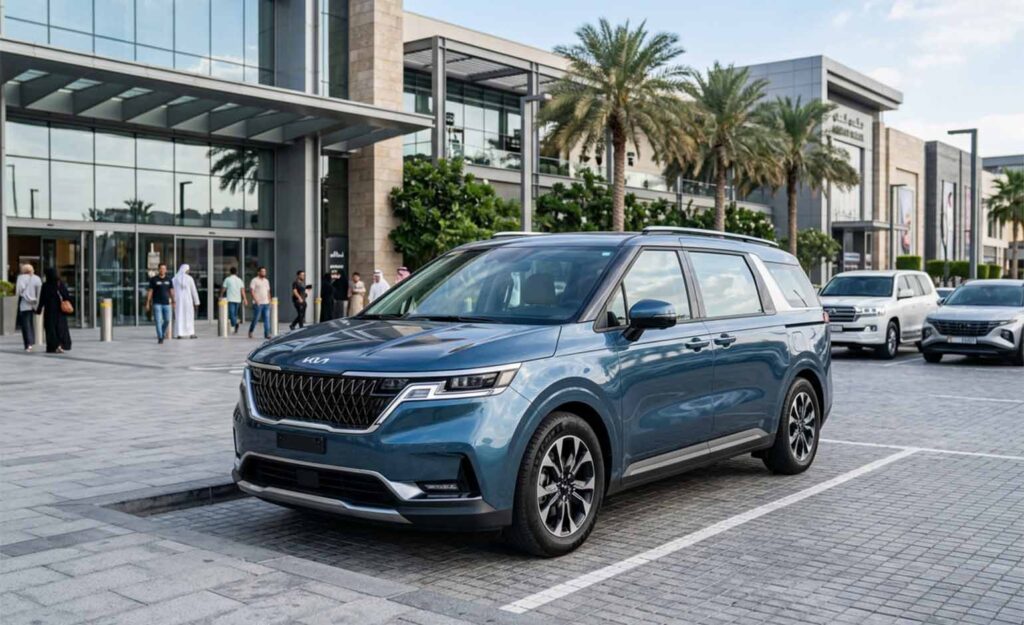
The answer depends less on whether MPVs are fashionable again and more on how the car will actually be used.
An MPV makes the strongest case for buyers who regularly use every seat rather than simply wanting the option of a third row.
Consider an MPV if you are:
- A large family carrying six or more people regularly.
- Frequently transporting young children or elderly relatives.
- Prioritising second and third-row comfort over off-road ability.
- Using the vehicle for chauffeur, hotel or executive transport.
- Mostly driving on urban roads and highways.
- Looking for maximum passenger space without moving to a full-size SUV.
An SUV still makes more sense if you are:
- Regularly driving in the desert or on rough terrain.
- Buying one vehicle to cover several different lifestyles.
- Prioritising ground clearance and four-wheel drive.
- Strongly focused on established local resale demand.
- Looking for the widest possible choice of engines, trims and brands.
There is also a middle group. Buyers who need eight seats but remain concerned about fuel consumption may find something like the Innova Hybrid particularly relevant because it combines MPV packaging with a hybrid drivetrain rather than forcing a choice between a conventional petrol van and a large SUV.
The Balanced Verdict: The MPV Is Returning, But On Different Terms
MPVs are making a comeback in the UAE, although not in the sense that they are about to replace SUVs.
The more meaningful change is that the category is becoming relevant to buyers who might previously never have considered one.
Toyota's Innova Hybrid covers the practical family end of the market. The Granvia and Hyundai Staria move towards higher passenger comfort. The GAC M8 adds a more overt luxury proposition, while vehicles such as the Zeekr 009 show where electric premium MPVs could take the segment next.
For a Dubai family that spends almost all its time on paved roads, regularly fills the third row and has no interest in dune driving, an MPV can be the more rational vehicle.
For a household that wants one car for school, highways, camping, desert trips and regional travel, a capable SUV remains difficult to displace.
The comeback, then, is not really about MPVs defeating SUVs. It is about Gulf buyers having enough credible MPV choices that choosing practicality over an SUV no longer feels like a compromise.


