

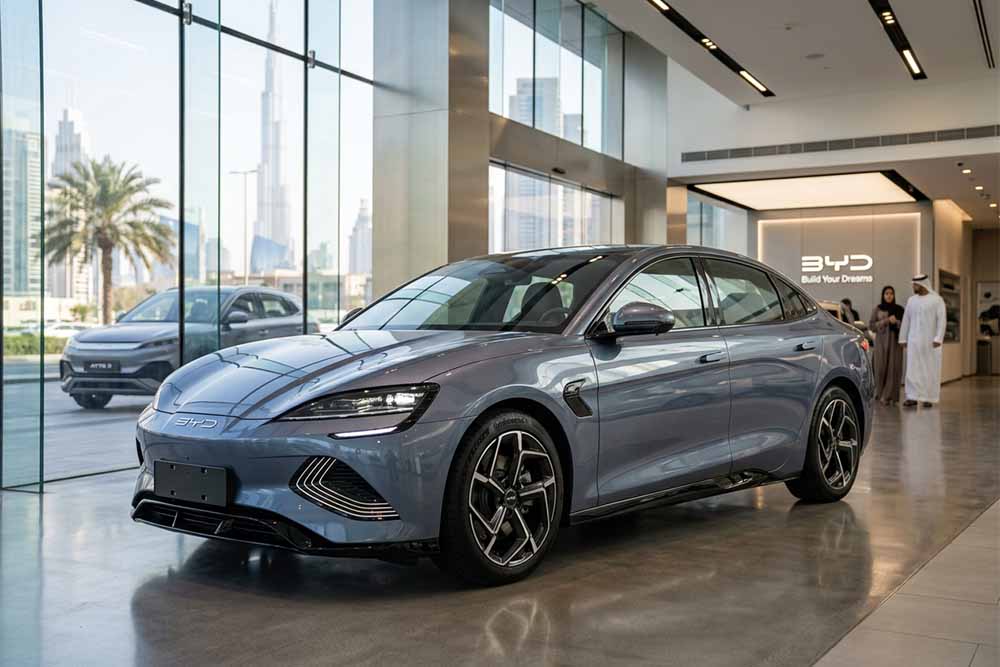
Chinese car brands have moved from the edges of the UAE automotive market to some of its busiest showrooms, shopping centres and highways. Buyers now have a growing choice of models from BYD, Geely, Jetour, Chery, Changan, GAC, XPENG, Zeekr, MG and several newer entrants.
The numbers show that this is more than a temporary wave. Gulf News reported in 2024 that Chinese brands had increased their UAE market share from around 8% to 12%, based on comments from AW Rostamani Group CEO Michel Ayat. AutoData Middle East data later cited by DubiCars put Chinese brands at roughly 15% to 17% of UAE new-car registrations in the first half of 2025.
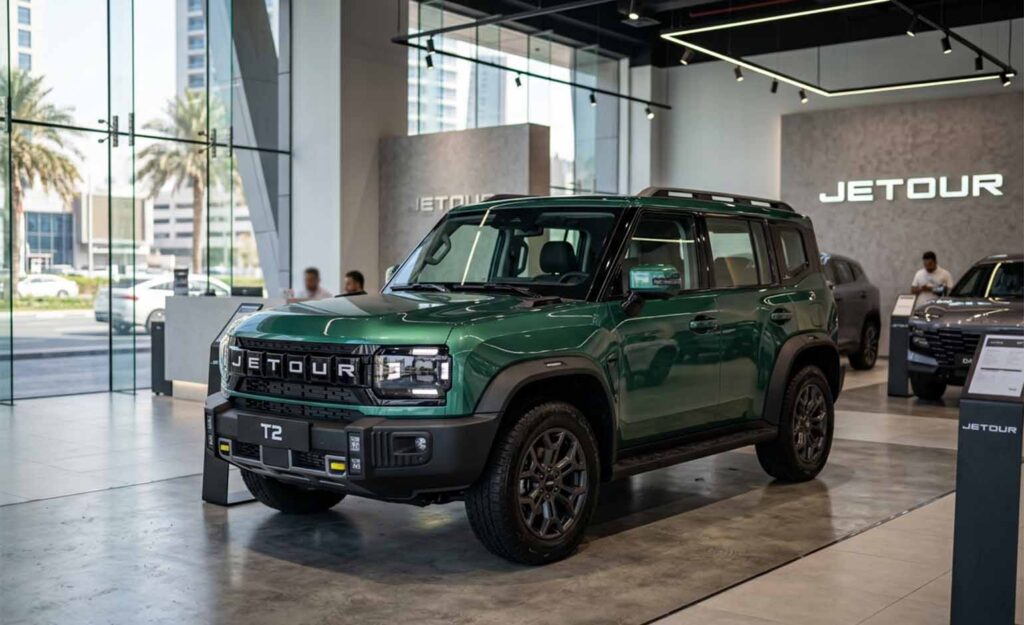
The momentum continued. Al Khaleej reported that 30,910 Chinese vehicles were sold in the UAE during the first half of 2026, while Chinese-brand sales across the GCC reached 111,862 units. The Jetour T2 was the best-selling Chinese model across the six GCC countries during that period.
These figures come from different datasets and periods, so they should not be treated as one perfectly comparable market-share series. The direction, however, is difficult to miss.
So, are Chinese car brands taking over the UAE new-car market? Not quite. They are taking a significantly larger slice of it and forcing established manufacturers to respond, but Japanese, Korean, European and American brands still retain major advantages in areas such as long-term reputation, resale confidence and ownership familiarity.
The takeover argument is stronger than it was two years ago
The strongest case for Chinese car brands in the UAE is no longer simply that they are cheaper.
The bigger challenge to established manufacturers is how much equipment, technology and choice Chinese carmakers are putting into increasingly competitive price brackets.
Price is only part of the attraction
A UAE buyer comparing similarly priced cars may find that the Chinese alternative offers larger screens, 360-degree cameras, electrically adjustable seats, extensive driver-assistance technology or more premium-looking interiors as standard.
That changes what buyers expect for their money.
Gulf News reported that the growing presence of Chinese brands was already influencing how other manufacturers priced new models in the UAE, with dealers having to pay closer attention to the value offered by Chinese competitors.
For many buyers, the appeal comes from a combination of:
- High equipment levels: Features that were previously associated with higher trim levels can appear much lower in the price range.
- More powertrain choice: Petrol, hybrid, plug-in hybrid and electric models are increasingly available.
- Aggressive warranty packages: Several brands use long warranties to reduce concerns about entering a relatively young market.
- Fast product cycles: New SUVs, saloons and electrified models are reaching UAE showrooms regularly.
This is particularly effective with younger buyers who may be less attached to the badge on the bonnet than previous generations.
Dealer investment is catching up with sales
The old criticism that Chinese cars were being sold without serious long-term infrastructure is becoming harder to apply to every brand.
Geely opened what it described as its largest overseas flagship showroom in Dubai in 2025. The 15,800-square-metre facility included mechanical workshops, a body shop and 30 service bays. Geely also said it was operating seven UAE dealerships at the time.
Jetour has taken a similar approach. Its UAE distributor says its flagship Sheikh Zayed Road service centre covers 100,000 sq ft, can handle up to 300 vehicles per day and supports a network covering Dubai, Abu Dhabi, Al Ain and Ajman.
BYD's UAE operation through Al-Futtaim also lists dedicated service facilities and a growing aftersales network, alongside service plans and local warranty coverage.
That does not mean every Chinese brand has equally strong support. It does mean buyers need to judge individual distributors rather than treating all Chinese manufacturers as one group.
Chinese brands are becoming difficult to ignore in EVs and hybrids
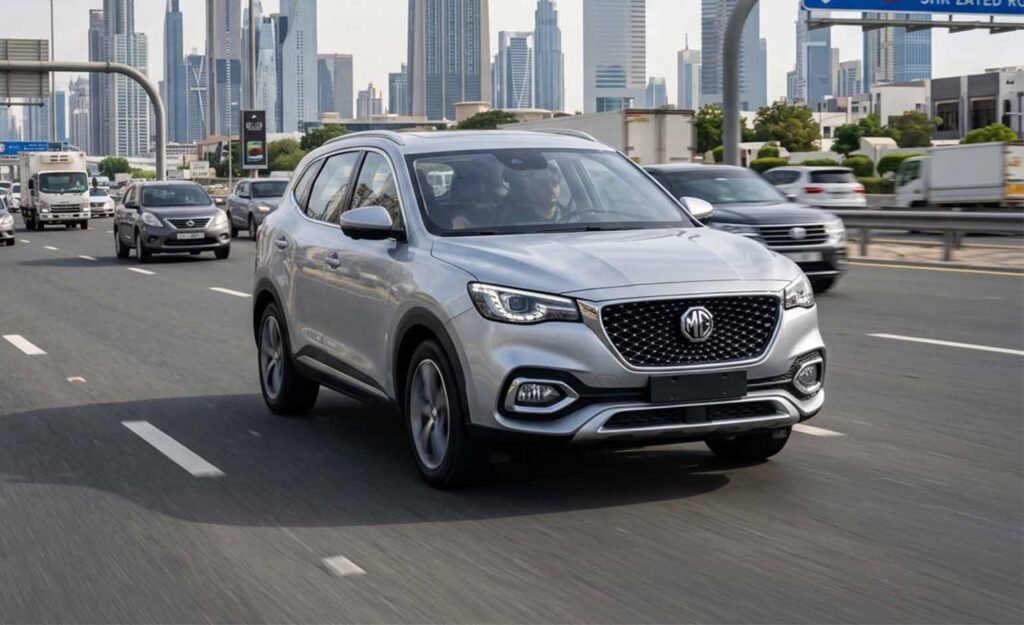
Electrification strengthens the argument further.
DubiCars, citing AutoData Middle East, reported that Chinese brands accounted for 67% of EVs sold in the UAE during the first half of 2025. The same report placed EVs at 7.7% of the overall UAE car market during that period.
BYD, Geely, Zeekr, XPENG, Deepal and other brands have consequently arrived in a market where their electric and battery expertise can be more relevant than decades of petrol-engine heritage.
AlixPartners has forecast that Chinese automotive brands could reach 34% market share across the wider Middle East and Africa region by 2030, compared with 10% in 2024. That remains a forecast rather than a confirmed outcome, but it illustrates how seriously the industry is treating their expansion.
Why the takeover claim still goes too far
Rapid growth is not the same thing as complete market control.
Toyota remained the leading brand in AutoData's first-half 2025 UAE figures. Established manufacturers also continue to dominate many areas of the used-car market and retain enormous pools of existing owners.
A buyer choosing a Toyota, Nissan, Lexus, Hyundai, Kia, Mercedes-Benz or BMW is not simply paying for a familiar badge. In many cases, that purchase also comes with years of accumulated local ownership knowledge.
There are still several reasons established brands remain powerful:
- Resale history: Dealers and private buyers have years of transaction data for models such as the Land Cruiser, Patrol, Camry and Prado.
- Established parts ecosystems: Independent garages and parts suppliers are familiar with many long-running Japanese, Korean and European models.
- Proven GCC use: Some models have decades of experience in extreme heat, high-mileage highway use and desert conditions.
- Buyer familiarity: Owners often already know what servicing, maintenance and resale will look like.
Chinese brands are building these advantages, but they cannot manufacture a 15 or 20-year UAE ownership history overnight.
The ownership test starts after the showroom handover
The real debate becomes more complicated once the first few years of ownership are considered.
A new Chinese SUV with more equipment and a long warranty may look stronger on paper than a similarly priced established rival. The unanswered question is what happens when that vehicle is six or eight years old.
Resale is improving, but the market is still developing
Resale has traditionally been one of the strongest arguments against newer Chinese brands.
That picture is beginning to change.
DubiCars reported that Chinese vehicles represented 13% of demand on its platform in 2025, up from 3% in 2024. It also said Chinese brands had significantly increased their presence in the used market.
More cars on UAE roads eventually means more cars entering the second-hand market, giving buyers, dealers, banks and insurers better information about long-term values.
However, residual strength can vary dramatically between brands and models. A popular SUV backed by a major distributor may behave very differently in the used market from a low-volume brand that entered the UAE recently.
Long warranties help, but read the detail
Warranty competition is one of the clearest ways Chinese brands are addressing ownership concerns.
Geely currently advertises a seven-year or 250,000 km UAE warranty, whichever comes first.
BYD lists six years or 150,000 km for its basic vehicle warranty and eight years or 200,000 km for the high-voltage battery and drive unit, subject to its warranty conditions.
Jetour promotes a 10-year or one-million-kilometre warranty package, with the exact coverage and applicable terms depending on the vehicle and agreement.
The headline number should not be the only comparison.
Before signing an order, buyers should check:
- Exactly which components are covered and which have shorter warranty periods.
- Where authorised servicing is available, particularly outside Dubai and Abu Dhabi.
- Whether the warranty transfers when the car is sold.
- Insurance quotations before purchase, rather than assuming premiums will match a familiar rival.
- Current trade-in values for two or three-year-old examples of the same brand.
A ten-year headline warranty has less value if the component you are worried about is covered for a shorter period.
What makes the Chinese car debate different in the UAE and GCC?
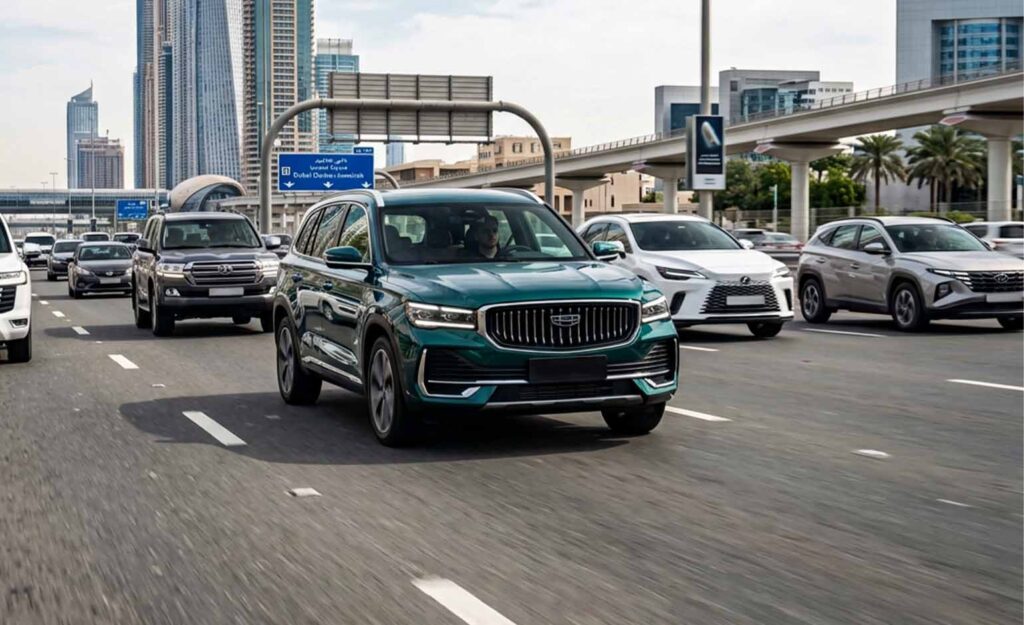
A vehicle that performs well in Shanghai, Munich or London still has to deal with a very different ownership environment in the Gulf.
The UAE rewards good air conditioning, cooling systems, durable interiors and reliable highway performance. It can also expose weaknesses quickly.
Heat and dust make local support more important
Summer temperatures, dust and prolonged exposure to sunlight place considerable demands on batteries, cooling systems, seals, screens, tyres and cabin materials.
That does not automatically favour one country of origin.
It favours cars properly engineered and supported for the region.
For UAE buyers, sensible checks include:
- Confirm that the vehicle is an official UAE or GCC-market car.
- Ask about regional testing and the recommended severe-condition service schedule.
- Test the air conditioning properly during the test drive.
- Check tyre specifications and replacement availability.
- Buy through an authorised distributor if warranty certainty matters.
This becomes particularly important with grey-market imports, where local warranty support may not match an officially distributed vehicle.
EV charging changes the equation, but not for everybody
Chinese manufacturers are particularly strong in EVs and plug-in hybrids, which gives them another route into the UAE market.
For a Dubai villa owner with home charging and a predictable commute, a Chinese EV could make considerable sense.
Someone living in an apartment without convenient charging may reach a different answer. A petrol or hybrid SUV could remain easier to live with, especially for regular long-distance travel between emirates.
Plug-in hybrids are therefore particularly interesting in the GCC because they offer electric driving for shorter journeys while retaining a combustion engine for longer trips.
The right technology depends more on how the car will actually be used than on which country built it.
Desert driving still rewards proven hardware
The growth of the Jetour T2 and other rugged-looking Chinese SUVs shows that manufacturers understand Gulf demand for adventurous styling and capable family vehicles. The T2 led Chinese model sales across the GCC during the first half of 2026, according to figures reported by Al Khaleej.
But buyers who regularly drive in dunes should look beyond appearance.
Cooling performance, four-wheel-drive hardware, tyre choice, ground clearance, underbody protection, recovery options and workshop knowledge all matter.
The Toyota Land Cruiser and Nissan Patrol benefit from decades of local experience and a vast regional off-road community. Chinese competitors can challenge that position, but establishing the same ownership ecosystem takes time.
Luxury buyers may be harder to convert
Chinese manufacturers are also moving well beyond affordable cars.
Brands such as Zeekr, Hongqi, XPENG and premium BYD subsidiaries demonstrate that Chinese manufacturers increasingly want to compete for buyers who might otherwise consider Lexus, Mercedes-Benz, BMW, Audi or Range Rover.
Technology and specification can make the comparison surprisingly close.
Brand value is harder to quantify.
In the UAE's luxury market, image, heritage, resale, dealership experience and social recognition still carry considerable weight. A feature-rich newcomer may be objectively competitive without immediately replacing brands that have spent decades establishing that position.
Who should choose a Chinese brand and who should stay with an established rival?
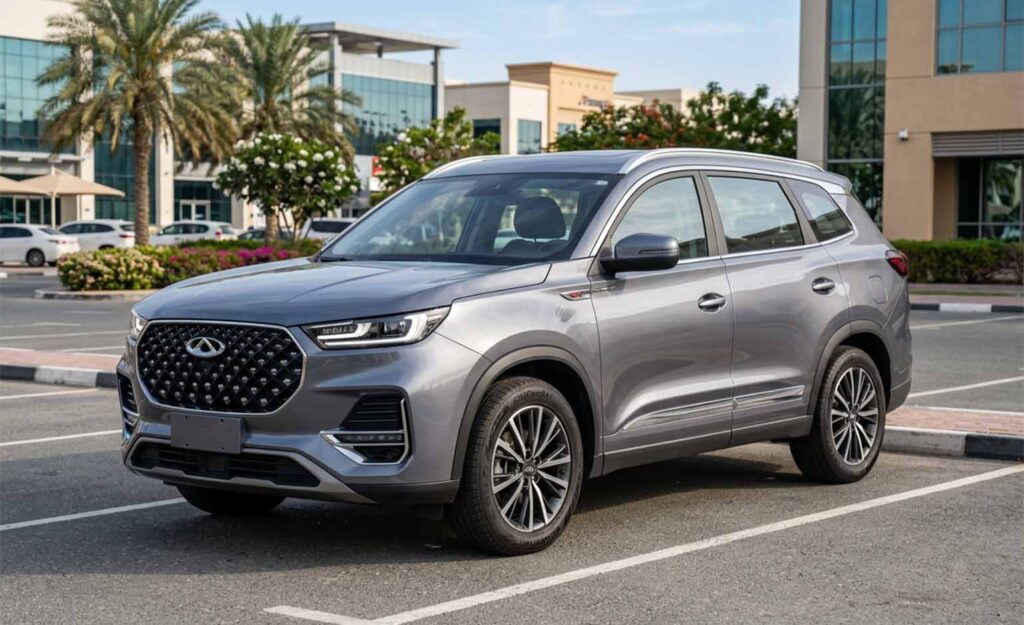
There is no single answer because the strongest choice changes with the buyer.
The decision becomes much easier when the vehicle is matched to ownership priorities rather than badge preference.
- Tech-focused buyer: Chinese models should be high on the test-drive list, particularly EVs and plug-in hybrids.
- Maximum-equipment buyer: A Chinese SUV can offer significantly more specification at a given budget.
- Three to five-year owner: Strong warranty coverage and competitive purchase pricing may outweigh longer-term uncertainty.
- Long-term keeper: Compare parts support, workshop coverage and model history carefully before committing.
- Resale-focused buyer: Established high-demand Japanese models remain difficult to dismiss.
- Frequent desert driver: Prioritise proven mechanical capability, cooling, recovery hardware and local specialist support.
- EV buyer with home charging: BYD and other Chinese EV brands deserve serious consideration alongside Tesla, Hyundai, Kia and European alternatives.
- Luxury buyer: Test the Chinese alternative, but decide how much brand heritage and future resale matter to you.
The mistake is assuming that every Chinese car offers exceptional value or that every traditional brand automatically guarantees a better ownership experience.
Both markets contain strong and weak products.
The balanced verdict: reshaping the market is not the same as owning it
Chinese car brands are not simply arriving in the UAE anymore. They are influencing prices, equipment levels, warranty expectations, EV adoption and even what buyers expect a modern family SUV to include.
That is already a major market shift.
Sales momentum is real, dealer investment is increasing and the number of serious Chinese competitors continues to expand. The UAE is also an ideal testing ground because buyers are open to new brands, the new-car market is highly competitive and Dubai remains an important vehicle trading hub. Jafza has itself identified the expansion of Chinese manufacturers as one of the trends reshaping the UAE automotive sector.
But calling it a complete takeover ignores what established manufacturers still have.
Toyota, Nissan and other long-standing brands retain enormous ownership ecosystems. Japanese and Korean manufacturers have strong family-car positions, while European marques remain deeply embedded in the UAE luxury and performance markets.
The more accurate description is that Chinese car brands have become a permanent major force in the UAE new-car market.
For buyers, that competition is largely positive. It means more choice, stronger warranties, faster technology adoption and additional pressure on every manufacturer to justify its pricing.
The smartest approach is no longer to ask whether a car is Chinese or traditional.
Ask whether the specific car has the right price, warranty, distributor, service network, resale outlook and capability for how you drive in the UAE.