

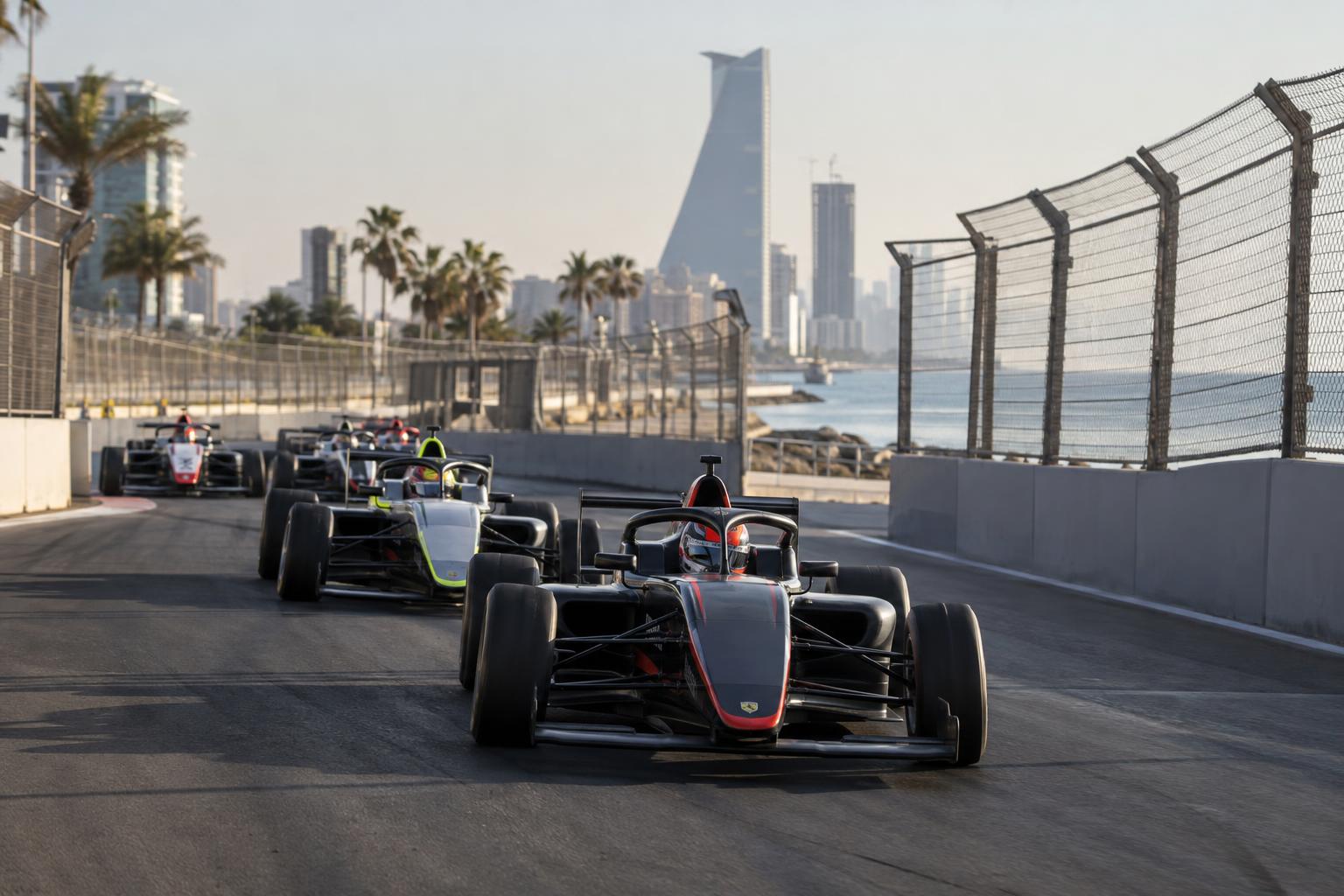
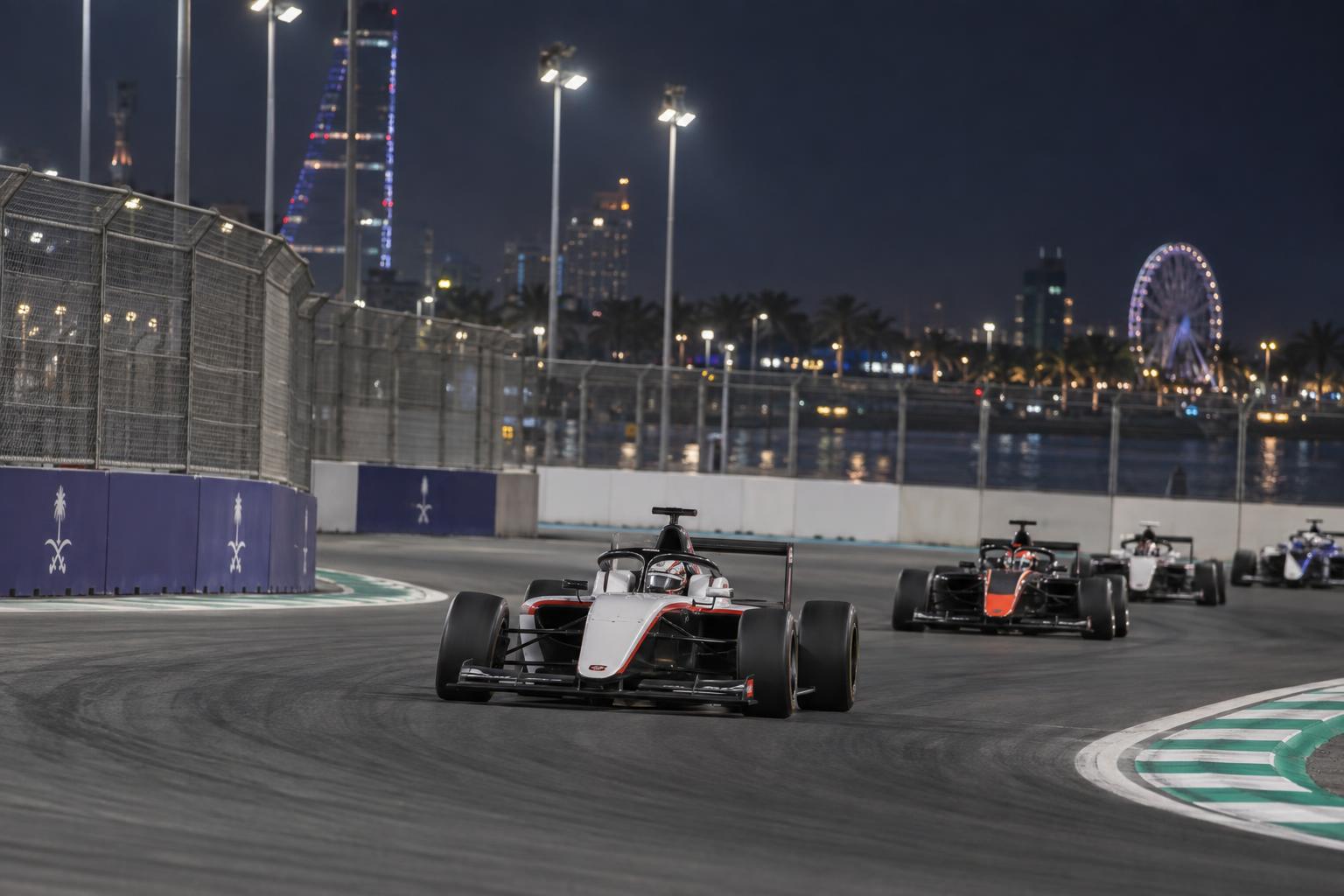
The Aramco F4 Saudi Arabian Championship has opened its third season at Jeddah Corniche Circuit, giving a new group of young drivers an early opportunity to prove themselves on one of the region's fastest and most demanding race tracks. The opening event began on October 1, with testing, qualifying and racing activity continuing through October 3 as the championship starts a four-round run into November.
For Saudi motorsport, the series is more than a support category. It is a structured first step into single-seater racing, combining equal machinery, professional race operations and experience at major venues for drivers who may later progress to regional or international championships.
What is the Aramco F4 Saudi Arabian Championship?
The Aramco F4 Saudi Arabian Championship is a Formula 4 single-seater series designed as an entry point for drivers moving beyond karting or beginning their circuit-racing careers. Formula 4 sits near the base of the FIA single-seater ladder, below categories such as Formula Regional, FIA Formula 3 and Formula 2.
Its purpose is to make driver ability the main differentiator. Competitors use the same specification of car, tyre and key technical components, while teams focus on preparation, engineering support and helping their drivers improve over a race weekend.
- Level: Entry-level FIA single-seater racing
- Car: Tatuus T421 chassis with Abarth power
- Format: Testing, practice, qualifying and multiple races across a round
- Driver focus: Young talent, karters moving into cars and developing regional racers
- Season: Four rounds, with three rounds remaining after Jeddah
How did Season 3 kick off at Jeddah Corniche Circuit?
The third season opened at the Jeddah Corniche Circuit, with the first on-track running beginning on October 1. Drivers then moved through testing and qualifying sessions before the opening races, which were scheduled to run through October 3.
Jeddah is a challenging place to begin a junior single-seater campaign. The circuit combines high-speed sections, close walls and heavy braking zones, so rookies need to build confidence quickly while avoiding the mistakes that can compromise a full weekend.
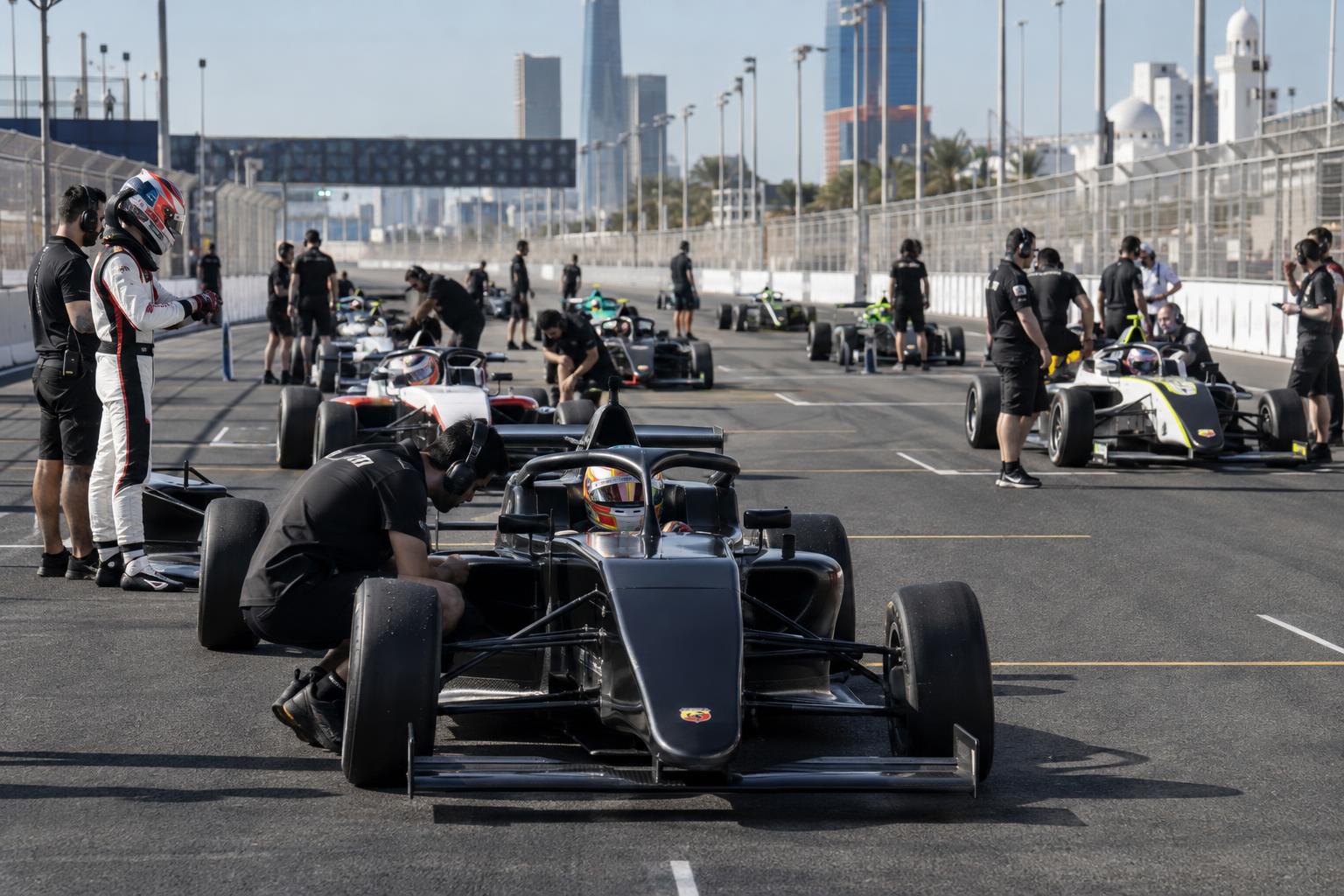
For drivers with limited experience in Formula 4 machinery, the early test sessions are especially important. They provide time to learn braking references, tyre behaviour, steering response and the effect of aerodynamic grip before qualifying determines the starting order.
Who is racing this season?
The 2026 grid features 15 drivers representing eight teams. That gives the championship a compact but competitive field, with drivers able to race closely while still receiving individual attention from their teams and engineers.
A mixed field is a key part of Formula 4 racing. Some entrants may arrive from successful karting backgrounds, while others have already completed tests or selected races in regional single-seater series. What matters is how quickly they adapt to a heavier, more powerful car with downforce, slick tyres and a proper race-weekend structure.
Why team support matters in Formula 4
Although the cars are closely matched, teams still play an important role. Engineers help drivers understand data, improve braking consistency and make permitted setup adjustments to suit the circuit and changing track conditions.
- Reviewing onboard video and timing data
- Refining braking points and corner-entry technique
- Managing tyre use over qualifying and races
- Preparing drivers for starts, safety-car restarts and wheel-to-wheel racing
- Building the communication habits needed for higher categories
What makes the Tatuus T421 Abarth an equal playing field?
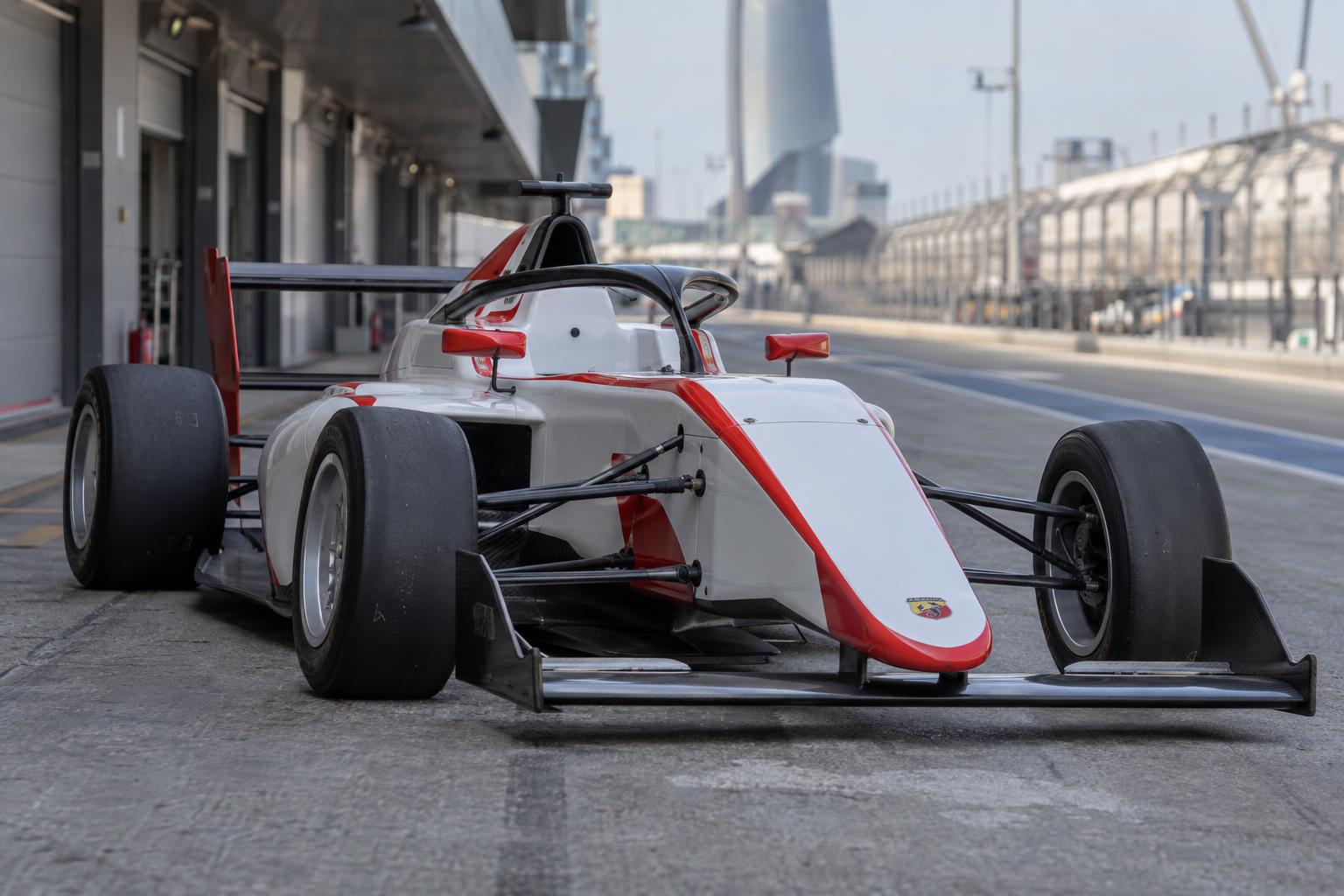
The championship uses the Tatuus T421 Abarth, a modern Formula 4 car built around a controlled specification. Rather than allowing major differences in engines, chassis development or aerodynamic packages, the formula keeps the core hardware consistent across the field.
That does not remove the importance of preparation. It means the decisive gains are more likely to come from driving precision, racecraft, tyre management and the ability to learn from feedback, rather than from a team spending heavily on unique performance parts.
| Component | Formula 4 specification |
|---|---|
| Chassis | Tatuus T421 carbon-fibre monocoque |
| Engine | Abarth 1.4-litre turbocharged four-cylinder |
| Power output | Approximately 160 hp |
| Transmission | Six-speed sequential gearbox |
| Safety equipment | Halo cockpit protection and FIA Formula 4 safety standards |
The T421 is also an important step up from karting because it teaches drivers how to manage aerodynamic grip. Faster corners reward commitment and smooth inputs, while abrupt steering or throttle use can reduce grip and damage tyre performance over a race distance.
What is left on the 2026 calendar?
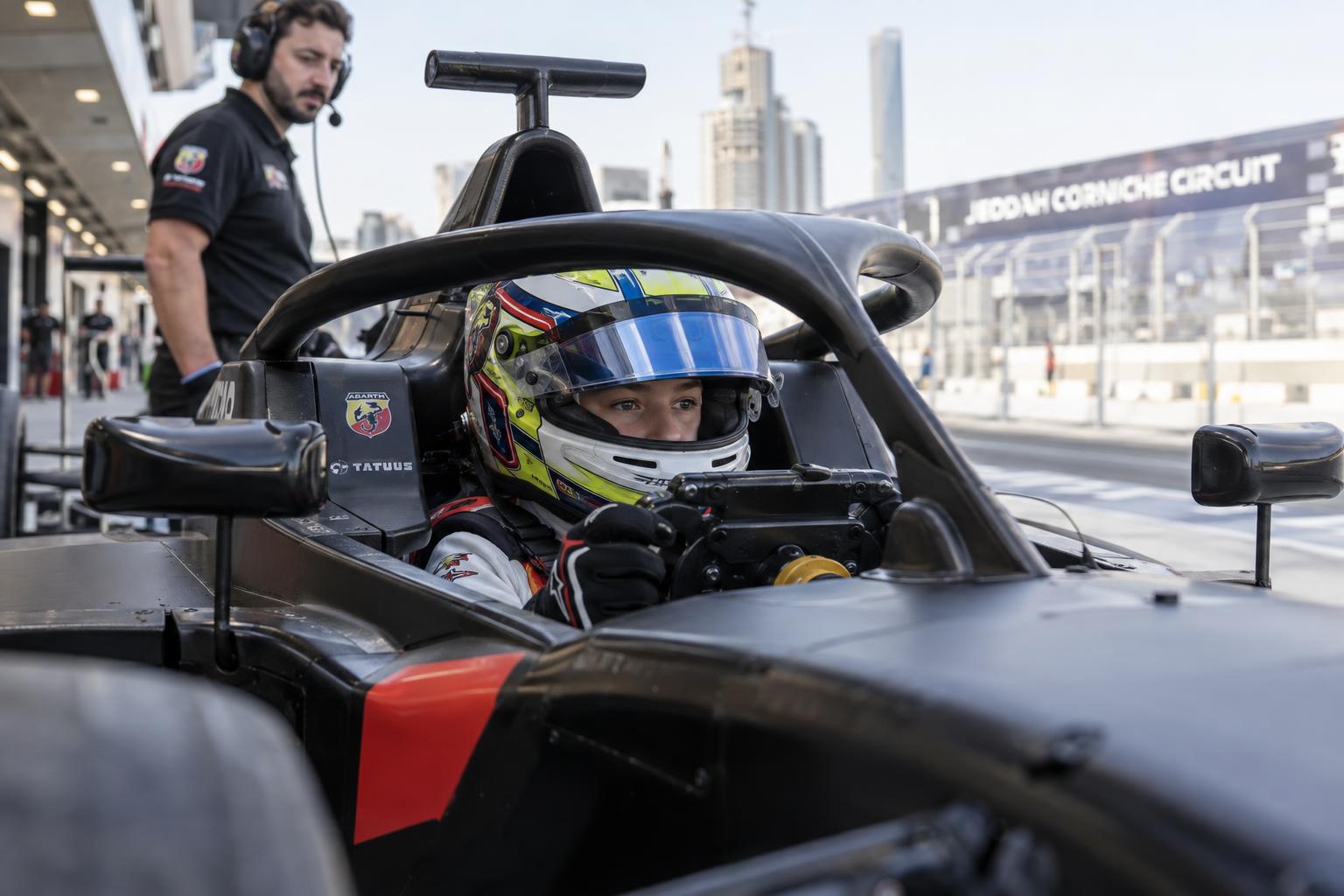
After the Jeddah opener, the championship has three more rounds scheduled before the season concludes in November. A short, concentrated calendar puts extra value on every session because drivers have fewer events in which to recover from a poor qualifying result or missed opportunity.
It also creates a useful development test. Drivers need to arrive prepared, learn circuits efficiently and carry momentum from one round to the next. In junior racing, the competitors who improve most consistently often make the strongest impression, even if they do not win every race.
Why the remaining rounds will matter
The second half of a compact Formula 4 season often reveals which drivers can turn raw speed into championship results. Points are won not only with pole positions and race victories, but also with clean starts, sensible overtakes and the ability to finish every race.
- Qualifying performance will remain critical on tight and high-speed circuits.
- Race starts can significantly shape the outcome in closely matched machinery.
- Consistency can be as valuable as a single standout result.
- Drivers will need to adapt quickly to different tracks and conditions.
Why does this series matter for developing Saudi motorsport talent?
Saudi Arabia has expanded its motorsport calendar rapidly, but drivers need a realistic pathway if they are to benefit from that growth. A domestic Formula 4 championship gives young Saudi and regional racers a place to gain experience without immediately facing the much higher costs and logistical demands of racing full-time in Europe.
It also helps create a broader racing ecosystem. Drivers need teams, mechanics, engineers, coaches, officials and event staff, so junior championships contribute to the technical and professional side of motorsport as well as the driver-development side.
For a promising karter, the move to Formula 4 can be difficult. The car is physically more demanding, its speed requires a different approach to risk, and performance is increasingly shaped by data and setup feedback. A local championship provides the repeated track time needed to make that transition properly.
How does Aramco F4 fit into the broader GCC motorsport landscape?
The GCC has become a significant hub for international motorsport, with Formula 1 races in Saudi Arabia, Bahrain, Qatar and Abu Dhabi alongside endurance racing, GT competition, rallying, drifting and regional touring-car events. Formula 4 gives the region a more accessible starting point for drivers who want to move into circuit racing.
Saudi Arabia's championship also complements established junior racing activity elsewhere in the Gulf. Drivers can build experience close to home, compete against a regional mix of talent and potentially use Formula 4 results to pursue Formula Regional, endurance racing, GT racing or other professional paths.
The benefit is not limited to aspiring Formula 1 drivers. The skills learned in Formula 4, including racecraft, data analysis, fitness, media discipline and working with engineers, are relevant across many forms of professional motorsport.
Key takeaways
- The third season of the Aramco F4 Saudi Arabian Championship has begun at Jeddah Corniche Circuit.
- The opening event started on October 1, with track activity running through October 3.
- The grid includes 15 drivers from eight teams.
- All competitors use the Tatuus T421 Abarth Formula 4 car, helping keep the focus on driver performance.
- Three more rounds remain on the 2026 calendar before the season ends in November.
- The series provides an important development route for Saudi and regional drivers moving from karting into single-seater racing.
People Also Ask
What is Formula 4 racing?
Formula 4 is an entry-level single-seater racing category intended for drivers moving up from karting or beginning a professional circuit-racing career. It uses controlled cars and regulations to emphasise driving skill, racecraft and development.
Where is the Aramco F4 Saudi Arabian Championship held?
The championship is held in Saudi Arabia at major circuit venues, beginning its third season at Jeddah Corniche Circuit. The 2026 campaign includes four rounds running into November.
How many drivers are competing in the third season?
The third season begins with 15 drivers competing across eight teams.
What car do drivers use in the Saudi Formula 4 championship?
Drivers race the Tatuus T421 Formula 4 car, powered by an Abarth 1.4-litre turbocharged engine. The shared specification is intended to keep competition close and make driver performance easier to compare.
Can Formula 4 drivers progress to higher racing categories?
Yes. Formula 4 is commonly used as a first step toward Formula Regional, Formula 3 and other single-seater categories. It can also prepare drivers for careers in GT racing, endurance racing and other professional motorsport disciplines.


