Oman EV And Battery Plant Deal Brings $250m Korean Project To Duqm
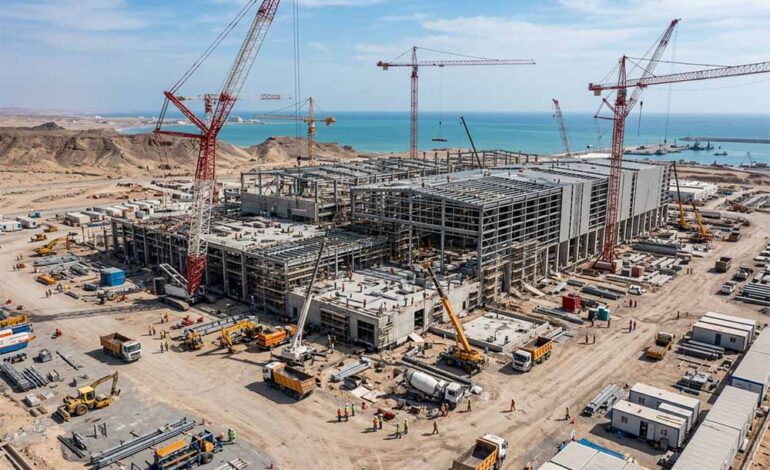
Oman has signed a $250 million agreement with South Korea’s EL B&T to establish electric vehicle and battery cell production in the Special Economic Zone at Duqm. Announced on 10 May 2026 by Oman’s Public Authority for Special Economic Zones and Free Zones, known as OPAZ, the development is planned in two phases.
The investment matters beyond Oman because EL B&T intends to serve the domestic market first before expanding towards the GCC, the wider Middle East and North Africa. No specific vehicle models, Gulf launch dates or regional sales partners have been confirmed.
$250m Agreement Sets Out A Two-Phase Manufacturing Plan
OPAZ signed an investment usufruct agreement with EL B&T, with OPAZ Chairman Qais bin Mohammed Al Yousef and EL B&T founder and chairman Dr Young Ill Kim representing the two sides. The announced investment is approximately OMR 96.2 million, equivalent to $250 million.
- The project will be completed in two phases. Officials have linked the largest production figures to Phase II, so they should not be treated as immediate output from the first stage.
- Commercial operation is targeted for March 2028. The announcement did not provide a detailed construction timetable or confirm when each production line will begin operating.
What EL B&T Plans To Build In Duqm
Vehicle Production And Battery Cell Output
Once Phase II is complete, the plant is expected to have capacity for up to 60,000 electric vehicles and 1.6 million battery cells annually. These are planned maximum figures, not confirmed production or sales volumes for the first operating year.
- Vehicle capacity could reach 60,000 units a year. The planned mix of passenger cars, buses, trucks, motorcycles or three-wheelers has not been identified, although EL B&T works across several electric mobility categories.
- Battery cell capacity is listed at 1.6 million units annually. Battery chemistry, cell format, pack capacity and intended vehicle applications have not been disclosed in the announcement.
Land, Energy And Supporting Industries
Phase I will occupy about 467,000 square metres, with a further 429,000 square metres expected to be reserved for Phase II. Omani officials say the project could help develop a wider EV supply chain around batteries, components and related manufacturing.
- The two stages could use nearly 896,000 square metres. The final factory layout and division of production between the phases have not been published.
- EL B&T plans a green power station at the site. The company wants it to become the main energy source for production, but the technology, capacity and timetable remain unconfirmed.
Why Gulf Automotive Markets Are Watching
For GCC readers, the main significance is the prospect of more regional EV and battery manufacturing rather than another fully imported vehicle programme. A functioning Duqm plant could support local component activity and regional supply, but that will depend on actual production volumes, supplier participation, certification and demand.
Phase I is intended to prioritise Oman before gradual expansion towards the GCC, Middle East and North Africa. It does not yet mean EL B&T vehicles are confirmed for UAE showrooms, and there is no indication of how Duqm-built models would be priced against established Chinese, Korean, European or American EV brands.
What Remains Unconfirmed For Buyers
Several details needed to assess the project’s effect on Gulf buyers and the wider automotive market remain open.
- No retail vehicle has been named. Driving range, power, battery size, safety specification, GCC configuration and pricing are all unconfirmed.
- Sales and ownership arrangements are unknown. EL B&T has not announced a UAE distributor, Oman retail network, warranty package, service structure or spare-parts plan.
- The full-capacity date remains unclear. March 2028 is the target for commercial operation, but the announcement does not say when output could reach 60,000 vehicles and 1.6 million battery cells.
Duqm Now Faces An Execution Test
The Oman EV and battery plant agreement gives Duqm a sizeable clean-mobility project with a defined investment value, land allocation and long-term production target. Its regional importance will become clearer when construction milestones, the first vehicle programme and export plans are announced.
Until then, it is a confirmed industrial investment, not confirmation of an imminent new EV launch across the GCC.