Are Driverless Taxis About To Change Everyday Driving In The UAE?
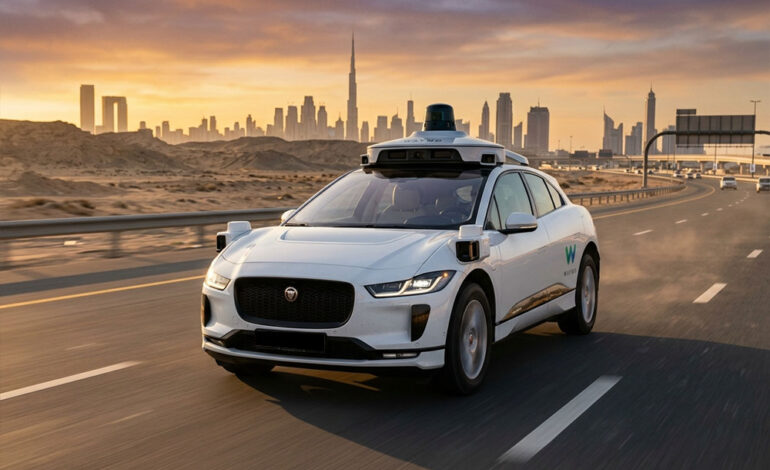
Driverless taxis in the UAE are no longer a future concept sitting inside transport strategy documents. Abu Dhabi has already moved into fully driverless commercial robotaxi operations in selected areas, while Dubai has been preparing autonomous taxi services through RTA partnerships and its wider self-driving transport strategy. For everyday drivers, that does not mean private cars will suddenly become unnecessary. It does mean the way people move around Dubai, Abu Dhabi and key tourist or business districts is starting to change.
The biggest impact will come in short urban trips, airport links, business districts, hotel zones and first-mile or last-mile journeys. For UAE car owners, the question is not whether driverless taxis will replace every car. The better question is how they will affect daily commuting choices, second-car decisions, insurance thinking, road behaviour and expectations around smart mobility.
Dubai’s long-term target is to make 25 per cent of total transportation trips autonomous by 2030, according to the official UAE government portal. That ambition sits behind much of the current robotaxi activity in the country.
Driverless taxis are already moving from trial to daily transport
The UAE has been testing autonomous mobility for years, but the recent shift is more practical. The conversation has moved from controlled demonstrations to public routes, app-based booking and commercial services in defined zones.
In Abu Dhabi, Uber and WeRide announced fully driverless robotaxi commercial operations in November 2025, starting with routes on Yas Island. Uber described Abu Dhabi as the first city outside the United States to host fully driverless robotaxi operations on its platform, supported by a city-level driverless permit.
Dubai is also moving quickly. RTA’s autonomous taxi plans sit within the Dubai Autonomous Transportation Strategy, which aims to convert 25 per cent of transportation trips in Dubai to autonomous mode by 2030. The same strategy also targets reductions in traffic accidents and travel-related losses, while improving productivity.
For UAE drivers, this means driverless taxis are not arriving as one dramatic nationwide switch. They are appearing area by area, route by route and service by service.
Why Abu Dhabi and Dubai are starting in controlled zones
Driverless taxis work best when the operating environment is clearly mapped, monitored and predictable. That is why early services focus on locations such as Yas Island, airports, business districts, tourist zones and planned urban areas.
These areas allow autonomous taxi operators to understand traffic flow, road markings, pick-up points, pedestrian behaviour and digital mapping requirements before expanding further. It also gives regulators and transport authorities time to observe performance before allowing wider coverage.
Yas Island shows how robotaxis can fit leisure and tourism trips
Yas Island is a logical starting point because it has hotels, attractions, event venues, residential areas and controlled road networks. For visitors, a robotaxi can work as a short-distance transport option between hotels, malls, theme parks and entertainment venues.
That type of route is easier to manage than a complex cross-city journey through older, busier roads. It also introduces the public to driverless rides in a place where many journeys are short and destination-based.
Dubai’s approach links robotaxis to wider public transport goals
Dubai is not treating autonomous taxis as a standalone novelty. The emirate’s self-driving strategy places them within a broader transport system that includes metro, buses, taxis, first-mile and last-mile journeys and future mobility services.
That matters because driverless taxis are unlikely to replace the Dubai Metro or regular taxis on their own. Their stronger role may be in connecting people to stations, offices, hotels, airports and districts where parking is costly or inconvenient.
What changes for everyday drivers in Dubai and Abu Dhabi?
For most drivers, the first change will be choice. A resident who normally drives for every short trip may start using a driverless taxi for specific journeys where parking, traffic or convenience is the main concern.
This is especially relevant in parts of Dubai and Abu Dhabi where parking can be limited, valet costs are high, or short trips are more effort than they are worth.
- Short urban trips may become less dependent on private cars. If autonomous taxis become reliable in areas such as business districts, airports, leisure zones and residential communities, some residents may leave their car parked more often. This will not remove the need for private cars, but it can reduce unnecessary short-distance driving.
- Second-car ownership could become easier to question. Families that keep an extra car mainly for school runs, metro connections, mall trips or occasional errands may start comparing ownership cost with on-demand transport. This depends heavily on coverage, pricing, availability and trust in the service.
- Parking habits may slowly change in high-demand areas. If driverless taxis become common in busy districts, some drivers may avoid bringing their own car into crowded areas. That could be useful around hotels, events, malls and tourist zones, especially during peak seasons.
The UAE road environment will test autonomous taxis properly
The Gulf is not an easy environment for any vehicle technology. Heat, dust, bright sunlight, sudden weather changes, mixed driving behaviour and heavy urban traffic all create challenges for autonomous systems.
Driverless taxis depend on cameras, radar, lidar, sensors, mapping, software and constant monitoring. UAE conditions make maintenance and calibration especially important. Dust on sensors, extreme heat, roadworks and unusual traffic behaviour can all affect how reliably these vehicles perform.
This is why official regulation and approved operating zones matter. Autonomous taxis need more than good software. They need a full support system around cleaning, charging, inspection, remote monitoring, emergency response and vehicle servicing.
The ownership costs buyers should not ignore
Driverless taxis could change how some people think about car ownership costs in the UAE. Private cars still make sense for many residents, especially families, long-distance commuters and people living outside dense urban zones. But the cost calculation may become more flexible.
A privately owned car involves finance, insurance, registration, parking, Salik, fuel or charging, servicing, tyres and depreciation. A driverless taxi turns some of those costs into pay-per-use mobility. That can be attractive for people who drive less often or mostly travel within high-coverage areas.
Before changing their ownership plans, UAE residents should think practically.
- Compare monthly use, not just ride prices. A robotaxi may look cheaper for occasional trips, but frequent daily use can add up quickly. Drivers should compare it against their real monthly cost of owning, insuring, fuelling and maintaining a car.
- Think about where you actually travel. Autonomous taxis will be most useful where coverage is strong. If most journeys are between supported zones, the service may reduce car dependence. If trips involve outer communities, industrial areas or regular inter-emirate travel, a private car may still be more practical.
- Do not ignore family needs. Child seats, school runs, luggage, elderly passengers and multi-stop errands can make private ownership more convenient. Driverless taxis may help with some trips, but they may not suit every household routine.
Will driverless taxis make UAE roads safer?
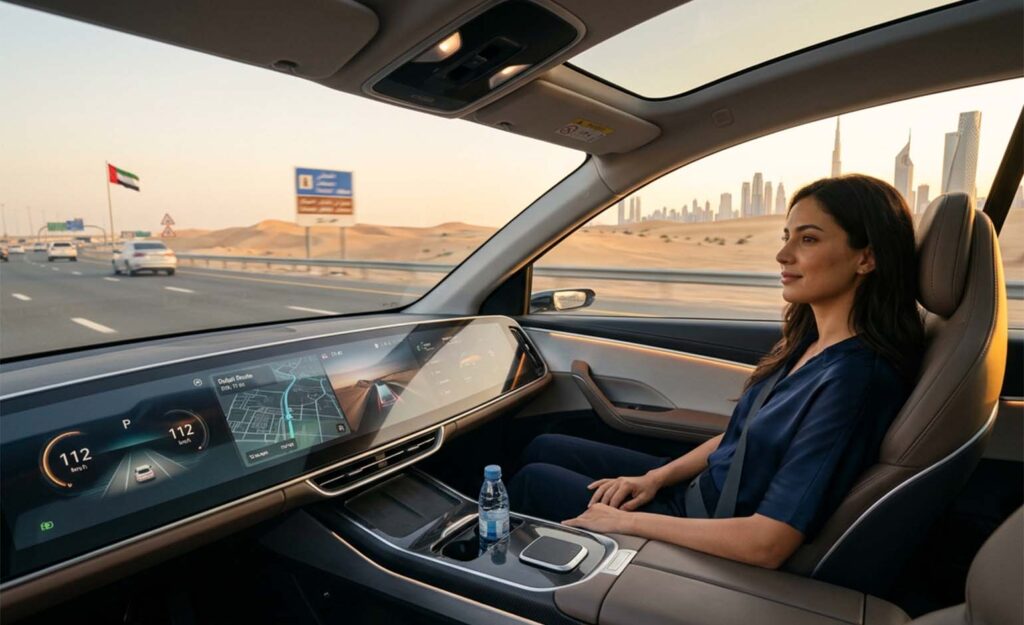
Safety is one of the main arguments behind autonomous mobility, but it should be discussed carefully. Dubai’s official autonomous transport strategy says it aims to reduce traffic accidents and losses by 12 per cent. That is a strategic target, not proof that every driverless taxi journey will be risk-free.
Autonomous taxis can reduce certain human errors such as distraction, fatigue or aggressive acceleration. They can also follow programmed speeds, mapped routes and controlled driving behaviour. However, they still operate in a road environment shared with human drivers, delivery riders, buses, pedestrians and construction activity.
For everyday drivers, the safety impact will depend on how well driverless taxis behave in mixed traffic and how human drivers react around them. Cutting in sharply, tailgating or testing how the vehicle responds would be dangerous and irresponsible.
Insurance and liability will become a bigger conversation
As driverless taxis become more common, insurance questions will become more complex. With a normal taxi, responsibility is easier to understand because there is a human driver, an operator and an insured vehicle. With a fully autonomous taxi, responsibility can involve the operator, vehicle owner, software provider, fleet manager, maintenance provider and regulator.
For private drivers, the immediate point is simple: treat autonomous taxis like any other road user. If there is an incident, do not assume the technology makes fault obvious. Dashcam footage, police reports, vehicle data and insurance investigation may all matter.
Private drivers should keep their own cover clear
If driverless taxis become more common around Dubai and Abu Dhabi, private motorists should make sure their own insurance is still suitable for city driving. Comprehensive cover, agency repair options and clear claim procedures matter more when roads become more mixed and technology-heavy.
This is especially important for premium and luxury cars. A low-cost policy may not offer the repair quality or parts support a high-value car needs after even a minor accident.
Fleet insurance will shape how quickly robotaxis expand
Robotaxi operators need insurance models that cover vehicles, passengers, third parties, software-related risks and maintenance-related issues. If insurance costs are too high or claims become complicated, expansion can slow.
That is why early operations are likely to remain controlled. The more data operators gather, the easier it becomes for insurers and regulators to understand real-world risk.
What buyers and owners often misunderstand about autonomous cars
Driverless taxis can create confusion because many people mix up assisted driving, self-driving and fully driverless operation. These are not the same.
A private car with adaptive cruise control, lane keeping and parking assistance is not a robotaxi. The driver remains responsible. A fully driverless taxi, by contrast, is designed to operate within approved areas without a human driver controlling the vehicle.
This distinction matters when buyers look at new cars with advanced driver assistance systems. Some owners may assume their car is more capable than it really is.
- Driver assistance is not permission to stop paying attention. Features such as lane keeping, adaptive cruise control and automatic emergency braking are support systems. They do not turn a private vehicle into a driverless taxi.
- Software names can be misleading if drivers do not read the limits. Some systems sound highly advanced, but still require hands-on or attentive driving. Owners should read the manual and understand what the car can and cannot do in UAE conditions.
- Sensors need maintenance in Gulf weather. Cameras, radar units and parking sensors can be affected by dust, dirt, heat and minor bumper damage. If an ADAS-equipped car has had windscreen, bumper or grille repairs, calibration may be needed.
Could driverless taxis reduce the need for a second family car?
For some UAE households, yes, but not immediately for everyone. The strongest case will be among residents who live and work in high-coverage districts, have predictable travel patterns and do not need a car for school runs, long errands or regular inter-emirate trips.
A second car is often kept for convenience rather than heavy use. If autonomous taxis become widely available, some households may decide that ride-hailing is cheaper than paying for insurance, parking, depreciation and maintenance on a lightly used vehicle.
But families should avoid rushing the decision. Coverage, availability at peak times, pricing, child-seat options and luggage practicality will decide whether robotaxis are genuinely useful for daily life.
Where this matters most in GCC conditions
The UAE is likely to influence how other Gulf markets view autonomous taxis. Cities such as Riyadh, Doha and Manama will be watching how Dubai and Abu Dhabi manage safety, public trust, insurance, road behaviour and fleet operations.
The GCC has several advantages for autonomous mobility. Many cities have modern roads, strong digital infrastructure, high smartphone usage and government interest in smart transport. At the same time, the region has challenges, including heat, dust, fast-moving traffic and varied driving styles.
For fleet operators, the Gulf is a serious test environment. If driverless taxis can work reliably through summer heat, busy tourist seasons and mixed traffic, it strengthens the case for wider regional use.
What UAE drivers should watch before changing their car plans
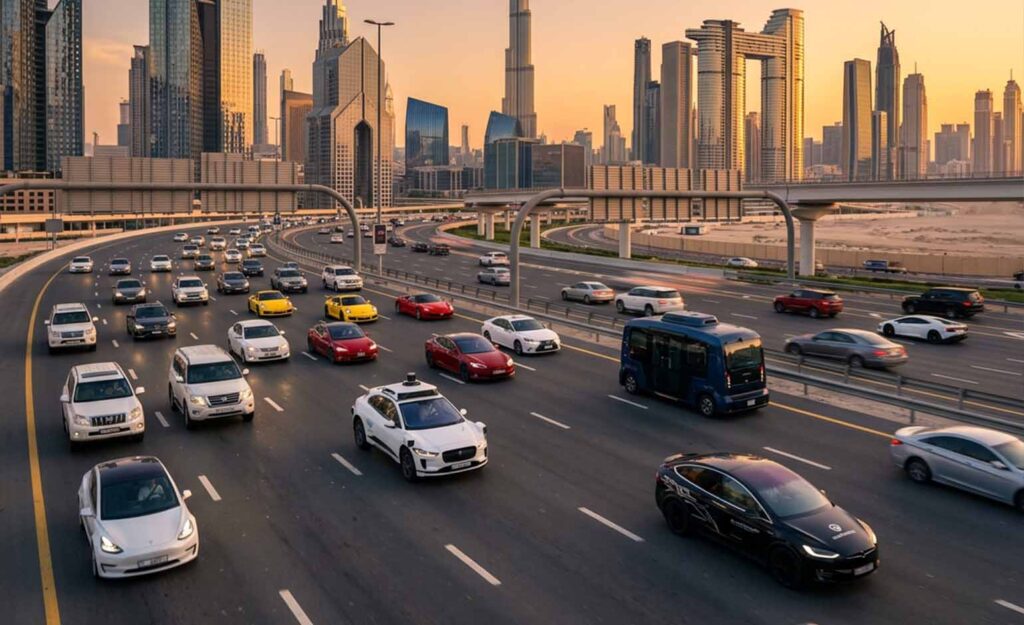
Driverless taxis are worth watching, but car buyers should avoid making ownership decisions based on excitement alone. The service must prove itself in daily use, not just in announcements.
The most useful signs to watch are practical.
- Coverage areas will matter more than launch headlines. A driverless taxi is only useful if it operates where people actually need to go. Watch whether services expand beyond showcase zones into residential communities, office districts, airports and transport hubs.
- Pricing will decide whether people use it regularly. If robotaxis are priced too close to premium ride-hailing, they may remain occasional novelty rides. If pricing becomes competitive for daily short trips, the impact on private car use could become more noticeable.
- Waiting times will shape public trust. A service that is safe but rarely available will not change habits quickly. For everyday drivers to shift behaviour, autonomous taxis need to be predictable during peak hours, weekends and event traffic.
- Regulation will influence confidence. Clear rules around safety, data, liability, maintenance and emergency handling will help the public trust the service. Without that, many residents will continue to prefer human-driven taxis or private cars.
The service and repair angle private car owners should notice
Private cars increasingly depend on the same types of cameras, radar units and electronic safety systems that support autonomous mobility. After windscreen replacement, suspension work or damage to the bumper and grille, owners should consider professional radar and ADAS calibration to ensure the relevant systems are correctly aligned. German Experts provides advanced diagnostic and calibration support for modern vehicles, helping drivers confirm that sensor-based safety features are operating as intended rather than relying only on the absence of a dashboard warning.
Driverless taxis may also change expectations around vehicle maintenance. Autonomous fleets need disciplined cleaning, sensor checks, software updates, calibration and charging or fuelling routines. That could raise public awareness around the importance of proper vehicle care.
Private car owners should take a lesson from this. Modern vehicles are already becoming more sensor-heavy. Even non-autonomous cars now rely on cameras, radar, parking sensors and software-linked safety features.
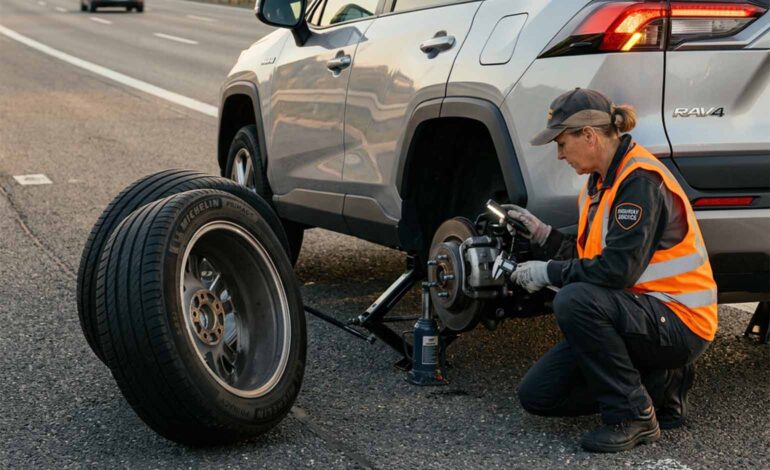
If a car has ADAS, owners should treat windscreen replacement, bumper repair, grille damage and sensor faults seriously. A badly repaired bumper or misaligned sensor can affect safety systems. In UAE traffic, where sudden braking and lane changes are common, those systems need to work correctly.
The Bottom Line For UAE Drivers
Driverless taxis are about to change everyday driving in the UAE, but gradually. They will not remove the need for private cars across Dubai, Abu Dhabi or the wider GCC overnight. Their first real impact will be in selected districts, airport links, tourist zones, short city trips and areas where parking or congestion makes private driving less appealing.
For UAE residents, the smart approach is to treat robotaxis as a new transport option rather than a full replacement for car ownership. Watch coverage, pricing, waiting times, insurance clarity and real-world reliability before changing buying plans.
For car owners, the bigger lesson is that UAE roads are becoming more technology-driven. Whether you drive a private car, use ride-hailing or try a robotaxi, maintenance, insurance, driver awareness and trust in proper service support will matter more than ever.