Qatar Tyre Sale Rules Put Road Safety Back In Focus For GCC Drivers
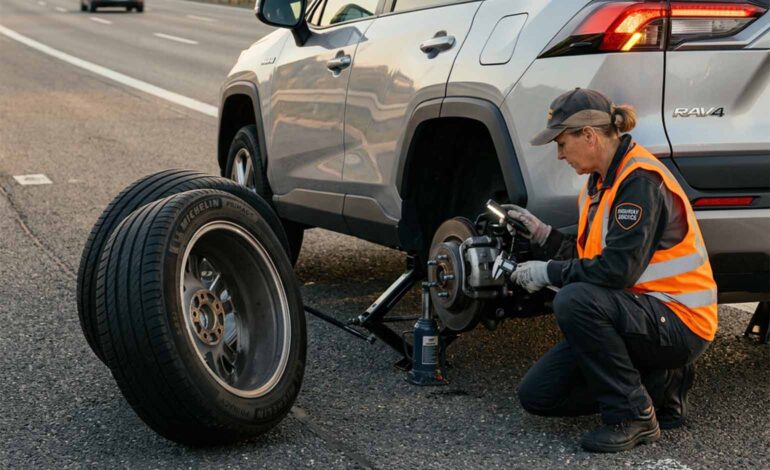
Qatar’s new tyre sale rules have tightened attention on how tyres are stored, sold and warranted in one of the Gulf’s most demanding driving environments. The Ministry of Commerce and Industry has highlighted compliance with Qatar Technical Regulation QS GSO 581:2021, issued under Ministerial Decision No. 35 of 2026, covering storage requirements for passenger car, truck and bus tyres.
The move matters beyond Qatar because tyre safety is a shared concern across the GCC, where high road temperatures, long highway journeys, heavy vehicle loads and under-inflation can quickly turn a neglected tyre into a serious road hazard.
Qatar’s new tyre sale rules focus on storage, age and warranty
The updated framework is not simply about allowing tyres to stay on sale for longer. Qatar’s authorities have made clear that any extension is tied to approved storage and handling standards, with the aim of protecting tyre quality before the tyre ever reaches a vehicle.
Under the regulation, the period from manufacture to sale must not exceed 24 months for passenger car, bus and light truck tyres, and 30 months for heavy truck tyres. A further six-month extension may be allowed, but only if the agent or manufacturer complies with the approved controls.
For drivers and fleet operators, the key point is simple: tyre age is only one part of the safety story. Storage conditions, warranty cover and proper inspection also matter.
The confirmed requirements include:
- Tyres must be stored in a way that avoids pressure, tension or deformation. Qatar’s rule also requires older stored tyres to be prioritised for sale, reducing the risk of stock sitting too long before reaching customers.
- Short-term tyre storage of up to four weeks must follow specific stacking rules. Longer storage periods require vertical rack storage at least 100 mm above ground level, with monthly rotation to help prevent deformation.
- Tyres approved for an extended sale period must come with consumer warranty cover. The Ministry says consumers must receive at least a one-year warranty, while reports on the extended period state that approved tyres should receive an additional three months of warranty support.
Why tyre storage matters in Gulf road conditions
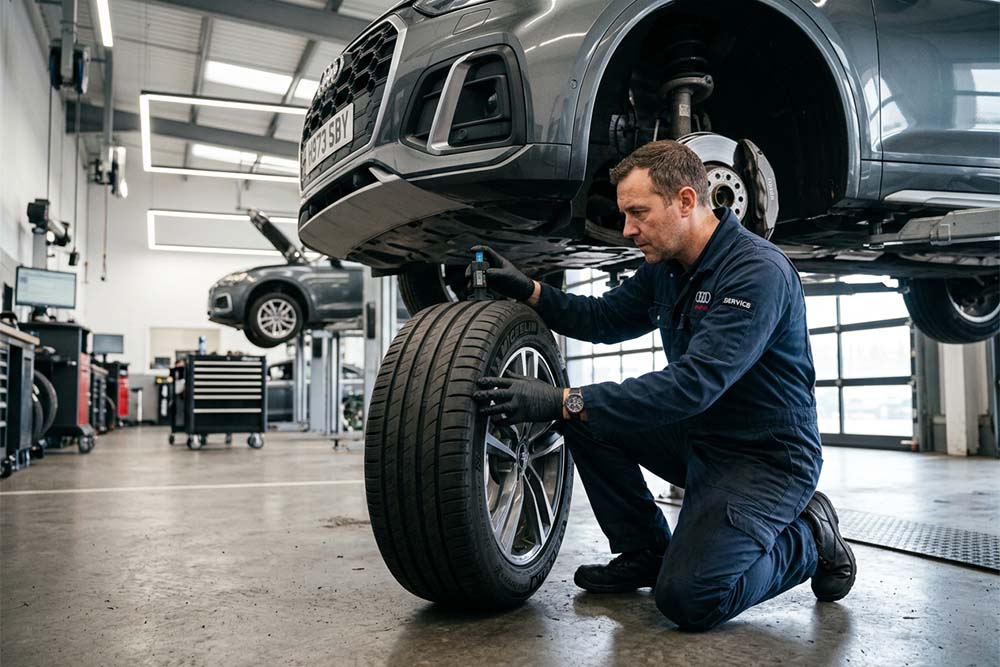
In the GCC, tyres are exposed to some of the harshest everyday driving conditions in the world. Summer heat, abrasive road surfaces, heavy SUVs, fast highways and long intercity journeys all place extra stress on rubber, sidewalls and internal tyre structure.
Qatar’s regulation is relevant because a tyre can look new from the outside while still being affected by poor storage. Excessive stacking, heat exposure, pressure marks or long storage periods can all affect performance once the tyre is fitted.
The hidden risk before a tyre is fitted
Many drivers focus only on tread depth once a tyre is on the car. Qatar’s rules show why the earlier stage matters too.
A tyre that has been stored badly may suffer shape changes or internal stress before it reaches the road. That is why the regulation places attention on warehouse handling, stock rotation and sale periods, not just driver behaviour after purchase.
What UAE drivers should take from this
The UAE already treats summer vehicle condition as a major safety issue. In July 2026, the UAE Ministry of Interior launched its “Accident-Free Summer” road safety campaign, urging drivers to check tyres, lights and indicators, avoid overloading roof racks and follow safe driving practices during the summer travel period.
Dubai’s RTA has also urged motorists to carry out regular vehicle inspections during extreme heat, warning that high temperatures place extra strain on tyres, cooling systems and engines.
For UAE motorists, the practical checklist is straightforward:
- Check tyre age before buying, not only after fitting. The manufacturing date is marked on the sidewall, and buyers should ask the retailer to explain the date code before paying.
- Inspect the full tyre, including sidewalls. Cracks, bulges, cuts, uneven wear and old repair marks are warning signs, especially before highway drives between Dubai, Abu Dhabi, Al Ain, Oman or Saudi Arabia.
- Keep pressure checks regular and cold. Tyre pressure readings taken after driving can be misleading because heat changes pressure, so checks are best done before the car has covered much distance.
Dealers and workshops face closer scrutiny
Tyre condition should also be assessed alongside wheel alignment and suspension health. A new tyre can begin wearing unevenly if the steering geometry is incorrect, particularly after kerb impacts, potholes or suspension repairs. Experts Car Maintenance provides a wheel alignment service in the UAE to help correct steering position, improve stability and reduce avoidable tyre wear, making it a useful follow-up when drivers notice pulling, vibration or uneven tread.
Qatar’s rule also puts responsibility on the tyre supply chain. The Peninsula reported that companies seeking approval for an extended sales period will have applications reviewed, with compliance checked against the technical requirements. It also reported that the next phase would include inspections and periodic audits of warehouses, tyre showrooms and sales outlets.
That matters because Gulf drivers often buy tyres based on brand, price and size, while paying less attention to how long the tyre has been in storage or whether it has been stored properly.
For workshops and tyre retailers across the region, Qatar’s approach reinforces three important expectations:
- Stock control needs to be transparent. Customers should be able to ask when the tyre was manufactured, how long it has been stored and whether it meets local technical standards.
- Cheaper old stock should be treated with caution. A discount may look attractive, but tyres are safety-critical parts, not cosmetic accessories.
- Warranty terms should be clear at the point of sale. Drivers should keep invoices and warranty documents, especially if the tyre has been approved under an extended sale period.
What remains unconfirmed for the wider GCC
Qatar’s announcement applies to Qatar and its local technical regulation. There is no confirmed single GCC-wide change in this specific 2026 rule based on the available official information.
That means UAE, Saudi Arabia, Oman, Bahrain and Kuwait drivers should not assume Qatar’s exact sale-period extension automatically applies in their markets. However, the safety principle is highly relevant across the Gulf: buy tyres from trusted outlets, check tyre age, avoid damaged or poorly stored stock, and inspect tyres more frequently during peak summer.
Dubai’s RTA also lists vehicle inspection as part of registration, renewal, transfer and export procedures for relevant vehicles, underlining how roadworthiness remains part of the ownership process in the UAE.
Conclusion
Qatar’s new tyre sale rules are a reminder that tyre safety starts before the car leaves the shop. For GCC drivers, the lesson is not only to replace worn tyres, but to ask better questions when buying them.
Tyres should be checked for age, storage quality, warranty cover, visible damage and correct pressure. In Gulf heat, that can make a real difference to braking, stability and blowout risk, especially during long summer journeys.