Saudi Arabia’s 90-Day GCC Vehicle Rule Is Now In Force: What UAE Drivers Need To Know
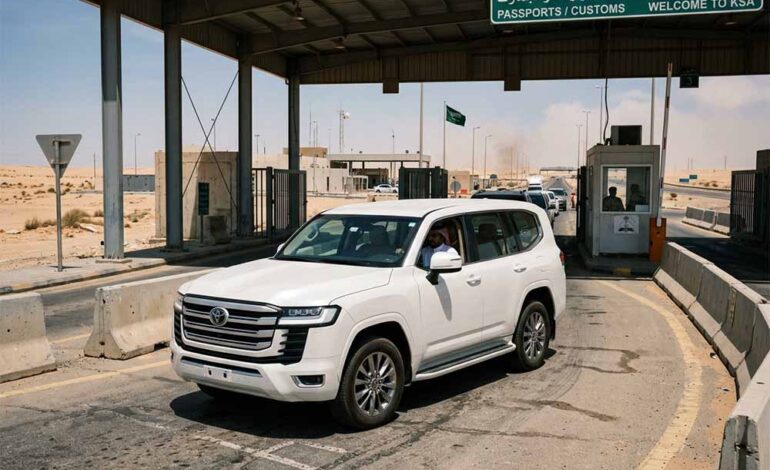
Saudi Arabia’s 90-day GCC vehicle rule took effect on 26 August 2026, limiting how long certain privately owned vehicles registered in other Gulf Cooperation Council countries can remain in the Kingdom. The limit is 90 days in total within a 365-day period, whether used continuously or across several visits.
The rule is not a blanket restriction on every UAE or GCC-plated car. It applies to GCC-registered private vehicles owned by Saudi citizens or non-GCC residents living in Saudi Arabia, and to vehicles either group is officially authorised to drive.
Saudi Arabia’s 90-Day GCC Vehicle Rule: The Confirmed Limits
The regulations are being implemented by the Zakat, Tax and Customs Authority, in coordination with the Ministry of Interior and General Directorate of Traffic.
The main limits are:
- A covered vehicle can remain in Saudi Arabia for up to 90 days.
- The 90 days can be consecutive or split across multiple trips.
- The count runs across 365 days from the vehicle’s first customs entry.
Vehicle, owner and authorised-driver details are recorded at entry and exit. Because the allowance is cumulative, leaving Saudi Arabia and returning does not restart a fresh 90-day period.
Who Is Actually Covered By The Rule?
The legal wording matters because the scope is narrower than some headlines suggest.
Saudi Citizens And Non-GCC Residents In Saudi Arabia
The rules apply when a private vehicle registered in another GCC country is owned by a Saudi citizen or by a Saudi resident who is not a GCC national. They also cover vehicles either group is formally authorised to drive.
Affected cases include:
- Saudi citizens using eligible private cars with another GCC country’s plates.
- Non-GCC nationals resident in Saudi Arabia who own such vehicles.
- Qualifying owners or residents officially authorised to drive them.
Not Every UAE-Plated Visitor Is Subject To The Cap
The regulation defines a resident as a person who is not a citizen of any GCC member state and who resides in Saudi Arabia. A Saudi citizen is treated separately.
This means the new rule should not be read as a general 90-day restriction on a UAE, Omani, Bahraini, Kuwaiti or Qatari citizen driving their own GCC-registered vehicle into Saudi Arabia. ZATCA has also clarified a reported case involving a non-Saudi GCC owner driving their own car as falling outside this specific regime.
Up To 30 Extra Days Can Be Requested
Owners or authorised drivers covered by the rule can apply for an extension before the original 90-day period expires.
The executive procedures confirm:
- The extension can be up to 30 days.
- Vehicle registration and insurance must remain valid.
- Late extension applications will not be accepted.
The request is handled through an electronic platform approved by the Ministry of Interior. ZATCA said the service will be made available through Absher in coordination with the General Directorate of Traffic.
The official ZATCA announcement does not give a separate activation date for the Absher extension service, only stating that it will be made available through the platform.
Fines Can Reach SAR 2,000

Saudi Arabia has set penalties for covered vehicles that remain beyond the legal period without an approved extension.
The confirmed penalties are:
- A fine of SAR 1,000 to SAR 2,000.
- Vehicle impoundment until the violation is resolved.
- Towing and impoundment costs charged to the owner or authorised driver.
The breach can be resolved by registering the vehicle in Saudi Arabia under the applicable rules or by undertaking to remove it through the relevant entry port after penalties are settled.
Existing Vehicles Get Until 23 November To Regularise
Affected GCC-registered vehicles already inside Saudi Arabia before 26 August receive a separate 90-day correction window ending on 23 November 2026.
During the grace period, owners or authorised drivers can either:
- Take the vehicle out of Saudi Arabia before the deadline.
- Regularise an eligible vehicle and obtain Saudi licence plates.
ZATCA says Saudi registration can be handled through an authorised customs broker at the nearest customs port, subject to the required procedures, customs duties and tax. The vehicle does not have to return to its original entry point.
What UAE Drivers Should Take From The Saudi Change
For UAE motorists, the key point is that a UAE number plate alone does not determine whether this rule applies. The status of the owner or authorised driver in Saudi Arabia is central.
A Saudi citizen using a UAE-registered car, or a non-GCC national resident in Saudi Arabia using an eligible UAE-registered vehicle, should track the vehicle’s accumulated days carefully. Drivers with unusual ownership, authorisation or residency arrangements should confirm their position with ZATCA or Saudi traffic authorities.
Cross-Border Owners Now Need To Watch The Calendar

For affected UAE and GCC vehicle users, the practical change is clear: the 90 days are cumulative, the calculation is tied to the first customs entry within the 365-day period, and overstaying can lead to both a fine and vehicle impoundment.