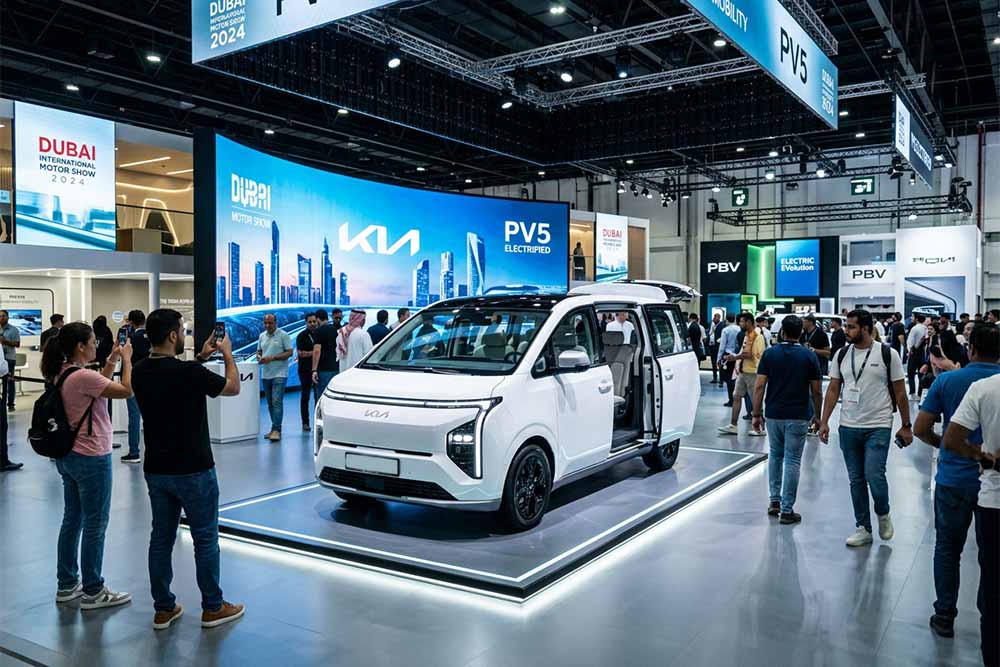
What The GCC Can Learn From China’s New Energy Vehicle Boom
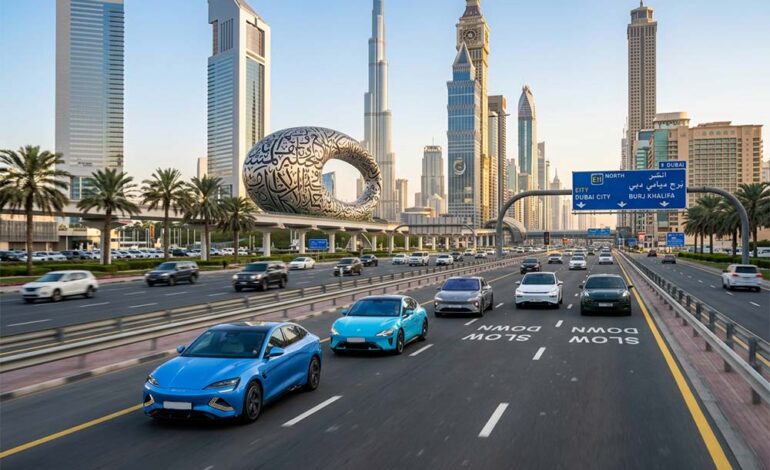
China’s new energy vehicle boom is not just a story about electric cars selling in huge numbers. It is a lesson in how policy, pricing, charging access, local manufacturing, software, battery supply and consumer choice can push a market from early adoption to mainstream demand.
For the GCC, the main lesson is clear: electric and plug-in hybrid vehicles will not grow because they are promoted as futuristic products. They grow when they make practical sense for buyers, fleets, families and businesses. China reached that point by making new energy vehicles widely available across price bands, body styles and use cases. The Gulf is still at an earlier stage, but the UAE, Saudi Arabia and Qatar are now moving from curiosity to real adoption.
The International Energy Agency reported that global electric car sales exceeded 20 million units in 2025, equal to about one-quarter of all new cars sold. China remained the largest force in that shift, with EVs accounting for nearly 55% of all car sales, while Chinese carmakers supplied around 60% of global electric car sales in 2025.
For GCC markets, the question is not whether China’s model can be copied exactly. It cannot. The GCC has different fuel prices, climate, driving habits, charging patterns, income profiles and vehicle preferences. The real question is what can be adapted.
China’s NEV growth was built on choice, not just incentives
China’s success did not come from one policy or one popular brand. It came from a full market being built around new energy vehicles, including battery electric vehicles, plug-in hybrids and extended-range electric vehicles.
CAAM-linked data reported by CnEVPost showed China’s NEV sales reached 16.49 million units in 2025, with a forecast of 19 million units in 2026. The same report said NEV penetration was projected to rise from 47.9% in 2025 to 54.7% in 2026.
That scale matters because it changes buyer behaviour. Once people see EVs and plug-in hybrids everywhere, they stop treating them as experiments. They become normal family cars, taxis, fleet vehicles, city runabouts and long-distance commuters.
For the GCC, this is a vital point. A market cannot move quickly if new energy vehicles remain limited to expensive luxury sedans, niche imports or a few high-end SUVs. Buyers in Dubai, Abu Dhabi, Riyadh, Doha and Kuwait City need choices that fit how they actually drive.
The GCC needs more variety in areas where demand is already strong:
- Family SUVs and crossovers: Gulf buyers still lean heavily towards SUVs because of cabin space, road presence and family use. NEV adoption will accelerate when electric, plug-in hybrid and range-extender SUVs become available with proper warranty, cooling systems and local service support.
- Fleet-friendly vehicles: Taxis, delivery vans, corporate cars and hotel transport fleets can help normalise EVs faster than private buyers alone. These vehicles have predictable routes, known charging needs and strong cost-saving potential when managed properly.
- Affordable second cars: Many UAE households own more than one vehicle. Smaller EVs can work well as city cars for Dubai, Sharjah and Abu Dhabi if pricing, home charging and insurance are practical.
Affordability is the real turning point for Gulf buyers
China’s NEV boom shows that buyers change behaviour when the price gap narrows. The IEA noted that in China, 70% of battery electric cars sold in 2025 were already cheaper than the average conventional car.
That is a major difference from many GCC markets, where EVs can still feel expensive once buyers factor in insurance, charging setup, resale uncertainty and dealer support. The Gulf has strong luxury demand, but mass adoption will depend on the middle of the market.
For the UAE and wider GCC, the important affordability lessons are practical rather than ideological.
- The purchase price must make sense: Buyers may accept a higher upfront price if the car clearly saves money over time. However, that saving must be easy to understand, especially when petrol remains relatively accessible compared with many global markets.
- Financing and insurance need to mature: EV insurance, battery coverage and repair networks still influence confidence. If insurers price EVs too cautiously, or if repair options are limited, the ownership case becomes harder for everyday buyers.
- Used EV values need more transparency: China’s market benefits from volume, which helps create better used-car data. In the UAE, resale confidence will improve only when buyers can check battery health, service history, software status and warranty transfer terms clearly.
Why Gulf charging must be planned around real driving patterns
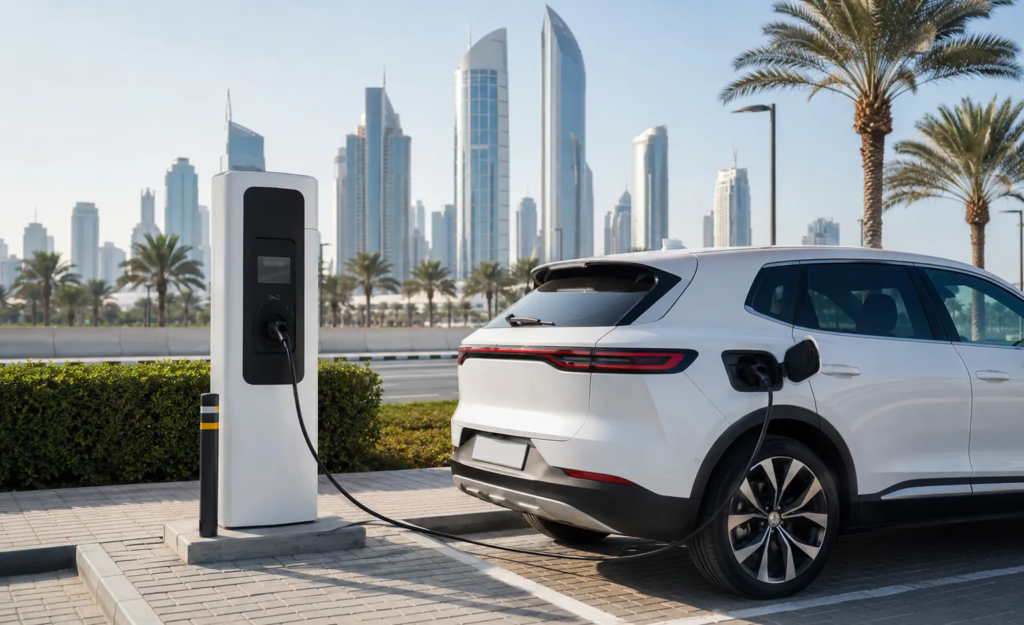
China’s charging expansion worked because infrastructure followed actual usage. In the GCC, charging needs to be designed around heat, apartment living, long highway drives and concentrated city traffic.
Dubai is already ahead of many regional cities. DEWA says its EV Green Charger network has grown from 100 chargers in 2015 to more than 400 charging stations across Dubai, with connected digital access through apps and platforms. The UAEV initiative, created by the Ministry of Energy and Infrastructure and Etihad Water and Electricity, is also aimed at expanding EV charging across the UAE.
That is progress, but China’s lesson is that charging needs to become part of daily life, not a special errand.
Apartment charging will decide adoption in Dubai and Abu Dhabi
A large share of UAE residents live in apartment buildings. For these drivers, home charging is not always simple. Building permissions, parking allocation, load capacity and payment management can all become barriers.
This is where the GCC needs clear building-level solutions. Developers, property managers and utility providers need practical standards for shared chargers, billing systems and future-ready parking. Without that, EV ownership remains easier for villa owners than apartment residents.
China’s lesson here is not only about charger numbers. It is about removing friction. Drivers should know where they can charge, what it will cost, whether the charger is working and how long it will take.
Highway charging matters more in the GCC than many markets
GCC driving is not only urban. Many drivers regularly travel between Dubai and Abu Dhabi, Riyadh and Dammam, Doha and northern Qatar, or across borders during holidays. Long, hot highway trips place heavy demands on battery cooling, energy use and charging reliability.
That makes ultra-fast charging important on major corridors. A city-only charging network will not build confidence for families who use one SUV for school runs, airport trips, weekend drives and long-distance travel.
Charging stops also need to be located where people already stop. Petrol stations, malls, hotels, border routes, tourist destinations and service areas are more useful than chargers placed only for visibility.
China’s plug-in hybrid lesson suits the GCC particularly well
China’s NEV category includes more than pure EVs. Plug-in hybrids and extended-range electric vehicles have played an important role because they reduce fuel use while easing range anxiety.
That matters for the GCC. The region’s car culture is built around flexibility. Drivers want to handle city traffic, high-speed highways, family trips, desert routes, valet parking, summer heat and occasional long drives without planning every kilometre around a charger.
For many Gulf buyers, plug-in hybrids may be the bridge technology that makes the most sense during the next few years.
- They suit mixed driving: A plug-in hybrid can cover short urban trips on electric power if charged regularly, while still offering petrol backup for long journeys. This fits Dubai and Abu Dhabi commuters who do weekday city driving but still want weekend flexibility.
- They reduce charging pressure: PHEVs do not need the same public charging dependence as full EVs. That can help during the transition period while public and residential charging networks continue to expand.
- They still need proper owner education: A plug-in hybrid only delivers strong efficiency if owners actually charge it. Dealers should explain charging habits, battery warranty, fuel use and service needs clearly rather than selling PHEVs as simple petrol SUVs with an extra badge.
The GCC should focus on climate-tested NEVs, not just imported specifications
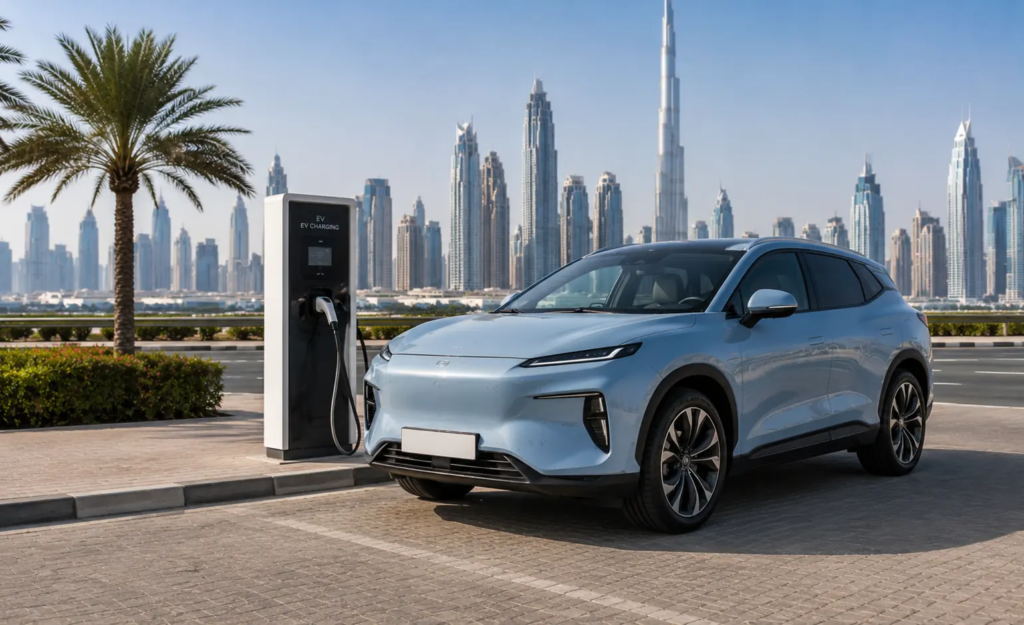
A China-market EV or PHEV specification sheet does not automatically answer GCC ownership questions. The Gulf has high summer temperatures, dust, sand, heavy air-conditioning use and long periods of high-speed driving.
This is where local testing and regional calibration matter. Buyers should not only ask about range, screen size or acceleration. They should ask how the vehicle performs in 45-degree heat, how the battery cooling system behaves in traffic, how quickly the cabin cools, and whether parts supply is ready.
The GCC can learn from China’s speed, but it should not copy the habit of rapid product turnover without strong aftersales planning. Gulf owners tend to keep SUVs and luxury cars for several years, and a weak service network can damage confidence quickly.
Important buyer checks include:
- Battery and cooling warranty terms: Heat management is one of the most important GCC ownership factors. Buyers should check battery warranty length, exclusions, thermal management coverage and whether diagnostics are available locally.
- Parts availability and repair training: A strong showroom launch means little if body parts, battery modules, sensors or software tools are unavailable. UAE owners should ask whether the authorised dealer can handle high-voltage repairs, ADAS calibration and software updates.
- Dust and cabin filtration performance: Gulf driving exposes cars to fine dust, construction areas and sandstorms. EVs and PHEVs still need strong AC performance, cabin filters, cooling system checks and proper sealing around sensitive electronics.
Chinese brands have changed expectations in the UAE and GCC
China’s NEV boom has also changed the image of Chinese cars. A decade ago, many Gulf buyers saw Chinese vehicles mainly as budget alternatives. Today, brands such as BYD, Geely, Zeekr, NIO, XPeng, Li Auto, Chery, Jetour, GAC and others are forcing buyers to reconsider what value means.
Some compete on price. Others compete on screens, cabin technology, hybrid systems, advanced driver assistance and premium materials. In the UAE, this matters because buyers are open to new brands when the value equation is strong, but they are also demanding about service, warranty and resale.
The GCC should take three lessons from the rise of Chinese NEV brands.
First, technology sells when it solves a real problem. A large screen is not enough. Fast charging, usable range, reliable AC, accurate navigation, strong driver assistance and easy service booking matter more in daily life.
Second, warranty can be a growth tool if it is backed by parts and trained technicians. Long warranty promises are attractive, but buyers become cautious if claims are slow or unclear.
Third, brand trust takes time. Chinese NEV brands can grow quickly in the Gulf, but long-term success will depend on service centres, resale values, software support and transparent communication during recalls or updates.
What UAE and Saudi policymakers can take from China’s approach
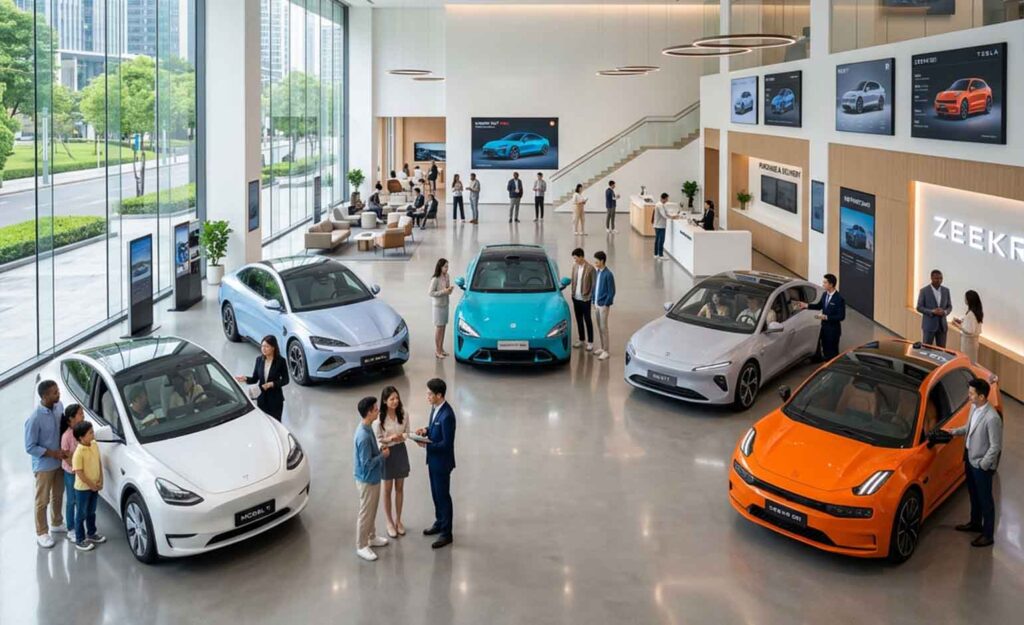
China used a combination of industrial policy, consumer incentives, infrastructure planning and domestic manufacturing support. The GCC does not need to follow the same route, but it can use the same principle: adoption is easier when different parts of the ecosystem move together.
The UAE already has a national policy direction for electric vehicles. The official UAE National Electric Vehicles Policy targets lower energy consumption in the transport sector, a centralised charging station database and improved charging convenience. Saudi Arabia is also building EV interest through Vision 2030, local manufacturing ambitions and major investments in brands and infrastructure.
The key is coordination. Buyers should not face one message from policymakers, another from utility providers, another from insurers and another from dealers. The market grows faster when the rules are clear.
Fleet electrification can create the first large wave
China’s market benefited from visible EV use in cities. The GCC can do the same through taxis, ride-hailing vehicles, delivery fleets, government cars and airport transport.
Fleet operators care about total cost, uptime and predictable service. If EVs and PHEVs prove themselves in those demanding roles, private buyers will gain confidence. Dubai’s taxi and logistics sectors could become major proof points if charging speed, maintenance and battery life are managed well.
Public data would make buyers more confident
One reason buyers hesitate is uncertainty. They want to know how EVs perform after three, five or seven years in local conditions. The GCC would benefit from better public data on battery health, charger uptime, ownership costs, insurance trends and used EV values.
This does not need to expose private customer data. Aggregated market information from transport authorities, charging operators, insurers and dealers could help buyers make better decisions.
Where the GCC should avoid copying China too closely
China’s NEV boom has produced major benefits, but it has also created intense price competition, rapid model turnover and pressure on smaller brands. The GCC should learn from that carefully.
A market filled with too many brands and too many short-lived models can create problems for owners. Parts become harder to source. Software support can become inconsistent. Resale values can suffer when a model is replaced quickly or a distributor changes strategy.
For Gulf buyers, this is especially important because many purchase decisions are tied to long-term ownership confidence. A seven-seat SUV may be a family’s main car. A luxury EV may be expected to hold value. A company fleet needs uptime, not just a low purchase price.
The GCC should encourage competition, but not at the expense of aftersales quality. Strong importer standards, recall transparency, parts support and technician training will matter more as the number of NEV brands grows.
The ownership costs Gulf buyers should not ignore
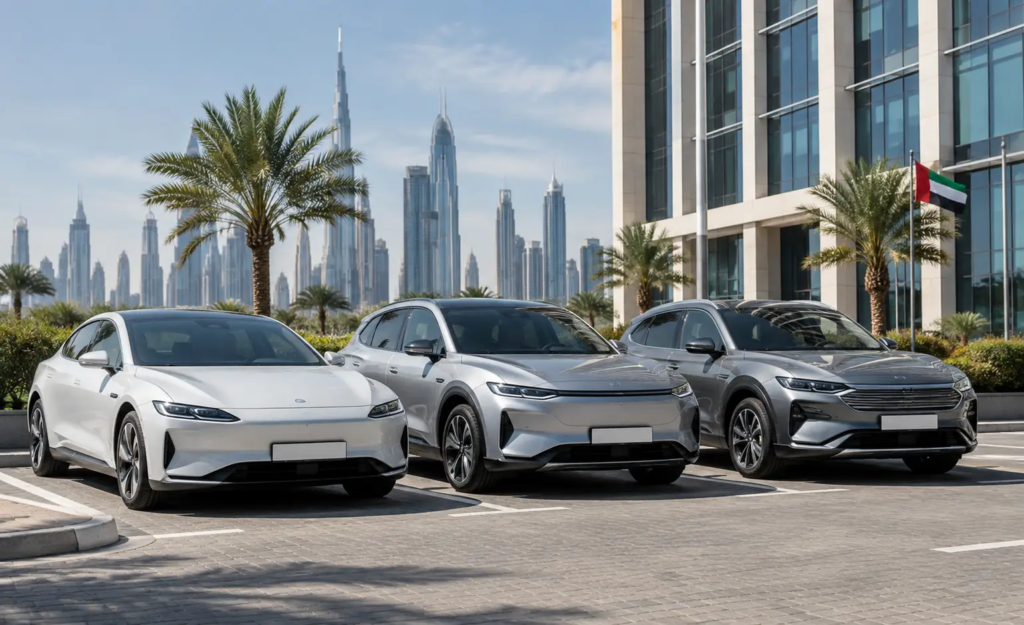
The Chinese experience shows that running costs can help sell NEVs, but ownership costs are not only about electricity versus petrol. GCC buyers need a fuller picture before switching.
Fuel prices, home charging access, public charging tariffs, insurance, tyres, depreciation, warranty coverage and service availability all affect the real cost of ownership. Electric cars may have fewer mechanical service items than petrol cars, but they can still carry high repair costs after accidents or battery-related faults.
The most realistic GCC ownership calculation should include:
- Energy cost and charging access: A driver with home charging may see a much stronger case than someone relying only on public chargers. Apartment residents should check whether regular charging is convenient before buying.
- Insurance and accident repair: EVs and PHEVs can require specialist repair procedures after crashes, especially around battery packs and high-voltage systems. Buyers should compare insurance terms, approved repair networks and excess amounts.
- Depreciation and warranty transfer: Resale value is still developing for many new EV and Chinese NEV brands in the UAE. A transferable battery warranty and clear service history can make a major difference when selling the car.
What Gulf dealers must get right next
China’s NEV growth was helped by product excitement, but the GCC market will be won or lost through dealer execution. Buyers in the UAE and Saudi Arabia expect strong showrooms, clear finance options, quick service booking and proper warranty handling.
Dealers selling EVs and plug-in hybrids should invest in more than launch events. They need trained sales staff who can explain real-world charging, service advisors who understand high-voltage systems, and technicians who can diagnose faults without long delays.
For premium Chinese brands, this is even more important. A buyer considering a Zeekr, NIO, BYD, Li Auto or XPeng may be comparing it with Lexus, BMW, Mercedes-Benz, Audi or Tesla. The car might be impressive, but the ownership experience has to match the promise.
The Gulf’s NEV future will be different from China’s, and that is fine
The GCC does not need to become China to benefit from China’s new energy vehicle boom. The region has its own buyer habits, climate demands and infrastructure challenges. Petrol vehicles, hybrids, plug-in hybrids and EVs are likely to share the market for years rather than one replacing the other overnight.
The strongest lesson from China is that adoption grows when the product feels normal, useful and financially sensible. For the Gulf, that means more family SUVs, better charging access, clearer warranty terms, stronger service networks, transparent used EV checks and climate-tested vehicles.
China proved that new energy vehicles can move from policy ambition to mass-market reality. The GCC now has to build its own version of that shift, one that works in Dubai traffic, Abu Dhabi suburbs, Saudi highways, Qatari commutes and the extreme heat that defines everyday ownership in the region.