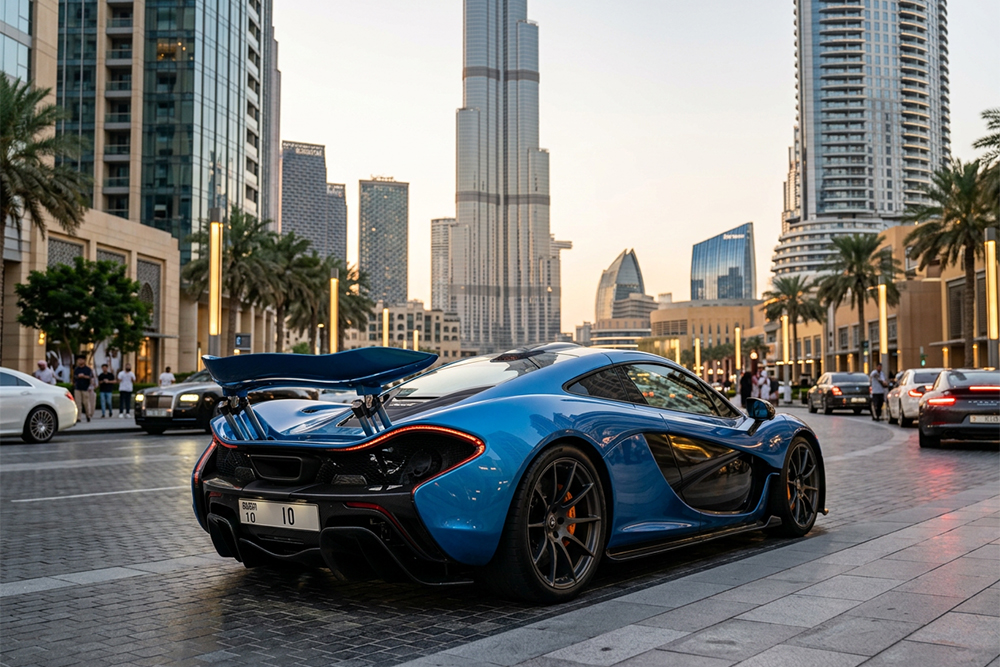
How Dubai Became One of the World’s Supercar Capitals
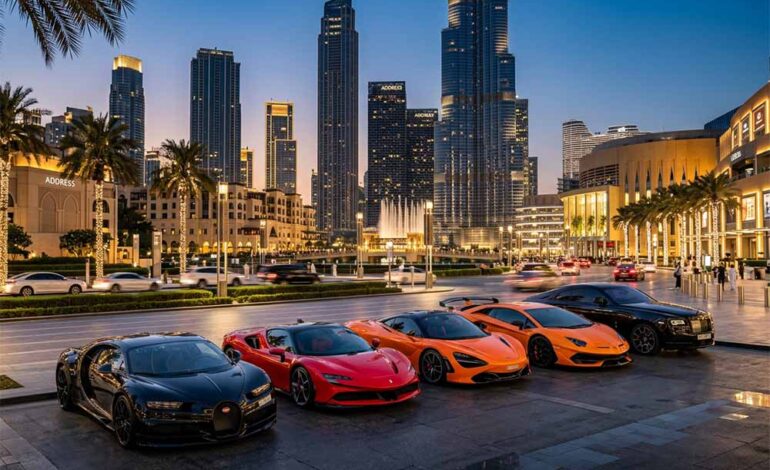
Dubai became one of the world’s supercar capitals through a combination of wealth, global trade, luxury tourism, strong dealer representation, modern roads and a public culture that treats exotic cars as part of the city’s identity.
Ferraris, Lamborghinis, McLarens and limited-production Porsches are not unusual sights around Downtown Dubai, Jumeirah, Dubai Marina or the Palm. Yet the city’s supercar status is not simply the result of wealthy residents buying expensive vehicles. It is supported by a wider automotive ecosystem that includes Jebel Ali Port, specialist dealerships, independent workshops, luxury rental fleets, motorsport venues and a growing international market for vehicle trading.
Dubai’s transformation also reflects the city’s wider development. As it expanded into a business, tourism and logistics centre, high-end cars became both desirable personal purchases and highly visible symbols of the lifestyle Dubai was building.
Dubai’s supercar culture grew with the city
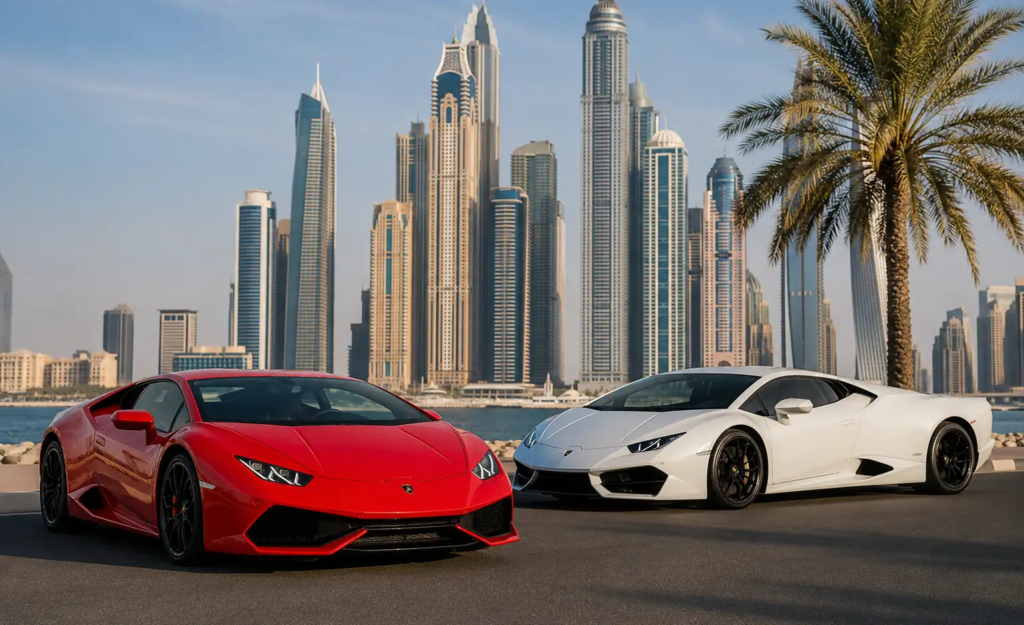
Dubai did not become a major exotic-car market overnight. Its rise followed decades of economic growth, infrastructure investment and international expansion.
As the city attracted entrepreneurs, investors, executives and high-net-worth residents from across the world, demand grew for the products associated with global luxury markets. That included watches, property, yachts and high-performance cars.
Supercars fitted naturally into this environment. They were exclusive, internationally recognisable and closely linked with engineering, design and personal status. Dubai also offered something many densely populated global cities could not: wide roads, modern districts, large villas, secure parking and comparatively easy access to neighbouring emirates.
Several factors reinforced that early growth:
- Dubai became an international home rather than simply a temporary business stop. As more affluent residents settled in the emirate, demand shifted from occasional luxury purchases towards long-term ownership. This encouraged manufacturers and authorised distributors to invest in showrooms, service centres and regional customer support.
- Luxury vehicles became closely connected with the city’s visible identity. Supercars suited the architectural backdrop of Downtown Dubai, JBR, Dubai Marina and the Palm Jumeirah. Their presence in hotels, retail districts and tourist areas made them part of Dubai’s public image rather than a private hobby hidden inside collections.
- The wider GCC already had a strong appetite for powerful cars. Buyers in Saudi Arabia, Kuwait, Qatar, Bahrain and the UAE had long valued large engines, prestige brands and high-performance models. Dubai became a convenient regional centre where collectors could purchase, maintain, trade and display these vehicles.
Jebel Ali turned Dubai into an automotive trading centre
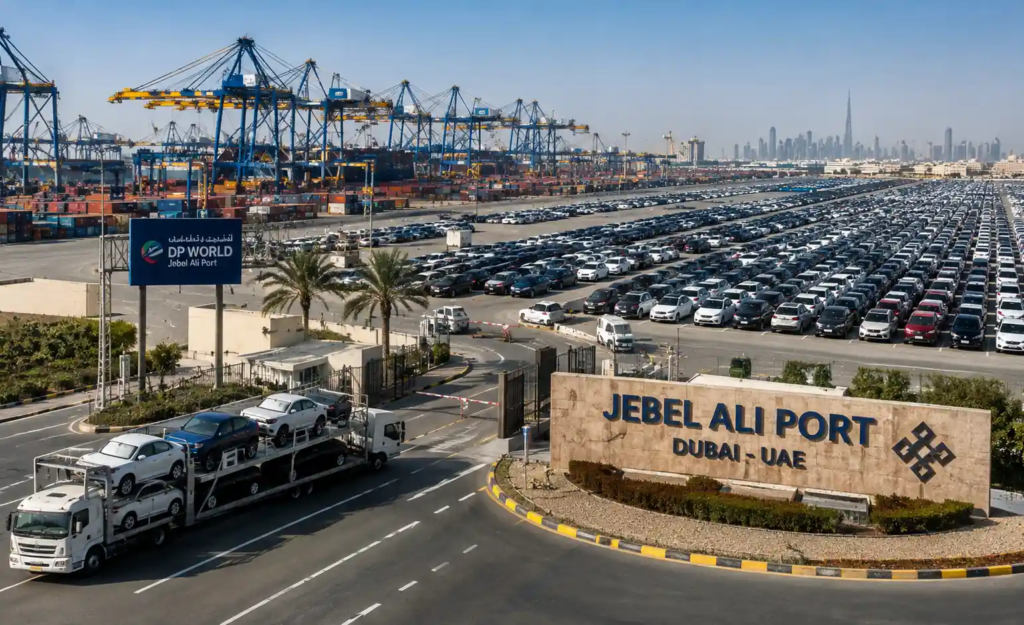
The supercar market relies on more than local purchasing power. Vehicles, replacement parts and specialist equipment must enter the region efficiently, particularly when dealing with low-volume cars built in Italy, Germany or the UK.
Jebel Ali Port gave Dubai a major advantage. DP World reported that its Dubai terminals handled a record 1.3 million vehicles in 2024, with Jebel Ali accounting for almost 960,000 units. Those figures cover the wider vehicle trade rather than supercars alone, but they show the scale of Dubai’s automotive logistics network.
DP World has also expanded vehicle storage at Jebel Ali. A 2.6-million-square-foot yard added 13,000 car-equivalent units of capacity, taking the port’s total storage capacity to 75,000 units.
Imports, exports and re-exports support the market
Dubai’s role is not limited to supplying cars for UAE residents. Vehicles move through the emirate towards other GCC countries, Africa, Asia and international collector markets.
This creates several advantages for the supercar sector. Dealers can access international stock, traders can source rare specifications, and owners have a larger market when they decide to sell.
The city’s trading infrastructure supports the market in practical ways:
- Vehicles can arrive through an established automotive logistics network. Large volumes help support shipping, customs, storage and transport services that smaller markets may struggle to sustain independently. Rare cars still require careful handling, but they benefit from the same mature trade infrastructure.
- Dubai functions as a redistribution point for the wider region. A vehicle offered in Dubai may ultimately be sold to a buyer in another Gulf country or exported further abroad. That larger audience can improve liquidity for unusual colours, high-performance specifications and limited-production models.
- Parts supply is supported by the same international connections. Supercars often need model-specific components, specialist tyres and manufacturer-approved fluids. Efficient logistics do not remove waiting times, but they make Dubai a more practical ownership base than markets with fewer direct automotive links.
Dubai is continuing to expand this role. The planned Dubai Auto Market has been presented as a large integrated destination for new and used vehicles, trade services, events and automotive businesses. Government announcements said the project would connect exporting countries with markets across the Middle East, Africa and Southeast Asia.
Global brands built a serious local presence
Dubai’s supercar scene is supported by authorised distributors representing many of the world’s leading performance marques.
Ferrari, Lamborghini, McLaren, Porsche, Aston Martin, Bentley and Rolls-Royce all have established representation in the UAE. This matters because buyers of expensive performance cars expect more than a showroom. They need trained technicians, diagnostic equipment, warranty support, recalls, software updates and access to genuine parts.
A mature dealer network also encourages manufacturers to allocate important vehicles to the region. Limited editions and track-focused variants often attract strong interest from Gulf collectors, although allocations remain controlled by each manufacturer and cannot be assumed.
Specialist workshops widened the ownership base
Not every supercar remains under an authorised dealer for its entire life. As Dubai’s vehicle population matured, independent specialists developed alongside the official network.
These businesses serve older Ferraris, Lamborghinis, McLarens, Porsches and other performance cars after warranties expire. Some focus on mechanical repair, while others handle paint protection, detailing, exhaust systems, restoration, storage or track preparation.
This broader support network matters because supercar ownership involves several recurring needs:
- Mechanical expertise must extend beyond routine servicing. Carbon-ceramic brakes, active suspension, dual-clutch gearboxes and complex cooling systems require model-specific knowledge. A low labour price is of little value if diagnosis is poor or incorrect parts are fitted.
- Vehicle condition is especially important in the used market. Buyers need service records, pre-purchase inspections and evidence of accident repairs. Imported cars, heavily modified examples and vehicles with incomplete histories can carry greater financial risk.
- Cosmetic care has become its own major industry. Paint protection film, ceramic coatings, wheel repair and climate-controlled storage are common considerations for collectors. Dubai’s heat, dust and intense sunlight can quickly expose neglected paint, rubber seals and interior materials.
Dubai Police made the supercar part of the city’s public image
Few initiatives have linked Dubai with exotic cars as effectively as the Dubai Police luxury patrol fleet.
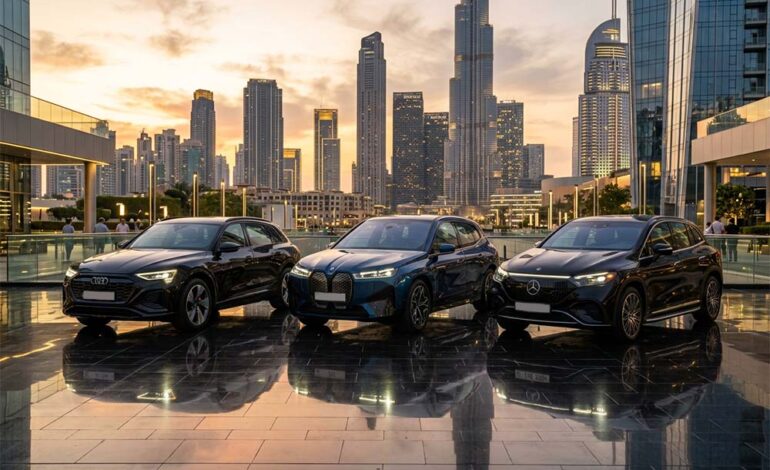
Its high-performance vehicles are regularly displayed at tourist destinations and public events. The fleet has included models from Aston Martin, Audi, Bentley, Lotus and Mercedes-Benz, alongside other luxury and performance cars introduced over the years.
Dubai Police says the vehicles are used to strengthen police visibility and public engagement at prominent tourist locations such as the Burj Khalifa area, Mohammed bin Rashid Boulevard and JBR.
The significance is largely cultural rather than operational. The cars became widely photographed symbols of Dubai and reinforced the idea that supercars were part of the city’s streetscape.
The fleet helped Dubai’s image in three ways:
- It connected exotic cars with recognisable Dubai landmarks. Images of performance cars in police livery outside the Burj Khalifa or along JBR travelled widely through international media. This gave the city an automotive identity that advertising alone would have struggled to create.
- It turned the cars into visitor attractions. Tourists could encounter vehicles normally seen at motor shows or private collections. That accessibility made the supercar scene feel public and closely tied to the visitor experience.
- It encouraged cooperation between authorities and authorised distributors. Many additions were announced through partnerships with local dealer groups. These handovers highlighted the scale and maturity of Dubai’s premium automotive market.
A city designed around driving helped the culture develop
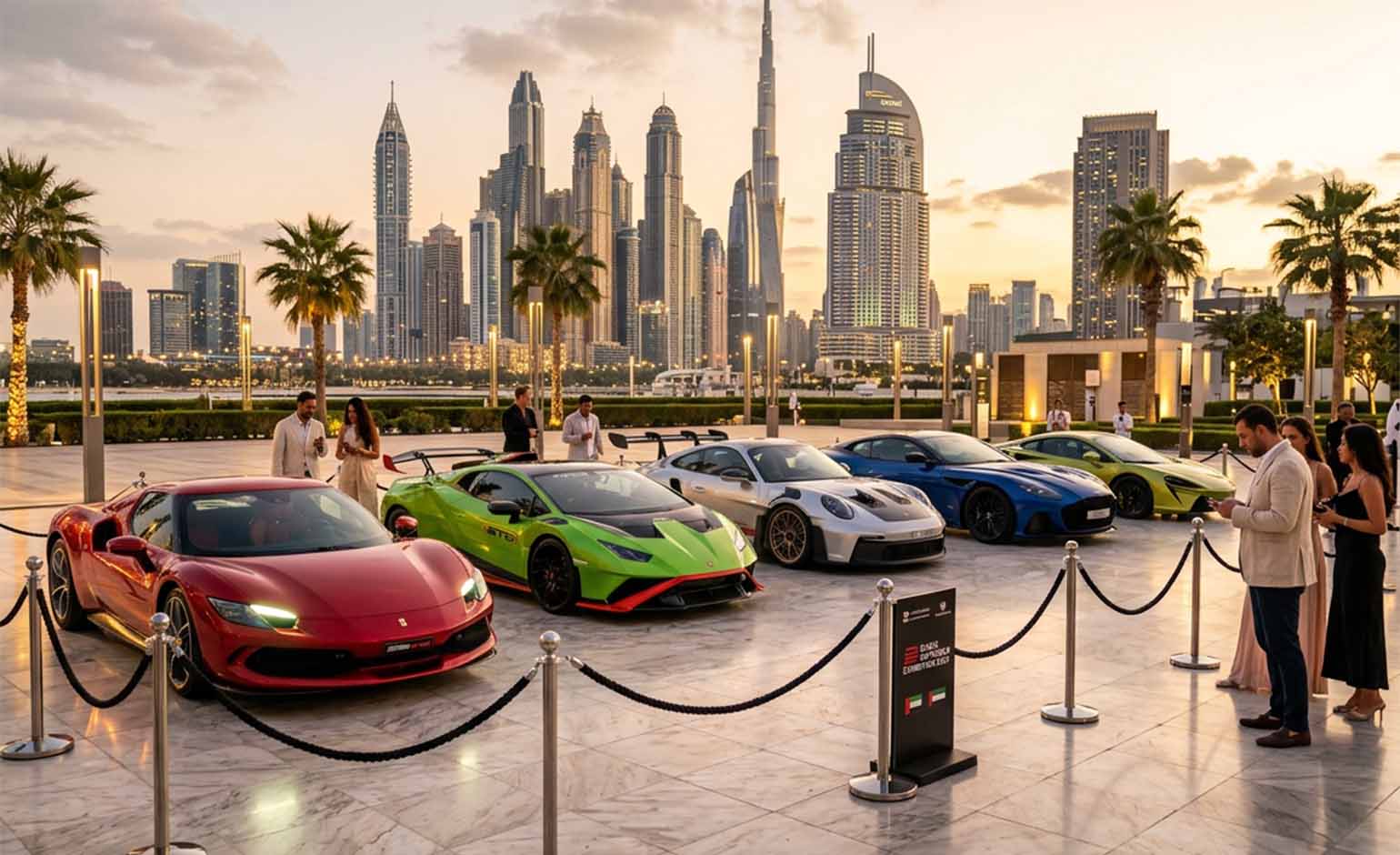
Dubai’s transport system is increasingly diverse, with metro, tram, taxi and shared mobility services playing a major role. Even so, private cars remain central to how many residents move between homes, offices, hotels and leisure destinations.
Wide arterial roads link districts across the emirate. Sheikh Zayed Road, Al Khail Road, Sheikh Mohammed bin Zayed Road and Emirates Road connect the city with residential communities and neighbouring emirates.
These roads do not make Dubai a place where supercars can be driven without restriction. Speed limits, cameras, traffic congestion and road-safety rules apply regardless of the vehicle’s performance. The appeal is instead the relative ease with which owners can use an exotic car for daily journeys, weekend drives or hotel and restaurant visits.
Dubai’s modern urban layout also provides the infrastructure high-end owners expect, including:
- secure underground parking in many premium developments;
- valet services at hotels, restaurants and shopping centres;
- specialist vehicle transport and storage businesses;
- broad access to fuel stations and workshop districts;
- direct highway links towards Abu Dhabi, Sharjah and the Northern Emirates.
This convenience helps explain why some collectors regularly use their cars rather than keeping them permanently stored.
Motorsport gave performance cars somewhere to belong
A strong supercar city needs more than showrooms and scenic roads. Dubai also developed a motorsport base that gave enthusiasts structured access to performance driving.
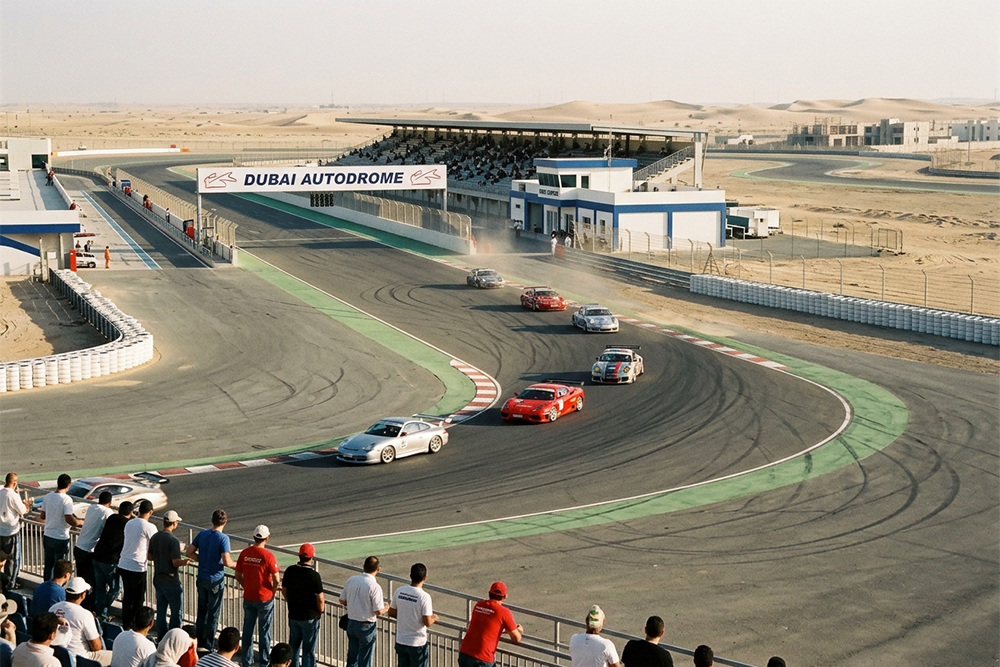
Dubai Autodrome opened in 2004 as the UAE’s first fully integrated multipurpose motorsport and entertainment facility. It includes an FIA-sanctioned 5.39km circuit and hosts regional and international racing, track days, karting and driving experiences.
The venue’s calendar has featured the 24H Dubai endurance race, Porsche Carrera Cup Middle East, Asian Le Mans Series and regional club racing. The 24H Dubai grid includes GT and touring cars from manufacturers such as Porsche, Ferrari, Aston Martin, Mercedes-Benz, Audi and BMW.
Track infrastructure benefits the wider culture even when most owners never compete professionally. It gives drivers a legal environment in which to understand braking, handling and vehicle behaviour away from public roads.
Rental fleets made supercars accessible to visitors
Dubai’s luxury tourism industry helped create a large supercar rental sector. Visitors who may never purchase an exotic car can hire one for a day, a weekend or a longer stay.
That has made Lamborghinis, Ferraris, McLarens and high-performance Mercedes-AMG models unusually visible around hotels and tourist districts. It has also added a commercial layer to the city’s supercar culture.
However, rental availability should not be confused with easy or risk-free access. Customers need to examine insurance terms, mileage limits, deposits, excess amounts and restrictions on where the vehicle may be driven.
Anyone considering a supercar rental should check:
- The insurance excess and damage policy. A rental may include basic insurance while leaving the customer responsible for a large excess. Tyres, wheels, windscreens and underbody damage may also be treated separately.
- The vehicle’s condition at collection. Every mark should be photographed and recorded before departure. Customers should also confirm the fuel level, mileage and any dashboard warnings.
- The company’s legal status and written agreement. Pricing advertised online may not show deposits, delivery charges or additional mileage fees. The full contract should be reviewed before payment or handover.
The rental industry has helped strengthen Dubai’s visual connection with supercars, but the quality and reliability of operators vary. A prominent social media presence is not a substitute for clear documentation and transparent terms.
Gulf conditions create a tougher ownership reality
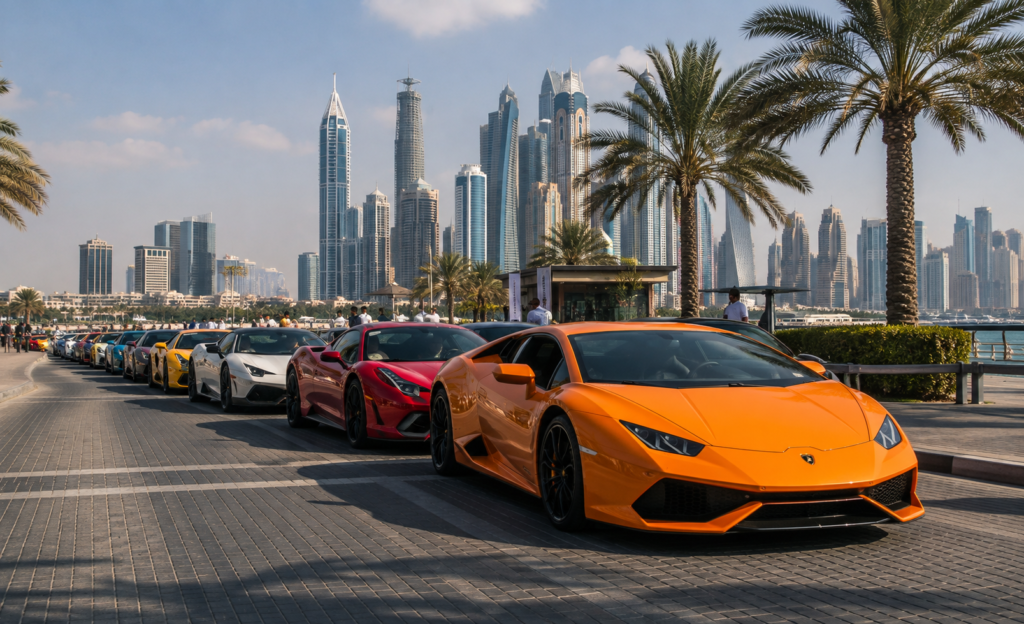
Dubai may look ideal for supercars, but the environment is demanding. Extreme summer heat, fine dust, heavy traffic and long periods of air-conditioning use all place stress on high-performance vehicles.
Cooling systems must be healthy, batteries can deteriorate quickly, and tyres may age before their tread is fully worn. Low ground clearance can also make ramps, speed humps and steep parking entrances difficult.
Owners need to plan for several Gulf-specific concerns:
- Cooling performance cannot be neglected. Radiators, coolant hoses, fans and air-conditioning systems work hard during summer. A minor cooling fault can become expensive very quickly in a tightly packaged high-performance engine bay.
- Tyre age matters as much as tyre tread. Heat and long storage periods can harden rubber or cause cracking. Correct manufacturer-approved sizes and speed ratings are essential, particularly on cars capable of very high speeds.
- Insurance can be costly and restrictive. Premiums depend on the vehicle, driver profile, repair value and insurer. Owners should verify agency repair conditions, approved workshops, track-use exclusions and agreed-value terms before accepting a policy.
Dust also affects filters, paintwork, radiators and interior components. Cars that are rarely driven still require maintenance, battery support and regular inspections.
Social media amplified a culture that already existed
Dubai’s supercar reputation was established before social media became dominant, but platforms such as Instagram, YouTube and TikTok greatly increased its visibility.
Hotel entrances, dealership launches, organised drives and car meets could suddenly reach viewers around the world. The contrast between rare cars, desert landscapes and Dubai’s skyline created highly shareable imagery.
This visibility also encouraged businesses to use exotic cars as marketing tools. Restaurants, property firms, tourism operators and content creators began incorporating them into campaigns. Some of that content reflects genuine local ownership, while some involves rentals, dealer stock or vehicles brought together specifically for filming.
The distinction matters. Dubai has a substantial real supercar market, but online content can exaggerate how common private ownership is or suggest that every car shown belongs to the person driving it.
Dubai’s market is now about more than petrol-powered exotics
The next stage of Dubai’s performance-car culture is becoming more varied.
Traditional V8, V10 and V12 models remain important, but plug-in hybrids and high-performance electric cars are increasingly visible. Ferrari, Lamborghini, McLaren and Porsche have all moved towards electrified powertrains in different forms, while brands such as Rimac and Lotus have pushed electric performance into hypercar territory.
Dubai Police has also added electrified models to its luxury patrol fleet, including the Lotus Eletre.
The transition will not remove the appeal of older combustion-powered cars. It may instead create a broader collector market in which naturally aspirated models, modern hybrids and electric hypercars coexist.
For Dubai, the key challenge will be maintaining the infrastructure needed for each category. That includes specialist battery diagnostics, high-voltage technician training, appropriate charging and continued support for complex older cars.
The city built an ecosystem, not just an image
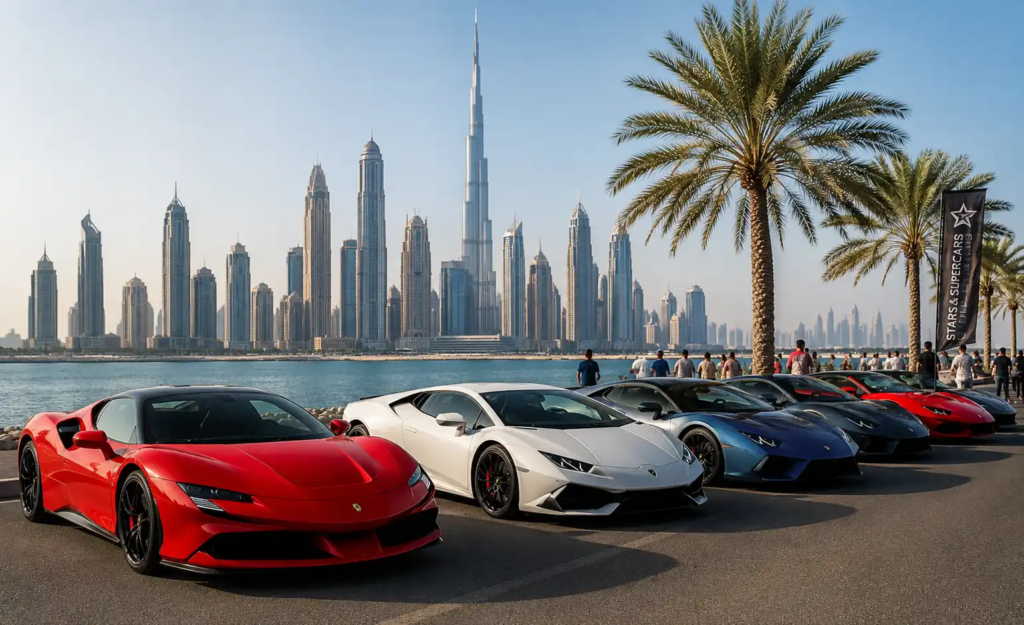
Dubai became one of the world’s supercar capitals because it combined aspiration with practical infrastructure.
The city attracted buyers, but it also developed ports, dealers, workshops, roads, events, storage businesses, rental companies and motorsport venues. Dubai Police and the tourism industry then gave the culture international visibility.
That does not mean supercar ownership in Dubai is effortless. Heat, insurance, depreciation, maintenance and uncertain used-car histories can make expensive cars even more costly. Yet the city remains one of the few places where the commercial, cultural and logistical sides of the supercar world operate at the same time.
The result is a market where an exotic car can be imported through a major global port, sold by an authorised dealer, maintained by trained specialists, driven at an international circuit and later offered to buyers across the Gulf or overseas. That complete ecosystem, rather than spectacle alone, is what made Dubai a genuine supercar capital.