The Story Of Dubai Autodrome And The Rise Of Motorsport In The UAE
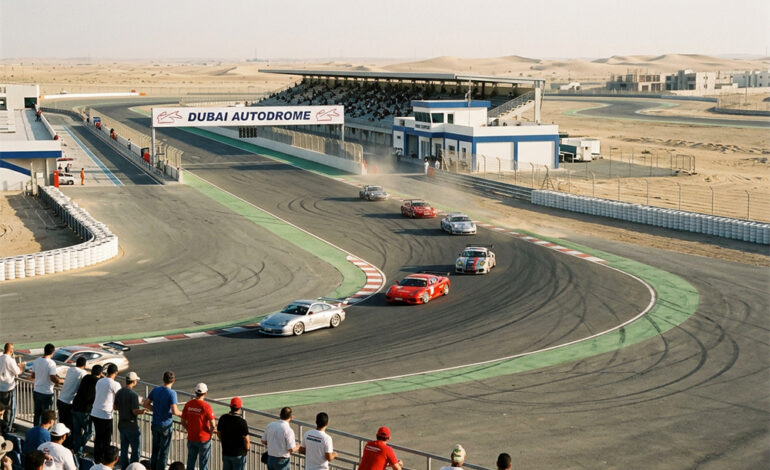
Dubai Autodrome did not create the UAE’s interest in speed, but it gave that interest a permanent home. When the circuit opened in 2004, the country already had decades of motorsport administration, desert rallying and occasional headline events. What was missing was a modern, purpose-built venue capable of hosting international circuit racing, developing local drivers and giving enthusiasts regular access to a controlled track.
That is why Dubai Autodrome history matters beyond the boundaries of Motor City. The venue helped turn motorsport in the UAE from a collection of rallies, one-off spectacles and private enthusiasm into a year-round ecosystem. It brought international championships to Dubai, established the 24H Dubai as a recognised endurance race, expanded karting and driver training, and helped prepare the ground for a national motorsport landscape that later included Yas Marina Circuit and the Formula 1 Abu Dhabi Grand Prix.
UAE motorsport had roots long before the Autodrome
Organised motorsport in the UAE predates Dubai Autodrome by several decades. The Emirates Motorsports Organization, previously known as the Automobile and Touring Club of the UAE, traces its history to 1965. Its role included governing and developing national motorsport, long before the country had a permanent international-standard circuit.
Dubai had also staged a major one-off Grand Prix event in 1981, bringing racing cars and well-known drivers to the city. That event showed there was an audience for motorsport, but it did not provide the permanent infrastructure needed for regular championships, training programmes or a stable racing community.
Before 2004, much of the UAE’s strongest motorsport identity was associated with rallying, off-road competition and desert endurance. Those disciplines suited the country’s geography and produced an established sporting culture, but circuit racing required a different type of investment: FIA-level safety systems, garages, race control, medical facilities, paddock space, timing infrastructure and a track that could support multiple categories.
Dubai Autodrome provided that missing base.
The 2004 opening changed what was possible in Dubai
Dubai Autodrome was completed in 2004 as part of the wider Motor City development. The main circuit measures 5.39 kilometres and was designed with six configurations, allowing the venue to run different types of racing, testing, track days and driver experiences. Dubai Autodrome describes itself as the UAE’s first fully integrated multipurpose motorsport and entertainment facility.
The scale of the project was important. This was not simply a strip of asphalt built for occasional races. It combined the circuit with pit and paddock facilities, hospitality areas, a race school, business facilities and indoor and outdoor karting. That broader structure made the venue useful even when no major international championship was in town.
An opening weekend built around international racing
The circuit’s public launch came with the LG Super Racing Weekend from 6 to 8 October 2004. The programme included the FIA GT Championship, the European Touring Car Championship and Formula Renault V6, immediately placing the new Dubai venue on an international calendar rather than easing into operation with only local events.
That opening sent a clear message. Dubai wanted a circuit capable of receiving established teams, professional drivers, international media and complex race operations from the start. The event also gave local spectators a view of serious circuit racing at close range, including GT cars from major European manufacturers and touring cars based on familiar road-going models.
Six layouts made the circuit more than a showpiece
A single long layout can be impressive, but it is not always the most practical format for club racing, tuition or private testing. Dubai Autodrome’s multiple configurations allowed organisers to match the circuit to the category, experience level and size of an event.
That flexibility helped the venue support professional racing while remaining useful to local competitors and road-car owners. Shorter layouts reduce operating demands for smaller events, while the full Grand Prix configuration provides the length and variety required for international endurance and GT racing.
The circuit created a permanent working environment
A successful motorsport venue needs activity between headline races. Dubai Autodrome developed track days, racing licences, tuition, driving experiences, karting and club-level competitions alongside its international calendar. The circuit’s own guidance for aspiring drivers points to UAE opportunities in karting, motorcycles, touring cars, GT racing, Radicals and formula categories.
The 2004 opening changed the UAE motorsport landscape in three practical ways:
- It gave circuit racing a fixed address. Teams, officials and drivers could plan a season around a permanent venue rather than relying on temporary sites or isolated events. A stable circuit also made it easier to build local championships and retain technical expertise.
- It brought international standards into everyday use. Race control procedures, scrutineering, marshalling, medical response and circuit safety became recurring operational requirements. That created experience not only for drivers, but also for officials, mechanics, event staff and volunteers.
- It made motorsport more accessible to residents. Track days, karting and driving experiences allowed enthusiasts to participate without owning a professional racing team. This helped shift circuit motorsport from something watched occasionally to something that could be experienced directly.
The Dubai 24H gave the Autodrome a signature event
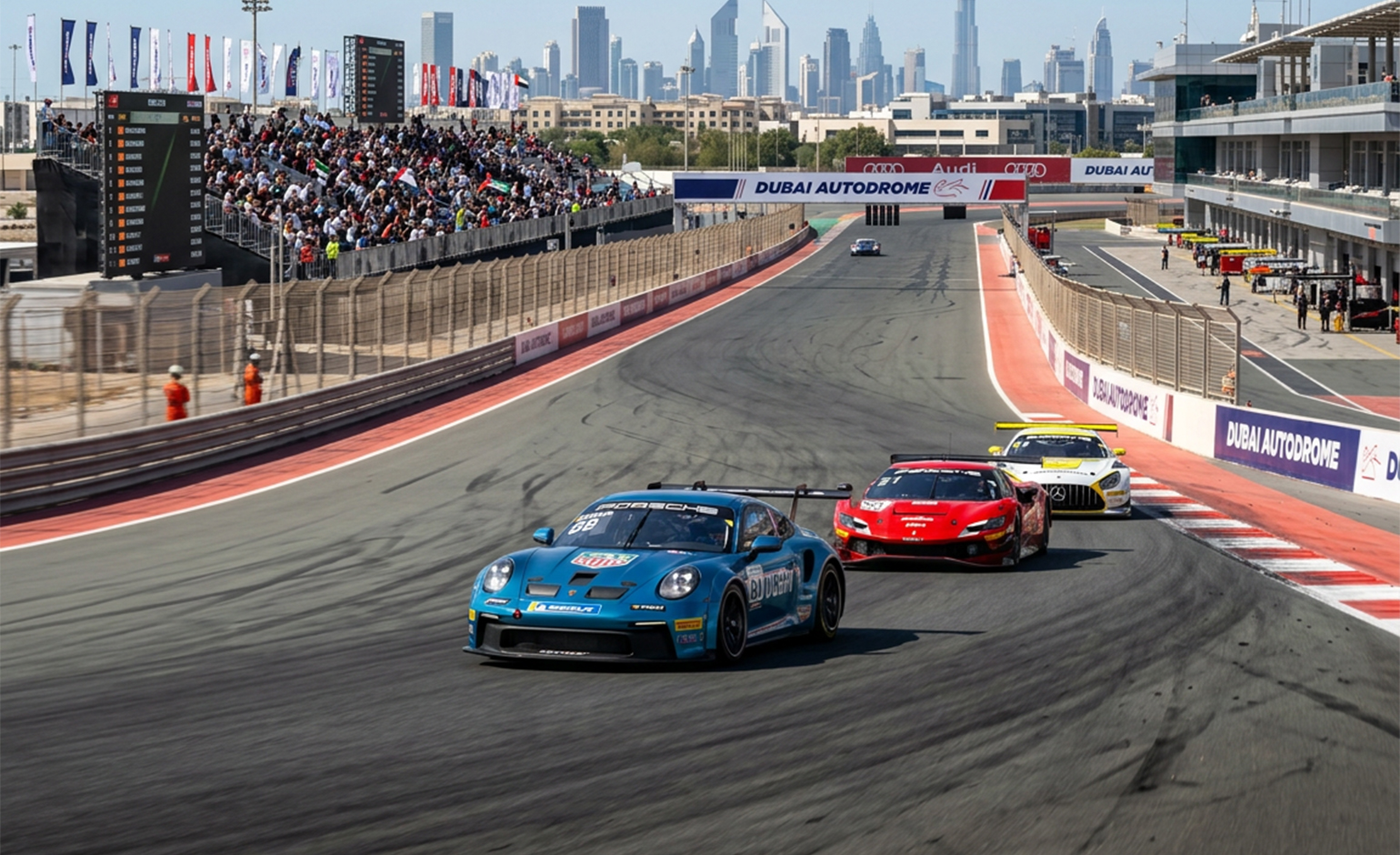
Many circuits need one race that becomes closely linked with their identity. For Dubai Autodrome, that event is the 24H Dubai.
The inaugural race was held in January 2006 and was the first official event organised by CREVENTIC. Over time, it developed into an international endurance fixture for GT cars, touring cars and other production-based racing categories.
The format suits Dubai Autodrome. A 24-hour race uses the full venue, tests teams through daylight and darkness, and creates a paddock filled with drivers, mechanics, engineers and equipment from numerous countries. It also allows professional and semi-professional competitors to share the same event, which gives the race a different character from a tightly restricted factory championship.
Dubai Autodrome has described the event as a mainstay of the international motorsport calendar, with large grids representing manufacturers such as Porsche, BMW, Ferrari, Mercedes-AMG, Audi and Aston Martin. The 2025-26 venue calendar also placed the race alongside the Porsche Carrera Cup Middle East, Asian Le Mans Series, Gulf ProCar and Gulf Radical Cup events.
Several factors helped the Dubai 24H become central to the circuit’s reputation:
- Its January date fits the regional racing season. Dubai’s cooler winter conditions are better suited to long outdoor events than the peak summer months. Teams can also begin their international year with substantial track time while much of Europe is in its off-season.
- The mixed grid creates variety. GT3 cars, one-make cup machinery, GT4 entries and touring cars can bring different speeds and strategies into the same event. Managing traffic becomes part of the challenge, not merely an inconvenience.
- The race connects Dubai with global team logistics. Endurance racing requires cars, spare parts, tyres, tools and personnel to move across borders. The event therefore demonstrates the city’s ability to support a complex international sporting operation, not just provide a circuit.
The 24H Dubai also gave the Autodrome continuity. International series can change calendars, regulations and promoters, but an established annual endurance race provides a recurring identity that fans and teams can recognise.
Dubai Kartdrome built the base of the racing ladder
The main circuit brought international visibility, but the Kartdrome may have had an equally important effect on local participation.
Dubai Kartdrome includes a 1.2-kilometre outdoor track and a 600-metre indoor venue. It hosts arrive-and-drive sessions, tuition and racing categories for different ages and experience levels.
Karting matters because it removes several barriers found in full-size racing. Participants do not initially need to buy and transport a race car, assemble a large technical team or commit to the costs of a full circuit season. A newcomer can begin with a rental session, progress to coaching and then enter structured competition.
Training young UAE-based drivers
The Dubai Autodrome Karting Academy is designed for children aged seven to 16 and presents itself as a starting point for those aiming towards professional motorsport. Its pathway connects tuition with competitions such as the Emirates Schools Karting Championship, the Sodi World Series and the Dubai Kartdrome Endurance Championship.
This does not guarantee a route to Formula 1, nor should every karting programme be judged by whether it produces a global star. Its value is broader. It teaches racecraft, discipline, safety awareness, fitness and technical feedback, while giving young drivers a structured environment in which to improve.
A community formed around participation
The Kartdrome also supports adult sprint and endurance competition, owner-kart sessions and corporate events. Its endurance championship has operated since 2005 and has attracted international participation as well as appearances by leading professional drivers.
That mix of grassroots and high-level involvement is important. It allows a resident racing for enjoyment to use the same venue that hosts recognised champions, creating a direct connection between amateur participation and professional motorsport culture.
Dubai and Abu Dhabi developed complementary roles
The opening of Yas Marina Circuit in 2009 changed the scale of UAE motorsport again. The first Formula 1 Abu Dhabi Grand Prix took place on 1 November 2009, giving the country one of the most visible annual events in world sport.
Yas Marina did not make Dubai Autodrome redundant. The two venues developed different strengths. Abu Dhabi became the home of the UAE’s Formula 1 event and a major international entertainment destination, while Dubai continued to serve a dense schedule of endurance racing, regional championships, track days, karting and driver development.
It would be too simple to claim that Dubai Autodrome directly caused Formula 1 to arrive in Abu Dhabi. The projects had different owners, ambitions and commercial structures. However, the Autodrome had already shown that the UAE could build and operate a modern circuit, host international series and sustain a local audience for track-based motorsport before Yas Marina opened.
The wider UAE motorsport system now works across several distinct areas:
- Dubai Autodrome supports regular circuit activity. Its value lies in frequency and range, from the 24H Dubai and regional championships to owner track days and academy programmes. It functions as a working circuit rather than only a once-a-year event venue.
- Yas Marina Circuit delivers global Formula 1 exposure. The Abu Dhabi Grand Prix places the UAE on an international broadcast stage and draws travelling spectators. The venue also runs track, karting, drifting and community activities outside the Grand Prix weekend.
- Desert events preserve the country’s off-road identity. Rallying and cross-country competition remain central to UAE motorsport, reflecting terrain and traditions that circuit racing cannot replace. The Emirates Motorsports Organization governs a broad national calendar rather than focusing on one discipline.
Together, these elements gave the UAE a more complete motorsport landscape than any single circuit could create alone.
Gulf heat and dust shaped how the circuit is used
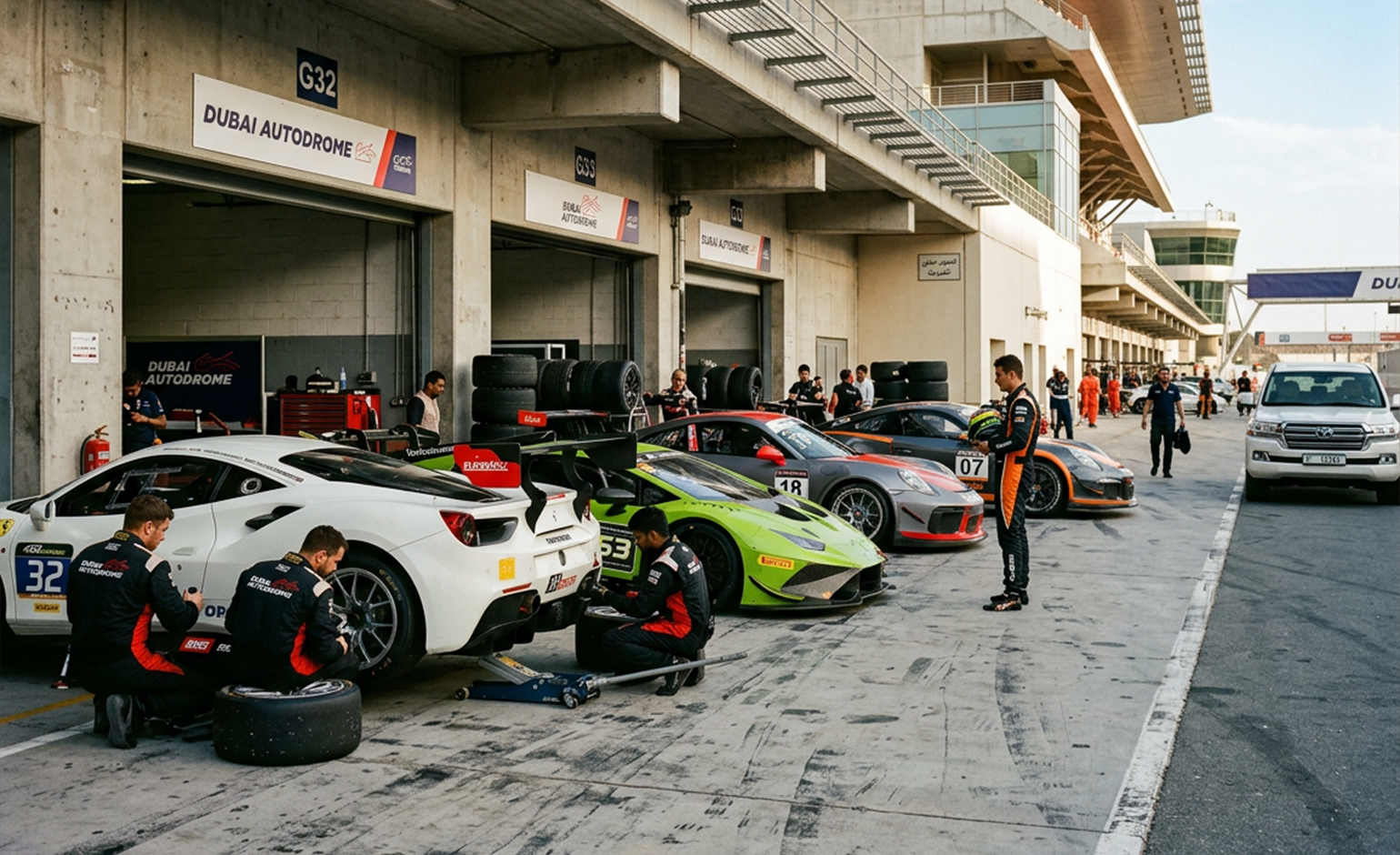
Dubai Autodrome’s location is part of its identity. The venue operates in conditions that are very different from traditional European circuits, especially during the hotter months.
The main racing calendar is concentrated in the cooler part of the year. Dubai Autodrome promotes extensive track activity from November through March, while major events such as the 24H Dubai have traditionally been scheduled in January.
The climate affects both event planning and vehicle preparation:
- Heat places greater emphasis on cooling and consistency. In high ambient temperatures, teams must pay closer attention to engine, transmission, brake and tyre temperatures during sustained running. Evening sessions and floodlit events also provide more manageable conditions during warmer periods.
- Dust changes grip and maintenance demands. Dubai Autodrome’s own track-day briefing warns that sand may remain on the circuit even after cleaning, making it necessary for drivers to assess conditions carefully. Air filters, cooling openings and brake components also deserve attention after repeated use in dusty environments.
- Long high-speed running exposes weak preparation. A car that feels healthy during normal Dubai commuting may reveal cooling, braking or tyre problems during a sustained circuit session. The venue requires participating cars to be in proper running condition, including suitable brakes, tyres and freedom from fluid leaks.
For UAE enthusiasts, the circuit also offers a safer alternative to exploring a car’s performance on public roads. Dubai and Abu Dhabi traffic, speed cameras and mixed road conditions are not suitable for testing braking limits or cornering behaviour. Dubai Autodrome provides marshal posts, safety vehicles, ambulance support and controlled overtaking procedures for its track days.
The Autodrome helped turn car enthusiasm into an industry
Dubai’s car culture is often associated with supercars, rare number plates and luxury dealerships, but a motorsport economy depends on more than visible road cars. It needs race teams, workshops, tyre suppliers, instructors, fabricators, data engineers, photographers, event organisers and trained officials.
A permanent venue gave those activities somewhere to gather. Regional teams could test more consistently, sponsors had events to support, and automotive brands gained a controlled setting for launches, customer experiences and performance demonstrations. The surrounding Motor City development also tied the circuit to a broader commercial and residential district rather than isolating it far outside the city.
The Emirates Motorsports Organization says it oversees more than 140 motorsport events annually across the UAE. That figure covers far more than Dubai Autodrome, but it illustrates how extensive the national calendar has become compared with the era when circuit events were occasional spectacles.
The Autodrome’s role within that growth is practical. It supplies track time, event infrastructure and a pathway from rental karting to licensed competition. It also gives international teams a winter racing base in the Gulf and provides local fans with repeated exposure to different categories rather than a single annual race.
Why Dubai Autodrome history still matters more than 20 years later
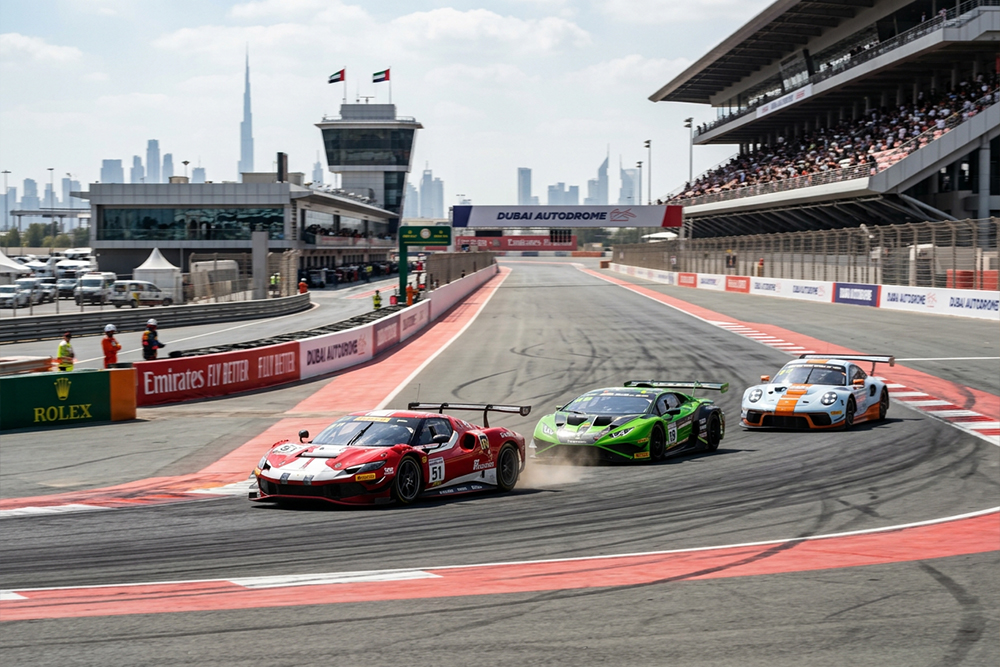
The most important part of Dubai Autodrome history is not that the circuit opened with an ambitious international event. It is that the venue remained active after the opening ceremony.
More than two decades later, its programme still spans professional endurance racing, regional championships, karting, track days, driver coaching and road-car experiences. The names of series and sponsors change, but the circuit continues to perform the same core function: giving motorsport in Dubai a permanent place to operate.
Its legacy can be seen in the wider UAE. Formula 1 now closes its season in Abu Dhabi, regional GT and prototype series race across the country, karting academies train younger drivers, and local competitors can move through a recognisable ladder of events. Dubai Autodrome did not achieve all of that alone, but it was the first modern circuit to make regular, structured track motorsport part of everyday automotive life in the Emirates.
The circuit that made racing part of modern Dubai
Dubai Autodrome arrived at a moment when the city was rapidly expanding its international profile. Its contribution was to prove that motorsport could become part of that growth without being limited to a single showcase weekend.
The circuit gave Dubai an international racing venue, the 24H Dubai a lasting home and local enthusiasts a place to learn, compete and test themselves. Karting widened the entry point, club racing created continuity, and the later arrival of Yas Marina Circuit expanded the UAE’s global reach.
That is the Autodrome’s real place in UAE automotive history. It did not simply bring racing cars to Dubai. It helped build the infrastructure, skills and participation that allowed motorsport culture to stay.