Where Is Dubai’s Car-Sharing Demand Highest? These Neighbourhoods Lead The Way
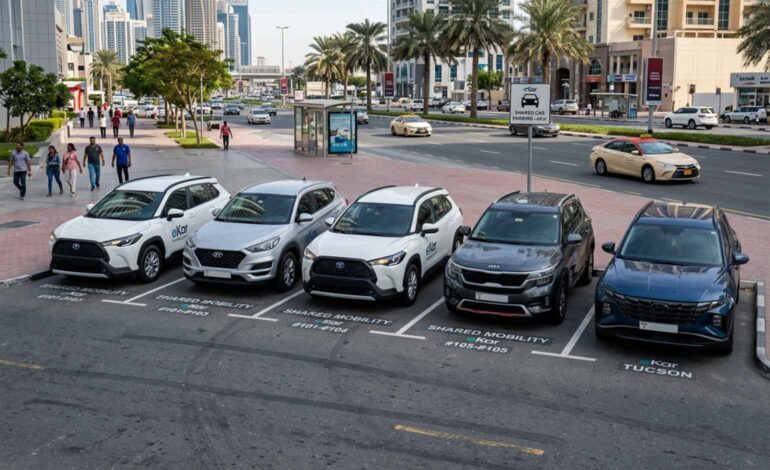
Dubai’s car-sharing demand is strongest across a mix of dense residential districts and major employment hubs, according to new usage data released by UAE car-sharing company Udrive on 18 August 2026. Karama, Al Nahda, Dubai Marina and Al Rigga are among the busiest areas for vehicle pick-ups and drop-offs, while Business Bay, Barsha Heights and the area around Emirates Headquarters stand out for work-related trips.
The findings show how self-drive, app-based car sharing is being used in Dubai for commuting, school runs, meetings, errands and weekend journeys, particularly when users want more flexibility than a fixed public transport route can provide.
Dubai car-sharing demand is strongest in residential and business hubs
Udrive’s proprietary data does not publish a complete neighbourhood ranking or exact booking totals, but it identifies four areas as some of the platform’s most active locations.
- Karama and Al Nahda: Both are high-density residential districts where demand is concentrated around homes and nearby parking areas. Their inclusion shows car sharing is not limited to Dubai’s tourist or waterfront zones.
- Dubai Marina: The waterfront community combines a large resident population with leisure, hospitality and visitor traffic. Udrive identifies it as one of its strongest locations for shared-car pick-ups and drop-offs.
- Al Rigga: The Deira district is another major pick-up and drop-off area. Its appearance alongside newer parts of Dubai shows that demand is spread across different sections of the city rather than concentrated in one corridor.
Business Bay and Barsha Heights lead work-related use
Office-focused journeys form another important part of the picture. Udrive names Business Bay, Barsha Heights and the area around Emirates Headquarters among its strongest locations for work-related travel.
These trips include commuting, meetings and multi-stop journeys, especially where fixed public transport schedules do not suit the user.
Mornings and weekends bring the heaviest activity
Demand rises during the morning as users travel to offices and schools, then builds again around afternoon school collection times. Weekends also produce strong activity as residents use shared cars for shopping, leisure and social trips.
- Morning demand: Office and school journeys are a major driver of bookings. Vehicle availability in residential districts therefore becomes particularly relevant before the working day begins.
- Afternoon demand: School pick-ups and family activities create another busy period. Multi-stop journeys can make temporary access to a self-drive car attractive for some households.
- Weekend demand: Shopping, leisure and social visits lift activity across the platform. These journeys are typically less tied to regular weekday commuting patterns.
Who is using shared cars in the UAE?
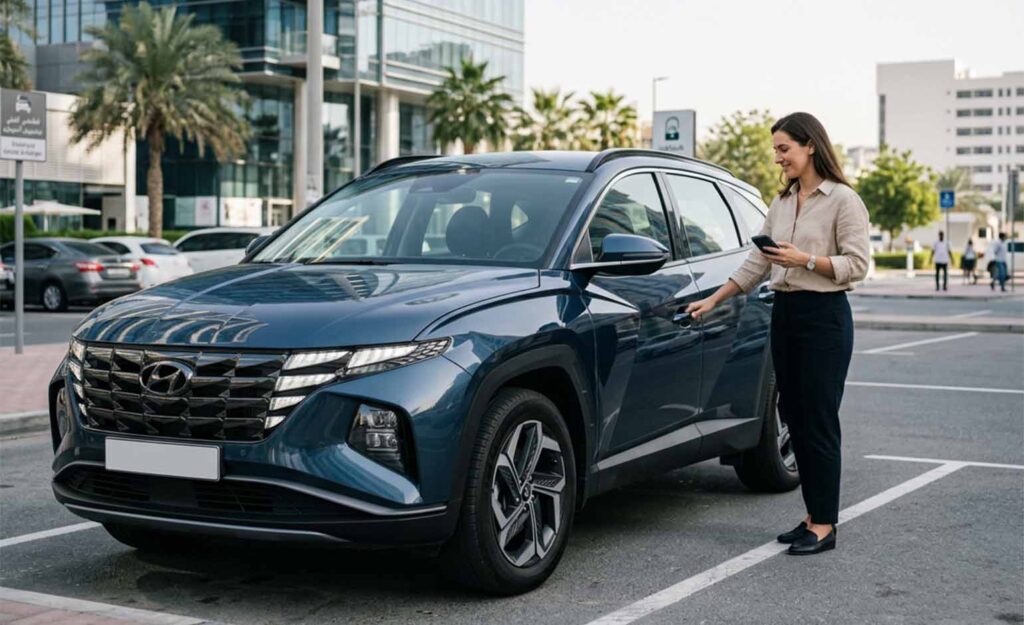
Udrive says residents account for around 90 per cent of its customer base, while people aged 30 to 40 make up 45 per cent of users. Those figures are platform-wide rather than a Dubai-only demographic breakdown.
The company operates across Dubai, Abu Dhabi, Sharjah and Ajman and says its wider fleet exceeds 2,000 vehicles, with more than three million rentals completed.
- Ford Territory: Udrive identifies the SUV as one of its preferred vehicles. The Territory is also currently listed among the company’s UAE street-rental options.
- BYD Qin: The Chinese-brand sedan also ranks among popular choices. Udrive currently includes the model in its app-based fleet.
- MINI Cooper: MINI models are another preferred choice in the usage data. Udrive’s wider listed fleet spans mainstream sedans, hatchbacks and SUVs from several manufacturers.
What Dubai drivers should know before using car sharing
Dubai’s Roads and Transport Authority lists hourly vehicle rental as an official mobility service available through partner apps. Users locate, reserve and unlock an available vehicle digitally and drive it themselves.
- Fuel, public parking and insurance are included in the RTA-listed fare: Insurance remains subject to the individual operator’s policy terms. Salik toll charges are billed separately.
- A UAE-accepted driving licence is required: Residents need an Emirates ID and driving licence, while visitor requirements include a passport, entry visa and accepted licence. Users should check the operator’s latest terms before booking.
- Car sharing is different from ride-hailing: The customer drives the vehicle for the booking period rather than being carried by a hired driver. RTA describes its hourly vehicle rental service as a self-drive option accessed through approved applications.
These hotspots reveal how Dubai residents are changing the way they drive
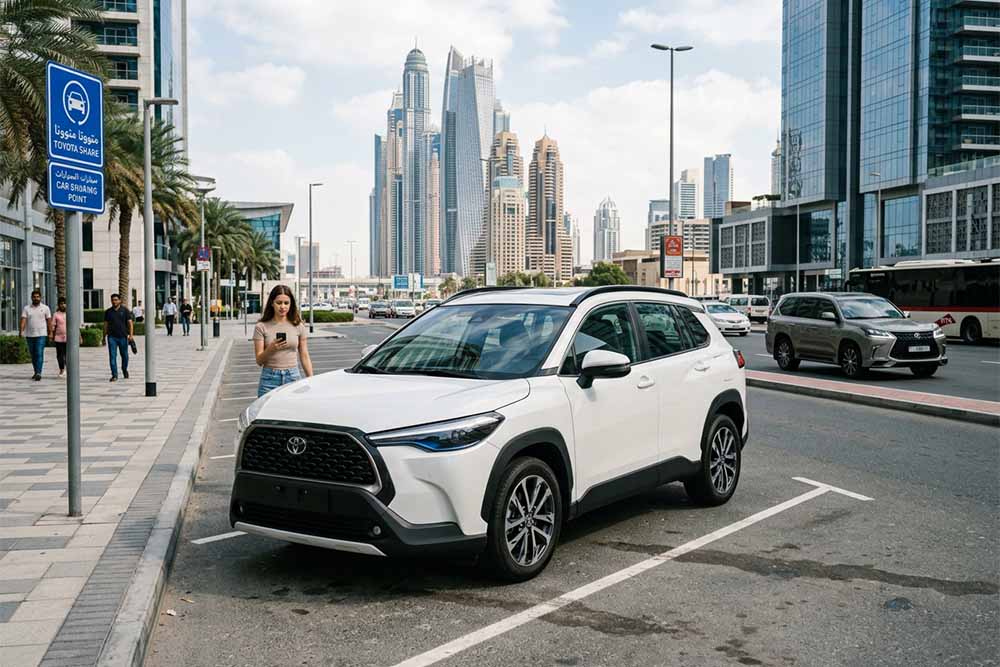
The figures do not establish a definitive citywide ranking because Udrive has not disclosed exact booking numbers for each neighbourhood, and the findings do not represent every car-sharing operator in Dubai. What is confirmed is that the company is seeing strong demand across both residential communities and major employment centres.
For Dubai residents, the main takeaway is that app-based shared cars are increasingly being used between traditional private ownership, public transport and taxis. Marina, Karama, Al Nahda and Al Rigga are among the clearest residential hotspots, while Business Bay, Barsha Heights and Emirates Headquarters demonstrate how strongly workplace travel is contributing to demand.