7X and UAEV Approve First Six UAE EV Charging Sites Across NXN Network
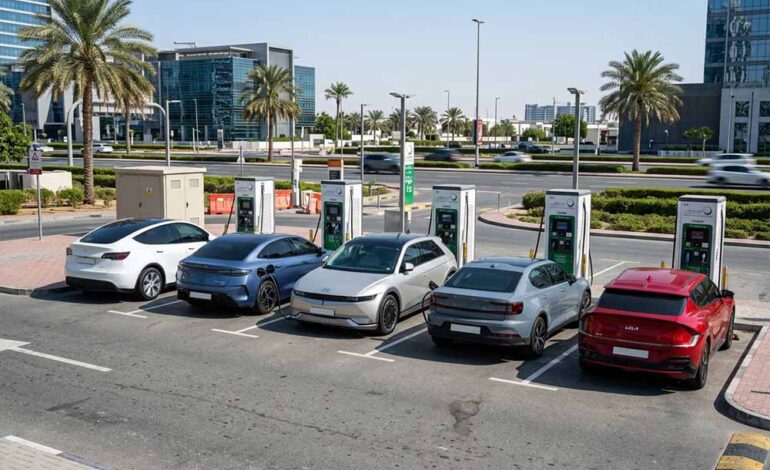
7X and Emarat EV Charging Stations Company PJSC, better known as UAEV, have approved the first six UAE EV charging sites across facilities operated by 7X’s National Network for Logistics, or NXN. Announced in Dubai on 20 August 2026, the first phase covers six locations across the emirate and marks the first physical step in a wider partnership aimed at expanding electric vehicle charging infrastructure through the UAE’s logistics network.
The approved locations are in Al Warqaa, Al Rashidiya, Al Karama, Al Quoz 4, Umm Suqeim and Al Barsha. The charging facilities are intended to support transport and logistics fleets, last-mile delivery operations and customers requiring access to EV charging.
The announcement is particularly relevant as the UAE continues expanding public and commercial charging infrastructure alongside the growing number of electric vehicles on its roads. For 7X and UAEV, the six Dubai locations also move a partnership first announced at GITEX Global 2025 from planning into implementation.
While the locations have now been approved, several operational details remain unconfirmed, including individual opening dates, charger capacities, the number of charging points at each site and specific access arrangements for private motorists.
Six UAE EV charging sites in Dubai form the first phase
All six locations confirmed under the initial rollout are in Dubai. According to the announcement, they will form the first phase of a broader plan to install charging infrastructure at strategically positioned facilities within 7X’s network.
Rather than concentrating the entire rollout at a single logistics centre, the selected sites cover several parts of Dubai. That approach could make the network useful for vehicles moving between residential, commercial and industrial districts while also supporting fleet operators whose routes already pass through 7X locations.
The first six approved sites are:
- Al Warqaa and Al Rashidiya will form part of the initial charging footprint in the eastern side of Dubai. Once operational, the sites are expected to support vehicles moving through established residential and transport areas while providing additional charging points within the broader NXN network. The announcement has not yet confirmed the number or type of chargers planned at either site.
- Al Karama and Al Quoz 4 bring the first phase into two very different parts of the city. Al Karama is a densely developed central district, while Al Quoz is a major commercial and industrial area with significant daily vehicle movements, making the latter particularly relevant to logistics and commercial fleet activity. Exact charging capacity at the two facilities remains to be disclosed.
- Umm Suqeim and Al Barsha complete the initial list. Both are established areas positioned around some of Dubai’s busiest road corridors, which could make the sites useful for both commercial vehicles and private motorists if public access is offered. UAEV and 7X have not yet detailed operating hours or access restrictions.
The six locations have been approved, but this does not mean all of the stations are already available to drivers. Neither 7X nor UAEV has announced individual commissioning dates, so motorists should wait for official confirmation before relying on the locations for charging.
The 7X-UAEV partnership moves from agreement to deployment
The new site approvals follow a Memorandum of Understanding signed by 7X and UAEV during GITEX Global on 14 October 2025. That agreement established the framework for the two companies to work together on expanding electric vehicle charging infrastructure across the UAE.
The collaboration centres on using 7X’s existing logistics footprint to help UAEV deploy chargers at locations that already play a role in the movement of goods, parcels and commercial vehicles.
This is significant because charging requirements for logistics fleets can differ from those of private EV owners. Commercial vehicles may operate predictable daily routes, cover higher mileages and return repeatedly to the same depots or service points. Placing charging equipment at logistics facilities can therefore allow operators to incorporate charging into existing vehicle schedules rather than making separate journeys solely to replenish batteries.
What the original agreement covered
The 2025 partnership was broader than the installation of chargers at six Dubai sites. 7X said its NXN network and logistics arm EMX would help support UAEV’s charging expansion through locations across the Emirates.
Commercial fleets and last-mile delivery operations were identified as important parts of the programme.
Several elements of the agreement help explain why the latest six-site approval matters:
- EV charging would be integrated into existing logistics infrastructure. Instead of building every charging location as a standalone site, the companies can use facilities that already serve transport and delivery operations. For fleet managers, that may make vehicle charging easier to integrate with daily dispatch, loading and operational schedules.
- The partnership was designed with a nationwide scope. The first six approved locations are in Dubai, but the original agreement covers 7X facilities more broadly across the UAE. This means the current announcement should be viewed as the opening phase rather than the final extent of the collaboration.
- Additional smart-mobility services were also part of the wider discussions. The original agreement included scope to explore services such as parcel lockers around charging locations. However, 7X and UAEV have not confirmed that these additional features will be installed at the first six Dubai sites, so they remain separate from the confirmed charging rollout.
Why NXN locations matter for commercial EV fleets
The choice of NXN facilities gives the project a stronger commercial transport angle than a conventional public charging rollout focused mainly on passenger cars.
For electric delivery vans and other fleet vehicles, the availability of charging infrastructure at logistics sites could help companies reduce disruption to their normal operating patterns. A vehicle that already returns to a hub between shifts, deliveries or loading periods could potentially charge during scheduled downtime.
That does not automatically mean every fleet will be able to use the new sites in the same way. Charging speeds, availability, access rules and the number of connectors will all determine how practical individual facilities are once they become operational.
Those specifications have not yet been announced.
UAEV’s charging expansion reaches deeper into everyday transport
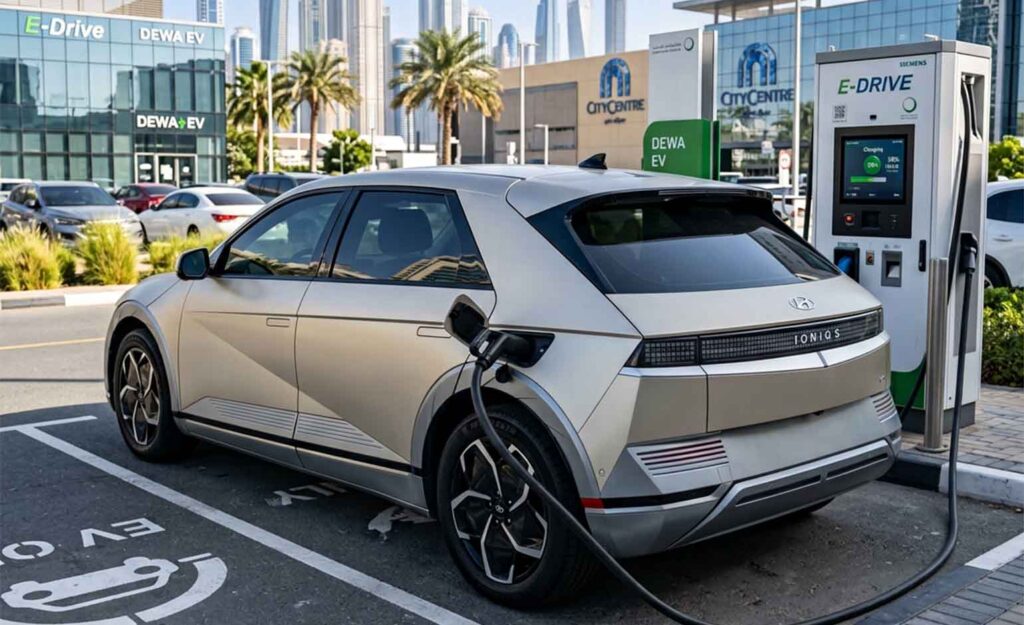
UAEV was established to develop and operate electric vehicle charging infrastructure across the UAE. The 7X partnership broadens that effort by bringing chargers into locations connected directly with logistics and last-mile transport.
The practical difference is that EV charging infrastructure is increasingly being developed not only around shopping centres, petrol stations and public parking areas, but also around places where commercial vehicles already spend time.
For the UAE’s wider EV market, that distinction matters. Expanding the number of passenger EVs on the road is only one side of transport electrification. Delivery vans, service vehicles and company fleets also account for a significant amount of daily road activity, particularly in large urban areas such as Dubai.
Private motorists could also benefit
The announcement indicates that the charging facilities will support customers as well as logistics operations. That raises the possibility that the locations could provide additional charging options for private EV owners, depending on the final access arrangements.
For motorists in areas such as Al Barsha, Umm Suqeim, Al Karama or Al Warqaa, another charging location could help increase the number of practical options available around the city.
However, drivers should not assume that every NXN charger will operate exactly like a fully public charging station until 7X or UAEV provides detailed access information.
Several questions therefore remain:
- Will all six sites be open to the general public? The announcement refers to customer charging services, but detailed public-access conditions have not been published. Some locations may operate differently depending on the layout and primary purpose of the underlying NXN facility.
- What charging speeds will be offered? A high-powered DC charger can serve a very different use case from a lower-powered AC unit. Without technical specifications, it is too early to determine whether the locations will be primarily intended for rapid top-ups, longer vehicle stops or a mixture of both.
- How many vehicles will each location support? The number of charging bays and connectors will have a direct effect on availability at busy times. UAEV and 7X have not yet released station-by-station capacity figures.
Key technical and opening details are still unconfirmed
The August announcement confirms the locations and the broader purpose of the rollout, but stops short of providing the detailed information an EV owner would normally need before planning to use a station.
The first six locations should therefore be described as approved charging sites rather than active charging stations.
Among the most important details still awaiting confirmation are:
- Opening dates remain unannounced. Neither 7X nor UAEV has provided an individual launch date for Al Warqaa, Al Rashidiya, Al Karama, Al Quoz 4, Umm Suqeim or Al Barsha. The companies have also not announced a single completion deadline for the entire six-site phase.
- Charger specifications have not been released. There is no confirmed information yet on charging output, connector types, the split between AC and DC units or the number of chargers at each facility. These details will ultimately determine how quickly different EVs can charge and how suitable each location is for fleet operations.
- Pricing and payment details are still pending. The announcement did not specify station-level charging tariffs or any particular payment process for the six NXN locations. Drivers will need to refer to UAEV’s official information once the sites are commissioned.
These gaps do not change the significance of the announcement, but they do limit what can currently be said about the day-to-day experience of using the stations.
Why the rollout matters for Dubai’s growing EV infrastructure
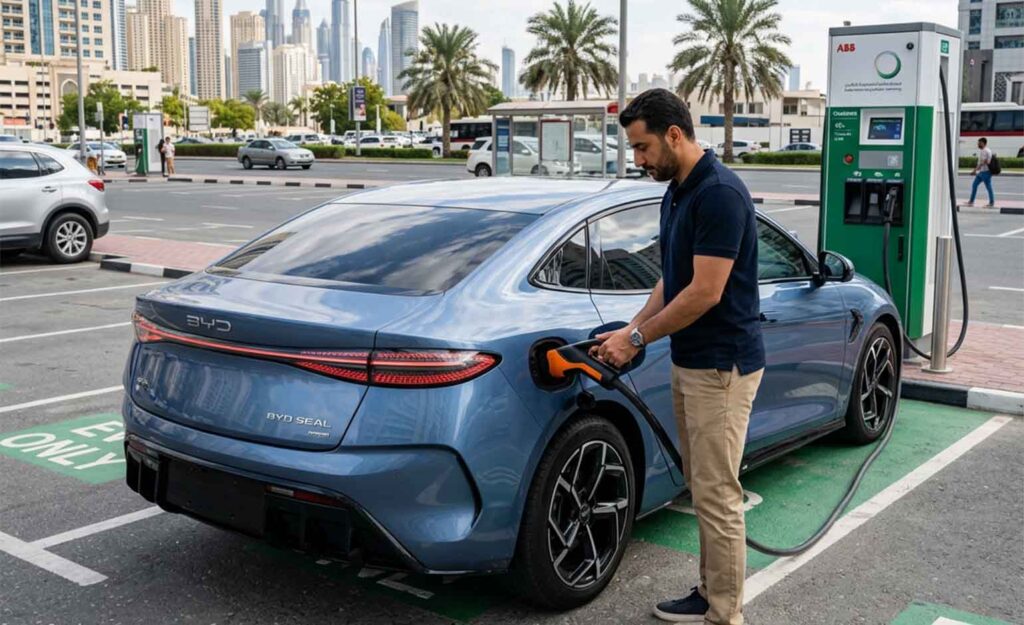
Dubai already has a substantial road network and a large concentration of commercial traffic, delivery operations and passenger vehicles. EV charging expansion therefore increasingly depends on adding infrastructure in places that fit naturally into everyday driving patterns.
The 7X and UAEV programme adds a different type of location to that mix.
A charging station installed at a logistics facility can potentially serve vehicles that already have a reason to visit the site. This can reduce the need for fleet vehicles to make dedicated charging detours and could become increasingly useful if electric vans and other commercial EVs gain a greater presence in delivery fleets.
There are several reasons the project deserves attention from UAE drivers and businesses:
- It links charging directly with logistics activity. Commercial EV adoption depends on more than vehicle availability. Operators also require charging locations that fit existing routes, working hours and depot movements, making logistics-based charging particularly relevant.
- The sites are spread across different parts of Dubai. The first phase does not rely on one central facility, which could improve geographic coverage as the network develops. This is especially useful in a city where commercial vehicles may travel considerable distances between delivery zones.
- The partnership has room to expand beyond Dubai. The original 7X-UAEV agreement was framed around a wider UAE network. No next-phase locations have yet been confirmed, but the broader partnership provides a framework for additional sites elsewhere in the Emirates.
A broader GCC shift towards commercial EV charging
The development also has relevance beyond the UAE.
Across the GCC, governments, utilities, transport operators and private companies are gradually expanding EV charging networks while considering how electrification can extend beyond private passenger cars.
Commercial vehicle charging presents different infrastructure challenges. Fleets may require several vehicles to charge in the same location, predictable charger availability and equipment capable of fitting around working schedules. Depot and logistics-site charging can therefore become as important as conventional public chargers positioned along major roads.
The 7X and UAEV arrangement provides one example of how existing logistics infrastructure could be adapted to support that transition without requiring every charging facility to be developed on a completely new site.
That said, the announcement should not be interpreted as confirmation of a wider GCC rollout. The six approved locations are specifically in Dubai, while future expansion under the partnership has so far been described only in the context of the UAE.
From six Dubai sites to a wider UAE charging network
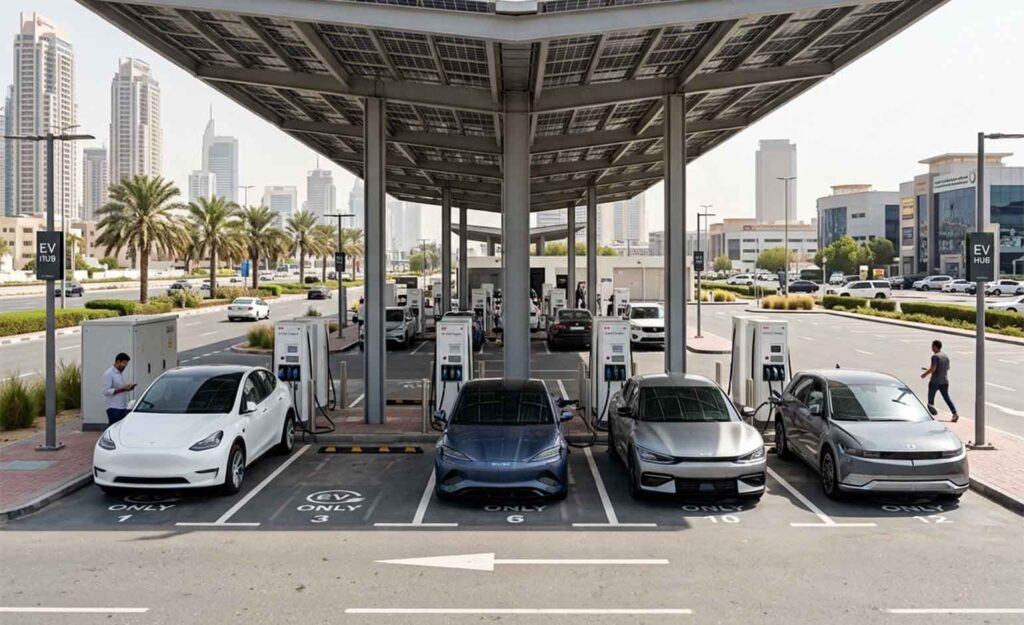
The latest approval moves the 7X and UAEV partnership beyond the agreement stage and identifies the first locations where the collaboration will take physical form.
For EV drivers, the immediate benefit will depend on how quickly the six sites open and what charging equipment is installed. For logistics companies, the project could be more significant if chargers are configured around fleet requirements and placed where vehicles already stop during normal operations.
The next announcements will therefore matter just as much as the initial site approvals.
Drivers and fleet operators should look for confirmation of charger power ratings, numbers of bays, opening dates, public access arrangements and pricing. Future phases will also reveal whether the NXN charging network expands from Dubai into other emirates as originally envisioned under the wider partnership.
For now, Al Warqaa, Al Rashidiya, Al Karama, Al Quoz 4, Umm Suqeim and Al Barsha are confirmed as the first six UAE EV charging sites under the 7X-UAEV NXN programme. The project adds another layer to the country’s developing EV infrastructure, with a particular focus on linking charging capacity to the logistics and transport network that keeps vehicles moving every day.