GAC’s Dubai R&D Hub Could Help Build Cars Better Suited For Gulf Roads
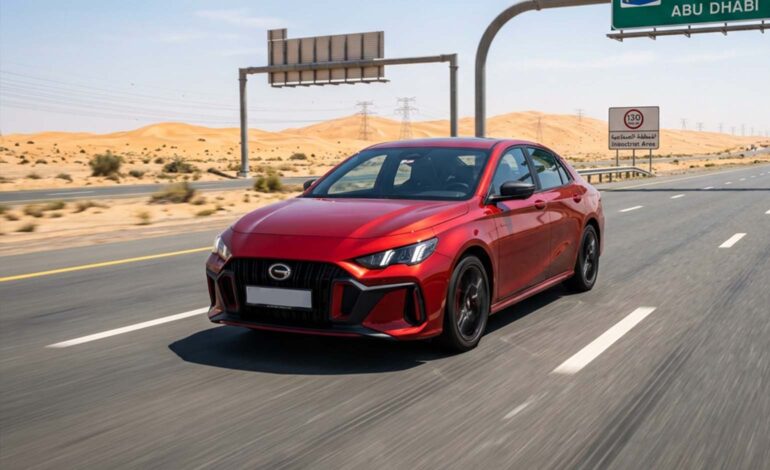
GAC Group is considering setting up a Dubai R&D hub by 2028, a move that could help the Chinese carmaker develop vehicles more closely matched to UAE and GCC driving conditions.
The plan was discussed by James Wang, Vice President of GAC International, during the Beijing Auto Show 2026, where the company outlined a wider overseas push focused on electric vehicles, hybrids, SUVs and premium models. The Dubai centre has not been formally confirmed as an operational facility yet, but GAC has indicated that the UAE is being studied as a base for deeper regional research, customer feedback and product localisation.
GAC’s Dubai R&D hub plan points to a more local Gulf strategy
The main announcement is that GAC is looking beyond conventional exports into the Gulf. According to Gulf News, the company is considering a Dubai-based R&D centre around 2028, building on its existing regional operation in Dubai, which already covers sales, branding, service workshops and warehousing for the wider MENA region.
For UAE buyers, the important point is not just the building itself. A local research and development function could give GAC engineers faster feedback on how vehicles perform in Gulf heat, dust, high-speed road use and mixed city driving.
The confirmed points so far are:
- GAC is studying Dubai as a future R&D base. The timeline mentioned is 2028, but the project is still described as being under consideration rather than fully launched. That distinction matters because no opening date, investment figure or facility location has been officially announced.
- The UAE is being treated as a serious test market. GAC sees the country as a diverse market with premium customers, family SUV buyers and more price-sensitive segments. That makes it useful for testing how Chinese brands can move beyond value-led sales into higher-end ownership experiences.
- The focus is wider than EVs alone. GAC’s regional plan includes petrol, hybrid, plug-in hybrid, battery-electric and range-extended electric vehicles. This could suit the GCC, where charging access is improving but many buyers still want long-distance flexibility.
Why Gulf roads need more than global specifications
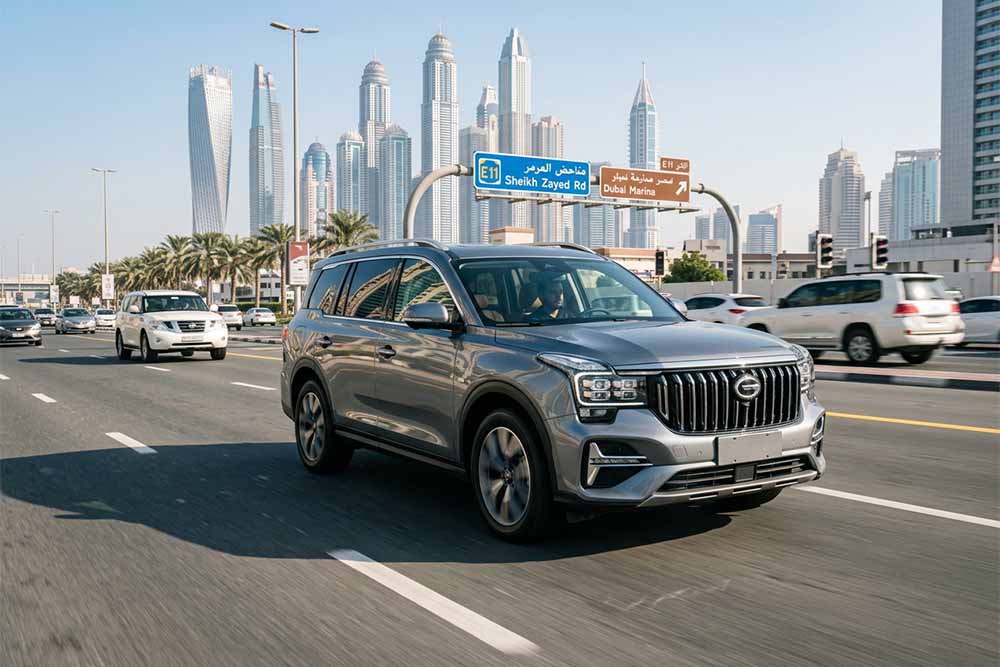
A car that performs well in China, Europe or Southeast Asia will not automatically feel right in Dubai, Abu Dhabi, Riyadh or Doha. Gulf driving places a different kind of pressure on vehicles, especially during summer.
GAC’s possible Dubai R&D hub could help the brand study these conditions more directly instead of relying only on overseas testing cycles.
UAE heat and AC performance are central ownership concerns
Strong air-conditioning is not a luxury feature in the UAE. It is part of everyday usability. Vehicles need to cool quickly after being parked in open sun, keep cabin temperatures stable in traffic and avoid overworking cooling systems during long summer drives.
For EVs and hybrids, battery thermal management also becomes important. Heat can affect charging behaviour, efficiency and long-term owner confidence, so local testing would be especially useful for new energy models.
Dust, sand and highway use change durability expectations
Dubai and Abu Dhabi roads are smooth in many areas, but GCC vehicles also face construction dust, desert sand, high-speed highways and long-distance family trips. That combination can affect filters, cooling systems, suspension components and cabin refinement.
A regional R&D presence could help GAC adjust specifications, materials, software calibration and service recommendations around real Gulf usage rather than standard global assumptions.
Auto China 2026 showed where GAC wants to go next
GAC used Auto China 2026 in Beijing to show several models aimed at global expansion, including the GAC YUE7, AION i60 and AION N60. The company described this as part of a broader global push covering multiple market segments and powertrain types.
For the GCC, the model strategy matters because buyers are not all moving in the same direction. Some want EVs, some prefer hybrids, while many still want petrol SUVs with strong service backup.
Key buyer angles to watch include:
- SUV demand remains strong across the Gulf. Family buyers in the UAE and Saudi Arabia often prioritise cabin space, rear-seat comfort, cooling performance and luggage capacity. Any GAC model developed with the Gulf in mind will need to compete on those practical points, not only screens and styling.
- Hybrids and range-extenders could fit the transition period. Public charging is expanding, but many drivers still need range confidence for intercity journeys. Plug-in hybrid and range-extended models may have a stronger near-term case for buyers who are not ready for a full EV.
- Premium Chinese cars need premium aftersales. GAC has spoken about Hyptec as part of its higher-end EV strategy, but premium buyers in the UAE will expect more than performance figures. Test drives, trained technicians, parts supply, software updates and clear warranty support will shape trust.
What remains unconfirmed for UAE and GCC buyers
GAC’s Dubai R&D hub plan is significant, but several buyer-relevant details are still not confirmed. The company has not announced a final site, a confirmed investment value, staffing plans or a detailed list of vehicles that will be developed specifically for the GCC.
There are also no confirmed UAE prices or launch dates in this announcement for any new GAC, AION or Hyptec model linked directly to the proposed R&D hub.
The main unknowns are:
- Exact launch timing for the hub. The 2028 timing has been mentioned as a possibility, but the project is still at a planning stage. Buyers should treat it as a strategic direction, not an active facility.
- Which models will benefit first. GAC has shown several global models, but it has not confirmed which vehicles will receive GCC-specific engineering input from a Dubai centre. UAE availability should only be treated as confirmed when announced by the brand or authorised distributor.
- How much localisation will go into production cars. Local feedback could influence cooling, suspension, software, infotainment, service schedules or trim choices. However, GAC has not yet detailed exactly what engineering changes a Dubai R&D hub would deliver.
A Gulf test bed that could matter beyond GAC
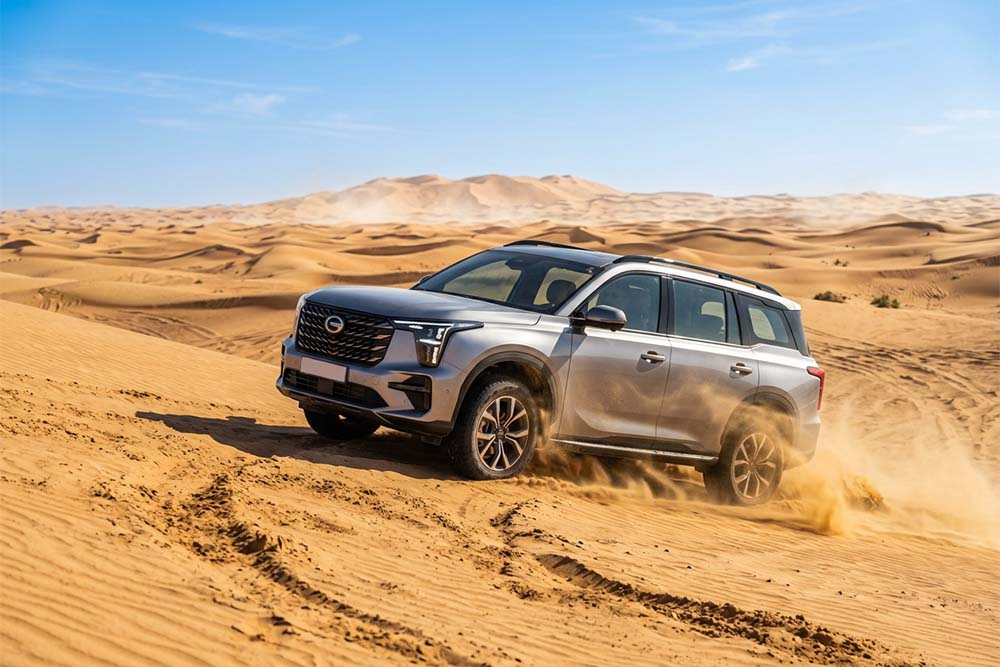
If GAC follows through, the Dubai R&D hub could become more than a brand-level investment. It would reflect a wider shift among Chinese carmakers from exporting vehicles into the GCC to building a deeper regional presence.
That matters because Chinese brands are becoming more visible in UAE showrooms, but long-term trust will depend on how well cars cope after the first few years. In this market, service quality, spare parts, warranty handling and resale value can be just as important as launch specifications.
For now, GAC’s plan should be viewed as a signal of intent. A Dubai R&D hub would not guarantee success on its own, but it could help the brand build cars that feel less like global imports and more like vehicles prepared for Gulf roads, Gulf weather and Gulf buyers.