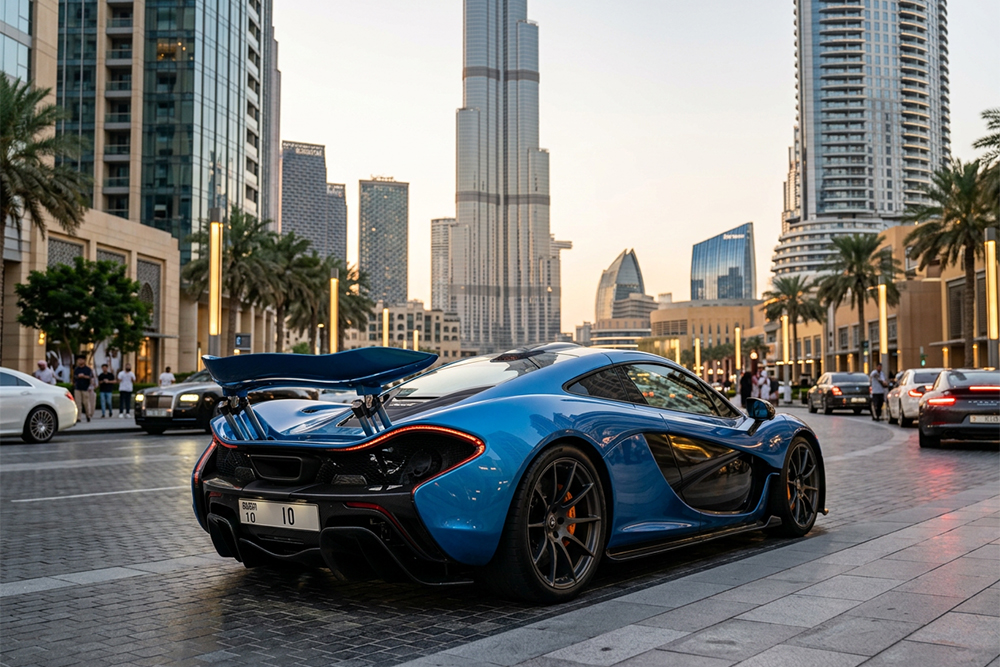
How Dubai Police Turned Supercars Into Patrol Cars
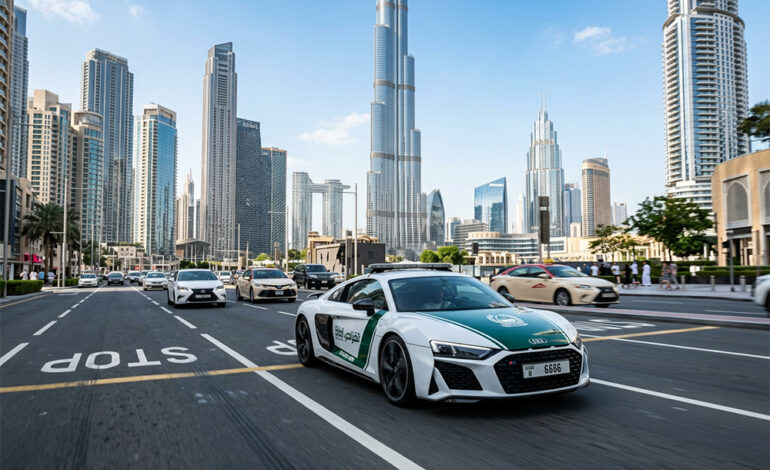
Dubai Police supercars are among the most recognisable police vehicles in the world, but they were not introduced simply to chase speeding motorists. The fleet began taking shape in April 2013, when a green-and-white Lamborghini Aventador appeared on Dubai’s streets, followed shortly afterwards by a Ferrari FF.
These exotic patrol cars were intended primarily for tourist districts, public events and high-visibility security duties. They gave officers an approachable presence at landmarks while projecting an image that matched Dubai’s luxury hotels, ambitious architecture and established supercar culture. Early police statements made clear that the vehicles were not expected to replace conventional patrol cars or become routine pursuit vehicles.
More than a decade later, the concept remains active. The fleet has expanded beyond petrol-powered supercars to include performance SUVs, hybrids and electric vehicles. Recent official additions have featured advanced driver technology, sustainable powertrains and equipment intended for tourist policing and community assistance.
Why Dubai Police Supercars Were Never Ordinary Chase Cars
A Lamborghini patrol car naturally creates images of high-speed pursuits along Sheikh Zayed Road. In practice, that was never the fleet’s main role.
Dubai Police officials have previously explained that the luxury cars are generally used at special events and in areas frequently visited by tourists. They do not normally respond to minor collisions or perform the everyday work assigned to standard patrol vehicles.
The strategy works through three closely connected roles:
- Creating a visible police presence at major destinations: The cars are deployed around locations such as the Burj Khalifa, Mohammed bin Rashid Boulevard and Jumeirah Beach Residence. A distinctive patrol car is difficult to overlook, allowing a relatively small tourist-police presence to remain highly visible in crowded areas.
- Making officers more approachable: Tourists regularly stop to photograph the vehicles and speak with the officers beside them. This turns the patrol car into a public-engagement tool rather than a barrier between the police and visitors.
- Representing Dubai internationally: Images of a Lamborghini, Ferrari or Bugatti in Dubai Police colours travel widely across news outlets and automotive media. The cars communicate the city’s connection with performance motoring without requiring a conventional tourism campaign.
This combination explains why outright speed is only part of the story. The cars attract attention first, then provide an opportunity for officers to offer information, assistance and safety guidance.
The Lamborghini Aventador Started a Global Conversation
The Lamborghini Aventador was the model that established the idea in April 2013. Finished in Dubai Police’s white-and-green livery and equipped with emergency lighting, it looked dramatically different from the saloons and SUVs normally associated with police work.
The timing suited Dubai. The city already had a strong relationship with Italian supercars, supported by wealthy collectors, luxury dealerships and frequent sightings of exotic vehicles around Downtown Dubai and Sheikh Zayed Road.
A police Aventador therefore appeared unusual without looking entirely out of place. It belonged visually to the same city as the Burj Khalifa, Dubai Mall and the supercar-lined entrances of five-star hotels.
Contemporary reports said the Lamborghini would largely appear in tourist areas. Police officials also stated that it was intended to reflect the character and status of Dubai rather than serve primarily as a pursuit vehicle.
The Aventador’s arrival also demonstrated how effectively a single car could generate international interest. Its value was not limited to horsepower or acceleration. Its real strength was immediate recognition.
The Cars That Defined the Dubai Police Supercar Fleet
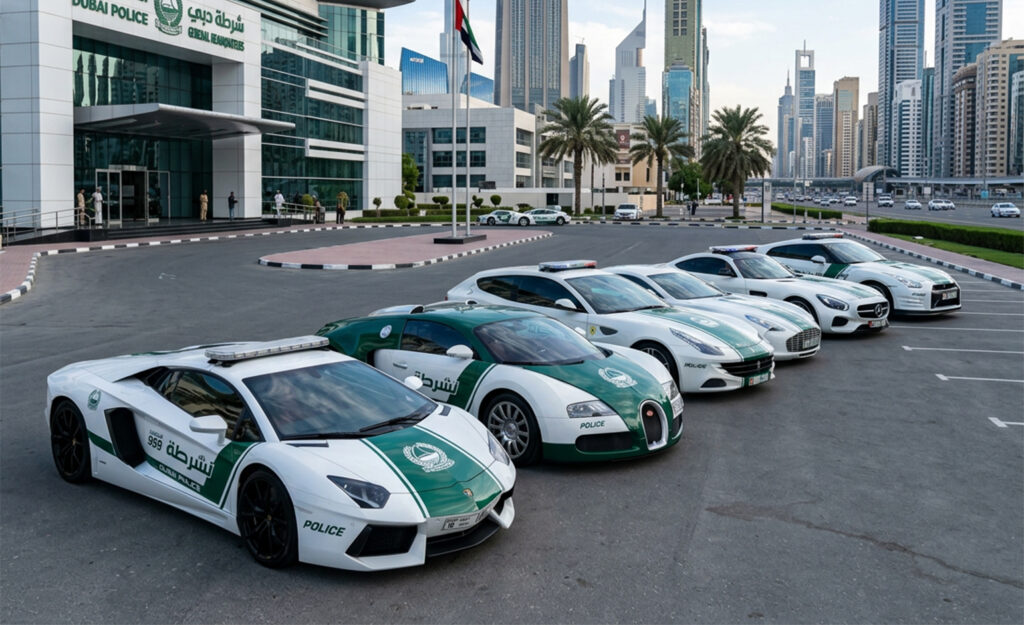
After the reaction to the Aventador, Dubai Police expanded the collection quickly. Ferrari, Aston Martin, Bentley and Mercedes-Benz models joined the line-up, turning what might have been a one-off publicity exercise into a long-running tourist patrol programme.
Ferrari FF Added Everyday Usability to the Spectacle
The Ferrari FF followed the Lamborghini within days. Unlike many two-seat supercars, the FF offered four seats, a usable luggage area and an all-wheel-drive system, making it closer to a grand tourer than a stripped-out track machine.
That did not make it an ordinary police vehicle, but it gave the fleet a more practical high-performance option. Reports at the time stated that female patrol officers would operate the Ferrari, adding another visible dimension to the programme.
The Ferrari also confirmed that Dubai Police was building a collection rather than relying on a single headline model. Once two of Italy’s best-known supercar brands appeared in matching patrol colours, the fleet developed an identity of its own.
Aston Martin One-77 Made Rarity Part of the Appeal
The Aston Martin One-77 represented a different type of prestige. Its appeal came from rarity, craftsmanship and exclusivity rather than widespread recognition alone.
Dubai Police displayed the One-77 at Arabian Travel Market alongside other luxury patrol cars. Gulf News reported an indicated value of AED 11 million at the time, although prices attached to rare collector cars can change significantly and should not be treated as current market valuations.
Displaying such a vehicle at a major travel event made the fleet’s tourism role particularly clear. The car was presented where international visitors and travel-industry professionals could see it, rather than being introduced quietly as an operational vehicle.
The Bugatti Veyron Delivered a World Record
The Bugatti Veyron became the fleet’s performance headline. Guinness World Records recognises the Dubai Police Veyron as the fastest police car in service, recording a top speed of 407 km/h in April 2016.
Its real-world policing value does not depend on reaching that speed. No public road in Dubai permits anything close to the Veyron’s maximum capability.
Instead, the record gave Dubai Police a simple global distinction. Other police forces might operate sports cars, but Dubai could officially claim the fastest.
Beyond these headline vehicles, the fleet has included a broad range of performance and luxury models:
- European supercars and grand tourers: The McLaren MP4-12C, Audi R8, Mercedes-Benz SLS AMG and Bentley Continental GT expanded the collection across several major performance brands. Each offered a different design language, helping the fleet remain visually varied at events and tourist locations.
- Japanese and American performance cars: The Nissan GT-R, Chevrolet Camaro and a Ford Mustang modified by Roush Performance brought the fleet beyond expensive European exotics. Their inclusion made the display more relevant to a wider group of enthusiasts, including the large communities of American muscle and Japanese performance-car owners in the Gulf.
- Hybrid performance models: Cars such as the BMW i8 and Porsche Panamera S E-Hybrid showed that the programme was not restricted to traditional large-capacity petrol engines. They provided an early indication that alternative powertrains would eventually become part of the fleet’s identity.
Why the Concept Worked Particularly Well in Dubai
Placing a fleet of exotic cars into police service would appear excessive in many cities. In Dubai, several local conditions allowed the idea to make more sense.
The city has a concentrated collection of highly photographed destinations. A patrol car operating around Downtown Dubai, JBR or a major exhibition can be seen by thousands of residents and visitors without travelling far.
Dubai also has one of the Gulf’s most visible luxury-car cultures. Lamborghinis, Ferraris, Rolls-Royces and heavily modified performance SUVs are a regular part of the automotive landscape. Police supercars reflect that environment while remaining clearly identifiable through their official livery.
There is also a strong events calendar. Motor shows, travel exhibitions, national celebrations, school initiatives and community programmes create repeated opportunities to display the cars away from routine traffic duties. Dubai Police has continued using its luxury vehicles at community events, including awareness activities involving students and families.
The idea works because the vehicles are placed where people are already likely to stop, photograph and interact with them.
The Difference Between Tourist Patrols and Everyday Police Work
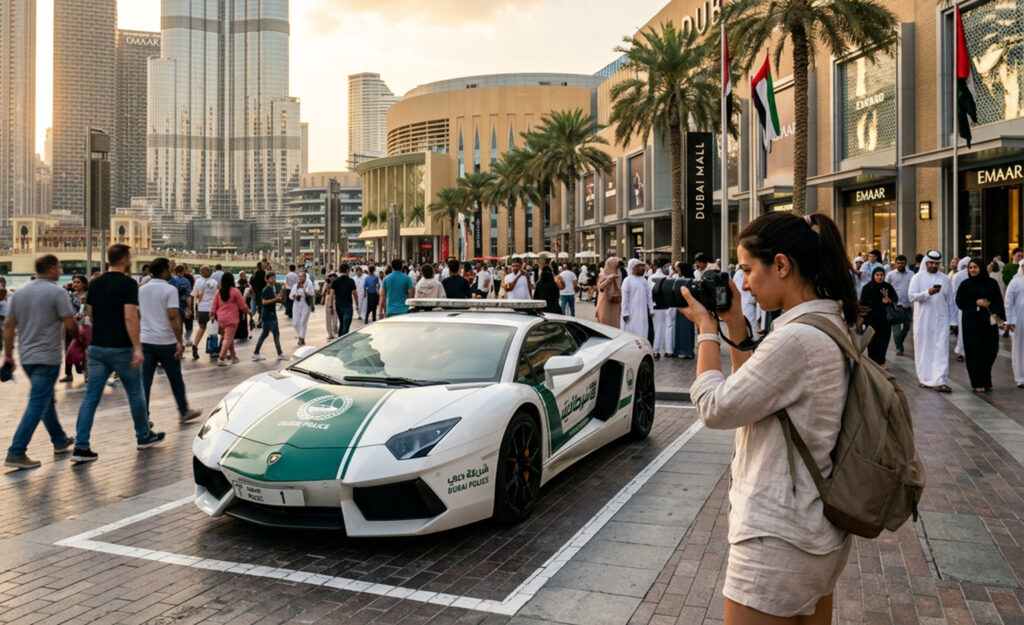
Dubai’s luxury patrol fleet should not be confused with the wider operational vehicle fleet.
Regular police work requires cars that can carry several officers, transport equipment, operate for long hours and tolerate kerbs, speed humps and heavy use. Conventional saloons, crossovers and SUVs are far better suited to those tasks than a low-slung supercar with limited cabin space.
Official descriptions of the luxury vehicles consistently connect them with the Tourist Police Department, important visitor areas and high-visibility community duties. This suggests they complement standard patrols rather than replace them.
Their practical responsibilities include:
- Tourist assistance and information: Officers assigned to the cars can help visitors with directions, questions and access to police services. Official announcements describe guidance and public assistance as part of their role at tourist destinations.
- Security visibility at events: A rare or brightly liveried performance car naturally attracts a crowd, but it also makes the police presence clear. This can be useful at exhibitions, celebrations and public-awareness campaigns where visibility is more valuable than discreet patrol work.
- Community and road-safety engagement: The vehicles provide a natural starting point for conversations about safe driving, police services and responsible car culture. This is particularly relevant in a region where performance cars and powerful SUVs have a strong following.
Gulf Heat and Dust Make Supercar Patrols More Demanding
Operating a high-performance car in the UAE presents challenges that are very different from keeping one in a climate-controlled private collection.
Dubai’s summer temperatures place sustained demand on cooling systems, air conditioning, batteries and tyres. Supercar tyres are designed to provide strong grip, but they remain sensitive to pressure, age and prolonged heat exposure.
Dust adds another layer of maintenance. Air filters, cooling openings, radiators and delicate exterior surfaces need regular inspection and cleaning. A highly photographed patrol car must also remain visually presentable, which means the white-and-green finish requires more attention than that of a typical working vehicle.
Several practical issues must therefore be managed:
- Tyres and braking components: High-performance tyres can be expensive and may have relatively short replacement intervals even when the car is not being driven aggressively. Heat, vehicle weight and extended periods of slow urban driving can all influence wear.
- Cooling and filtration: Large engines produce significant heat, especially when a car is moving slowly through tourist areas with its air conditioning running. Fine dust can collect around intakes and cooling surfaces, making preventive inspection essential.
- Limited operational flexibility: Low ground clearance, wide bodywork and restricted luggage space make many supercars unsuitable for crowded car parks, rough access roads or equipment-heavy duties. Performance SUVs and luxury electric saloons offer more usable space while retaining the visual impact expected from the fleet.
These conditions help explain why later additions have increasingly included SUVs, four-door performance cars and electric vehicles rather than relying only on traditional two-seat supercars.
Electric Patrol Cars Changed the Meaning of Performance
The fleet’s transition towards electric vehicles shows how Dubai Police has adapted the original concept.
In October 2022, the Hongqi E-HS9 became the first electric SUV added to the luxury patrol fleet. Dubai Police connected the vehicle with tourist-area security, road safety and the ability to respond to different operational situations.
The Lotus Eletre R followed as another high-performance electric SUV, offering the dramatic acceleration and styling expected of the luxury fleet while providing the space and flexibility of a larger vehicle. Dubai Police said it would support operations and public services at key tourist locations.
In 2024, the Lucid Air Grand Touring joined the Tourist Police patrol fleet. Its introduction was officially linked with police visibility, community engagement and the UAE’s broader direction towards clean energy and lower-emission transport.
The electric additions serve several purposes:
- They demonstrate that high performance is no longer limited to petrol engines.
- Their quiet operation suits slow patrols around pedestrian-heavy tourist areas.
- Four-door saloons and SUVs provide more usable interior space than many early supercars.
- They connect the fleet with Dubai’s sustainability and technology objectives.
Charging logistics, battery temperature management and real-world summer efficiency remain important considerations in Gulf conditions. However, tourist patrols operating predictable urban routes are better suited to planned charging than emergency vehicles that may need to remain available continuously.
Newer Additions Show a Broader Patrol Strategy
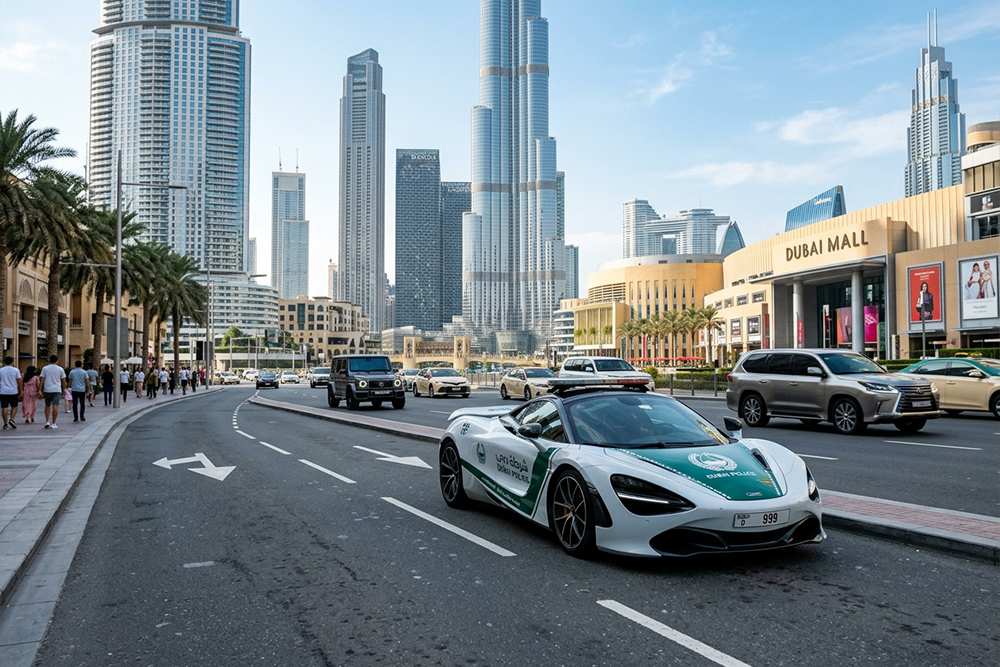
By 2025, the luxury patrol programme had moved well beyond its original collection of dramatic two-seat exotics.
Dubai Police added an Audi RS7 Performance, a fast four-door model that combines supercar-level acceleration with rear-seat and luggage capacity. Official figures listed 630 horsepower, 850 Nm of torque and a 0 to 100 km/h time of 3.4 seconds.
Later that year, Mercedes-Benz SL 55 AMG, GT 63 AMG and EQS 580 models joined the luxury patrol fleet. Dubai Police said the vehicles would enhance security presence at tourist destinations while allowing officers to provide guidance, information and police assistance.
A Bentley Bentayga Azure was also announced in November 2025, reinforcing the shift towards luxury SUVs that can offer greater visibility, cabin space and day-to-day usability.
Official announcements frequently refer to cooperation with manufacturers and authorised distributors. However, the commercial arrangements, purchase prices or ownership terms for individual vehicles are not always disclosed publicly, so it should not be assumed that every car was purchased under the same conditions.
A Patrol Fleet Only Dubai Could Have Created
Dubai Police transformed supercars into patrol cars by giving them a role built around visibility rather than pursuit.
The early Lamborghini and Ferrari attracted global attention, but the programme lasted because it could support tourist policing, community engagement and the city’s public identity. The Bugatti provided a record, the Aston Martin added rarity and later electric vehicles connected the collection with changing technology.
For UAE and GCC enthusiasts, the fleet also reflects the region’s wider relationship with performance cars. These vehicles are admired for speed and design, but their use by Dubai Police places them within a public-service setting centred on accessibility, security and responsible visibility.
The fleet’s greatest achievement is not that Dubai Police owns cars capable of more than 300 km/h. It is that a parked patrol car can become one of the busiest public-engagement points on the street.